# Commercial Solar Planning Permission in the UK: A Guide

[ ](https://www.linkedin.com/in/david-martyn-coleman/ "Linked
In profile for David Coleman")[David Coleman](/authors/david-coleman/ "Author profile for David Coleman")Founder & Renewable Energy Author, kilowatts.uk
# Commercial Solar Planning Permission in the UK: A Guide
**Published:** 2026-07-18 19:41:57
**Updated:** 2026-07-25 05:37:29
Learn when commercial solar panels need UK planning permission, permitted development checks, listed building rules, and more. Discover how to navigate the com…
[ Preferred on Google](https://www.google.com/preferences/source?q=https://kilowatts.uk)
## Do commercial solar panels need planning permission in the UK?
Commercial solar planning permission in the UK depends on where the system is installed, which UK nation the site is in, whether the building or land is protected, the size and type of array, and how visible the installation will be. Many standard [commercial rooftop solar PV systems](/services/commercial/renewable-energy/commercial-solar-panel-installation/compare/) can be installed under permitted development rights, especially on ordinary commercial roofs in England, but ground-mounted arrays, listed buildings, conservation areas, prominent sites and larger schemes often need a planning application or specialist checks.
In practical terms, do not assume that “commercial solar” automatically means planning permission is required. Also do not assume that permitted development means there are no rules. The correct answer depends on the roof, the site, the local planning history and the wider compliance picture.
This guide is for businesses searching for answers to questions such as “do commercial solar panels need planning permission?”, “is commercial rooftop solar permitted development in England?”, “what are the planning rules for solar panels on commercial buildings?” and “does a solar farm need planning permission in the UK?” As a broad starting point:
- Rooftop commercial solar is often simpler than ground-mounted solar.
- Standard systems on ordinary commercial buildings may fall within permitted development rights.
- Listed buildings, conservation areas and designated landscapes need extra care.
- Planning permission is separate from grid approval.
- Building regulations, structural checks, fire safety and insurance requirements still apply.
- Larger schemes can fall into more complex consenting routes.
For most businesses, the first step is a planning screening exercise before finalising system size, layout or cost. This should happen alongside structural checks and an early grid connection review, because planning approval alone does not make a project buildable. If you are at feasibility stage, you can [compare commercial solar options](/services/commercial/renewable-energy/commercial-solar-panel-installation/compare/) or review wider [commercial renewable energy services](https://kilowatts.uk/services/commercial/renewable-energy/ "renewable energy") before committing to a design.
## What counts as commercial solar?
Commercial solar usually means solar PV or solar thermal installed on non-domestic premises. This can include warehouses, factories, offices, farms, shops, schools, hospitals, public buildings, community facilities and mixed-use sites.
Solar PV generates electricity. Solar thermal produces heat, usually for hot water or process heat. Most commercial solar planning permission questions relate to solar PV because it is more common on business roofs and larger ground-mounted sites.
Planning permission is the local planning authority’s formal consent for development. Permitted development is different. It means planning law allows certain works without a full planning application, provided the proposal meets the relevant limits and conditions. A lawful development certificate is also different. It is usually optional, but it can provide written evidence that a proposed or existing installation is lawful. Businesses sometimes use one where a landlord, funder, buyer, insurer or board wants a clear paper trail. For example, a warehouse owner may not need a full planning application for a low-profile rooftop PV system, but the funder may still ask for evidence that the installation is lawful. In that case, a lawful development certificate can be useful even where permitted development rights appear to apply.
## How the rules differ across the UK
Planning is devolved, so England, Wales, Scotland and Northern Ireland do not all use exactly the same rules. The broad principles are similar, but the detailed permitted development limits, application routes and terminology can differ.
In England, many non-domestic rooftop solar installations are covered by permitted development rights under the Town and Country Planning General Permitted Development Order, commonly Part 14, Class J. The previous national 1 MW permitted development cap for many non-domestic rooftop solar installations has been removed, but conditions still apply. The installation must still be designed to minimise its effect on the external appearance of the building and the amenity of the area, as far as practicable.
In Wales, commercial rooftop solar can often be permitted development if it meets Welsh limits and conditions. Sensitive sites, heritage assets and larger energy schemes can require a different route. In Scotland, many rooftop solar systems can be installed without a full planning application where limits are met, but the effect on the external appearance of the building and the setting of heritage assets remains important. In Northern Ireland, some rooftop solar installations can be permitted development, but listed buildings, conservation areas, Areas of Outstanding Natural Beauty and larger projects need careful checking. The safest approach is to check the rules for the specific nation and local planning authority before ordering equipment. Local plan policies, Article 4 directions, old planning conditions and site-specific designations can all change the answer for an individual site. A simple example is a national retailer with branches in England, Wales and Scotland. The same panel layout may be acceptable under permitted development at one warehouse but require different evidence, amended drawings or a planning application at another branch because planning powers and local constraints differ.
## When rooftop commercial solar is likely to be permitted development
A straightforward commercial rooftop solar PV installation is more likely to be permitted development where it sits neatly on an ordinary commercial building, has limited visibility from sensitive public viewpoints, does not exceed height or projection limits, and does not affect a listed building, scheduled monument or other protected asset.
For pitched roofs in England, panels usually need to avoid projecting too far beyond the roof plane and must not project above the highest part of the roof, excluding chimneys. Flat roof systems have their own height, siting and edge-distance considerations, and this is where many commercial layouts need adjustment.
Flat roofs can look simple on paper, but they are often the point where planning, wind loading, ballast, roof warranties and maintenance access all interact. A design that maximises panel count may be less acceptable if it pushes panels too close to exposed edges, blocks access routes or creates unnecessary visibility from the street. Typical rooftop checks include:
- ### Visibility
Whether panels are prominent from highways, public spaces or sensitive viewpoints.
- ### Mounting type
Whether the proposed frames, ballast, fixings and inverter positions materially affect appearance.
- ### Edge distances
Whether flat roof frames are set back where rules, wind design or safe access require it.
- ### Roof projection
Whether panels sit within permitted height and projection limits.
- ### Heritage setting
Whether the building or nearby buildings have listed or conservation constraints.
- ### Existing conditions
Whether past planning permissions restrict roof alterations or external equipment.
Example: a distribution warehouse on an industrial estate may be a good candidate for permitted development if the PV array sits below the roof ridge, does not protrude beyond permitted limits, is not visible from a sensitive viewpoint, and the site is not affected by heritage or local restrictions. The business should still keep drawings, installer details, DNO correspondence and commissioning records. Example: a city-centre office with a flat roof may appear suitable at first, but raised frames could be visible from nearby streets or upper-floor neighbours. A lower-profile layout set further back from roof edges may reduce planning risk, even if it slightly reduces generation. Even when permitted development appears available, some businesses choose to apply for a lawful development certificate. This can reduce future uncertainty during refinancing, lease negotiations, sale, insurance review or property due diligence. Roof use — Whether smoke vents, plant, rooflights, walkways and maintenance zones remain accessible.
## When full planning permission is commonly needed
Full planning permission for commercial solar panels is more likely when the proposed system falls outside permitted development limits or where the site is sensitive. The most common triggers are heritage, visual impact, ground-mounted scale, glare risk and local restrictions.
A planning application may be needed if the building is listed, if the panels are within the curtilage of a listed building, if the site affects a scheduled monument, or if the installation is in a conservation area and would be highly visible. National Parks, National Landscapes, World Heritage Sites and the Broads can also raise planning sensitivity.
Ground-mounted commercial solar is generally more planning-sensitive than rooftop solar. Very small ground-mounted arrays within a commercial curtilage may sometimes fit permitted development limits, but commercial-scale arrays and solar farms usually need full planning permission. Other common reasons for a planning application include: The panels exceed permitted development limits. The site is affected by an Article 4 direction. Existing planning conditions restrict external plant or roof alterations. The system materially changes the building’s appearance. The proposal creates possible glare for roads, railways, airports, neighbours or homes. The array forms part of a wider redevelopment. Example: a hotel in a conservation area may need planning permission if panels would be visible on a principal roof slope facing the street. The design might be improved by moving panels to a rear roof slope, using a lower-profile mounting system or reducing the array size to avoid harm to the character of the area. Example: a farm business proposing a ground-mounted PV array in a field next to existing buildings is likely to face more planning scrutiny than the same capacity installed on a barn roof. The council may consider landscape impact, agricultural land quality, ecology, access, drainage and glint and glare. For larger ground-mounted schemes, the planning route can become much more complex. In England, solar generating stations above 50 MW are generally treated as Nationally Significant Infrastructure Projects. In Scotland, electricity generation projects above 50 MW usually require Section 36 consent from Scottish Ministers. Wales and Northern Ireland have their own routes for larger or nationally significant energy schemes. The installation is ground-mounted at commercial scale. The site is in or near a sensitive heritage, landscape or ecological designation. The local planning authority asks for more information because the lawful route is unclear.
## Planning route for a commercial solar project
A good commercial solar planning route starts before the final quote is fixed. If the array layout is designed without checking the planning position, the project can lose time later through redesign, extra reports or avoidable objections.
The usual sequence is to confirm the property status, identify constraints, test the proposed layout against permitted development rules, then decide whether the project can proceed under permitted development, needs a lawful development certificate, or needs a full application.
- ### Initial survey
Confirm roof size, roof condition, visibility, access, shading and electrical intake location.
- ### Consent decision
Decide whether to proceed under permitted development, apply for a lawful development certificate or submit a planning application.
- ### Technical checks
Review structure, fire access, electrical design, inverter locations and DNO application route.
- ### Layout development
Adjust panel positions for roof edges, ridge height, public views, rooflights, vents and maintenance routes.
- ### Planning screening
Check nation-specific rules, designations, listed status, Article 4 directions and historic planning conditions.
- ### Evidence preparation
Produce drawings, specifications, statements and any specialist reports needed for the site.
For rooftop systems, a lawful development certificate or minor planning application often has an 8-week target, although real timings depend on the council and quality of information. Major applications often have a 13-week target, and applications requiring Environmental Impact Assessment can have a 16-week target. Solar farms can take several months to over a year where landscape, ecology, grid and community issues are substantial. A practical buyer-intent point is timing. If your business has a target installation window, lease event, refinancing deadline or ESG reporting date, do not leave planning checks until the procurement stage. Planning, DNO approval and roof works can all affect the programme. Record keeping — Keep plans, permissions, as-built drawings, DNO correspondence, commissioning documents and maintenance information.
## Documents you may need for a planning application
The documents needed depend on the site and the type of installation. A simple rooftop case should not be treated like a solar farm, but it still needs accurate drawings and enough detail for the planning officer to understand the appearance and impact.
Common rooftop planning documents include:
Location plan. Site plan. Existing and proposed roof plans. Existing and proposed elevations. Panel specification. Mounting details. For ground-mounted schemes, the evidence package can be much larger. It may include ecology surveys, landscape and visual assessment, glint and glare assessment, flood risk assessment, archaeology review, drainage strategy, construction traffic information, agricultural land assessment, biodiversity information and decommissioning details. The most useful drawings are usually the simplest ones: clear roof plans showing panel positions and edge distances, and elevations showing height, projection and visibility. Poor drawings are a common cause of delay because planning officers cannot assess what is actually being proposed. Example: for a flat-roof office, the planning officer may need to see not only a roof plan but also an elevation or section showing how high the panels sit above the roof and whether they are screened by a parapet. Without that information, the council may ask for clarification, extending the timeline. Example: for a small ground-mounted commercial array, a simple site plan is unlikely to be enough. The council may want to understand boundary distances, fencing, access, landscape screening, nearest neighbours, drainage and whether the panels will cause glint and glare. Inverter and plant details where externally visible. Short planning statement. Photographs from public viewpoints. Heritage statement where heritage assets may be affected. Design and access statement where required.
## Rooftop factors that affect planning and feasibility
Commercial solar planning is rarely just a paperwork exercise. The physical roof often decides whether a proposal is acceptable, affordable and safe to install.
A large roof does not always mean a large usable solar area. Rooflights, smoke vents, plant, drainage paths, parapets, fragile areas, fire compartment lines, fall protection, shading and access walkways can all reduce the practical layout. On older commercial buildings, roof condition and load capacity may limit the use of ballasted flat roof systems.
Planning risk and technical risk often move together. A high, exposed flat roof may need more careful mounting design. A prominent pitched roof facing a main road may need a lower-profile, more orderly array. A historic commercial building may need panels moved to a less visible roof slope, even if that reduces generation. Commercial systems are commonly sized around available roof space and on-site electricity use. A small commercial rooftop system may be 10 k
Wp to 50 k
Wp, while a larger warehouse or factory roof can support much more where the structure, grid connection and roof layout allow. For bigger sites, it may also be worth comparing [industrial solar options](/services/industrial/renewable-energy/industrial-solar-panel-installation/compare/) where the project scale and electrical demand are closer to industrial use. As a broad rule, 1 k
Wp of solar PV usually needs about 5 to 7 square metres of usable roof area, but usable area is often much less than gross roof area. A business with a 2,000 square metre roof may not have 2,000 square metres available for panels once rooflights, vents, walkways, loading limits and shading are deducted. A good feasibility review should therefore answer three questions together:
- ### Planning
Is the layout likely to be permitted development, lawful with evidence, or subject to planning permission?
- ### Technical
Can the roof safely support the system, and can it be installed and maintained safely?
- ### Commercial
Does the system match the site’s electricity use, lease position, grid capacity and long-term occupancy plans?
## Grid approval, building regulations and insurance are separate
Planning permission is only one part of commercial solar approval. A project can be acceptable in planning terms but still be delayed or reduced because of grid, structure, fire safety or insurance requirements.
Most commercial solar systems need Distribution Network Operator involvement. Very small generation connections may fall under G98, but most commercial systems above small microgeneration limits use G99. Where export capacity is limited, G100 export limitation may be considered. DNO approval can take longer than planning checks, so it should not be left until the end.
Building regulations can apply even where planning permission is not needed. Structural safety, electrical safety and fire safety all matter. Commercial installations also need proper construction management, safe access and maintenance planning. Insurers should be told early. Some insurers may ask for accredited installers, isolation arrangements, monitoring, fire risk assessment updates, access routes, cable management or evidence that combustible roof risks have been considered. The cheapest layout is not always the best layout once insurer requirements and maintenance access are included. A common scenario is a business that receives a positive planning view but then finds that export capacity is limited or the roof needs strengthening. This does not mean the project is impossible, but it may change the system size, layout, export strategy or installation programme.
## Heritage, conservation areas and visual impact
Listed buildings and conservation areas are not automatic “no solar” zones, but they require a more careful design process. The question is usually whether the proposal causes unacceptable harm to the building, its setting or the character of the area.
A commercial building can be sensitive even if it is not itself listed. Panels fixed to a modern roof within the setting of a listed building may still need assessment. In conservation areas, visibility from streets and public viewpoints is often more important than visibility from private yards.
Practical ways to reduce visual impact include: Using low-profile mounting. Keeping panels below the roof ridge. Avoiding principal elevations where possible. Choosing orderly, symmetrical layouts. Placing panels on less prominent roof slopes. Using parapets or existing roof forms to screen flat-roof arrays. Black-framed or all-black panels can sometimes reduce contrast, but they do not remove the need for proper heritage assessment. Example: a converted mill used as offices may be capable of supporting solar panels on a rear roof slope with limited public visibility, while panels on the main historic elevation could be unacceptable. The planning outcome may depend less on the total capacity and more on where the panels are placed. Example: a school in a conservation area may be able to install panels on a modern sports hall roof rather than the original historic building. That approach can reduce heritage impact while still delivering on-site generation. On heritage sites, early engagement with the local planning authority or conservation officer can prevent wasted design work. A smaller, better-positioned array may have a stronger chance of consent than a maximised array on the most visible roof plane. Avoiding unnecessary external cable runs on visible elevations. Considering black-framed or all-black panels where contrast is an issue.
## Ground-mounted commercial solar and solar farms
Ground-mounted commercial solar usually receives more planning scrutiny because it changes land use and can affect landscape, ecology, agriculture, drainage, heritage and neighbours’ amenity.
For small ground-mounted systems within a business site, the key checks are size, height, boundary distances, visibility and whether the array sits within the relevant permitted development limits. Once the system becomes larger or looks more like a standalone generating site, a planning application is usually expected.
Solar farms almost always need planning permission. Councils will look closely at landscape impact, agricultural land quality, access, glint and glare, biodiversity, drainage, archaeology and decommissioning. Best and most versatile agricultural land, usually Grades 1, 2 and 3a, can be a significant issue, and many councils prefer poorer-quality agricultural land, brownfield land or previously developed land where suitable. Glint and glare is not just an airport issue. Roads, railways, homes, control towers and signal sightlines can all be sensitive receptors. Solar panels are designed to absorb light, but reflected glare can still matter depending on angle, location and timing. Example: a logistics business with unused yard land may consider a small ground-mounted array behind existing fencing. Planning risk may be manageable if the array is low, well screened and within the commercial site. However, if the same business proposes a much larger array on adjoining open land, the council is likely to assess landscape, ecology, drainage, access and local amenity in more detail. Example: a landowner promoting a solar farm will usually need a much fuller planning strategy. This may include community engagement, grid evidence, ecological enhancement proposals, landscape mitigation, glint and glare modelling, construction traffic planning and a decommissioning plan. Ground-mounted solar can still be consented where well designed, but it should not be treated as a larger version of rooftop solar. The planning issues are different.
## Common mistakes to avoid
The most common mistake is treating planning as a yes-or-no question after the design is finished. Commercial solar works better when planning, roof structure, grid, fire, insurance and maintenance are considered together.
Another mistake is assuming that a large roof is automatically suitable. Weak structures, ageing coverings, asbestos-containing materials, roof warranty restrictions or expensive access can make a project less attractive even when planning is straightforward.
Businesses should also avoid designing only for the maximum panel count. A layout that blocks smoke vents, covers drainage paths, prevents safe maintenance, pushes panels into exposed wind zones or ignores rooflights may create problems later. A sensible early checklist is: Confirm whether the building is listed or in a designated area. Check for Article 4 directions and old planning conditions. Review roof condition before committing to a layout. Check whether the proposed roof works could affect warranties. Keep flat roof arrays away from sensitive edges where required. Photograph public viewpoints before fixing the design. If the roof is likely to need replacement soon, it is usually better to coordinate roof works and solar installation rather than remove and reinstall panels shortly afterwards. Example: a manufacturer may receive an attractive quote for a large rooftop system, but later discover that the roof covering has only a few years of useful life left. Installing solar first could lead to avoidable removal and reinstallation costs. A better approach is to coordinate roof refurbishment, structural checks and solar procurement together. Check whether panels or frames will be visible above parapets. Start DNO discussions early. Notify insurers before installation. Keep as-built drawings and approval records. Consider whether a lawful development certificate is useful for due diligence.
## Practical next steps
For a standard commercial rooftop solar project, start with a site-specific feasibility review covering planning, structure, roof condition, usage profile and DNO route. If the site looks ordinary and the layout fits permitted development limits, the project may proceed without a full planning application, although a lawful development certificate may still be useful.
For heritage sites, prominent buildings, conservation areas, ground-mounted arrays or larger schemes, allow time for planning advice before finalising costs. The design may need to change to reduce visual impact, glare, ecological effects or landscape harm.
Commercial solar is most suitable where the business has long-term site occupation, good daytime electricity use, a sound roof, manageable grid requirements and limited planning constraints. It may be less suitable where the roof is near end of life, the lease is short, the structure is weak, export is heavily constrained or the site is highly heritage-sensitive. A practical route for buyers is: Check whether the site is ordinary, designated, listed or otherwise constrained. Ask for a layout that considers planning, roof access, fire safety and maintenance. Start the DNO process early enough to avoid programme delays. Decide whether permitted development evidence is enough or whether a lawful development certificate is worthwhile. For sensitive sites, get planning advice before agreeing the final layout. If you are ready to compare suppliers and feasibility routes, you can [compare commercial solar options](/services/commercial/renewable-energy/commercial-solar-panel-installation/compare/) or review wider [commercial renewable energy services](https://kilowatts.uk/services/commercial/renewable-energy/ "renewable energy") before committing to a design.
Tags: [Renewable energy uk](/tags/renewable-energy-uk/ "Renewable energy uk")[Solar panels uk](/tags/solar-panels-uk/ "Solar panels uk")[Commercial solar panels](/tags/commercial-solar-panels/ "Commercial solar panels")[Uk planning permission](/tags/uk-planning-permission/ "Uk planning permission")[Permitted development rights](/tags/permitted-development-rights/ "Permitted development rights")[Solar farm development](/tags/solar-farm-development/ "Solar farm development")[Uk solar grants](/tags/uk-solar-grants/ "Uk solar grants")[Home battery](/tags/home-battery/ "Home battery")[Solar storage](/tags/solar-storage/ "Solar storage")[Renewable energy installation](/tags/renewable-energy-installation/ "Renewable energy installation")
[ Preferred on Google](https://www.google.com/preferences/source?q=https://kilowatts.uk)
## Plan, Compare & Buy Renewable Energy Solutions
AI does the thinking.
You get the perfect solar match.
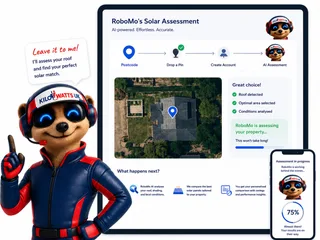
Use Robo
Mo™ to assess your property, compare available technologies and connect with trusted UK installers, suppliers and manufacturers.
Simply enter your postcode, drop a pin on your roof, create your free account and let Robo
Mo™ analyse your property to find the best solar panels for your home.

#### You don't have to think
Robo
Mo™'s AI analyses your roof and does all the hard work.

#### Accurate & tailored
AI-powered assessment based on your roof, location, and conditions.

#### Best options, maximum savings
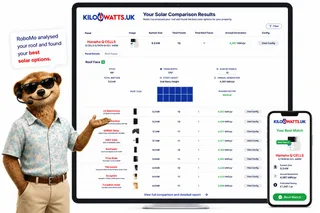
Compare top solar panels for the best performance and value.

#### Simple, fast & effortless
Provide a few details, sit back and watch your results unfold.
STEP 1
#### Choose Home, Business or Industrial
Enter your postcode to start your assessment.
- Home
- Business
- Industrial
It's fast, free and effortless.
STEP 2
#### Drop a pin on your roof
STEP 3

#### Create your free account
STEP 4

#### Sit back and watch Robo
Mo™ work
Robo
Mo™ analyses your roof and builds your personalised solar comparison.
 ## Flower Turbines
Design your wind energy system.
Instantly forecast generation.
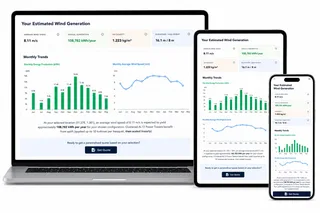
Choose a location, configure your Flower Turbines and instantly see estimated annual generation using location-specific wind data. No account required.

#### Real location data
Generation forecasts based on the location you select.

#### Build your own layout
Configure Flower Turbines to suit your available space.

#### Instant generation forecasts
See estimated annual generation and energy production instantly.

#### No commitment required
Explore different configurations before deciding whether to request a quotation.

STEP 1
#### Enter your postcode
Start designing your wind energy system in seconds.
No account required. Start designing today.
STEP 2

#### Choose a location
STEP 3

#### Build your layout
STEP 4

#### Instant generation forecasts
Compare different turbine layouts and see annual generation forecasts instantly.
STEP 5

#### No commitment required
Explore different configurations before deciding whether to request a quotation.
Are you an installer, distributor or renewable energy business?
Kilowatts UK is actively expanding the Flower Turbines partner network across the United Kingdom. Contact us to discuss installation, reseller and project partnership opportunities.
[Become A Flower Turbines Partner](mailto:dcoleman@flowerturbines.com?subject=Flower%20Turbines%20Partnership%20Enquiry)
## Related articles
[ 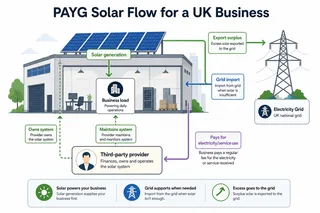 ### What PAYG Solar Means for UK Businesses
Discover how pay-as-you-go solar can benefit UK businesses, including reduced upfront costs and flexible financing options. Learn about the different models an…
](/resources/what-payg-solar-means-for-uk-businesses/ "What PAYG Solar Means for UK Businesses")
[ 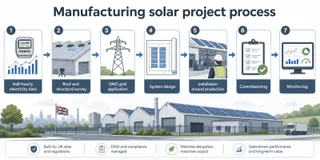 ### Unlock Commercial Solar for Manufacturing in the UK
Discover how commercial solar can benefit your manufacturing business in the UK. Learn about suitable sites, costs, generation, and what affects the price of a…
](/resources/unlock-commercial-solar-for-manufacturing-in-the-uk/ "Unlock Commercial Solar for Manufacturing in the UK")
[ 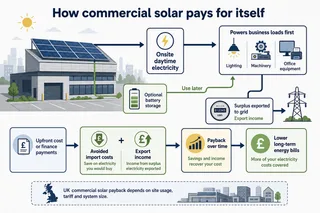 ### Can Solar Pay for Itself in Your Commercial Property?
Discover how solar power can benefit your business and learn about the factors that affect payback. Find out why self-consumption matters more than export.
](/resources/can-solar-pay-for-itself-in-your-commercial-property/ "Can Solar Pay for Itself in Your Commercial Property?")
[ 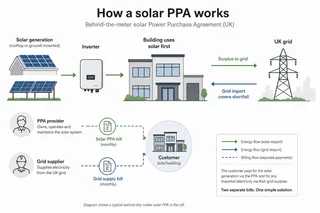 ### How does a solar PPA work in the UK? | Commercial Solar Finance
A solar power purchase agreement (PPA) helps UK businesses and organisations reduce their reliance on imported grid electricity. Learn how it works, its benefi…
](/resources/how-does-a-solar-ppa-work-in-the-uk-commercial-solar-finance/ "How does a solar PPA work in the UK? | Commercial Solar Finance")
FAQ
## Need Help? Robo
Mo's Got Answers
Do commercial solar panels need planning permission in the UK? +Commercial solar panels do not always need full planning permission in the UK. Many standard rooftop systems on ordinary commercial buildings can be installed under permitted development rights, provided they meet the relevant limits and conditions. However, planning permission is more likely to be needed for listed buildings, conservation areas, prominent or sensitive sites, ground-mounted arrays, solar farms and systems that exceed permitted development rules. The correct answer depends on the UK nation, the building, the site designations, visibility, system size, mounting method and any previous planning restrictions affecting the property.
Is commercial rooftop solar permitted development? +Commercial rooftop solar is often permitted development, especially on standard commercial roofs where panels sit neatly within the roof profile and do not have a significant visual impact. In England, many non-domestic rooftop solar installations fall under permitted development rights, and the previous national 1 MW cap for many rooftop systems has been removed. Conditions still apply, including rules about appearance, height, projection, siting and impacts on amenity. Scotland, Wales and Northern Ireland have their own rules, so the position should always be checked for the specific site.
When is planning permission likely to be needed for commercial solar panels? +Planning permission is commonly needed where the proposal falls outside permitted development limits or affects a sensitive location. This includes many ground-mounted systems, solar farms, listed buildings, sites within the curtilage of listed buildings, scheduled monuments, conservation areas where panels are visible, National Parks, National Landscapes, World Heritage Sites and sites affected by Article 4 directions or restrictive planning conditions. It may also be required where the panels create a significant visual change, potential glint and glare issue, or form part of a wider redevelopment.
Do solar panels on listed commercial buildings need planning permission? +Solar panels on listed commercial buildings usually need special care and may require planning permission and listed building consent. Even if panels are not fixed directly to the listed building, an installation within its curtilage or setting can still need assessment. The key issue is whether the panels would harm the building’s special architectural or historic interest, its setting, or nearby heritage assets. A lower-profile design, rear roof slope, less visible location or smaller array may improve the chance of consent.
Can commercial solar panels be installed in a conservation area? +Commercial solar panels can sometimes be installed in a conservation area, but visibility and design are very important. Panels on rear roof slopes, modern extensions or screened flat roofs may be easier to justify than panels on prominent principal elevations facing a street. The local planning authority will consider whether the proposal preserves or enhances the character and appearance of the conservation area. Early planning advice is recommended where panels would be visible from public viewpoints.
Do ground-mounted commercial solar panels need planning permission? +Ground-mounted commercial solar panels are more likely to need planning permission than rooftop systems because they can affect land use, landscape character, ecology, drainage, heritage and neighbouring amenity. Very small arrays within a commercial site may sometimes fall within permitted development limits, but larger commercial arrays and standalone solar schemes usually require a planning application. The council may consider height, site area, boundary distances, fencing, screening, access, glint and glare, agricultural land quality and decommissioning.
Do solar farms need planning permission? +Solar farms almost always need planning permission. Local planning authorities typically assess landscape and visual impact, agricultural land classification, biodiversity, drainage, construction access, archaeology, glint and glare, grid connection, community effects and decommissioning. In England, solar generating stations above 50 MW are generally treated as Nationally Significant Infrastructure Projects. In Scotland, electricity generation projects above 50 MW usually require Section 36 consent from Scottish Ministers. Wales and Northern Ireland have their own consenting routes for larger energy projects.
Is planning permission the same as DNO approval? +Planning permission is not the same as Distribution Network Operator approval. Planning deals with land use, appearance and local impacts, while DNO approval deals with connecting generation to the electricity network. Most commercial solar systems need DNO involvement, commonly under G99, while very small systems may fall under G98. If export capacity is limited, G100 export limitation may be considered. A project can be acceptable in planning terms but still need redesign if the grid connection is constrained.
Do building regulations apply if commercial solar is permitted development? +Building regulations can still apply even when planning permission is not required. Commercial solar installations need to be safe structurally, electrically and in relation to fire risk. The roof must be able to support the panels, mounting system, ballast and wind loads, and the installation should maintain safe access, fire routes, smoke vents, rooflights and maintenance zones. Electrical design, isolation, cable management and commissioning records should also be properly documented.
Should insurers be told before installing commercial solar panels? +Yes, insurers should be informed before commercial solar panels are installed. Insurers may have requirements covering installer competence, fire risk assessments, isolation switches, monitoring, cable routes, roof construction, maintenance access and combustible materials. Notifying the insurer early helps avoid problems with cover and can prevent costly redesign if the insurer raises concerns after the layout has already been agreed.
What is a lawful development certificate for commercial solar? +A lawful development certificate is formal evidence from the local planning authority that a proposed or existing installation is lawful. It is not the same as planning permission, and it is often optional, but it can be useful where a business, landlord, funder, buyer, insurer or board wants a clear planning record. Businesses often consider one where the project appears to be permitted development but future due diligence, refinancing, lease negotiations or property sale could require written confirmation.
What documents are needed for a commercial solar planning application? +The documents depend on the site and project type. A simple rooftop application may need a location plan, site plan, existing and proposed roof plans, elevations, panel specifications, mounting details, inverter details, photographs and a short planning statement. Heritage sites may need a heritage statement. Ground-mounted schemes often require more evidence, such as ecology surveys, landscape and visual assessment, glint and glare assessment, flood risk information, drainage strategy, archaeology review, construction traffic details, agricultural land assessment, biodiversity information and a decommissioning plan.
How long does commercial solar planning permission take? +A straightforward lawful development certificate or minor planning application often has an 8-week target, although actual times depend on the local planning authority and the quality of the submitted information. Major applications commonly have a 13-week target, and applications requiring Environmental Impact Assessment can have a 16-week target. Solar farms and complex ground-mounted schemes can take several months to more than a year, especially where landscape, ecology, grid, transport or community issues are significant.
What roof factors affect commercial solar planning and feasibility? +Roof size alone does not determine whether a commercial solar project is suitable. Rooflights, smoke vents, plant, parapets, drainage routes, fragile areas, access walkways, shading, fire requirements and structural loading can all reduce the usable area. Flat roofs may need setbacks from edges, careful ballast design and visibility checks. Older roofs may need repair or replacement before installation. A good feasibility review should consider planning, structure, roof condition, maintenance access, electrical demand and grid connection together.
What are the most common commercial solar planning mistakes? +Common mistakes include assuming all rooftop solar is automatically permitted development, checking planning only after the design is finalised, ignoring heritage or conservation constraints, maximising panel count without allowing for safe access, and leaving DNO approval until late in the project. Other issues include failing to check historic planning conditions, Article 4 directions, roof warranties, insurer requirements and whether the roof is near the end of its useful life. Early screening can prevent redesign, delay and avoidable cost.