# Do EV chargers increase house value in the UK?

[ ](https://www.linkedin.com/in/david-martyn-coleman/ "Linked
In profile for David Coleman")[David Coleman](/authors/david-coleman/ "Author profile for David Coleman")Founder & Renewable Energy Author, kilowatts.uk
# Do EV chargers increase house value in the UK?
**Published:** 2026-06-27 19:48:00
**Updated:** 2026-06-29 01:16:05
Discover how EV chargers can impact your UK home's saleability and value. Our expert guide explores the factors that matter most to buyers.
[ Preferred on Google](https://www.google.com/preferences/source?q=https://kilowatts.uk)
## When an EV charger is most likely to add buyer appeal
The strongest case is a property where the charger solves a real problem for the next owner. A buyer with an EV will often prefer a home where charging is already safe, certified, and located next to a usable parking space.
- An EV charger is most likely to strengthen a listing when the home has:
- Private driveway: The charger has clear practical use and the buyer can usually charge without relying on public infrastructure.
- Dedicated off-street parking: A charger next to an allocated bay is more useful than one dependent on uncertain street parking.
- Neat certified installation: Tidy cable routes, proper \[electrical documentation\](https://kilowatts.uk/services/residential/general-electrical-work/residential-electrical-inspections/), and a working smart charger give buyers more confidence.
- EV-friendly location: Commuter towns, areas near clean air zones, and places with poor public charging can make home charging more desirable.
- Solar-ready home: A property with solar panels, or space for them, can make an EV charger part of a wider home energy setup.
The appeal is also stronger when the charger is modern, weather-rated, compatible with Type 2 charging, and easy to use. Most UK home chargers are 7k
W single-phase units, which is suitable for many homes and can usually charge an EV overnight depending on the car and battery size. A 22k
W charger sounds better, but it is not automatically the right choice. Most UK houses do not have a three-phase electricity supply, and many EVs cannot accept 22k
W AC charging anyway. In many residential settings, a well-specified 7k
W charger is the more realistic and useful option.
## When an EV charger may add little or no value
An EV charger is much less compelling if the property does not have a reliable place to park. A wall-mounted charger on a terraced house may look useful, but if the owner cannot regularly park outside, its practical value is limited.
- It may add little buyer value where:
- There is no off-street parking.
- Parking is on-street and uncontrolled.
- A cable would need to cross a public pavement.
- The charger is old or not working.
- The installation looks untidy.
- Documentation is missing.
- Local buyers are unlikely to own an EV.
- The charger is positioned where it cannot easily reach a parked car.
- Leasehold or shared-parking permissions are unclear.
Flats and leasehold homes can be more complicated. A charger for an allocated bay can be a strong feature if permissions and billing arrangements are clear. A charger in a shared car park with uncertain rights is less valuable because buyers may worry about access, ownership, service charges, and future disputes. For homeowners planning to sell soon, installing a charger purely to increase the asking price can be risky. If the buyer does not need it, they may not assign much value to it. If the installation requires expensive groundworks, consumer unit upgrades, or permissions, the resale argument becomes weaker.
## What buyers and surveyors will look for
A buyer who cares about EV charging will usually look beyond the existence of the box on the wall. They will want to know whether it works, whether it is safe, and whether it suits their vehicle and parking arrangement.
- \### Useful documents to keep
- Useful documents to keep include:
- Electrical Installation Certificate.
- Building Regulations compliance paperwork where applicable.
- Charger manual and warranty details.
- Installer invoice.
- DNO notification or approval record if available.
- App transfer instructions.
- Freeholder or management company consent if relevant.
- Details of any charger ownership, warranty, or service agreement.
A missing certificate does not automatically mean the installation is unsafe, but it can create questions during conveyancing. A non-working charger can become a negotiation point rather than a selling feature. It is also worth checking whether the charger is tied to an old app account, a lease, or a specific energy scheme. Buyers may ask whether ownership transfers with the property and whether the warranty can be transferred. Clear answers help protect the feature’s value.
## Installation factors that affect value and cost
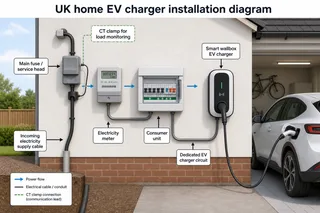
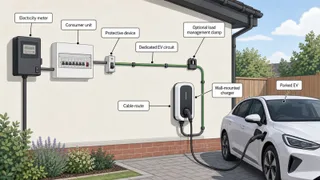
The easiest EV charger installations are usually close to the meter, consumer unit, or an accessible cable route. The more complicated the route, the more likely the job is to cost more and look intrusive.
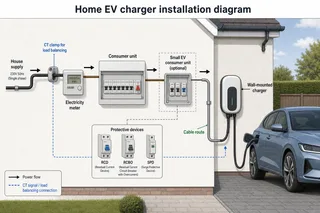
Important practical factors include the main fuse rating, total household electrical demand, charger location, earthing arrangement, Wi-Fi signal, and whether load management is needed. A 7k
W charger can draw a significant load, so the installer may need to consider electric showers, heat pumps, induction hobs, batteries, and other high-demand equipment.
- \### Practical installation checks
- Key installation factors include:
- Cable route: Shorter and simpler routes are usually cheaper and neater.
- Electrical capacity: Older supplies may need checks, load balancing, or DNO involvement.
- Parking position: The charger should reach the car without creating trip hazards.
- Connectivity: Smart chargers often need reliable Wi-Fi or mobile signal.
- Earthing and protection: The installer must specify safe protection for the property and charger type.
- Future ownership: The charger should be easy for a future buyer to operate, maintain, and transfer into their own app account.
Installers usually notify the Distribution Network Operator, and some jobs need approval before connection. New domestic chargepoints sold in Great Britain must also meet smart charging requirements, including the ability to schedule charging. Planning permission is not usually required for a standard wall-mounted house charger, but listed buildings, conservation areas, flats, and shared parking can be different.
## How solar panels change the picture
Solar panels can make an EV charger more attractive because they link transport energy with home energy generation. This is especially relevant for larger homes, such as a four-bedroom house, where electricity use may already be higher and the household may have more than one car.
A four-bedroom UK home may have enough roof space for a larger solar array than a smaller property, but bedroom count is not the deciding factor. Roof area, orientation, shading, location, and electricity use matter more. If an EV is being charged at home, annual electricity demand can rise significantly, so a solar system sized only for appliances may not cover much car charging.
Solar charging is also not as simple as “free charging”. Solar output changes with weather and season, and the car must be plugged in when generation is available unless [battery storage](https://kilowatts.uk/services/residential/renewable-energy/residential-solar-battery-storage/ "residential solar battery storage") or smart charging settings help shift the energy. Even so, the combination of solar panels, battery storage, and a smart EV charger can be more compelling to energy-conscious buyers than an EV charger alone.
## How to present an EV charger when selling
If you are selling a home with an EV charger, be specific rather than vague. “EV-ready” can mean very different things, from a fully working charger to empty ducting or only a possible future cable route.
Property details should ideally mention whether there is off-street parking, whether the charger is working, whether it is smart, and whether the paperwork is available. If you know the charger rating, include it accurately. Do not advertise a 22k
W capability unless the property supply and charger genuinely support it.
A tidy installation matters. Buyers notice exposed cable runs, awkward charger positions, damaged sockets, and chargers placed where a parked car cannot easily connect. Small practical issues can reduce confidence even if the charger itself is technically sound.
- \### What to mention in the property listing
- When relevant, a listing can mention:
- Private driveway or allocated parking.
- Working smart EV charger.
- Approximate charger rating, such as 7k
W, if known.
- Type 2 compatibility, where applicable.
- Availability of installation paperwork.
- Whether the charger is positioned for convenient daily use.
- Any related home-energy features, such as solar panels or battery storage.
The aim is to make the feature clear without overstating it. A well-presented charger can support buyer confidence; exaggerated claims can create unnecessary questions later.
## Should you install one before selling?
If you already own an EV, have a suitable driveway, and plan to use the charger before selling, installation can make sense. You get the everyday benefit first, and any resale appeal is a bonus.
If you do not own an EV and are selling soon, the decision is less clear. A charger may help your listing stand out, but it may not repay the full installation cost. In that situation, it is often better to ask a local estate agent whether EV charging is a known buyer preference in your area before committing.
The best candidates for a pre-sale installation are homes with private parking, a simple electrical route, strong local car ownership, and likely EV demand. The weakest candidates are homes with no dedicated parking, complex leasehold permissions, expensive installation requirements, or uncertain buyer demand. If you are weighing up EV charging alongside solar, it can help to [compare home solar panel options](/services/residential/renewable-energy/residential-solar-panel-installation/compare/) or [book a free home energy survey](https://kilowatts.uk/booking/?kwrf=8SA53&kwpid=6&kwlid=9) before spending money on upgrades.
## Bottom line
EV chargers can increase buyer appeal in the UK, especially for homes with off-street parking, neat installation, and likely EV-owning buyers. They are less reliable as a direct house value booster because valuers and buyers do not all treat them the same way.
For most homeowners, the sensible view is that an EV charger is a practical convenience feature. It may improve saleability, reduce buyer friction, and support a wider low-energy home setup, particularly alongside solar panels. It should not be installed purely on the assumption that it will automatically raise the sale price.
If you want to know whether an EV charger, solar panels, or battery storage would make practical and financial sense for your home, [book a free home energy survey](https://kilowatts.uk/booking/?kwrf=8SA53&kwpid=6&kwlid=9) with Kilowatts UK.
### Take the next step
Use our tools to compare options, understand trade-offs, and make an informed decision.
Tags: [Home battery](/tags/home-battery/ "Home battery")[Solar storage](/tags/solar-storage/ "Solar storage")[Renewable energy uk](/tags/renewable-energy-uk/ "Renewable energy uk")[Solar panels uk](/tags/solar-panels-uk/ "Solar panels uk")[Battery storage](/tags/battery-storage/ "Battery storage")[Uk solar grants](/tags/uk-solar-grants/ "Uk solar grants")[Uk ev chargers](/tags/uk-ev-chargers/ "Uk ev chargers")[Home charging solutions](/tags/home-charging-solutions/ "Home charging solutions")[Domestic electrical installations](/tags/domestic-electrical-installations/ "Domestic electrical installations")[Panel efficiency](/tags/panel-efficiency/ "Panel efficiency")
[ Preferred on Google](https://www.google.com/preferences/source?q=https://kilowatts.uk)
## Plan, Compare & Buy Renewable Energy Solutions
AI does the thinking.
You get the perfect solar match.
Use Robo
Mo™ to assess your property, compare available technologies and connect with trusted UK installers, suppliers and manufacturers.
Simply enter your postcode, drop a pin on your roof, create your free account and let Robo
Mo™ analyse your property to find the best solar panels for your home.

#### You don't have to think
Robo
Mo™'s AI analyses your roof and does all the hard work.

#### Accurate & tailored
AI-powered assessment based on your roof, location, and conditions.

#### Best options, maximum savings
Compare top solar panels for the best performance and value.

#### Simple, fast & effortless
Provide a few details, sit back and watch your results unfold.
STEP 1
#### Choose Home, Business or Industrial
Enter your postcode to start your assessment.
- Home
- Business
- Industrial
It's fast, free and effortless.
STEP 2

#### Drop a pin on your roof
STEP 3

#### Create your free account
STEP 4

#### Sit back and watch Robo
Mo™ work
Robo
Mo™ analyses your roof and builds your personalised solar comparison.
 ## Flower Turbines
Design your wind energy system.
Instantly forecast generation.
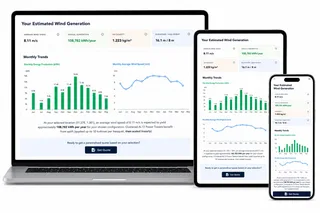
Choose a location, configure your Flower Turbines and instantly see estimated annual generation using location-specific wind data. No account required.

#### Real location data
Generation forecasts based on the location you select.

#### Build your own layout
Configure Flower Turbines to suit your available space.

#### Instant generation forecasts
See estimated annual generation and energy production instantly.

#### No commitment required
Explore different configurations before deciding whether to request a quotation.

STEP 1
#### Enter your postcode
Start designing your wind energy system in seconds.
No account required. Start designing today.
STEP 2

#### Choose a location
STEP 3

#### Build your layout
STEP 4

#### Instant generation forecasts
Compare different turbine layouts and see annual generation forecasts instantly.
STEP 5

#### No commitment required
Explore different configurations before deciding whether to request a quotation.
Are you an installer, distributor or renewable energy business?
Kilowatts UK is actively expanding the Flower Turbines partner network across the United Kingdom. Contact us to discuss installation, reseller and project partnership opportunities.
[Become A Flower Turbines Partner](mailto:dcoleman@flowerturbines.com?subject=Flower%20Turbines%20Partnership%20Enquiry)
## Related articles
[  ### Choosing the Best Home EV Charger for Your UK House
Discover how to select the right home EV charger for your UK house, considering factors like tariff integration, solar compatibility, and installation costs. G…
](/resources/choosing-the-best-home-ev-charger-for-your-uk-house/ "Choosing the Best Home EV Charger for Your UK House")
[  ### EV Charger Installation Cost in the UK: A Comprehensive Guide
Discover how much it costs to install an EV charger in your home in the UK. Learn about factors affecting the price, including cable routes, consumer unit upgr…
](/resources/ev-charger-installation-cost-in-the-uk-a-comprehensive-guide/ "EV Charger Installation Cost in the UK: A Comprehensive Guide")
[  ### Can I have a wind turbine in my garden? UK rules, suitability & alternatives
Discover whether you can install a wind turbine in your UK garden and what factors to consider. Learn about planning permission, site conditions, costs, and mo…
](/resources/can-i-have-a-wind-turbine-in-my-garden-uk-rules-suitability-alternatives/ "Can I have a wind turbine in my garden? UK rules, suitability & alternatives")
[  ### Install an EV Charger at Home: What You Need to Know
Discover how to install an electric vehicle charger at home in the UK. Learn about the key checks, costs, and considerations for a safe and efficient installat…
](/resources/install-an-ev-charger-at-home-what-you-need-to-know/ "Install an EV Charger at Home: What You Need to Know")
FAQ
## Need Help? Robo
Mo's Got Answers
Do EV chargers increase house value in the UK? +A home EV charger can improve a property’s appeal in the UK, especially for buyers who already own or plan to buy an electric car. However, it does not guarantee a higher formal valuation or a fixed increase in sale price. In most cases, the benefit is more about saleability, convenience, and making the home feel future-ready. The impact depends on whether the property has reliable off-street parking, local EV demand, installation quality, charger age, paperwork, and whether buyers in that area see home charging as useful.
Is there an official average value added by an EV charger? +There is no official UK average for how much value an EV charger adds to a home. Sold house price data does not normally separate EV chargers as an individual feature, so claims of a fixed percentage or guaranteed cash uplift should be treated cautiously. Estate agents may describe a charger as a useful modern feature, but a mortgage valuation may not assign it a separate value. Location, property size, condition, layout, parking, and comparable sales remain much bigger valuation factors.
When is an EV charger most likely to help sell a home? +An EV charger is most likely to help sell a home when the property has private off-street parking, such as a driveway, garage, or allocated bay close to the house. It is also more attractive in commuter areas, suburban locations, places with high car ownership, areas near clean air zones, and locations where public charging is limited. A neat, working, certified installation with clear paperwork is much more persuasive than a poorly positioned charger with missing documents or uncertain ownership.
Can an EV charger add little or no value? +Yes. An EV charger may add little or no value if the property relies on street parking, has unallocated parking, or requires a cable to cross a pavement or shared access route. It may also be less appealing if the charger is old, not working, visually untidy, badly located, unsupported by documents, or still linked to the previous owner’s app account. In some cases, a poor installation can become a concern for buyers because they may feel it needs checking, moving, or replacing.
What documents should I keep for an EV charger when selling a house? +You should keep the Electrical Installation Certificate, Building Regulations compliance documentation where applicable, charger model details, installation date, installer details, invoice, warranty information, and any DNO approval or notification records. If the property is leasehold or has shared parking, keep any freeholder, managing agent, or residents’ management company consent. It is also useful to keep the charger manual and instructions for resetting or transferring the charger app account. Good paperwork reassures buyers and can reduce delays or questions during conveyancing.
Is a 7 k
W charger enough for most UK homes? +Yes. A 7 k
W smart charger is the normal practical choice for most UK homes because most domestic properties have a single-phase electricity supply. It can typically add around 25 to 30 miles of range per hour, depending on the car and conditions, and is usually suitable for overnight charging. Higher-rated 11 k
W or 22 k
W chargers normally require three-phase electricity and are not automatically more useful or valuable, especially if the vehicle cannot accept higher AC charging speeds.
Does installation quality matter more than the charger brand? +Yes. Buyers are likely to care more about whether the charger is safe, compliant, well positioned, easy to use, and properly documented than about the brand alone. A good installation should consider the main fuse, consumer unit, earthing, bonding, cable route, parking position, household load capacity, smart connectivity, and whether load management is needed. A neat certified installation can support buyer confidence, while missing certificates, awkward cable routes, or untidy workmanship can reduce the charger’s appeal.
Should I install an EV charger just before selling my house? +You should be cautious about installing an EV charger solely to increase the sale price. If the property has a driveway, a simple installation route, and local buyers are likely to value home charging, it may help the home stand out. However, you may not recover the full installation cost, especially if the work is complex or the buyer does not own an EV. If you will use the charger yourself before selling, the decision is usually easier to justify because you benefit from the convenience as well as any resale appeal.
Do flats and leasehold homes benefit from EV chargers? +Flats and leasehold homes can benefit from EV chargers, but the value depends heavily on consent, parking rights, cable routes, metering, billing arrangements, and management responsibilities. A flat with an allocated parking bay and an approved, documented charger is more attractive than one with communal or unallocated parking. Leaseholders may need permission from the freeholder, managing agent, residents’ management company, or landlord before installing a charger, and buyers will usually want evidence that the installation is authorised.
Do solar panels make an EV charger more valuable? +Solar panels can make an EV charger more appealing as part of a wider home energy setup, but they are not required for EV charging. A standard smart charger can still charge from the grid and schedule charging during cheaper off-peak periods if the homeowner has a suitable tariff. Solar-compatible chargers may divert surplus solar electricity into the car, but the benefit depends on solar system size, weather, season, electricity use, and whether the car is parked at home during daylight hours.
Are EV charger grants still available in the UK? +The main EV charger grant for owner-occupiers in typical houses has ended, but some renters, flat owners, landlords, and certain eligible properties may still qualify for OZEV support. The EV chargepoint grant can usually contribute up to £350 or 75% of the installation cost, whichever is lower, subject to eligibility rules. Grant availability, property criteria, approved installer requirements, and charger requirements can change, so it is important to check the latest rules before arranging installation.
Do I need planning permission for a home EV charger? +Planning permission is not usually needed for a small domestic wall-mounted EV charger at a typical house, but there are exceptions. Listed buildings, conservation areas, flats, leasehold homes, shared parking areas, and installations affecting public highways may need extra consent. If the property does not have private off-street parking, charging can be more complicated because trailing a cable across a pavement may create safety and legal issues and may be subject to local authority rules.
What does EV-ready mean when selling a property? +EV-ready can mean different things, so it is better to be specific. It might mean a fully installed working charger, a dedicated electrical supply, ducting for a future cable, or simply a suitable parking space where a charger could be installed later. When selling, avoid vague claims and state clearly whether there is a working charger, what rating it is, whether it is smart-enabled, whether it serves a private parking space, and whether the installation paperwork is available.
Will a surveyor check the EV charger? +A standard property survey may note the presence and condition of an EV charger, but it is unlikely to provide a detailed electrical inspection unless specifically instructed. Buyers may ask for installation certificates or request an electrician’s check if the charger looks old, damaged, poorly installed, or undocumented. A working charger with clear paperwork is less likely to raise concerns than one with missing certificates, visible damage, or unclear ownership.
Does an EV charger need DNO approval? +Many domestic EV charger installations require the installer to notify the Distribution Network Operator, and some installations need approval before connection depending on the charger, supply capacity, main fuse, and existing electrical demand. This is normally handled by the installer rather than the homeowner. Keeping DNO notification or approval records is useful when selling because it helps show that the installation was handled properly.
Should I remove an EV charger before selling? +In most cases, it is better to leave a properly installed, working EV charger in place because it may appeal to buyers and avoids making good the wall, cable route, or electrics. If the charger is leased, faulty, unsafe, or tied to a finance or service agreement, you should clarify ownership before marketing the property. If you plan to take the charger with you, make this clear to the estate agent and buyer early, and arrange safe removal by a qualified electrician.