# Install an EV Charger at Home: What You Need to Know

[ ](https://www.linkedin.com/in/david-martyn-coleman/ "Linked
In profile for David Coleman")[David Coleman](/authors/david-coleman/ "Author profile for David Coleman")Founder & Renewable Energy Author, kilowatts.uk
# Install an EV Charger at Home: What You Need to Know
**Published:** 2026-06-28 23:20:56
**Updated:** 2026-06-29 01:15:52
Discover how to install an electric vehicle charger at home in the UK. Learn about the key checks, costs, and considerations for a safe and efficient installat…
[ Preferred on Google](https://www.google.com/preferences/source?q=https://kilowatts.uk)
## Can I install an EV charger at home?
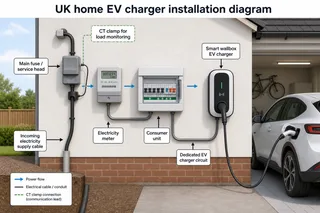
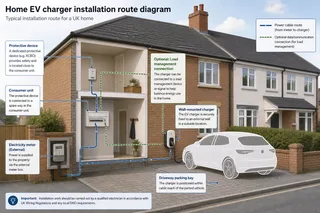
Yes, you can usually [install an EV charger at home](https://kilowatts.uk/services/residential/electric-vehicle-infrastructure/residential-ev-charger-installation/ "residential ev charger installation") in the UK if you have safe off-street parking, permission to alter the property, and an electrical supply that can support the extra load. The key checks are your parking arrangement, cable route, consumer unit condition, main fuse capacity, earthing system, Distribution Network Operator requirements, and whether you need landlord, freeholder, managing agent, or planning consent.
For most UK houses with a driveway or garage, a dedicated 7k
W home EV charger is the normal choice. It is faster, safer, and more practical than relying on a 3-pin domestic socket for regular charging. A 3-pin plug should normally be treated as an occasional backup, not the main weekly charging method for an electric vehicle.
A standard home EV charger installation is often straightforward when the charger can be mounted close to the parking space and the cable route is short. It becomes more involved when the charger is far from the meter, the consumer unit is old or full, the garage supply is undersized, or the home already has high-load equipment such as solar panels, battery storage, a heat pump, electric shower, hot tub, or more than one EV.
## Short summary for UK homeowners.
A home EV charger is most suitable if you regularly park on a private driveway, in a garage, or in an allocated bay close to your home. Most domestic EV chargers in the UK are 7k
W on a single-phase electricity supply. A 22k
W EV charger usually needs a three-phase supply, which most homes do not have.
Typical home EV charger installation costs are often around £800 to £1,500 including the charger and standard electrical work. More complex installations can cost £1,500 to £2,500 or more, especially where there are long cable runs, groundworks, consumer unit upgrades, detached garages, DNO delays, or parking areas away from the house.
Before work starts, a competent installer should check the meter position, main fuse, earthing, consumer unit, cable route, parking location, existing electrical demand, and charger connectivity. You should receive the correct electrical certification and Building Regulations documentation where applicable. In simple terms, you are most likely to be able to install a home EV charger if:
- You have private off-street parking.
- The charging cable can remain on your property.
- Your electrical supply can support the charger safely.
- You have any required permissions.
- The installation can comply with current UK electrical standards.
## When a home EV charger is suitable.
A home charger works best when the car is parked at home for long periods, especially overnight. This allows you to use scheduled charging, smart charging settings, and off-peak electricity tariffs where available. For many EV drivers, home charging means the car starts each day with enough range without relying on public chargers for normal daily mileage.
- A home EV charger is usually suitable where:
- You have a private driveway, garage, or allocated parking space.
- The charging cable can reach the vehicle without crossing a public pavement.
- The charger can be mounted in a practical and safe position.
- The electrical supply can support the charger safely.
- You have permission if you rent, lease, or share the property.
- You expect to keep using the parking space for the foreseeable future.
The charger location matters more than many homeowners expect. It should be convenient for the vehicle’s charge port, but it also needs a safe cable route, suitable weather exposure, protection from vehicle impact, and access for installation, testing, and future maintenance. A good installer should also consider how you park day to day. A charger that looks well placed on a wall may still be awkward if the cable has to stretch around the car, cross a doorway, sit under a gate, or create a trip hazard.
## When it may not be straightforward.
Home EV charger installation is harder if you do not have legal off-street parking. Running a private charging cable across a public pavement is usually not a suitable everyday solution and may breach local rules. Some councils are trialling cross-pavement channels, pavement gullies, or kerbside charging options, but availability depends on the local authority and should be checked before assuming it is allowed.
Flats, rented homes, leasehold houses, and shared parking areas can also add complexity. You may need landlord permission, freeholder approval, managing agent consent, or agreement for cabling through communal areas. Allocated parking is usually easier than unallocated parking because the installer can design the circuit around a known bay.
Listed buildings and conservation areas may need extra checks before external equipment is fitted. Many standard domestic EV charger installations do not need planning permission, but exceptions can apply where the building is protected, external changes are restricted, or the charger position affects the appearance of the property. Detached garages and parking bays away from the house can also make installation less simple. The installer may need to check whether the existing garage supply is suitable, whether armoured cable is required, whether trenching is needed, and whether voltage drop is acceptable over the cable run.
## What an installer checks before installation.
A proper EV charger survey is not just about finding a wall to mount the charger on. EV charging is a sustained electrical load, often running for several hours at a time. The installer needs to confirm that the whole installation can operate safely under real household conditions.
The installer will usually ask for photos of the consumer unit, electricity meter, main fuse, earthing arrangement, driveway or parking bay, and the likely cable route. They may also ask about your vehicle, electricity supplier, MPAN, existing solar PV, battery storage, heat pump, electric shower, hot tub, or plans for another EV.
- Key checks normally include:
- Main fuse and supply capacity: Many homes have a 60A, 80A, or 100A main fuse, and a 7k
W charger draws around 32A.
- Consumer unit condition: Older boards may need upgrading, or the charger may need a separate small EV consumer unit.
- Earthing arrangement: PME supplies need suitable protection against open PEN conductor faults.
- Cable route: Long runs, buried cables, detached garages, and external routes increase complexity.
- Existing electrical loads: Heat pumps, electric showers, cookers, batteries, hot tubs, and multiple EVs affect maximum demand.
- Load management: Some homes need dynamic load balancing so the charger reduces output when the house is using more electricity.
- Connectivity: Many smart chargers need reliable Wi-Fi, Ethernet, or mobile signal at the charger location.
- Physical protection: The charger and cable route may need protection from vehicle impact, sharp edges, gates, pets, or weather exposure.
A remote quote can be useful, but it can change after a site survey. Older homes, detached garages, long driveways, flats, and properties with solar or battery systems are more likely to need a closer assessment before a firm price is given.
## How much does it cost to install an EV charger at home?
Most UK home EV charger installations cost around £800 to £1,500 including equipment and a standard installation. The charger unit itself often accounts for around £500 to £1,200 of that amount. Complex installations can cost £1,500 to £2,500 or more.
The final cost is affected by the electrical work required, not just the charger model. A cheaper charger is not always the cheapest final installation if it needs extra protective equipment, has poor connectivity for the site, lacks the right tariff or solar features, or is unsuitable for your electrical supply.
- Common cost factors include:
- Cable length and route: A short route through an external wall is usually simpler than a long run across a garden or to a detached garage.
- Groundworks: Trenching, armoured cable, warning tape, ducting, and making good surfaces can add significant cost.
- Consumer unit work: An older, full, or non-compliant consumer unit may need alteration or a separate EV board.
- DNO requirements: Some homes need approval, fuse upgrades, or work on a looped supply before installation.
- Charger features: Solar integration, load balancing, tethered cables, app features, and connectivity options can affect equipment choice.
- Parking layout: Post-mounted chargers, remote parking bays, and shared areas are usually more expensive than simple wall-mounted installations.
- Connectivity improvements: Wi-Fi extenders, Ethernet routes, or alternative communication options may be needed for smart features to work reliably.
A simple home EV charger install can often be completed in one day. More complex work may take longer, especially if the Distribution Network Operator needs to approve the charger, inspect the supply, upgrade the main fuse, or unloop a shared service. When comparing quotes, check what “standard installation” includes. Some quotes include only a short cable run, basic fixings, and straightforward wall mounting. Extra work may be charged separately if the cable route is longer, the consumer unit needs changes, or the parking space is not directly next to the property.
## What charger size do I need?
For most UK homes, a 7k
W EV charger is the standard option because most domestic properties have a single-phase electricity supply. A 7k
W charger typically adds roughly 25 to 30 miles of range per hour, depending on the vehicle, efficiency, temperature, and charging conditions.
A 3.6k
W charger may be used where the home supply cannot safely support 7k
W, or where the vehicle has a smaller battery and does not need faster charging. Plug-in hybrids often charge at lower rates than full battery EVs, so a smaller charger can sometimes be enough.
A 22k
W charger usually needs a three-phase electricity supply and a vehicle that can accept 22k
W AC charging. Many UK homes do not have three-phase power, and many cars cannot use the full 22k
W on AC anyway. Installing a higher-rated charger does not guarantee faster charging if the vehicle’s onboard charger is the limiting factor. For most homeowners, the best charger size is the one that fits the property safely and meets normal driving needs. If the car is parked at home overnight, a 7k
W charger is usually enough to replace daily mileage comfortably, even if it does not charge a large battery from empty to full in a few hours.
## How long does home charging take?
Charging time depends on battery size, starting charge, target charge, charger output, the vehicle’s onboard charger, temperature, and any load balancing or tariff settings. Many EV owners do not charge from empty to full every day. They top up overnight to replace normal daily mileage.
- As a rough guide:
- A 40k
Wh battery may take around 6 to 8 hours from low to full on a 7k
W charger.
- A 60k
Wh battery may take around 8 to 10 hours.
- A 77k
Wh battery may take around 11 to 13 hours.
Real-world timings vary because the car controls part of the charging process and may reduce power in some conditions. Charging also slows as the battery approaches full, and many drivers set a daily charge limit rather than charging to 100% every time. Load balancing can also reduce output temporarily. This is not a fault. It helps prevent the home from exceeding its safe electrical demand when other appliances are running.
## Permissions, certification, and DNO notification.
EV charger installation is electrical work and must be carried out safely. In England and Wales, this type of work is usually notifiable under Part P of the Building Regulations, and a registered electrician can normally self-certify it. The work should comply with BS 7671, including the requirements for EV charging installations.
You should receive an Electrical Installation Certificate and Building Regulations compliance documentation where applicable. Keep these documents with the charger manual, warranty information, commissioning details, and any DNO correspondence. They may matter for insurance, future inspections, warranty claims, or when selling the property.
The installer must notify the Distribution Network Operator. Some installations can be notified after completion, while others need approval before work starts. Approval is more likely where there is a smaller main fuse, a looped supply, high existing demand, multiple high-load devices, or more than one EV charger. If you are renting, in a leasehold property, or using a shared parking area, permissions should be confirmed before installation. This may include written consent from the landlord, freeholder, managing agent, residents’ association, or parking space owner. Verbal permission is rarely enough for work that involves fixed electrical equipment or cabling through shared parts of a building.
- A trustworthy installer should be able to explain:
- Who is responsible for DNO notification or approval.
- What electrical certificate you will receive.
- Whether Building Regulations notification applies.
- Whether your consumer unit needs work.
- How open PEN protection and earthing requirements will be handled.
- What product warranty and workmanship warranty apply.
- How the charger will be commissioned and handed over.
## Smart charging, Wi-Fi, and tariffs.
New private EV chargers sold in Great Britain must meet smart charging rules. Smart chargers can delay, schedule, or manage charging to reduce peak grid demand, although users can usually override settings when needed.
Connectivity is a practical issue that is often missed. A charger on the front of a house may not receive reliable Wi-Fi from a router at the back. Driveways, garages, thick walls, foil-backed insulation, and metal meter cabinets can all reduce signal quality. Some chargers use Ethernet or mobile connectivity instead.
If you want to use a specialist EV tariff, check whether it needs a smart meter, a compatible charger, a compatible vehicle, or control through a specific app. Some tariffs control charging through the car rather than through the wall charger, so compatibility should be checked before buying equipment. Smart features can be useful, but they need to be set up correctly. Scheduled charging, app control, solar diversion, tariff integration, and load balancing all depend on the charger, vehicle, metering, communication signal, and installation design working together.
## Can I charge from solar panels?
Yes, solar panels can work with a home EV charger, but the setup needs to be designed properly. A solar-compatible EV charger can divert surplus solar electricity into the car, usually using monitoring clamps to measure import, export, and household demand.
Solar EV charging works best when the car is parked at home during daylight hours. UK solar output is much higher in summer than winter, and cloud cover can change generation quickly. A typical home solar PV system may not cover all EV charging year-round, especially if the car is away during the day. If you are weighing up panel options, you can [compare home solar panel options](/services/residential/renewable-energy/residential-solar-panel-installation/compare/) before committing to a charger setup.
Solar panels do not usually charge the car directly in isolation. In most homes, the grid, solar inverter, house loads, battery storage, and EV charger all interact. The EV charger still needs its own suitable circuit and protection, and an EV charger should not be incorrectly connected to a solar circuit. If you already have solar panels, the installer should check where the monitoring clamps can be fitted, how the charger will measure surplus export, and whether the consumer unit or meter area has enough space. If you are planning solar panels, battery storage, a heat pump, or a second EV, it is sensible to consider these together before fitting the charger. Space for future consumer unit changes, inverter equipment, monitoring clamps, and load management can be difficult to add neatly later.
## Choosing the right charger and location.
The best home EV charger is the one that suits your property, vehicle, daily routine, electrical supply, tariff plans, and future upgrades. The right choice is not always the most expensive unit, and it is not always the charger with the longest feature list.
Tethered chargers have a fixed cable attached and are usually more convenient for daily use. Untethered chargers can look tidier and may suit households with changing connector needs, although most modern UK EVs use Type 2 for AC home charging.
Charger location should be planned around how you actually park. Some cars have charge ports at the front, rear, nearside, or offside. Reversing into the space instead of driving in forwards can completely change whether the cable reaches comfortably. A good installation also avoids trip hazards, cable strain, blocked access, and damage from gates, bins, gardening, pets, or vehicles. Post-mounted chargers are possible where there is no suitable wall, but they usually add cost because of the mounting, cable route, and groundworks.
- Before choosing a charger, consider:
- Whether you want a tethered or untethered unit.
- Whether the charger works with your preferred EV tariff.
- Whether you need solar diversion now or in future.
- Whether Wi-Fi, Ethernet, or mobile connectivity is best for the location.
- Whether the unit has built-in open PEN protection or needs external protection.
- Whether the cable length suits the way you park.
- Whether the charger can support load balancing if required.
- Whether you may add a second EV, heat pump, solar PV, or battery storage later.
## Common mistakes to avoid.
Many poor EV charger installations start with assumptions rather than a proper survey. The charger may still work at first, but the homeowner can be left with awkward cable routing, weak Wi-Fi, missing paperwork, limited charging speed, or a charger that cannot run at the intended output.
- Common mistakes include:
- Assuming any outside wall is suitable.
- Buying a charger before checking tariff and solar compatibility.
- Ignoring Wi-Fi signal at the parking space.
- Expecting 22k
W charging on a normal single-phase home supply.
- Using an extension lead as a regular charging solution.
- Forgetting landlord, freeholder, or management company permission.
- Not planning for a second EV, solar panels, battery storage, or a future heat pump.
- Failing to check whether the cable will create a trip hazard.
- Choosing purely on the lowest quote without checking what is included.
- Not asking what certification and DNO notification will be provided.
The most important point is that EV charging is a sustained high-load use. It needs proper design, suitable protection, safe cable sizing, testing, and certification. DIY EV charger installation is not appropriate for most homeowners.
## How to decide your next step.
Start by confirming whether you have suitable off-street parking and whether the charging cable can stay on your private property. Then gather photos of your meter, consumer unit, main fuse area, parking space, and proposed cable route before asking for quotes.
Compare installers on the quality of their survey, not only on the headline price. A good installer should explain supply capacity, DNO notification, load balancing, earthing protection, cable routing, certification, and any limitations clearly. If the quote says “standard installation”, ask exactly what is included and what would count as extra work.
- Useful information to prepare before requesting a quote includes:
- Your vehicle make and model, or the EV you plan to buy.
- Whether you want tethered or untethered charging.
- Photos of your consumer unit, meter, and main fuse.
- Photos of the driveway, garage, or allocated bay.
- The distance from the meter or consumer unit to the charger position.
- Whether you rent, lease, or share the property.
- Whether you have solar panels, battery storage, a heat pump, or an electric shower.
- Whether you want to use a specific EV tariff.
- Whether you may add another EV or renewable technology later.
If you are also considering solar panels, battery storage, or a heat pump, mention this before the charger is specified. It can affect load assessment, consumer unit space, monitoring clamps, and future cable routes. For a joined-up view of your property, you can [book a free home energy survey](https://kilowatts.uk/booking/?kwrf=8SA53&kwpid=6&kwlid=9). A home EV charger is usually a sensible upgrade for a UK homeowner with a driveway or private parking, but it is not a one-size-fits-all purchase. The right installation depends on the property as much as the car.
### Take the next step
Use our tools to compare options, understand trade-offs, and make an informed decision.
Tags: [Renewable energy uk](/tags/renewable-energy-uk/ "Renewable energy uk")[Home ev charger](/tags/home-ev-charger/ "Home ev charger")[Solar storage uk](/tags/solar-storage-uk/ "Solar storage uk")[Electric vehicle charging](/tags/electric-vehicle-charging/ "Electric vehicle charging")[Uk solar panels](/tags/uk-solar-panels/ "Uk solar panels")[Ev charger installation](/tags/ev-charger-installation/ "Ev charger installation")[Residential ev chargers](/tags/residential-ev-chargers/ "Residential ev chargers")[Battery storage solutions](/tags/battery-storage-solutions/ "Battery storage solutions")[Uk government incentives](/tags/uk-government-incentives/ "Uk government incentives")[Sustainable energy options](/tags/sustainable-energy-options/ "Sustainable energy options")
[ Preferred on Google](https://www.google.com/preferences/source?q=https://kilowatts.uk)
## Plan, Compare & Buy Renewable Energy Solutions
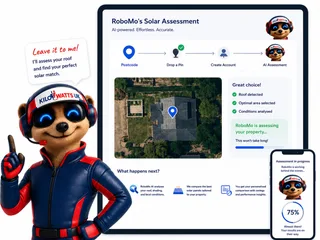
AI does the thinking.
You get the perfect solar match.
Use Robo
Mo™ to assess your property, compare available technologies and connect with trusted UK installers, suppliers and manufacturers.
Simply enter your postcode, drop a pin on your roof, create your free account and let Robo
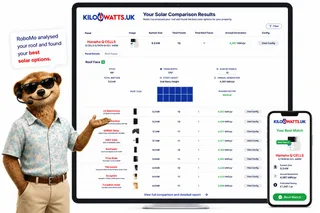
Mo™ analyse your property to find the best solar panels for your home.

#### You don't have to think
Robo
Mo™'s AI analyses your roof and does all the hard work.

#### Accurate & tailored
AI-powered assessment based on your roof, location, and conditions.

#### Best options, maximum savings
Compare top solar panels for the best performance and value.

#### Simple, fast & effortless
Provide a few details, sit back and watch your results unfold.
STEP 1
#### Choose Home, Business or Industrial
Enter your postcode to start your assessment.
- Home
- Business
- Industrial
It's fast, free and effortless.
STEP 2

#### Drop a pin on your roof
STEP 3

#### Create your free account
STEP 4

#### Sit back and watch Robo
Mo™ work
Robo
Mo™ analyses your roof and builds your personalised solar comparison.
 ## Flower Turbines
Design your wind energy system.
Instantly forecast generation.
Choose a location, configure your Flower Turbines and instantly see estimated annual generation using location-specific wind data. No account required.

#### Real location data
Generation forecasts based on the location you select.

#### Build your own layout
Configure Flower Turbines to suit your available space.

#### Instant generation forecasts
See estimated annual generation and energy production instantly.

#### No commitment required
Explore different configurations before deciding whether to request a quotation.


STEP 1
#### Enter your postcode
Start designing your wind energy system in seconds.
No account required. Start designing today.
STEP 2

#### Choose a location
STEP 3

#### Build your layout
STEP 4

#### Instant generation forecasts
Compare different turbine layouts and see annual generation forecasts instantly.
STEP 5

#### No commitment required
Explore different configurations before deciding whether to request a quotation.
Are you an installer, distributor or renewable energy business?
Kilowatts UK is actively expanding the Flower Turbines partner network across the United Kingdom. Contact us to discuss installation, reseller and project partnership opportunities.
[Become A Flower Turbines Partner](mailto:dcoleman@flowerturbines.com?subject=Flower%20Turbines%20Partnership%20Enquiry)
## Related articles
[ 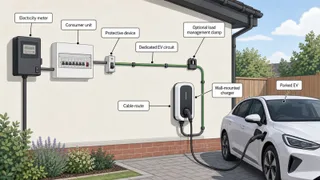 ### EV Charger Installation Cost in the UK: A Comprehensive Guide
Discover how much it costs to install an EV charger in your home in the UK. Learn about factors affecting the price, including cable routes, consumer unit upgr…
](/resources/ev-charger-installation-cost-in-the-uk-a-comprehensive-guide/ "EV Charger Installation Cost in the UK: A Comprehensive Guide")
[ 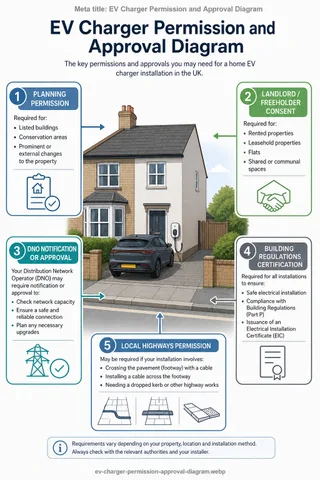 ### Do You Need Permission to Install an EV Charger at Home?
Learn about the different types of permission required for installing an electric vehicle charger in your home, including planning permission, landlord consent…
](/resources/do-you-need-permission-to-install-an-ev-charger-at-home/ "Do You Need Permission to Install an EV Charger at Home?")
[  ### Choosing the Best Home EV Charger for Your UK House
Discover how to select the right home EV charger for your UK house, considering factors like tariff integration, solar compatibility, and installation costs. G…
](/resources/choosing-the-best-home-ev-charger-for-your-uk-house/ "Choosing the Best Home EV Charger for Your UK House")
[  ### Do EV chargers increase house value in the UK?
Discover how EV chargers can impact your UK home's saleability and value. Our expert guide explores the factors that matter most to buyers.
](/resources/do-ev-chargers-increase-house-value-in-the-uk/ "Do EV chargers increase house value in the UK?")
FAQ
## Need Help? Robo
Mo's Got Answers
Can I install an EV charger at home in the UK? +Yes, you can usually install an EV charger at home if you have safe off-street parking, permission to make alterations, and an electrical supply that can support the additional load. The installer will need to check your parking position, cable route, consumer unit, main fuse, earthing arrangement, existing electrical demand, and any Distribution Network Operator requirements before confirming the installation.
Do I need off-street parking for a home EV charger? +In most cases, yes. A home EV charger is most suitable if you have a private driveway, garage, or allocated parking bay close to your property. Running a private charging cable across a public pavement is usually not suitable for regular use and may breach local rules. Some councils offer or trial pavement channels and kerbside charging options, but this depends on your local authority.
What size EV charger do most UK homes need? +Most UK homes use a 7k
W EV charger because they have a single-phase electricity supply. A 7k
W charger typically adds around 25 to 30 miles of range per hour, depending on the car and conditions. A 22k
W charger usually requires a three-phase supply and a vehicle that can accept 22k
W AC charging, so it is not suitable for many domestic properties.
How much does it cost to install a home EV charger? +A typical UK home EV charger installation often costs around £800 to £1,500 including the charger and standard installation work. More complex installations can cost £1,500 to £2,500 or more if they involve long cable runs, groundworks, consumer unit changes, detached garages, DNO delays, or remote parking areas. Always check what a quote includes, as “standard installation” can vary between installers.
What does an EV charger installer check before installation? +A competent installer will check the electricity meter, main fuse, consumer unit, earthing system, cable route, parking location, charger position, existing household loads, and any solar panels, battery storage, heat pumps, electric showers, hot tubs, or additional EVs. They may also assess whether load balancing is needed and whether the charger location has reliable Wi-Fi, Ethernet, or mobile connectivity for smart features.
Do I need permission to install an EV charger? +You may need permission if you rent, live in a leasehold property, have a shared parking area, or need to run cabling through communal areas. Permission may be required from a landlord, freeholder, managing agent, residents’ association, or parking space owner. Listed buildings, conservation areas, and properties with external alteration restrictions may need additional checks before installation.
Does a home EV charger need DNO approval? +The installer must notify the Distribution Network Operator, and some installations need approval before work starts. Pre-approval is more likely if the property has a smaller main fuse, a looped supply, high existing electrical demand, multiple high-load appliances, or more than one EV charger. A good installer should explain whether your installation can be notified after completion or needs approval first.
What certificates should I receive after an EV charger installation? +You should receive an Electrical Installation Certificate and, where applicable, Building Regulations compliance documentation. The installer should also provide charger commissioning information, warranty details, and any relevant DNO correspondence. Keep these documents safely, as they may be needed for insurance, warranty claims, future electrical work, or when selling the property.
How long does it take to charge an EV at home? +Charging time depends on the battery size, starting charge, target charge, charger output, vehicle onboard charger, temperature, and any smart charging or load balancing settings. As a rough guide, a 40k
Wh battery may take around 6 to 8 hours on a 7k
W charger, a 60k
Wh battery around 8 to 10 hours, and a 77k
Wh battery around 11 to 13 hours. Most drivers top up overnight rather than charging from empty to full every day.
Can I use a 3-pin plug instead of a home EV charger? +A 3-pin domestic socket should normally be treated as an occasional backup rather than the main way to charge an EV. Regular EV charging is a sustained high-load use, and a dedicated home charger is usually faster, safer, and more practical. If you need to use a 3-pin plug temporarily, it should be on a suitable socket and circuit, without an extension lead.
Can I charge my EV from solar panels? +Yes, solar panels can work with a home EV charger if the system is designed correctly. A solar-compatible charger can divert surplus solar generation into the car, usually using monitoring clamps to measure import, export, and household demand. Solar charging works best when the car is parked at home during daylight hours, but UK solar output varies by season and weather, so the grid may still be needed.
Do smart chargers need Wi-Fi? +Many smart EV chargers need reliable Wi-Fi, Ethernet, or mobile signal to use app control, scheduled charging, tariff integration, solar diversion, and software updates. Wi-Fi can be weak at driveways, garages, or external walls, especially where there are thick walls, foil-backed insulation, or metal meter cabinets. Connectivity should be checked before choosing the charger and final location.
Can I use an off-peak EV tariff with any charger? +Not always. Some EV tariffs require a smart meter, a compatible charger, a compatible vehicle, or control through a specific app. Some tariffs control charging through the car rather than the wall charger. If you want to use a particular tariff, check compatibility before buying a charger.
What is load balancing and do I need it? +Load balancing allows the charger to reduce its output when the rest of the home is using a lot of electricity. This helps prevent the property from exceeding its safe electrical demand, especially where there are appliances such as electric showers, heat pumps, hot tubs, battery storage, or multiple EVs. If your charger slows down temporarily because of load balancing, it is usually operating as intended.
Can I install an EV charger in a detached garage? +Yes, but it may be more complex than installing a charger on the house. The installer will need to check whether the existing garage supply is suitable, whether a new armoured cable is needed, whether trenching or ducting is required, and whether voltage drop is acceptable over the cable length. Detached garages often cost more to connect safely than a simple wall-mounted charger near the meter or consumer unit.
Is a tethered or untethered EV charger better? +A tethered charger has a fixed cable attached and is usually more convenient for daily charging. An untethered charger can look tidier and allows the cable to be changed more easily, which may suit some households. Most modern UK EVs use a Type 2 connector for AC home charging, but the best choice depends on your vehicle, parking layout, and preferences.
Where should a home EV charger be installed? +The charger should be installed where it is safe, convenient, and practical for the way you park. The cable should reach the vehicle charge port without strain, crossing doorways, creating trip hazards, or being damaged by gates, bins, pets, or vehicles. The location also needs a safe cable route, suitable weather exposure, physical protection where needed, and access for testing and maintenance.
Do I need a consumer unit upgrade for an EV charger? +Not always, but some homes need consumer unit alterations or a separate small EV consumer unit. This is more likely if the existing consumer unit is old, full, damaged, or unsuitable for the required protective devices. The installer should assess the consumer unit and explain any required work before installation.
Is DIY EV charger installation allowed? +DIY EV charger installation is not appropriate for most homeowners. EV charging is a sustained high-load electrical installation that needs proper design, cable sizing, protection, testing, certification, and DNO notification. It should be installed by a competent electrician with experience in EV charging requirements.
What information should I prepare before requesting a quote? +Prepare your vehicle make and model, preferred charger type, photos of your consumer unit, meter and main fuse, photos of your parking area, the likely cable route, and the approximate distance from the electrical supply to the charger location. You should also mention whether you rent, lease, have shared parking, use solar panels, battery storage, a heat pump, an electric shower, or plan to add a second EV in future.