# Renewable Energy Resources for UK Homeowners

[ ](https://www.linkedin.com/in/david-martyn-coleman/ "Linked
In profile for David Coleman")[David Coleman](/authors/david-coleman/ "Author profile for David Coleman")Founder & Renewable Energy Author, kilowatts.uk
# Renewable Energy Resources for UK Homeowners | Kilowatts UK
**Published:** 2026-07-18 18:25:04
**Updated:** 2026-07-25 05:37:42
Discover the benefits of renewable energy resources, such as solar panels and wind turbines, for UK homeowners. Learn how to install and maintain these sustain…
[ Preferred on Google](https://www.google.com/preferences/source?q=https://kilowatts.uk)
## Commercial solar for schools in the UK
Commercial solar for schools means a solar PV system installed on school buildings, car parks or suitable land to generate electricity for the site. It is often a strong fit in the UK because schools use much of their electricity during daylight hours, when solar panels are producing power. Suitability still depends on roof space, roof condition, shading, electricity demand, grid connection capacity, procurement route, safeguarding requirements and whether the school will occupy the site long enough to benefit.
For many schools, the main financial value comes from using solar electricity on site instead of buying power from the grid. Exporting surplus electricity can help, but export income is usually less valuable than avoided import costs, so a good design should be based on real consumption data rather than roof area alone. Schools at the early research stage can [compare commercial solar options](/services/commercial/renewable-energy/commercial-solar-panel-installation/compare/) before shortlisting installers or funding routes.
A practical early summary is simple.
- Schools with large, unshaded roofs are usually the best candidates.
- Daytime electricity use improves the financial case.
- Roof age, roof warranty and structural capacity must be checked before design.
- Summer holidays can increase export and reduce self-consumption.
- Grid connection limits can restrict the final system size.
- Procurement, safeguarding, asbestos records and planned building works can affect programme and cost.
Commercial solar can support sustainability plans, reduce purchased electricity and provide educational value through monitoring displays. It should still be treated as a long-term building services project, not as a quick bolt-on product.
## Typical solar PV system sizes for schools
UK school solar systems commonly range from about 30 k
Wp to 300 k
Wp. A small primary school may suit a system of around 30 k
Wp to 80 k
Wp, while larger secondary schools, colleges, sports facilities and multi-building sites may justify systems above 100 k
Wp. Very large education estates with high electrical demand may also want to [compare industrial solar options](/services/industrial/renewable-energy/industrial-solar-panel-installation/compare/) if the project resembles a campus or large operational site.
As a guide, a 50 k
Wp UK solar PV system typically generates about 40,000 to 55,000 k
Wh per year. A 100 k
Wp system typically generates about 80,000 to 110,000 k
Wh per year. Overall UK solar output is often around 800 to 1,100 k
Wh per k
Wp per year, but roof design, orientation, pitch, shading and system losses can affect performance more than the difference between many UK regions. Tools such as the European Commission’s [PVGIS solar calculator](https://re.jrc.ec.europa.eu/pvg_tools/en/) can help estimate site-specific solar yield, but professional design should still use actual roof and electrical information.
South-facing roofs usually deliver the highest annual generation. East-west roofs can also work well for schools because they spread generation across more of the school day rather than concentrating it around midday. Flat roofs can use mounting frames, but the design must account for ballast, wind uplift, drainage, access routes, roof falls and structural loading. A school with a swimming pool, sports centre, nursery, catering kitchen, servers, evening lettings, holiday clubs or EV charging may have stronger year-round demand than a school that is largely empty outside teaching hours. That matters because generation is highest in spring and summer, while school electricity use often falls during the long summer holiday. The UK Government publishes national solar deployment statistics, including installed capacity trends, through its [solar photovoltaics deployment data](https://www.gov.uk/government/statistics/solar-photovoltaics-deployment). These national figures are useful for context, but they should not replace a site-level feasibility study for an individual school.
## What affects the cost of school solar panels
Typical installed costs for UK commercial solar are often around £700 to £1,200 per k
Wp. Smaller or complex school projects can cost more per k
Wp, while larger straightforward roof installations often have a lower cost per k
Wp.
A 50 k
Wp school system may cost roughly £40,000 to £65,000 before VAT. A 100 k
Wp school system may cost roughly £75,000 to £120,000 before VAT. These are early budgeting ranges, not fixed prices. Final quotations depend on site surveys, roof condition, electrical work, access requirements, DNO requirements, specification, warranties, monitoring and procurement rules.
The main cost drivers are usually practical site conditions rather than the panels alone.
- ### Roof type
Pitched roofs, flat roofs, fragile roofs and membrane roofs all need different mounting approaches.
- ### Roof condition
A roof that needs repair soon can make installation poor value until the roof work is completed.
- ### Electrical work
Main switchgear capacity, meter position, cable routes, distribution boards and three-phase supply arrangements must be checked.
- ### Grid connection
DNO requirements, export limits, witness testing and protection settings can influence system size and design.
- ### Access requirements
Scaffolding, lifting plans, segregation from pupils and holiday working can affect cost.
- ### Fire and safety requirements
Labelling, isolation, cable containment, emergency procedures and fire strategy coordination must be included.
Schools should compare quotations on system design, assumptions and lifecycle cost, not only on headline price. A cheaper design can become expensive if it causes roof warranty problems, produces less electricity than expected, or makes future maintenance difficult. For this reason, the scope should be closer to a properly specified [commercial solar panel installation](https://kilowatts.uk/services/commercial/renewable-energy/commercial-solar-panel-installation/ "commercial solar panel installation") than a simple equipment purchase. Monitoring and maintenance — Good monitoring, clear handover information and planned inspections reduce long-term risk. Procurement requirements — Public-sector tendering, academy trust approval, consultant review and framework rules can add time and professional cost.
## Payback, savings, and export income
Simple payback for UK school solar can often range from about 5 to 12 years. The actual result depends on installed cost, electricity tariff, self-consumption, export income, finance costs, maintenance, insurance requirements, degradation, inverter replacement and whether the model includes VAT where relevant.
The best early-stage information is 12 months of electricity bills and half-hourly consumption data. Half-hourly data lets the designer compare expected solar generation against real term-time, weekend, holiday and evening demand. Without this, the proposal may rely on assumptions that are too optimistic.
A common mistake is assuming that all generated electricity will be used on site. This may be reasonable for some high-demand buildings, but it should not be assumed for every school. If the school has low summer demand, a large system may export more electricity than expected. Exported electricity can be sold through a Smart Export Guarantee tariff or a commercial export agreement, but export rates are usually lower than the price paid for imported electricity. Ofgem explains the Smart Export Guarantee on its [SEG guidance page](https://www.ofgem.gov.uk/environmental-and-social-schemes/smart-export-guarantee-seg). Financial estimates should separate the value of self-consumed electricity from export income. They should also state whether VAT, maintenance, inverter replacement, insurance, performance degradation and finance costs have been included. Panel performance warranties may run for 25 to 30 years, but commercial inverters commonly need replacement sooner, often around 10 to 15 years, so a credible payback model should allow for that. Schools should also be cautious about savings claims based on future energy price rises. It is reasonable to test scenarios, but the base case should show the assumptions clearly. A robust proposal should include: expected annual generation in k
Wh; expected self-consumption percentage; expected export percentage; current import tariff used in the model; export tariff used in the model; expected annual savings before and after maintenance; assumed system degradation; replacement allowance for inverters or other major components; simple payback and, where relevant, whole-life cost or net present value.
## Roof, survey, and site constraints
A school roof should be assessed before any final solar design is accepted. Panels can last longer than many roof coverings, so installing solar on a roof that is close to replacement can create unnecessary future cost. If panels must be removed and reinstalled for roof repairs, the financial case can be weakened.
Structural checks are essential, especially on older buildings, flat roofs, lightweight roofs and sites with multiple roof types. Flat roof systems may use ballast or fixings, and both need proper assessment. Ballast adds weight, while penetrative fixings can affect waterproofing and roof warranties if not coordinated with the roof manufacturer.
Asbestos is another common issue on school estates. Where asbestos-containing materials may be present, surveys and safe working plans are needed before drilling, fixing or routing cables. This is not just a paperwork issue because it can affect mounting methods, cable routes, programme and cost. The Health and Safety Executive provides specific guidance on [asbestos in schools](https://www.hse.gov.uk/services/education/asbestos.htm), and schools should make sure their asbestos register is available before contractors price the work. Shading should be assessed carefully. Trees, chimneys, roof plant, parapets, nearby buildings and even partial shading across strings can reduce output. Optimisers or microinverters may help on complex or shaded roofs, but they add cost and more components to maintain. On simpler roofs, string inverters are often the more straightforward choice. Schools should also check planned building works. Solar may be poor value if the roof is due for replacement, if a block is likely to be demolished, or if major decarbonisation works will soon change electrical demand. The Department for Education’s [Good Estate Management for Schools](https://www.gov.uk/guidance/good-estate-management-for-schools) guidance is useful context for integrating solar decisions into wider estate planning.
## Grid connection and electrical design
Most school solar projects need a Distribution Network Operator application before connection. Very small systems may fall under G98 connection rules, while larger systems usually fall under G99. Where export needs to be limited, G100-compliant export control may be part of the design. The Energy Networks Association publishes connection guidance and engineering recommendations through its [industry resources](https://www.energynetworks.org/industry-hub/resource-library).
Grid capacity can set a hard limit on system size even when the roof is large enough for more panels. This is why electrical checks should happen early. The installer should review the incoming supply, main switchgear, meter arrangement, earthing, cable routes, inverter location and whether the site has single-phase or three-phase supply. Where existing records are incomplete, [commercial electrical inspections](https://kilowatts.uk/services/commercial/general-electrical-work/commercial-electrical-inspections/ "commercial electrical inspections") can help identify constraints before a solar design is finalised.
Inverter locations should be secure, accessible, ventilated and suitable for maintenance. They should not be placed where heat or noise will affect teaching spaces. External equipment may also need protection from vandalism, accidental damage or unauthorised access. Fire safety design is also important. Installers should work to relevant electrical requirements such as BS 7671 and appropriate IET guidance for solar PV systems. The IET provides information on electrical standards and guidance through its [codes and guidance resources](https://electrical.theiet.org/bs-7671/iet-codes-and-guidance/). Handover documents should include test results, single-line diagrams, datasheets, shutdown procedures, labels and information needed for future maintenance and fire safety reviews. A good electrical design should also consider:
- DC cable routes and containment;
- roof penetrations and weatherproofing;
- emergency isolation arrangements;
- inverter access for maintenance;
- metering and monitoring;
- export limitation where required;
lightning protection interfaces where relevant; fire service information and signage; compatibility with future batteries, EV chargers or heat pumps.
## Planning, governance, and procurement
Planning requirements depend on the site, building type and location. Roof-mounted solar on non-domestic buildings can often be permitted development in England if conditions are met, but restrictions may apply to listed buildings, conservation areas, protected landscapes and sites near scheduled monuments. Ground-mounted systems and solar carports usually need more planning consideration. The Planning Portal summarises rules for [non-domestic solar panels](https://www.planningportal.co.uk/permission/common-projects/solar-panels/non-domestic-solar-panels), but schools should still confirm local requirements before committing.
Governance also varies. Maintained schools, academies, multi-academy trusts, local authority sites, independent schools and colleges can have different approval routes. Public-sector procurement rules may apply, and larger projects may need competitive tendering or use of an approved framework. The UK Government’s [buying for schools guidance](https://www.gov.uk/guidance/buying-for-schools) can help schools understand procurement expectations.
A well-prepared school solar brief should include the information an installer needs to price and design responsibly. Electricity data: Recent bills and half-hourly consumption help avoid poor sizing assumptions. Roof information: Roof plans, age, condition, construction, warranty details and asbestos records are important. Site constraints: Access limits, safeguarding requirements, exam periods, fire routes and playground segregation affect delivery. Electrical information: Meter locations, switchgear details, existing drawings and supply capacity should be reviewed. Ownership plans: The school should confirm whether it expects to own the system, finance it or consider third-party ownership. Governance route: The brief should state who approves budget, contracts, roof access, grid connection and ongoing maintenance. Schools should also decide who will review technical submissions. For academy trusts and local authorities, estates teams may want a standard specification so that monitoring, maintenance, warranties and safety documentation are consistent across multiple sites. Evaluation criteria — Schools should decide how they will score price, quality, warranties, safety, generation assumptions and lifecycle cost.
## Funding options for school solar
Schools can fund solar in several ways, and the best route depends on budget, governance, risk appetite, accounting treatment and long-term site plans. Grant availability changes, so it should not be assumed unless a specific scheme is open, confirmed and applicable to the school’s legal status.
- ### Finance lease
The school spreads payment over time. This can protect capital budgets, but finance costs and approval rules need to be understood.
- ### Operating lease
The school uses the system under a lease arrangement. Accounting treatment, maintenance duties and end-of-term responsibilities should be checked carefully.
- ### Capital purchase
The school, trust or local authority pays for the system and owns the asset. This usually gives the clearest benefit from avoided electricity purchases, but it requires upfront budget.
- ### Estate-wide programme
A local authority or multi-academy trust may procure solar across several sites, potentially improving consistency and buying power, but each site still needs its own feasibility assessment.
- ### Power purchase agreement
A third party owns the system and sells electricity to the school. This can reduce upfront cost, but the long-term contract needs careful review.
- ### Community energy ownership
A community group funds and owns the system. This can suit some schools, but responsibilities, electricity pricing, roof access and end-of-term arrangements must be clear.
For a power purchase agreement, schools should look closely at electricity price escalation, roof access rights, insurance, break clauses, maintenance responsibilities, data access, assignment rights and what happens at the end of the term. They should also confirm who can claim the environmental benefit of the generated electricity. VAT treatment can differ by school type and funding structure. Local authority schools, academies, charities and independent schools may not all be treated the same, so specialist tax advice may be needed where the sums are material. Schools should avoid choosing a funding route solely because it has no upfront cost. The important comparison is whole-life value, contract flexibility, risk allocation and whether the arrangement still makes sense if electricity tariffs, school occupancy or estate plans change.
## Batteries, heat pumps, EV charging, and carports
Batteries are not automatically needed for schools. Because many schools already use electricity during daylight hours, the case for a battery may be weaker than it is for some other buildings. A battery can make sense where there is evening use, high peak charges, export limitation, demand charge exposure, resilience requirements or a need to shift energy into later periods, but it adds cost and complexity. Where this is being considered, schools should assess [commercial solar battery storage](https://kilowatts.uk/services/commercial/renewable-energy/commercial-solar-battery-storage/ "commercial solar battery storage") as a separate business case rather than assuming it must be included with PV.
Solar PV can work alongside heat pumps, but the seasonal match is imperfect. Solar output is highest in spring and summer, while heat pump demand is usually highest in winter. The two technologies can still support an electrification plan, but projected electricity demand should be modelled rather than assumed. This is especially important if the school is considering a [commercial air source heat pump](https://kilowatts.uk/services/commercial/heating-cooling-ventilation/commercial-air-source-heat-pump/ "commercial air source heat pump") as part of a wider decarbonisation plan.
EV charging can improve solar self-consumption if vehicles are on site during daylight or after school. Load shifting can also help where operationally practical, such as timing dishwashers, laundry, hot water heating or some charging sessions during solar generation periods. Behaviour change should not be the main basis for the financial case, but it can improve outcomes. Schools planning staff, visitor or fleet charging should also review [commercial EV charger installation](https://kilowatts.uk/services/commercial/electric-vehicle-infrastructure/commercial-ev-charger-installation/ "commercial ev charger installation") alongside the solar design. Solar carports may suit schools with limited roof space and large car parks. They usually cost more than roof-mounted solar and may need planning consent, civil engineering work, lighting considerations, drainage design and traffic management. Ground-mounted systems can also work where there is unused land, but playing fields, ecology, security, planning, safeguarding and future site development must be considered.
## Installation and disruption on school sites
Most school solar installations can be planned around holidays, weekends or out-of-hours work, but disruption should still be managed properly. Roof access, scaffolding, lifting operations, internal cable routes and electrical shutdowns can all affect daily school operations.
Contractor work on school sites brings safeguarding and site management requirements. DBS expectations, supervision, access routes, compound locations, deliveries and pupil segregation should be agreed before work starts. Exam periods, assemblies, fire routes, playground use and after-school clubs can all influence the installation programme.
Under CDM Regulations, the school, trust or local authority may have client duties. Risk assessments and method statements should cover working at height, electrical isolation, lifting, fragile roofs, weather, roof access and keeping pupils and staff away from work areas. The HSE provides guidance on the [Construction Design and Management Regulations](https://www.hse.gov.uk/construction/cdm/2015/index.htm), including client duties. Commissioning should not be rushed. The school should receive generation meter details, monitoring access, test certificates, shutdown instructions, warranties, layout drawings and maintenance guidance. These records are valuable for future bursars, site managers, estates teams, insurers, fire safety reviews and roof works. A good handover pack should include: system layout drawings; string diagrams and single-line diagrams; panel, inverter and mounting datasheets; test certificates and commissioning records; DNO connection approval and export settings where relevant; monitoring login details; emergency shutdown instructions; maintenance schedule; warranty documents; roof access and cleaning guidance; fire safety and isolation information.
## How to choose a school solar installer
A good installer should be able to explain not only how many panels fit on the roof, but why the proposed system size is appropriate for the school’s electricity profile, roof condition and grid connection. The proposal should show the assumptions behind predicted yield, savings, export and payback.
Schools should ask for enough detail to compare proposals fairly.
Design assumptions: The quote should state roof orientation, tilt, shading, system losses, panel model, inverter model, mounting method and expected annual generation. Financial assumptions: The proposal should separate self-consumption savings from export income and explain electricity tariff assumptions. Roof approach: The installer should explain loading, fixings, ballast, roof warranty implications, drainage and maintenance access. Electrical approach: The proposal should cover grid application route, export limitation if needed, inverter location, cable routes and shutdown arrangements. Safety approach: The contractor should explain working-at-height controls, safeguarding, isolations, fire safety coordination and site segregation. Handover and maintenance: The school should know what monitoring, inspections, documentation and response process are included. The cheapest quote is not always the best value. Poor roof design can damage warranties, inadequate cable management can create safety and performance risks, and weak monitoring can allow faults to go unnoticed. A school solar system should be specified like a long-term asset, with maintenance and future access in mind. Before appointing an installer, schools should clarify who is responsible for: Evidence of competence — The school should ask for relevant commercial PV experience, insurance, references, accreditations where applicable and examples of comparable education projects. structural assessment; asbestos review; roof warranty liaison; DNO application and approval; planning checks; design risk management; scaffolding and access; electrical shutdown planning; commissioning; monitoring setup; post-installation maintenance.
## When commercial solar may not be suitable for a school
Solar PV is not right for every school. A project may need to be delayed or redesigned if the roof is near the end of its life, heavily shaded, structurally unsuitable or subject to complex heritage restrictions. It may also be less attractive where the school has very low daytime electricity use or may close, merge, relocate or undergo major redevelopment.
Grid connection constraints can also limit feasibility. If export capacity is restricted, the school may need a smaller system, export control, more on-site consumption, a battery, a phased approach or a different commercial model. In some cases, the roof can physically take more panels than the electrical connection can sensibly support.
A final decision should be based on a proper feasibility review, not a desktop estimate alone. The most reliable projects start with real electricity data, roof and structural information, asbestos records, electrical checks, planning constraints and a clear procurement route. When those basics are in place, commercial solar can be a practical, long-term way for UK schools to reduce bought-in electricity and improve the resilience of their energy planning.
Tags: [Home battery](/tags/home-battery/ "Home battery")[Solar storage](/tags/solar-storage/ "Solar storage")[Renewable energy uk](/tags/renewable-energy-uk/ "Renewable energy uk")[Solar panels uk](/tags/solar-panels-uk/ "Solar panels uk")[Battery storage](/tags/battery-storage/ "Battery storage")[Uk solar grants](/tags/uk-solar-grants/ "Uk solar grants")[Panel efficiency](/tags/panel-efficiency/ "Panel efficiency")[Inverter sizing](/tags/inverter-sizing/ "Inverter sizing")[Export tariff](/tags/export-tariff/ "Export tariff")[Installation cost](/tags/installation-cost/ "Installation cost")
[ Preferred on Google](https://www.google.com/preferences/source?q=https://kilowatts.uk)
## Plan, Compare & Buy Renewable Energy Solutions
AI does the thinking.
You get the perfect solar match.
Use Robo
Mo™ to assess your property, compare available technologies and connect with trusted UK installers, suppliers and manufacturers.
Simply enter your postcode, drop a pin on your roof, create your free account and let Robo
Mo™ analyse your property to find the best solar panels for your home.

#### You don't have to think
Robo
Mo™'s AI analyses your roof and does all the hard work.

#### Accurate & tailored
AI-powered assessment based on your roof, location, and conditions.

#### Best options, maximum savings
Compare top solar panels for the best performance and value.

#### Simple, fast & effortless
Provide a few details, sit back and watch your results unfold.
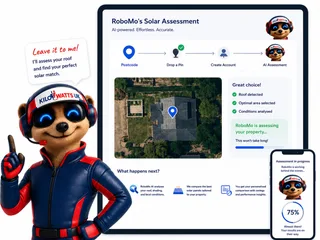

STEP 1
#### Choose Home, Business or Industrial
Enter your postcode to start your assessment.
- Home
- Business
- Industrial
It's fast, free and effortless.
STEP 2

#### Drop a pin on your roof
STEP 3

#### Create your free account
STEP 4

#### Sit back and watch Robo
Mo™ work
Robo
Mo™ analyses your roof and builds your personalised solar comparison.
 ## Flower Turbines
Design your wind energy system.
Instantly forecast generation.
Choose a location, configure your Flower Turbines and instantly see estimated annual generation using location-specific wind data. No account required.

#### Real location data
Generation forecasts based on the location you select.

#### Build your own layout
Configure Flower Turbines to suit your available space.

#### Instant generation forecasts
See estimated annual generation and energy production instantly.

#### No commitment required
Explore different configurations before deciding whether to request a quotation.


STEP 1
#### Enter your postcode
Start designing your wind energy system in seconds.
No account required. Start designing today.
STEP 2

#### Choose a location
STEP 3

#### Build your layout
STEP 4

#### Instant generation forecasts
Compare different turbine layouts and see annual generation forecasts instantly.
STEP 5

#### No commitment required
Explore different configurations before deciding whether to request a quotation.
Are you an installer, distributor or renewable energy business?
Kilowatts UK is actively expanding the Flower Turbines partner network across the United Kingdom. Contact us to discuss installation, reseller and project partnership opportunities.
[Become A Flower Turbines Partner](mailto:dcoleman@flowerturbines.com?subject=Flower%20Turbines%20Partnership%20Enquiry)
## Related articles
[ 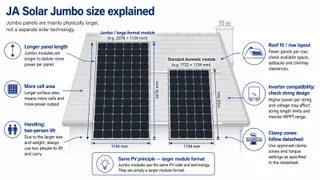 ### What is JA Solar Jumbo? Understanding Large-Format Solar Panels in the UK
Discover the benefits and limitations of JA Solar Jumbo, a popular large-format solar panel option in the UK. Learn how it compares to standard domestic panels…
](/resources/what-is-ja-solar-jumbo-understanding-large-format-solar-panels-in-the-uk/ "What is JA Solar Jumbo? Understanding Large-Format Solar Panels in the UK")
[  ### What is EPVS? How it Matters for Solar Panel Quotes
Discover how EPVS (Energy Performance Validation Scheme) helps protect UK homeowners from exaggerated solar panel quotes. Learn what to look for in a quote and…
](/resources/what-is-epvs-how-it-matters-for-solar-panel-quotes/ "What is EPVS? How it Matters for Solar Panel Quotes")
[ 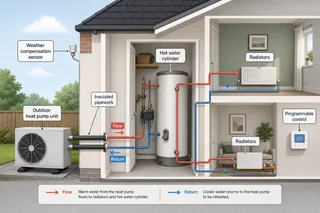 ### £9,000 Heat Pump Grant: What It Means for UK Homeowners
Learn about the £9,000 heat pump grant announcement and what it means for UK homeowners. Find out if you're eligible, how it works, and what to consider when c…
](/resources/9000-heat-pump-grant-what-it-means-for-uk-homeowners/ "£9,000 Heat Pump Grant: What It Means for UK Homeowners")
[ 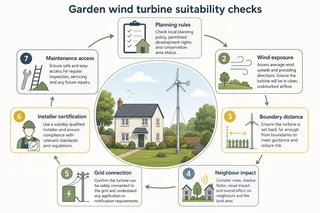 ### Can I have a wind turbine in my garden? UK rules, suitability & alternatives
Discover whether you can install a wind turbine in your UK garden and what factors to consider. Learn about planning permission, site conditions, costs, and mo…
](/resources/can-i-have-a-wind-turbine-in-my-garden-uk-rules-suitability-alternatives/ "Can I have a wind turbine in my garden? UK rules, suitability & alternatives")
FAQ
## Need Help? Robo
Mo's Got Answers
Is solar PV suitable for schools in the UK? +Solar PV can be a strong fit for UK schools because electricity is usually used during daylight hours, when panels are generating. Suitability depends on roof space, shading, roof condition, structural capacity, electricity demand, grid connection limits, procurement rules and how long the school expects to occupy the site. A feasibility study using real electricity data is the best way to confirm whether solar is worthwhile.
What size solar PV system does a school need? +Many UK school solar systems range from about 30 k
Wp to 300 k
Wp. A small primary school may suit 30 k
Wp to 80 k
Wp, while larger secondary schools, colleges or schools with sports centres, swimming pools, catering kitchens or EV charging may justify systems above 100 k
Wp. The right size should be based on half-hourly electricity consumption, roof constraints and grid connection capacity, not roof area alone.
How much electricity can school solar panels generate? +As a broad guide, a 50 k
Wp solar PV system in the UK may generate around 40,000 to 55,000 k
Wh per year, while a 100 k
Wp system may generate around 80,000 to 110,000 k
Wh per year. Actual generation depends on roof orientation, pitch, shading, location, panel layout, inverter design and system losses. South-facing roofs usually produce the highest annual output, but east-west roofs can work well for schools by spreading generation across more of the school day.
How much do solar panels cost for a school? +Typical installed costs for UK commercial solar are often around £700 to £1,200 per k
Wp, although smaller or more complex projects can cost more. A 50 k
Wp school system may cost roughly £40,000 to £65,000 before VAT, while a 100 k
Wp system may cost roughly £75,000 to £120,000 before VAT. Final cost depends on roof type, access, electrical works, DNO requirements, scaffolding, monitoring, warranties, procurement requirements and any structural or roof repairs needed before installation.
What is the typical payback period for school solar panels? +Simple payback for UK school solar can often fall between about 5 and 12 years, but the actual figure depends on installation cost, electricity tariff, self-consumption, export income, maintenance, finance costs, insurance, system degradation and future inverter replacement. The most reliable savings estimates separate the value of electricity used on site from export income and clearly state all assumptions.
Why is self-consumption important for school solar? +Self-consumption means using solar electricity on site instead of buying electricity from the grid. This is usually more valuable than exporting surplus power because export rates are commonly lower than import tariffs. Schools can have lower demand during weekends and summer holidays, so a system that is too large may export more electricity than expected. Good design should use half-hourly consumption data to match the system size to real demand.
Can schools sell excess solar electricity back to the grid? +Yes, schools may be able to sell surplus electricity through a Smart Export Guarantee tariff or a commercial export arrangement. However, export income is usually less valuable than avoided grid electricity costs, so export should normally be treated as a secondary benefit. The school will also need the correct metering, export agreement and DNO approval or export limitation arrangements where required.
What roof checks are needed before installing solar at a school? +Before installation, the school should check roof condition, age, warranty, structural capacity, access, drainage, shading and any planned roof works. Panels can last for decades, so installing them on a roof that may soon need replacement can create avoidable removal and reinstallation costs. Older buildings, flat roofs, lightweight roofs and sites with multiple roof types should have structural checks before a final design is accepted.
Does asbestos affect school solar installation? +Yes, asbestos can affect mounting methods, cable routes, drilling, programme and cost. Schools should provide their asbestos register and arrange any required surveys before contractors price or start work. If asbestos-containing materials may be disturbed, the project must be planned and managed safely by competent professionals.
Do schools need DNO approval for solar panels? +Most school solar projects need approval from the local Distribution Network Operator before connection. Very small systems may fall under G98 rules, while larger systems usually fall under G99. If export needs to be limited, a G100-compliant export control system may be required. Grid capacity can restrict the final system size even when the roof has room for more panels.
Do schools need planning permission for solar panels? +Roof-mounted solar on non-domestic buildings can often be permitted development in England if the relevant conditions are met. Planning restrictions may apply for listed buildings, conservation areas, protected landscapes, scheduled monuments, ground-mounted systems and solar carports. Schools should confirm planning requirements with the local planning authority before committing to a project.
What funding options are available for school solar? +Schools may fund solar through capital purchase, finance lease, operating lease, power purchase agreement, community energy ownership or an estate-wide programme led by a local authority or multi-academy trust. The best route depends on budget, governance, accounting treatment, risk appetite and long-term site plans. Grant availability changes, so schools should only rely on a grant once a specific scheme is open, confirmed and applicable.
Are power purchase agreements a good option for schools? +A power purchase agreement can reduce upfront cost because a third party owns the system and sells electricity to the school. It can be useful where capital budgets are limited, but the contract needs careful review. Schools should check the electricity price, annual price increases, contract length, roof access rights, maintenance responsibilities, insurance, break clauses, data access, end-of-term options and who can claim the environmental benefit.
Do schools need batteries with solar panels? +Batteries are not automatically needed for schools. Because many schools use electricity during daylight hours, a battery may offer less benefit than it would for a building with high evening use. A battery may make sense where there is evening demand, high peak charges, export limitation, resilience requirements or a need to shift solar electricity into later periods, but it should be assessed as a separate business case.
Can solar panels work with heat pumps and EV chargers at schools? +Yes, solar PV can work alongside heat pumps and EV chargers, but the design should be modelled carefully. Heat pump demand is usually highest in winter, while solar output is highest in spring and summer, so the seasonal match is imperfect. EV charging can improve solar self-consumption if vehicles are on site during daylight hours. Schools planning heat pumps or EV charging should include future electrical demand in the solar feasibility study.
How disruptive is solar installation for a school? +Solar installation can often be planned around holidays, weekends or out-of-hours work, but disruption still needs careful management. Scaffolding, roof access, lifting operations, cable routes, electrical shutdowns, deliveries and contractor compounds can affect school operations. Safeguarding, DBS expectations, pupil segregation, fire routes, exam periods and after-school activities should be planned before work starts.
What should be included in a school solar handover pack? +A good handover pack should include layout drawings, string diagrams, single-line diagrams, panel and inverter datasheets, commissioning records, test certificates, DNO approval, export settings, monitoring login details, emergency shutdown instructions, warranty documents, maintenance requirements, roof access guidance and fire safety information. These records are important for site managers, estates teams, insurers, fire safety reviews and future maintenance.
How should a school choose a solar installer? +Schools should choose an installer who can explain why the proposed system size suits the school’s electricity demand, roof condition and grid connection, not just how many panels fit on the roof. Proposals should show design assumptions, expected generation, self-consumption, export income, payback, mounting method, roof warranty implications, DNO process, safety arrangements, monitoring and maintenance. Relevant commercial PV experience, insurance, accreditations and education-sector references should also be checked.
When might solar panels not be suitable for a school? +Solar may need to be delayed or redesigned if the roof is near the end of its life, heavily shaded, structurally unsuitable, affected by asbestos issues, subject to complex heritage restrictions or likely to be replaced or demolished. It may also be less attractive where the school has low daytime electricity use, limited grid connection capacity or uncertain long-term occupancy. A proper feasibility review should be completed before committing budget.