


How long do home batteries last in the UK
Published: 2026-04-08 11:27:58
Updated: 2026-06-07 17:11:49
Understand home battery lifespan uk in the UK, with clear explanations, examples, and practical next steps.

How long do home batteries last in the UK?
A home battery in the UK typically lasts between 10 and 15 years under normal residential use. This lifespan depends on how often the battery is used, how it is installed, and the type of battery chemistry inside the system. Most modern systems are designed to degrade slowly, meaning they continue working beyond their warranty period but with reduced capacity. In simple terms, a home battery stores electricity for later use, often alongside solar panels or cheaper overnight tariffs. If you are comparing systems or considering installation, it helps to understand how long they realistically last and what affects that lifespan in a UK home. You can explore options through the electrical companies directory or compare setups on the solar comparison tool.
How batteries degrade over time
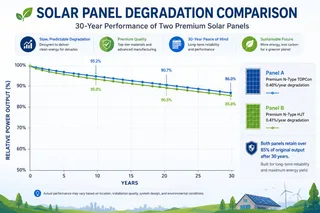
All home batteries degrade gradually, meaning their capacity reduces over time rather than stopping suddenly. This means the battery will still work after 10 years, but it may store less energy than when it was new. In most UK systems, degradation occurs at around 1.5 to 3 percent per year. Manufacturers usually guarantee that the battery will still retain around 60 to 80 percent of its original capacity after the warranty period, which is typically 10 years. As the battery ages, you may notice slightly reduced savings because less energy can be stored and used during peak periods. However, this decline is usually slow enough that it does not create a sudden drop in performance.
Key factors that affect lifespan in UK homes
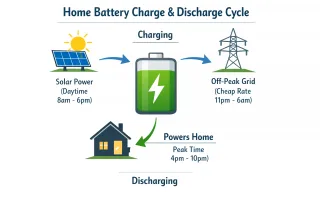
The way a battery is used has a direct impact on how long it lasts. In UK households, usage patterns vary depending on whether the system is paired with solar or used for tariff optimisation. Several practical factors influence lifespan: Usage pattern: Daily cycling for solar self-consumption wears the battery faster than occasional use Depth of discharge: Shallow use extends lifespan, while frequent full discharge shortens it Temperature: The UK climate is generally favourable, but extreme cold or heat can still reduce efficiency Installation location: Indoor installations tend to last longer than exposed outdoor units Tariff usage: Charging from off-peak tariffs such as energy comparison tools may increase cycling frequency In practice, a well-installed system in a typical UK home will operate within safe conditions, allowing it to reach or exceed its expected lifespan.
Ready to compare your options?
Get tailored comparisons and connect with trusted installers in under a minute.
Plan, Compare & Buy Renewable Energy Solutions
AI does the thinking.
You get the perfect solar match.
Use RoboMo™ to assess your property, compare available technologies and connect with trusted UK installers, suppliers and manufacturers.
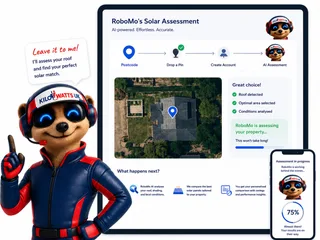
Simply enter your postcode, drop a pin on your roof, create your free account and let RoboMo™ analyse your property to find the best solar panels for your home.

You don't have to think
RoboMo™'s AI analyses your roof and does all the hard work.

Accurate & tailored
AI-powered assessment based on your roof, location, and conditions.

Best options, maximum savings
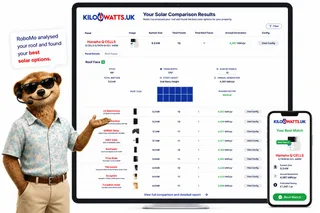
Compare top solar panels for the best performance and value.

Simple, fast & effortless
Provide a few details, sit back and watch your results unfold.
STEP 1
Choose Home, Business or Industrial
Enter your postcode to start your assessment.
STEP 2

Drop a pin on your roof
STEP 3

Create your free account
STEP 4

Sit back and watch RoboMo™ work
RoboMo™ analyses your roof and builds your personalised solar comparison.

Step 1
Enter your postcode
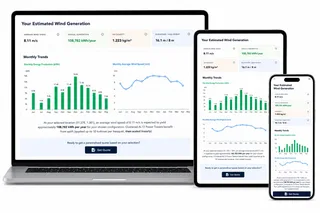
Start designing your wind energy system in seconds.
Are you an installer, distributor or renewable energy business?
Kilowatts UK is expanding the Flower Turbines partner network across the UK.
Become A Flower Turbines PartnerKilowatts UK is an authorised representative
Flower Turbines
Compact vertical-axis turbines built for real UK sites, not just open farmland.
They start in light wind, sit in a small footprint, and are bird-safe by design. Cluster them as a bouquet and the group performs better together than the same turbines standing alone. Enter your postcode for a location-based generation estimate. Figures use area weather data and will differ if buildings, trees or hills sit in the way.
Starts in light UK wind
Built to generate in typical UK wind, not only open farmland.
Small rooftop or ground footprint
Compact towers for roofs, yards and tight sites.
Bird-safe slow rotation
Slow vertical-axis spin, bird-safe by design.
Bouquet clusters raise output
Grouped turbines outperform the same units standing alone.
STEP 2

Choose a location
STEP 3

Place your cluster
Tap the map where you want the turbine cluster to go.
STEP 4

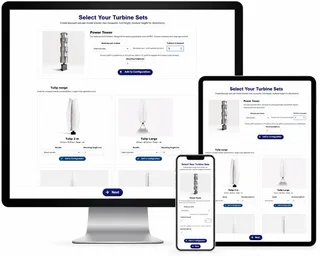
Instant generation forecasts
Compare different turbine layouts and see annual generation forecasts instantly.
STEP 5

No commitment required
Explore different configurations before deciding whether to request a quotation.
Related articles

Mo's Mission Nominations
FAQ
Need Help? RoboMo's Got Answers
How long do home batteries last in the UK?
A home battery in the UK typically lasts between 10 and 15 years under normal residential use.
This lifespan depends on how often the battery is used, how it is installed, and the type of battery chemistry inside the system.
Most modern systems are designed to degrade slowly, meaning they continue working beyond their warranty period with reduced capacity.
In simple terms, a home battery stores electricity for later use, often alongside solar panels or cheaper overnight tariffs.
If you are comparing systems or considering installation, it helps to understand how long they realistically last and what affects that lifespan in a UK home.
You can explore options through the electrical companies directory or compare setups on the solar comparison tool.
This lifespan depends on how often the battery is used, how it is installed, and the type of battery chemistry inside the system.
Most modern systems are designed to degrade slowly, meaning they continue working beyond their warranty period with reduced capacity.
In simple terms, a home battery stores electricity for later use, often alongside solar panels or cheaper overnight tariffs.
If you are comparing systems or considering installation, it helps to understand how long they realistically last and what affects that lifespan in a UK home.
You can explore options through the electrical companies directory or compare setups on the solar comparison tool.
What determines home battery lifespan?
Battery lifespan is usually measured in cycles rather than years.
A cycle means the battery is fully charged and then discharged once, although in practice most UK homes only use part of a cycle each day.
In real-world UK usage, many systems perform less than one full cycle per day, which helps extend their lifespan beyond simple estimates.
For example, a battery rated for 6,000 cycles could theoretically last around 16 years if used once per day, but in practice it may last longer due to partial cycling.
Battery chemistry also plays a major role, with newer lithium-based systems significantly outperforming older technologies.
Lithium-ion batteries are common in UK homes and typically last between 4,000 and 8,000 cycles.
Lithium iron phosphate (LiFePO4) batteries often last between 6,000 and 10,000 cycles with improved durability.
Lead-acid batteries are older technology with a much shorter lifespan, often below 1,500 cycles.
A cycle means the battery is fully charged and then discharged once, although in practice most UK homes only use part of a cycle each day.
In real-world UK usage, many systems perform less than one full cycle per day, which helps extend their lifespan beyond simple estimates.
For example, a battery rated for 6,000 cycles could theoretically last around 16 years if used once per day, but in practice it may last longer due to partial cycling.
Battery chemistry also plays a major role, with newer lithium-based systems significantly outperforming older technologies.
Lithium-ion batteries are common in UK homes and typically last between 4,000 and 8,000 cycles.
Lithium iron phosphate (LiFePO4) batteries often last between 6,000 and 10,000 cycles with improved durability.
Lead-acid batteries are older technology with a much shorter lifespan, often below 1,500 cycles.
How batteries degrade over time
All home batteries degrade gradually, meaning their capacity reduces over time rather than stopping suddenly.
This means the battery will still function after 10 years, but it may store less energy than when it was new.
In most UK systems, degradation occurs at around 1.5 to 3 percent per year depending on usage.
Manufacturers usually guarantee that the battery will retain around 60 to 80 percent of its original capacity after the warranty period, which is typically 10 years.
As the battery ages, you may notice slightly reduced savings because less energy can be stored and used during peak periods.
However, this decline is usually gradual enough that it does not create a sudden drop in performance.
This means the battery will still function after 10 years, but it may store less energy than when it was new.
In most UK systems, degradation occurs at around 1.5 to 3 percent per year depending on usage.
Manufacturers usually guarantee that the battery will retain around 60 to 80 percent of its original capacity after the warranty period, which is typically 10 years.
As the battery ages, you may notice slightly reduced savings because less energy can be stored and used during peak periods.
However, this decline is usually gradual enough that it does not create a sudden drop in performance.
What factors affect battery lifespan in UK homes?
The way a battery is used has a direct impact on how long it lasts.
In UK households, usage patterns vary depending on whether the system is paired with solar or used for tariff optimisation.
Several practical factors influence lifespan in everyday use.
Usage pattern: Daily cycling for solar self-consumption tends to wear the battery faster than occasional use.
Depth of discharge: Using only part of the battery capacity helps extend its life.
Temperature: The UK climate is generally favourable, but extreme conditions can still affect performance.
Installation location: Indoor installations are more stable than exposed outdoor units.
Tariff behaviour: Charging overnight using the solar comparison tool can help homeowners assess battery storage alongside electricity tariff optimisation.
In UK households, usage patterns vary depending on whether the system is paired with solar or used for tariff optimisation.
Several practical factors influence lifespan in everyday use.
Usage pattern: Daily cycling for solar self-consumption tends to wear the battery faster than occasional use.
Depth of discharge: Using only part of the battery capacity helps extend its life.
Temperature: The UK climate is generally favourable, but extreme conditions can still affect performance.
Installation location: Indoor installations are more stable than exposed outdoor units.
Tariff behaviour: Charging overnight using the solar comparison tool can help homeowners assess battery storage alongside electricity tariff optimisation.
Do warranties reflect real lifespan?
Most home batteries in the UK come with a 10-year warranty.
This does not mean the battery stops working after 10 years, but rather that its performance is guaranteed up to that point.
Manufacturers usually define a minimum remaining capacity at the end of the warranty period.
For example, a battery may still hold around 70 percent of its original capacity after 10 years of use.
Some systems are designed to continue operating well beyond this period, particularly if they are not heavily cycled.
If you are considering installation, you can request detailed specifications from installers through the Kilowatts partners network.
This does not mean the battery stops working after 10 years, but rather that its performance is guaranteed up to that point.
Manufacturers usually define a minimum remaining capacity at the end of the warranty period.
For example, a battery may still hold around 70 percent of its original capacity after 10 years of use.
Some systems are designed to continue operating well beyond this period, particularly if they are not heavily cycled.
If you are considering installation, you can request detailed specifications from installers through the Kilowatts partners network.
What happens at end of life?
A home battery is not considered failed when it reaches the end of its lifespan.
Instead, it reaches a point where the reduced capacity makes it less effective from a financial perspective.
Most systems are considered at end-of-life when they fall below around 60 to 70 percent capacity.
At this stage, homeowners may choose to replace the battery or continue using it with reduced performance.
Replacement costs in the UK typically range from £2,000 to £6,000 depending on the size and compatibility of the system.
In some cases, the inverter may also need replacing if it is not compatible with newer battery models.
Instead, it reaches a point where the reduced capacity makes it less effective from a financial perspective.
Most systems are considered at end-of-life when they fall below around 60 to 70 percent capacity.
At this stage, homeowners may choose to replace the battery or continue using it with reduced performance.
Replacement costs in the UK typically range from £2,000 to £6,000 depending on the size and compatibility of the system.
In some cases, the inverter may also need replacing if it is not compatible with newer battery models.
Common misconceptions about battery lifespan
Many UK homeowners assume batteries will last indefinitely or completely remove electricity bills.
In reality, batteries are designed to improve efficiency and reduce costs rather than replace the grid entirely.
Another common misunderstanding is that a larger battery will automatically last longer.
In practice, lifespan is more closely linked to how often the battery is used rather than its size.
It is also widely assumed that batteries fail suddenly.
In most cases, they degrade slowly over time, allowing homeowners to plan ahead for replacement without disruption.
In reality, batteries are designed to improve efficiency and reduce costs rather than replace the grid entirely.
Another common misunderstanding is that a larger battery will automatically last longer.
In practice, lifespan is more closely linked to how often the battery is used rather than its size.
It is also widely assumed that batteries fail suddenly.
In most cases, they degrade slowly over time, allowing homeowners to plan ahead for replacement without disruption.
Is a home battery suitable for long-term use?
Home batteries are generally suitable for households with solar panels or access to time-of-use tariffs.
They are particularly effective in homes with consistent daily energy usage patterns.
However, they may be less suitable for very low energy users, as the system may not cycle enough to justify the investment.
The financial return in the UK often aligns closely with the battery's lifespan, making usage patterns an important consideration.
If you are unsure whether a battery is right for your home, it can help to compare options alongside solar and EV charging through the renewable services section.
They are particularly effective in homes with consistent daily energy usage patterns.
However, they may be less suitable for very low energy users, as the system may not cycle enough to justify the investment.
The financial return in the UK often aligns closely with the battery's lifespan, making usage patterns an important consideration.
If you are unsure whether a battery is right for your home, it can help to compare options alongside solar and EV charging through the renewable services section.
Do home batteries stop working after 10 years?
No. Most home batteries continue operating after 10 years, but with reduced storage capacity due to gradual degradation.
Manufacturers typically warranty batteries for around 10 years, but many systems continue providing useful energy storage beyond this period.
Manufacturers typically warranty batteries for around 10 years, but many systems continue providing useful energy storage beyond this period.
Can a home battery last 20 years?
A home battery can potentially last 20 years in low-use scenarios with favourable operating conditions.
However, most residential systems are designed around a practical lifespan of approximately 10 to 15 years.
However, most residential systems are designed around a practical lifespan of approximately 10 to 15 years.
What reduces battery lifespan the most?
Frequent full charge and discharge cycles, excessive heat, poor installation conditions and consistently deep discharges tend to reduce battery lifespan more quickly than normal residential use.
Do warranties match real-world performance?
Battery warranties guarantee a minimum level of performance for a specified period, usually around 10 years.
Many batteries continue operating beyond the warranty period, although with reduced capacity compared to when they were new.
Many batteries continue operating beyond the warranty period, although with reduced capacity compared to when they were new.