


How much does a home battery cost in the UK
Published: 2026-04-08 00:17:02
Updated: 2026-04-08 00:35:22
Find out home battery cost uk in the UK, including costs, what affects price, and how to choose an installer.
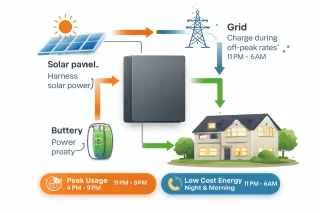
How much does a home battery cost in the UK?
A home battery in the UK typically costs between £2,500 and £10,000 fully installed, depending on size, brand, and installation complexity. Most homeowners fall into the £4,000 to £7,000 range for a standard system sized around typical daily usage. In simple terms, a home battery stores electricity so you can use it later instead of drawing from the grid at peak times. This is often combined with solar, but many systems are now installed on their own to take advantage of cheaper off-peak tariffs, especially when comparing options like solar panel installation comparisons alongside battery storage. If you are looking at real quotes, the best approach is to compare local installers through a directory such as electrical companies near you to understand what applies to your property.

Typical home battery price ranges in the UK
The cost of a home battery is largely driven by its storage capacity, measured in kilowatt-hours (kWh), and how complex the installation is.
Small systems (3–5 kWh)
£2,500 to £4,500Large systems (32–64 kWh+)
£6,000 to £10,000+Medium systems (10–32 kWh)
£4,000 to £7,000
Most UK households use around 8 to 10 kWh per day, which is why many systems are sized within this range. Typical price ranges are: In practice, larger systems do not always deliver proportionally higher savings. If the battery is too big for your usage, some of the stored energy may never be used, which reduces overall value.
What affects home battery cost in the UK
The headline price is only part of the picture, as several practical factors influence the final cost you will be quoted.
System type
hybrid systems with solar can reduce overall costExisting setup
adding to solar is usually cheaper than starting from scratchBrand and technology
premium systems sit at the higher endInstallation complexity
upgrades to wiring or consumer units increase costBattery size (kWh capacity)
larger batteries cost more upfront
Two homes with the same battery size can have very different installation costs depending on their electrical setup. The main factors include: Installation alone can range from around £800 to £2,000, particularly if additional electrical work is required. Some properties also need adjustments to comply with regulations or to safely integrate with existing systems.
Cost per kWh and what you are really paying for
Rather than looking only at total price, installers often assess value in terms of cost per kWh of storage. In the UK, this typically falls between £400 and £900 per kWh installed. This range reflects differences in battery chemistry, modular design, and inverter setup. Premium systems tend to offer better performance and longer warranties, but not always better financial return. A typical home battery will last around 10 to 15 years, with warranties commonly covering 10 years or a set number of charge cycles. Efficiency is usually between 85% and 95%, meaning some energy is lost during storage and use.
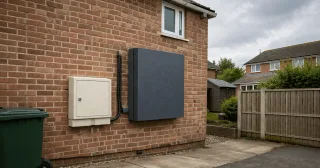
Battery cost with and without solar
A key cost difference comes from whether the battery is installed alongside solar panels or as a standalone system. This changes both the installation setup and the long-term value of the system. Battery-only systems are often slightly more expensive per kWh because they require additional configuration and do not benefit from shared components. However, they are increasingly used for energy arbitrage, where electricity is stored at cheap off-peak rates and used during expensive periods. When installed with solar, the battery can store excess generation instead of exporting it. This can be compared alongside renewable energy options to decide whether exporting or storing provides better value.
Ongoing savings and payback expectations
Savings from a home battery depend heavily on how it is used rather than just its size. Time-of-use tariffs play a major role, as they allow you to charge the battery when electricity is cheap and use it when prices are high. In the UK, typical payback periods range from 7 to 15 years depending on tariff choice, usage patterns, and system size. Without solar, savings are usually lower but can still be worthwhile with the right tariff. Export payments under the Smart Export Guarantee can also influence the decision. In some cases, exporting electricity may be more beneficial than storing it, depending on the rates available.
Practical installation considerations in the UK
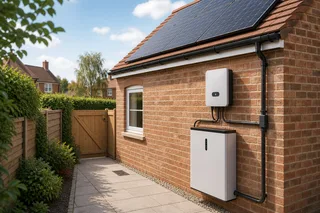
Most UK home batteries are installed externally on a wall near the electricity meter or inside a garage or utility space. Installers must consider ventilation, temperature, and access for maintenance. Cold conditions can reduce battery performance, which is why placement matters more than many homeowners expect. Some systems also require a stable internet connection for monitoring and updates. Regulatory requirements may apply depending on how the system interacts with the grid. Installations often need to comply with G98 or G99 rules, particularly if the system can export electricity.
Common misconceptions about home battery costs
Many homeowners expect a battery to remove their electricity bill entirely, which is not realistic in most UK setups. Instead, a battery reduces reliance on the grid and helps shift when you use electricity. Another common assumption is that a bigger battery always leads to better savings. In reality, oversizing can reduce financial return if the stored energy is not fully used. It is also important to understand that backup power is not included by default. Additional hardware is required if you want the battery to operate during a power cut.
Is a home battery worth it for your home
A home battery is generally most suitable for households with higher evening electricity use or those already using solar panels. It can also make sense for homes on smart tariffs where energy prices vary throughout the day. It is less suitable for very low energy users or households without access to flexible tariffs. In these cases, the financial return may be limited unless usage patterns change. If you are unsure, reviewing real installation options through a platform like Kilowatts.uk can help you understand what systems are available and how they compare in practice.
Ready to compare your options?
Get tailored comparisons and connect with trusted installers in under a minute.
Plan, Compare & Buy Renewable Energy Solutions
AI does the thinking.
You get the perfect solar match.
Use RoboMo™ to assess your property, compare available technologies and connect with trusted UK installers, suppliers and manufacturers.
Simply enter your postcode, drop a pin on your roof, create your free account and let RoboMo™ analyse your property to find the best solar panels for your home.

You don't have to think
RoboMo™'s AI analyses your roof and does all the hard work.

Accurate & tailored
AI-powered assessment based on your roof, location, and conditions.

Best options, maximum savings
Compare top solar panels for the best performance and value.

Simple, fast & effortless
Provide a few details, sit back and watch your results unfold.
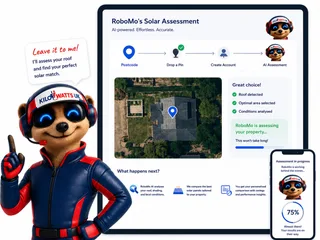
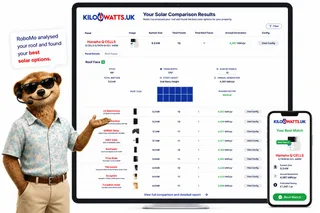
STEP 1
Choose Home, Business or Industrial
Enter your postcode to start your assessment.
STEP 2

Drop a pin on your roof
STEP 3

Create your free account
STEP 4

Sit back and watch RoboMo™ work
RoboMo™ analyses your roof and builds your personalised solar comparison.

Step 1
Enter your postcode
Start designing your wind energy system in seconds.
Are you an installer, distributor or renewable energy business?
Kilowatts UK is expanding the Flower Turbines partner network across the UK.
Become A Flower Turbines PartnerKilowatts UK is an authorised representative
Flower Turbines
Compact vertical-axis turbines built for real UK sites, not just open farmland.
They start in light wind, sit in a small footprint, and are bird-safe by design. Cluster them as a bouquet and the group performs better together than the same turbines standing alone. Enter your postcode for a location-based generation estimate. Figures use area weather data and will differ if buildings, trees or hills sit in the way.
Starts in light UK wind
Built to generate in typical UK wind, not only open farmland.
Small rooftop or ground footprint
Compact towers for roofs, yards and tight sites.
Bird-safe slow rotation
Slow vertical-axis spin, bird-safe by design.
Bouquet clusters raise output
Grouped turbines outperform the same units standing alone.


STEP 2

Choose a location
STEP 3

Place your cluster
Tap the map where you want the turbine cluster to go.
STEP 4

Instant generation forecasts
Compare different turbine layouts and see annual generation forecasts instantly.
STEP 5

No commitment required
Explore different configurations before deciding whether to request a quotation.
Related articles


Mo's Mission Nominations
FAQ
Need Help? RoboMo's Got Answers
How much does a 5 kWh home battery cost in the UK?
A 5 kWh battery typically costs between £3,000 and £5,500 installed, depending on the brand and installation complexity.
This size is common for smaller households or partial energy coverage.
This size is common for smaller households or partial energy coverage.
What is the average home battery cost in the UK?
Most UK homeowners pay between £4,000 and £7,000 for a typical system sized around 5 to 10 kWh.
This reflects a balance between capacity and practical usage.
This reflects a balance between capacity and practical usage.
Is it cheaper to install a battery with solar?
Yes, installing a battery alongside solar panels is usually more cost-effective.
Shared components such as inverters and labour reduce the overall installation cost.
Shared components such as inverters and labour reduce the overall installation cost.
Can I use a home battery without solar in the UK?
Yes, home batteries can be installed without solar and are often used with time-of-use tariffs.
They store electricity from the grid when prices are low and supply it when prices are higher.
They store electricity from the grid when prices are low and supply it when prices are higher.
How long does a home battery last in the UK?
Most home batteries last between 10 and 15 years.
Warranties typically cover 10 years, although performance may gradually reduce over time.
Warranties typically cover 10 years, although performance may gradually reduce over time.