


Best direction for solar panels in the UK
Published: 2026-02-27 15:26:16
Updated: 2026-04-09 13:21:23
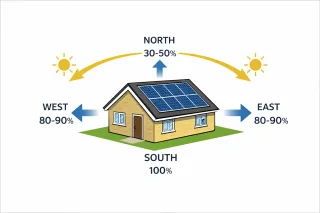
South is the best direction for solar panels in the UK. South-east and south-west still work well. East and west can suit morning or evening use.
What direction should solar panels face in the UK?
A south-facing roof is usually the best direction for solar panels in the UK. This orientation produces the highest annual electricity output. However, south-east and south-west roofs are still highly effective and often only slightly less productive. If you are unsure how your roof performs, you can compare real options using the solar panel comparison tool or explore installers in the electrician directory.
Why south-facing panels work best in the UK
The UK sits in the northern hemisphere, so the sun travels across the southern part of the sky. Panels facing south receive the most consistent sunlight throughout the day. Most systems in southern England achieve their highest output when facing due south at a tilt of around 30 to 40 degrees.
Maximum annual yield
South-facing systems typically generate the most electricity over a full year.Strong export potential
Higher generation supports better export through schemes like the Smart Export Guarantee.Balanced sunlight exposure
Energy production is spread evenly from morning to afternoon.
How much difference direction actually makes
Not all roofs can face south, but the performance difference is often smaller than expected. This means many UK homes can still benefit from solar even without a perfect orientation. You can review different system designs through the renewable energy services section to understand realistic outcomes.
East or west
Typically 10 to 20 percent lower annual output.North-facing
Often 30 to 50 percent lower, depending on pitch and shading.South-east or south-west
Usually 5 to 10 percent less generation than south.
East vs west vs south explained
Different directions change when electricity is produced, not just how much. This can matter depending on your usage. Homes with higher evening demand may benefit from west-facing panels, while daytime users may prefer south-facing systems.
East-facing
Generates more electricity in the morning.West-facing
Produces more in the afternoon and evening.South-facing
Produces energy consistently throughout the day.
The role of roof pitch and angle
Direction alone does not determine performance. Roof pitch has a major impact on energy generation. Flat roofs allow mounting systems to adjust both tilt and direction, giving more flexibility in design.
Ideal pitch
Around 30 to 40 degrees for most of the UK.Flatter roofs
Reduce winter generation due to low sun angles.Steeper roofs
Can reduce summer efficiency.
When south is not the best financial option
The highest generation does not always mean the best financial return. If you are considering storage, explore battery storage options alongside solar to improve flexibility.
Battery storage
Allows energy to be stored, reducing reliance on exact orientation.East-west systems
Can better match typical UK usage patterns.Self-consumption patterns
Energy used at home is often more valuable than exported energy.
The impact of shading on direction
Shading can reduce performance more than poor orientation. Even a perfectly south-facing system can underperform if shading is not addressed.
Partial shading
May affect the entire system without optimisers.Chimneys and trees
Can block sunlight during key hours.Urban environments
Nearby buildings can reduce output significantly.
Common misconceptions about solar direction
Many homeowners assume solar only works on south-facing roofs. Modern system design tools consider all variables including postcode, roof angle, and shading.
Panels must face south
False, east and west still perform well.North-facing roofs are useless
Not always, but usually less efficient.Direction matters more than everything else
Shading and system design can be more important.

Can I still get solar if my roof is not south-facing?
Yes, many UK homes install solar successfully on east or west-facing roofs with good results.
Direction comparison at a glance
East
Strong morning generationWest
Better afternoon and evening generationNorth
Lowest output and usually least suitableSouth
Highest annual output and balanced generationSouth-east or south-west
Slightly lower output but still highly effective
Ready to compare your options?
Get tailored comparisons and connect with trusted installers in under a minute.
Plan, Compare & Buy Renewable Energy Solutions
AI does the thinking.
You get the perfect solar match.
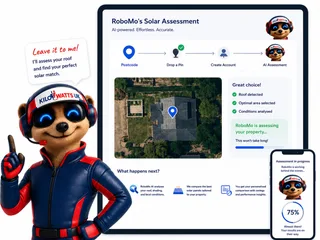
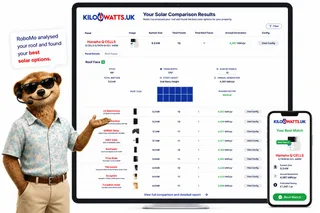
Use RoboMo™ to assess your property, compare available technologies and connect with trusted UK installers, suppliers and manufacturers.
Simply enter your postcode, drop a pin on your roof, create your free account and let RoboMo™ analyse your property to find the best solar panels for your home.

You don't have to think
RoboMo™'s AI analyses your roof and does all the hard work.

Accurate & tailored
AI-powered assessment based on your roof, location, and conditions.

Best options, maximum savings
Compare top solar panels for the best performance and value.

Simple, fast & effortless
Provide a few details, sit back and watch your results unfold.
STEP 1
Choose Home, Business or Industrial
Enter your postcode to start your assessment.
STEP 2
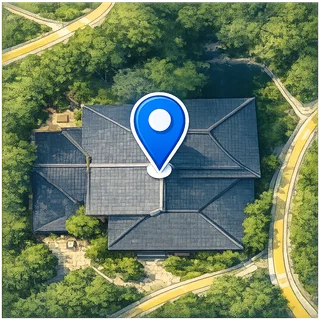
Drop a pin on your roof
STEP 3

Create your free account
STEP 4

Sit back and watch RoboMo™ work
RoboMo™ analyses your roof and builds your personalised solar comparison.
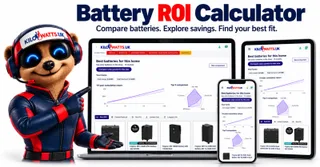
BATTERY ROI TOOL
See what a battery saves on your bill
Enter the day rate, off-peak rate and export rate. The calculator ranks batteries in the Kilowatts shop over 10 years.
Home batteries also suit offices and small commercial sites. Industrial batteries are listed on their own calculator.

Step 1
Enter your postcode
Start designing your wind energy system in seconds.
Are you an installer, distributor or renewable energy business?
Kilowatts UK is expanding the Flower Turbines partner network across the UK.
Become A Flower Turbines PartnerKilowatts UK is an authorised representative
Flower Turbines
Compact vertical-axis turbines built for real UK sites, not just open farmland.
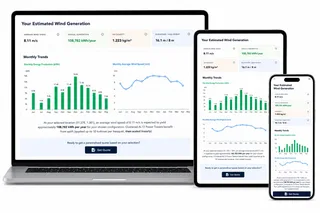
They start in light wind, sit in a small footprint, and are bird-safe by design. Cluster them as a bouquet and the group performs better together than the same turbines standing alone. Enter your postcode for a location-based generation estimate. Figures use area weather data and will differ if buildings, trees or hills sit in the way.
Starts in light UK wind
Built to generate in typical UK wind, not only open farmland.
Small rooftop or ground footprint
Compact towers for roofs, yards and tight sites.
Bird-safe slow rotation
Slow vertical-axis spin, bird-safe by design.
Bouquet clusters raise output
Grouped turbines outperform the same units standing alone.
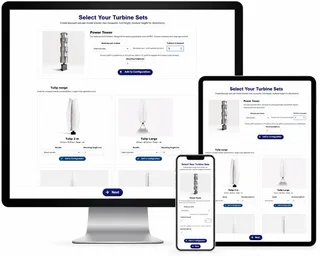
STEP 2

Choose a location
STEP 3
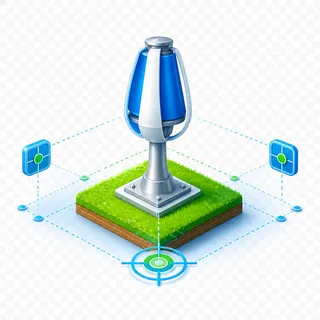
Place your cluster
Tap the map where you want the turbine cluster to go.
STEP 4

Instant generation forecasts
Compare different turbine layouts and see annual generation forecasts instantly.
STEP 5
No commitment required
Explore different configurations before deciding whether to request a quotation.
Related articles

Mo's Mission Nominations
FAQ
Need Help? RoboMo's Got Answers
What is the best direction for solar panels in the UK?
South-facing is generally the best direction because it produces the highest annual energy output due to consistent sunlight throughout the day.
Are south-east and south-west roofs still effective?
Yes, south-east and south-west facing roofs are still highly effective and usually only slightly less productive than a south-facing system.
Why do south-facing panels work best in the UK?
The UK is in the northern hemisphere, so the sun travels across the southern part of the sky, allowing south-facing panels to capture the most sunlight throughout the day.
How much does direction really affect solar performance?
Direction does affect performance, but often less than people expect. Many homes still achieve strong results even if their roof is not perfectly south-facing.
Is it worth installing solar panels on an east or west-facing roof?
Yes, east and west-facing panels can still perform well and may better match your energy usage depending on when you use electricity.
Do different directions affect when electricity is generated?
Yes, south-facing panels generate more evenly throughout the day, east-facing panels produce more in the morning, and west-facing panels generate more in the evening.
Does roof pitch matter as much as direction?
Yes, roof angle plays a major role. A pitch of around 30 to 40 degrees is typically ideal for maximising solar output in the UK.
Can flat roofs work for solar panels?
Yes, flat roofs can use mounting systems to adjust both the tilt and direction of panels, offering more flexibility in design.
Is south-facing always the best financial option?
Not always. While it produces the most energy, the best financial return depends on your energy usage and whether you include options like battery storage.
How does shading affect solar panel performance?
Shading can significantly reduce performance and may have a greater impact than direction, even on a south-facing system.
Do solar panels only work on south-facing roofs?
No, modern systems can work effectively on east and west-facing roofs, and even north-facing roofs may still be viable in some situations.
How much less efficient are north-facing panels?
North-facing panels can produce significantly less energy, typically around 30 to 50 percent lower than south-facing systems, but they may still be usable depending on the setup.
Can I compare solar options for my home?
Yes, you can use the solar panel comparison tool to explore real options and find suitable installers.