


Are solar panels worth it in the UK in 2026
Published: 2026-01-06 00:55:11
Updated: 2026-01-07 11:41:46
Find out are solar panels worth it 2026 in the UK, including costs, what affects price, and how to choose an installer.

Are solar panels worth it in the UK in 2026?
In the UK, solar panels can be worth it in 2026 when the system size, roof, and household electricity use line up. Most of the value comes from using your own solar electricity during the day, rather than exporting it. Payback varies widely, so it helps to compare like-for-like quotes and assumptions before deciding. For background on how the technology works, see how solar panels work in the UK.
What "worth it" means in practice
Worth it usually means the system pays for itself within its working life while reducing grid electricity you buy. Financial value depends on how much solar you use in the home versus how much you export. A practical measure is payback time, alongside expected panel life, inverter replacement risk, and maintenance needs. If you plan to add a battery later, it helps to understand the basics of home battery storage installation first.
Typical UK system sizes, costs, and lifespan in 2026
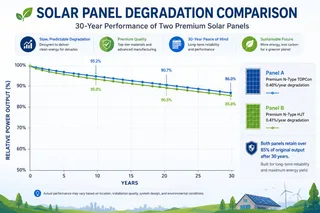
Most domestic UK installs are roughly 3.5 kW to 5.0 kW, sized to roof space and annual consumption. Typical installed costs for a standard home system are often in the £5,000 to £9,000 range, depending on equipment and access. Larger systems above around 6 kW can be roughly £10,000 to £14,000, depending on roof complexity and electrical work needed. A battery is optional and commonly adds around £3,000 to £7,000 depending on usable capacity and power rating. Panels are typically expected to last 25 to 30 years with gradual performance decline. Modern panels often degrade around 0.3 to 0.5 percent per year in output. Inverters commonly last 10 to 15 years and may need replacing once during the system lifetime.
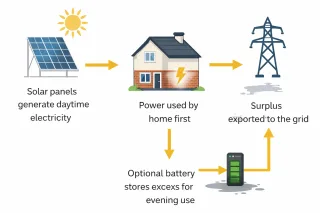
How much electricity UK solar typically generates
A typical 4 kW UK system often produces roughly 3,000 to 4,500 kWh per year, depending on roof and location. Generation varies by region, with southern areas often producing more than northern areas. Season matters, with summer contributing a large share of annual output and winter producing less but not zero. Shading from chimneys, dormers, trees, or nearby buildings can reduce output more than many homeowners expect.
The biggest factors that decide whether it pays back
The following points summarise the most important takeaways:
Shading profile
Partial shade at key times can cut annual generation and can be missed without a proper site survey.Export arrangements
Export payments usually matter less than self-consumption, but they still affect the totals.Daytime electricity use
Homes using more power during daylight typically get better value from self-consumption.Property electrification
Heat pumps and EV charging can increase useful self-consumption if scheduled around generation.Roof direction and pitch
South-facing is usually strongest, with many east or west roofs producing a meaningful share of that output.Electricity price and tariff setup
Higher import prices increase the value of using your own solar electricity.
Batteries in 2026: when they help and when they do not
Batteries can increase self-consumption by storing daytime surplus for evening use. They can improve independence from peak grid prices, but they add upfront cost and can extend payback time. A battery does not automatically give backup power during a power cut. Backup during an outage usually needs additional hardware and specific system design, so it must be agreed upfront. If you are considering an EV, solar value can change when you add smart charging, so it can help to review EV charger installation options alongside solar quotes.
UK rules and practical constraints homeowners run into
Most domestic solar installs do not need planning permission, but listed buildings and conservation areas can require extra checks. Some installs need DNO approval depending on system size and export limits. Older homes may need a consumer unit upgrade or other electrical work before connection is compliant. Smart metering is relevant for export payments and accurate monitoring of imports and exports.
Common misconceptions and objections in the UK
The following points summarise the most important takeaways:
A battery is required
Batteries are optional and many homes start without one.Solar is pointless in winter
Winter output is lower, but it is not zero and summer output can be substantial.Solar works during a blackout
Most grid-tied systems shut down unless designed for backup operation.Solar needs direct sunshine to work
Panels generate from daylight, so they still produce in cloudy UK weather.Solar means free electricity all day
Output changes through the day and across seasons, so usage patterns still matter.
Who solar is usually suitable for in 2026
Solar is often more suitable for homeowners who plan to stay in the property long enough to see payback. Homes with usable roof area, limited shading, and daytime demand often see stronger outcomes. Homes adding EV charging or heat pumps can increase self-consumption potential with good scheduling. Flats, heavily shaded roofs, or properties with unsuitable roof orientation or structure may see weaker results. Renters usually cannot proceed unless the landlord installs and owns the system.
Installer-level checks that affect your quote
Installers should check roof structure and fixing method, not only roof area. Scaffolding requirements can change cost materially depending on access and roof shape. Cable routes, inverter location, and consumer unit condition can affect labour and extra parts. DNO limits can cap export, which can change the value of oversizing the system. A good quote should state the assumed annual generation, the roof orientation used, and the export and self-consumption assumptions. If you want to compare local installers, you can use an electrician and installer directory to check coverage and services.
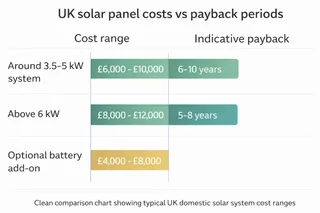
Simple cost and payback comparison for UK homes
Typical payback in the UK in 2026 is often around 7 to 12 years for many homes without a battery, depending on usage and tariff. Adding a battery can improve self-consumption, but it can also lengthen payback because of the extra cost. If a quote claims unusually fast payback, the assumptions should be checked carefully against your actual use and roof conditions.
Ready to compare your options?
Get tailored comparisons and connect with trusted installers in under a minute.
Plan, Compare & Buy Renewable Energy Solutions
AI does the thinking.
You get the perfect solar match.
Use RoboMo™ to assess your property, compare available technologies and connect with trusted UK installers, suppliers and manufacturers.
Simply enter your postcode, drop a pin on your roof, create your free account and let RoboMo™ analyse your property to find the best solar panels for your home.

You don't have to think
RoboMo™'s AI analyses your roof and does all the hard work.

Accurate & tailored
AI-powered assessment based on your roof, location, and conditions.

Best options, maximum savings
Compare top solar panels for the best performance and value.

Simple, fast & effortless
Provide a few details, sit back and watch your results unfold.
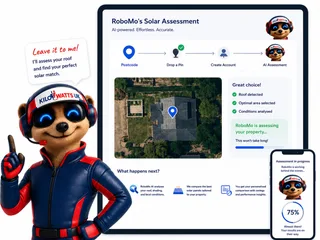
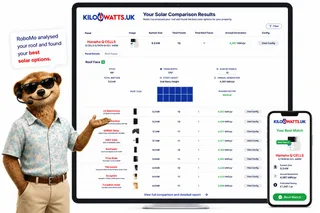
STEP 1
Choose Home, Business or Industrial
Enter your postcode to start your assessment.
STEP 2

Drop a pin on your roof
STEP 3

Create your free account
STEP 4

Sit back and watch RoboMo™ work
RoboMo™ analyses your roof and builds your personalised solar comparison.

Kilowatts UK is an authorised representative
Flower Turbines
Compact vertical-axis turbines built for real UK sites, not just open farmland.
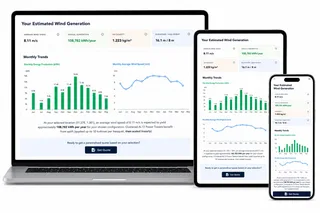
They start in light wind, sit in a small footprint, and are bird-safe by design. Cluster them as a bouquet and the group performs better together than the same turbines standing alone. Enter your postcode for a location-based generation estimate. Figures use area weather data and will differ if buildings, trees or hills sit in the way.
Starts in light UK wind
Built to generate in typical UK wind, not only open farmland.
Small rooftop or ground footprint
Compact towers for roofs, yards and tight sites.
Bird-safe slow rotation
Slow vertical-axis spin, bird-safe by design.
Bouquet clusters raise output
Grouped turbines outperform the same units standing alone.

Step 1
Enter your postcode
Start designing your wind energy system in seconds.
STEP 2

Choose a location
STEP 3

Place your cluster
Tap the map where you want the turbine cluster to go.
STEP 4

Instant generation forecasts
Compare different turbine layouts and see annual generation forecasts instantly.
STEP 5

No commitment required
Explore different configurations before deciding whether to request a quotation.
Related articles


Mo's Mission Nominations
FAQ
Need Help? RoboMo's Got Answers
Are solar panels worth it in the UK in 2026?
Solar panels can be worth it in 2026 when the system size, roof suitability, and household electricity use align, with most value coming from using your own electricity during the day rather than exporting it.
How long does it usually take for solar panels to pay back in the UK?
Typical payback periods in the UK in 2026 are often around 7 to 12 years without a battery, depending on electricity use patterns, tariffs, and how much solar energy is self-consumed.
How much electricity can a typical UK solar system generate?
A common 4 kW UK solar system typically generates around 3,000 to 4,500 kWh per year, with output varying by location, roof orientation, shading, and seasonal daylight levels.
Do I need a battery for solar panels to be worth it?
A battery is not essential, as many homes see value from solar through daytime self-consumption alone, but batteries can increase self-consumption while adding cost and potentially extending payback time.
What factors most affect whether solar pays back for a UK home?
Key factors include roof direction and shading, daytime electricity use, electricity prices, export arrangements, system size, and whether the property has additional loads such as EV charging or a heat pump.
Will solar panels work during winter or power cuts in the UK?
Solar panels produce less electricity in winter but still generate some power, while most grid-connected systems shut down during a power cut unless specifically designed with additional backup equipment.
What should be included in a UK solar installation quote?
A clear quote should include system size, panel and inverter details, estimated annual generation, assumptions for self-consumption and export, and any additional electrical work such as consumer unit upgrades or DNO requirements.