


How do solar panels work in the UK
Published: 2026-01-02 12:36:28
Updated: 2026-01-03 02:17:35
Understand how do solar panels work uk in the UK, with clear explanations, examples, and practical next steps.
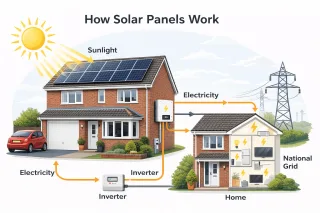
How do solar panels work in the UK?
Solar panels turn daylight into electricity using photovoltaic cells. In the UK they work in cloudy weather because they use light, not heat. Most homes use grid connected solar that powers the house first, then exports any surplus.
The basic solar PV system explained
A typical UK home solar setup has panels on the roof, an inverter, and a connection into your consumer unit. The panels generate electricity only in daylight, so the timing of your usage matters. If you want a quick overview of domestic installation steps and what installers check, see Solar Panel Installation: An Introduction.
- Solar panels generate DC electricity
- An inverter converts DC into AC for home use
- Your home uses solar electricity first
- Any extra is exported to the grid unless a battery stores it
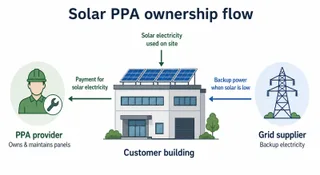
- The grid supplies power when solar output is low
From sunlight to usable electricity
Solar PV cells are made from layers of silicon that create an electric current when exposed to light. The electricity from panels is direct current, but UK homes run on alternating current. That is why the inverter is essential, and why inverter choice affects system performance, monitoring, and future add ons like batteries.
Monitoring
Many inverters track generation and export so you can spot faults or shading losses.Inverter conversion
The inverter turns DC into AC so it can run normal household circuits.Photovoltaic effect
Light knocks electrons loose inside silicon cells, creating DC electricity.
What happens to the electricity your panels generate
Solar electricity is used by appliances that are running at the time it is generated. If your panels produce more than you are using, the surplus typically goes out to the grid. Export is normally measured by a smart meter, which is also needed if you want to be paid for export under a supplier export tariff.
Export to grid
Surplus goes to the grid and may be paid under the Smart Export Guarantee if you meet the requirements.Self consumption
Daytime use usually gives the best savings because it avoids buying electricity at import rates.Imports still happen
You will still buy electricity at night and during low generation periods, and standing charges still apply.
Solar performance in the UK
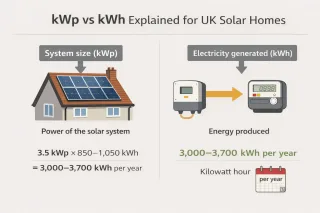
UK solar output varies by season, location, roof orientation, roof pitch, and shading. A typical domestic system size is around 3 kW to 6 kW, with 4 kW common for many homes. Annual output for a 4 kW system is often roughly 3,200 to 3,800 kWh, but real world results depend heavily on site details.
Shading risk
Trees, chimneys, and nearby buildings can reduce output noticeably, especially in winter.Roof direction
South facing roofs usually produce the most, while east or west often produce less.Location effect
Southern England tends to produce more than northern Scotland because average irradiation is higher.
Roof suitability checks an installer will care about
Installers usually assess more than just roof size. They need to confirm roof condition, structure, safe access, wiring route, and whether your electrical system needs upgrading. If you are comparing quotes, a structured comparison page can help you keep assumptions consistent, such as Residential Solar Panels Compare.
Cable routing
Long or complex cable runs can add time and materials.Consumer unit
Some homes need fuse board or protection upgrades to meet current wiring requirements.Roof condition
Older roofs may need repairs before panels are fitted.Structural capacity
The roof must support the additional load and fixings.Access and scaffolding
Roof height, conservatories, or restricted access can change costs and scheduling.
Battery storage and what it does
Solar panels do not store electricity by themselves. A battery stores surplus solar so you can use it later, usually in the evening. Batteries increase self consumption but do not increase how much electricity the panels generate. For an overview of how storage works and what to consider, see Home Battery Storage Systems: An Introduction.
Battery sizing
Capacity should match typical surplus and evening demand, not just maximum panel output.Smart charging
Some systems can charge from the grid on off peak tariffs, which can change the economics.Usage pattern fit
Homes with higher evening use often benefit more from storage.Self consumption boost
More of your generated power is used in the home instead of exported.
Grid connection, export payments, and safety behaviour
Most UK domestic solar is connected to the mains and operates alongside grid electricity. Standard grid tied systems shut down during a power cut for safety reasons, so they do not normally provide power in an outage. Backup power needs compatible inverter equipment and usually a battery, and it is typically more complex.
SEG basics
The Smart Export Guarantee is supplier led and rates vary by supplier.Export metering
Export payments are based on metered export units, commonly via a smart meter.Power cut behaviour
Anti islanding protection shuts down generation unless you have a designed backup setup.
Planning and compliance basics for UK homes
Planning permission is not usually required for domestic rooftop solar, but rules and exceptions apply. Special cases include listed buildings and conservation areas, where extra restrictions may apply. Installations should comply with UK wiring rules and may need notification or approval from the local network operator depending on the equipment and export settings.
Electrical compliance
Work must comply with UK wiring regulations and be properly tested and certified.Permitted development
Panels should not protrude excessively from the roof and should be sited with reasonable consideration of appearance.Installer certification
MCS certification is commonly needed for export tariff eligibility.
Costs, lifespan, and maintenance in the UK
UK domestic solar costs depend on system size, roof access, and equipment choices. A typical 4 kW install is often in the £5,000 to £8,000 range, with battery storage commonly adding £2,500 to £6,000. Panels often last 25 to 30 years, while inverters are more commonly replaced around the 10 to 15 year mark. Panel output typically degrades slowly over time, and maintenance is usually limited to basic checks and monitoring.
Pricing scope
Confirm whether scaffolding, monitoring, and export limiting equipment are included.Component lifetimes
Inverters usually need replacement sooner than panels.Performance monitoring
Monitoring helps identify shading changes, inverter faults, or wiring issues early.
Who solar in the UK is and is not suitable for
Solar tends to suit households that can use electricity in daylight hours, and owners who expect to stay in the property for years. It can be harder to make work in flats due to roof access and ownership, and in rentals due to consent and who benefits from the savings. If you want to combine technologies, such as solar plus small wind, you can review system compatibility considerations at Can You Combine Solar Panels and a Wind Turbine at Home.
Better fit
Owner occupied homes with daytime electricity use and suitable roof space.Harder fit
Flats, complex shared roofs, short term occupancy, or heavily shaded roofs.Possible fit
Homes with higher evening use if adding a correctly sized battery.
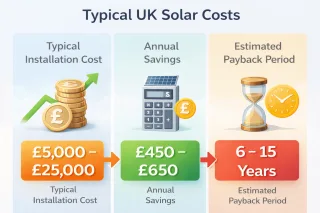
Costs and savings explained
Solar panel costs vary by system size and specification. Savings depend on how much electricity you use during the day. Export payments add extra value over time. Larger systems and batteries usually increase upfront cost but improve flexibility.
Common misconceptions UK homeowners have
Solar panels can generate electricity in cloudy weather, but output is lower than in clear conditions. They do not remove electricity bills entirely because you still import power when generation is low and standing charges remain. Solar does not automatically provide backup power during outages because standard systems shut down for safety.
Roof damage
Correct mounting and flashing should protect roof integrity, but poor workmanship can cause leaks.Free storage
Panels generate power but do not store it without a battery.Bills to zero
Solar reduces imports but does not eliminate usage outside daylight hours.Cloudy weather
Panels work with daylight, not heat, so they still generate on overcast days.
What to ask an installer before you accept a quote
The main risk is not that solar will not work, but that performance assumptions were unrealistic or that key costs were excluded. Ask for the yield estimate assumptions, shading assessment approach, and what is included in the price. If you also plan to install a charger, it can be helpful to understand the electrical load implications, and you can read EV Charging Station Installation: An Introduction for UK specific context.
Included works
Confirm scaffolding, consumer unit upgrades, and monitoring are included or excluded.Future upgrades
Ask if the inverter supports later battery addition and export limiting if required.Export and metering
Check how export is measured and whether a smart meter is required.Yield estimate basis
Confirm the assumptions for orientation, shading, and location.
Ready to compare your options?
Get tailored comparisons and connect with trusted installers in under a minute.
Plan, Compare & Buy Renewable Energy Solutions
AI does the thinking.
You get the perfect solar match.
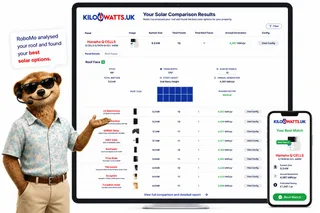
Use RoboMo™ to assess your property, compare available technologies and connect with trusted UK installers, suppliers and manufacturers.
Simply enter your postcode, drop a pin on your roof, create your free account and let RoboMo™ analyse your property to find the best solar panels for your home.
You don't have to think
RoboMo™'s AI analyses your roof and does all the hard work.

Accurate & tailored
AI-powered assessment based on your roof, location, and conditions.

Best options, maximum savings
Compare top solar panels for the best performance and value.

Simple, fast & effortless
Provide a few details, sit back and watch your results unfold.
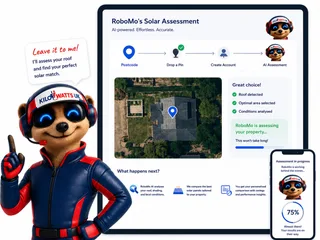
STEP 1
Choose Home, Business or Industrial
Enter your postcode to start your assessment.
STEP 2
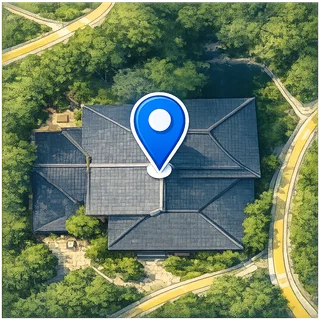
Drop a pin on your roof
STEP 3

Create your free account
STEP 4

Sit back and watch RoboMo™ work
RoboMo™ analyses your roof and builds your personalised solar comparison.

Kilowatts UK is an authorised representative
Flower Turbines
Compact vertical-axis turbines built for real UK sites, not just open farmland.
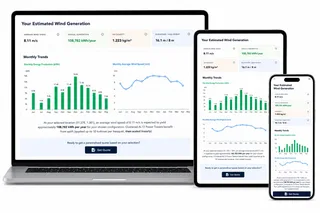
They start in light wind, sit in a small footprint, and are bird-safe by design. Cluster them as a bouquet and the group performs better together than the same turbines standing alone. Enter your postcode for a location-based generation estimate. Figures use area weather data and will differ if buildings, trees or hills sit in the way.
Starts in light UK wind
Built to generate in typical UK wind, not only open farmland.
Small rooftop or ground footprint
Compact towers for roofs, yards and tight sites.
Bird-safe slow rotation
Slow vertical-axis spin, bird-safe by design.
Bouquet clusters raise output
Grouped turbines outperform the same units standing alone.
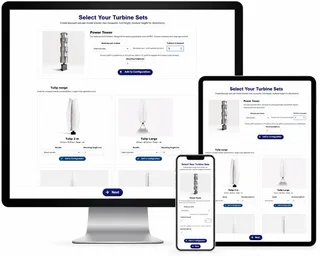
Step 1
Enter your postcode
Start designing your wind energy system in seconds.
STEP 2

Choose a location
STEP 3
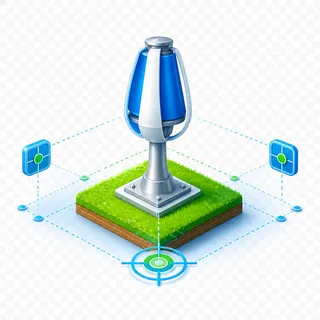
Place your cluster
Tap the map where you want the turbine cluster to go.
STEP 4

Instant generation forecasts
Compare different turbine layouts and see annual generation forecasts instantly.
STEP 5
No commitment required
Explore different configurations before deciding whether to request a quotation.
Related articles


Mo's Mission Nominations
FAQ
Need Help? RoboMo's Got Answers
Do solar panels work in winter in the UK?
Yes, solar panels generate electricity all year.
Winter output is lower due to shorter days.
Systems are designed to balance annual performance.
Winter output is lower due to shorter days.
Systems are designed to balance annual performance.
Do solar panels need direct sunlight?
No, they work with daylight.
Direct sun increases output but is not required.
Cloud cover reduces generation but does not stop it.
Direct sun increases output but is not required.
Cloud cover reduces generation but does not stop it.
How long do solar panels last?
Most panels last 25 years or more.
Inverters may need replacing sooner.
Performance slowly reduces over time.
Inverters may need replacing sooner.
Performance slowly reduces over time.
Can I use solar power during a power cut?
Standard systems shut down for safety.
Battery systems with backup can supply power.
Backup capability depends on system design.
Battery systems with backup can supply power.
Backup capability depends on system design.
Is solar worth it for UK homes?
It depends on roof suitability and energy use.
Homes with daytime usage benefit most.
A professional assessment gives accurate answers.
Homes with daytime usage benefit most.
A professional assessment gives accurate answers.