


EV Charging Station Installation: An Introduction
Published: 2025-05-05 19:00:00
Updated: 2026-10-06 04:16:04
EV Charging Station Installation: An Introduction Electric Vehicle (EV) charging station installation equips homes.
What EV charging installation involves
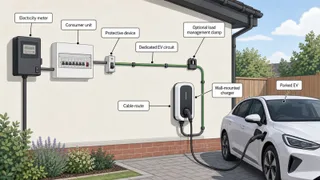
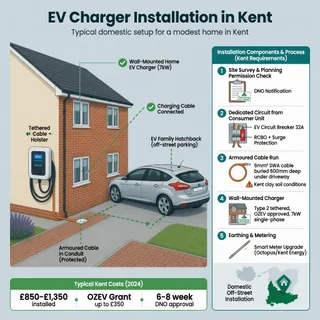
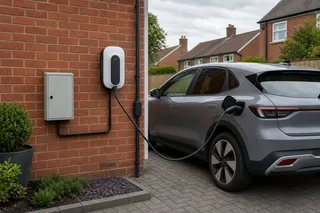
EV charging station installation means fitting a dedicated chargepoint and connecting it safely to a property’s electrical installation. For most UK homes with off-street parking, this is usually a single-phase AC wall unit, often around 7 kW. It should be designed after checks on the consumer unit, supply capacity, earthing, cable route, smart controls and any DNO requirements.
The chargepoint on the wall is not quite the same as the charger inside the car. In a typical home installation, the wall unit supplies controlled AC electricity, while the vehicle’s onboard charger converts it for the battery. The car, the property supply and the chargepoint all affect the charging rate.
A good installation is not simply a box on the wall. The installer has to check whether the full electrical route is suitable, and how the new load will sit alongside cooking, heating, showers, solar equipment, batteries and other high-demand circuits already in the home.
Who home EV charging suits best
Home EV charging is usually most practical when the vehicle can be parked safely on private land close to the property supply. A driveway, garage or allocated bay makes the job far more straightforward than relying on a trailing cable or trying to reach a vehicle across shared or public space.
It also suits drivers who park at home for long periods, especially overnight. A dedicated chargepoint can be scheduled through smart controls, may work with off-peak electricity tariffs if set up correctly, and can often be coordinated with solar generation where the property has suitable equipment and daytime parking. For a fuller homeowner primer, see this home EV charger guide.
Flats, leasehold homes, managed developments, homes with no private parking, detached garages with long cable routes, looped supplies and older electrical installations can be more difficult. They do not always rule out EV charging, but they often need more design work, permissions or a different charging approach.
Shared access
More complex where parking, walls, cable routes or electrical equipment are managed by others.Private parking
Best suited to homes with a driveway, garage or allocated bay close to the supply.Public pavements
Running a private cable across a public pavement is usually not a suitable permanent approach.Older installations
May need extra checks if the consumer unit, earthing or spare capacity is limited.Predictable parking
Works well when the vehicle is usually parked at home for several hours.
The key question is whether a chargepoint can be fitted safely, neatly and in a way that suits how the vehicle is actually used.
What an installer checks before fitting a chargepoint
Before installation, a competent installer will assess whether the property can safely support the additional electrical demand. This normally includes the consumer unit, main fuse information, earthing arrangement, existing circuits, available space for protective devices, and the proposed route from the supply to the chargepoint. If you are comparing tradespeople, it helps to know how to choose a qualified electrician before booking the work.
The survey also looks at practical details that change the job. A short run through an external wall is very different from routing cable under floors, through loft spaces, around extensions, across outbuildings or to a detached garage. The mounting surface, weather exposure, parking position and cable management all affect the final design.
Earthing is especially important for UK EV installations. Many homes use PME earthing, and EV chargepoints need appropriate protection against certain fault conditions. Some modern units include built-in open PEN protection, but the installer still has to confirm that the chosen equipment and design are suitable for the actual site.
Cable route
Distance, drilling, containment, weather exposure and mechanical protection affect the specification.Communications
Smart functions may depend on Wi-Fi, Ethernet, mobile data or a reliable app connection.Future upgrades
Solar panels, batteries, heat pumps and additional EVs can change the best design choice.Electrical capacity
The installer checks how the chargepoint load will interact with existing demand.Earthing arrangement
The design must be suitable for the property’s earthing system.Consumer unit suitability
Space, condition, protective devices and labelling all matter.
A proper survey can feel like a delay, but it prevents common problems. These include buying the wrong unit, underestimating cable work or discovering on installation day that extra electrical work is needed.
UK rules and standards to know
EV chargepoint installation is electrical work, so it should be designed, installed, inspected and tested in line with the relevant UK requirements. Homeowners do not need to become electrical designers, but they should expect the installer to understand the rules that apply to EV charging equipment and domestic wiring.
Important frameworks include BS 7671 Requirements for Electrical Installations, the IET Code of Practice for Electric Vehicle Charging Equipment Installation, relevant Building Regulations such as Part P in England and Wales where applicable, DNO and ENA processes for connecting additional load, and the UK Electric Vehicles Smart Charge Points Regulations for domestic and workplace smart chargepoints.
These frameworks affect real decisions on site. They influence protective devices, earthing design, circuit routing, notification, smart charging features, commissioning and the paperwork issued after the job.
BS 7671
Sets the core wiring requirements used for safe electrical design and testing.DNO process
Covers whether the network operator needs notification after installation or approval before work proceeds.Building Regulations
May require compliance notification or certification depending on the work and location.IET EV charging guidance
Gives specific good practice for EV charging equipment installations.Smart chargepoint regulations
Apply to many domestic and workplace chargepoints sold for private use in Great Britain.
If an installer cannot explain which route applies to your property, that is a warning sign. The answer can depend on the supply, existing demand, equipment specification, location and whether the work is domestic, commercial, leasehold or managed.
The usual installation process
A straightforward installation follows a logical order: survey first, design second, installation third, then testing and documentation. Skipping the survey can lead to surprises, particularly where the property has limited consumer unit space, an unknown main fuse rating, unreliable connectivity, or a difficult cable route.
In practice, the installer will also consider whether the chargepoint needs Wi-Fi, Ethernet or mobile data for smart functions. Smart charging features are useful only if the unit can communicate reliably and has been configured properly with the relevant app, schedule or tariff settings.
Initial survey
The installer checks parking position, electrical supply, consumer unit, earthing, cable route and chargepoint location.Installation work
The chargepoint, cabling, protective devices and any isolators or accessories are fitted to the agreed design.Handover documents
The homeowner receives the relevant certification, instructions and records for the installation.Testing and commissioning
The installer tests the circuit, configures the unit and confirms safe operation.Design and approval checks
The installer decides the circuit design and confirms whether DNO notification or application is needed.
A neat installation is not always the cheapest or quickest design on paper, but it often matters over the long term. Cable protection, access for future maintenance, weather exposure and how the cable reaches the car all affect day-to-day use.
Cost and timescale factors
EV chargepoint installation costs and timescales vary because the electrical work behind the unit is not the same in every property. A simple driveway installation close to the meter position is very different from a long cable route to a detached garage, a consumer unit that needs upgrading, or a flat where consent and shared infrastructure are involved. Use the quote to understand the work involved, then compare it with the main EV installation cost factors. It is more useful to ask what is included than to rely on a headline price. A quote should make clear whether it includes the chargepoint, cabling, protective devices, containment, drilling, testing, commissioning, DNO administration where relevant, app setup and documentation. Timescale can also depend on factors outside the installer’s immediate control. Permissions, DNO approval, supply checks, equipment availability and additional remedial electrical work can all affect when the job can be completed.
| Factor | Why it matters | What to check early |
|---|---|---|
| Cable route | Longer or more awkward routes need more labour and materials | Distance from consumer unit or meter area to parking position |
| Consumer unit condition | Older or crowded boards may need extra work before a new circuit is added | Space, labelling, RCD protection and overall condition |
| Supply capacity | The extra EV load must be considered alongside existing household demand | Main fuse information, existing loads and load management options |
| Earthing arrangement | EV installations have specific safety considerations | Earthing type and whether the chargepoint design is suitable |
| Permissions | Leasehold, rented and managed properties may need approval | Landlord, freeholder, managing agent or residents’ association consent |
| Smart connectivity | App scheduling and tariff features need reliable communication | Wi-Fi signal, Ethernet option or mobile data coverage |
Overview
A very low quote can be a false economy if it excludes necessary work or assumes a simple route that has not been checked. Ask for an itemised scope so you can compare like with like.
Practical UK installation examples
A typical driveway installation might involve a short cable route from the consumer unit or meter area to an outside wall next to the parking space. If the consumer unit is suitable, earthing is straightforward, connectivity is reliable and no unusual permissions are needed, this can be a relatively simple job.
A detached garage is often more involved. The installer may need to assess an existing sub-main, the condition of the garage supply, cable length, voltage drop, mechanical protection, weather exposure and whether load management is needed. It is not safe to assume that a garage socket circuit is suitable for regular EV charging.
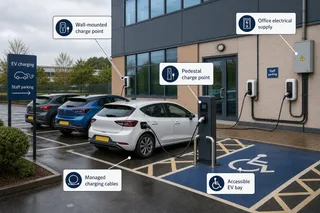
A flat or managed parking bay can be more complex again. The electrical supply may be shared, the parking space may be remote from the flat, the cable route may pass through communal areas, and consent may be needed before any equipment is mounted or cables are run.
Solar home
Benefits from early planning so the chargepoint can work sensibly with generation and household demand.Managed bay
Usually needs permission, route approval and clarity over who owns or maintains the electrical infrastructure.Older house
May reveal consumer unit limitations, unclear earthing details or a need for additional protective devices.Detached garage
Often needs closer design checks because the garage supply may not have been intended for EV charging.Simple driveway
Usually depends on consumer unit suitability, a short cable route and clear private parking.
These examples show why a photo-based quote can be helpful but may not tell the whole story. The more unusual the property, the more valuable a proper survey becomes.
How home, workplace and public charging compare
Home charging is convenient because it happens while the car is parked anyway. Workplace charging can be useful when the vehicle is away from home during daylight hours, while public rapid charging is better suited to longer journeys, occasional top-ups or drivers without reliable private parking. Site owners planning staff or fleet facilities can look at commercial EV charging as a separate design exercise from a domestic installation. The different charging types are not directly interchangeable. A domestic AC chargepoint, a three-phase AC unit and a public rapid DC charger all interact with the car differently, and the vehicle may not accept the maximum rate printed on the equipment.
| Charging option | Typical setting | Main advantage | Main limitation |
|---|---|---|---|
| 3-pin domestic socket | Occasional home use | Can be useful as a temporary fallback | Slow and not ideal as a long-term daily solution |
| Standard AC home chargepoint | Driveways, garages and private bays | Convenient for regular home parking | Depends on property supply and installation suitability |
| Three-phase AC chargepoint | Some homes and commercial sites | Can support higher AC charging where available | Requires suitable supply and a vehicle that can use it |
| Workplace charging | Staff or fleet parking | Useful when vehicles are parked during the working day | Depends on employer provision and parking access |
| Public rapid DC charging | Motorways, hubs and destinations | Useful for longer trips and faster top-ups | Less convenient than charging where the vehicle is parked routinely |
Overview
For many homes, a standard single-phase chargepoint is the sensible starting point. A 22 kW AC unit is not automatically better if the property does not have three-phase supply or the car cannot accept that AC charging rate.
Permissions, DNO involvement and paperwork
EV chargepoints are significant electrical loads, so the local distribution network operator may need to be notified or consulted depending on the installation. The exact route depends on the proposed equipment, existing demand, supply characteristics and local network requirements, so it should be handled by the installer rather than guessed by the homeowner. If you are unsure where consent begins, start with the basics of EV charger permission.
Permission can also depend on who owns or manages the property. Owner-occupiers with private driveways often have a simpler route, while rented homes, leasehold properties, flats and managed parking areas may need consent from a landlord, freeholder, managing agent or residents’ association.
Planning considerations are usually site-specific. External works on listed buildings, conservation areas or visually sensitive locations may need extra care, and homeowners should not assume that every wall-mounted unit in every location is treated the same way.
Rented property
Usually needs landlord consent before installation work is arranged.Leasehold property
May need freeholder or managing-agent approval for external equipment and cable routes.Owner-occupied driveway
Often the simplest permission route, subject to electrical and network checks.Flats and shared parking
Can involve communal electrical infrastructure, bay ownership and access agreements.Listed or sensitive buildings
May need extra planning care before visible equipment is installed.
The safest approach is to collect the property details early: meter position, consumer unit location, parking layout, ownership status, and any management rules for the building or parking bay. That gives the installer enough information to identify likely hurdles before equipment is ordered.
What documents you should receive after installation
A proper handover is part of the installation, not an optional extra. The documents prove what has been installed, how it was tested, how it should be used and what has been notified or registered where applicable.
The exact paperwork depends on the type of property and work carried out, but the homeowner should not be left with only an app login and a verbal explanation. Keep the records with your property documents because they may be useful for warranty claims, future electrical work, selling the property or resolving charger faults.
You should usually expect the relevant electrical certificate, any Building Regulations compliance evidence required for the work and location, and evidence of DNO notification or approval where applicable. The handover should also cover commissioning, product warranty details, user instructions and smart charging setup.
User instructions
Covers safe use, isolation, cable handling, scheduling and fault indicators.Commissioning record
Confirms the chargepoint was set up and tested for safe operation.Manufacturer warranty details
Explains product warranty terms and any registration requirements.Electrical Installation Certificate
Confirms the new electrical work has been inspected and tested.DNO notification or approval evidence
Records the network process followed for the additional EV load.Building Regulations compliance evidence
Shows compliance notification where this is required for the work and location.
If any of these items are missing, ask for them promptly. It is easier to resolve paperwork gaps immediately after installation than months later when an issue appears.
Smart charging, tariffs and solar integration
Smart charging means the chargepoint can control when and how the car charges, rather than simply delivering power whenever it is plugged in. In a home setting, this can help avoid peak periods, coordinate with suitable electricity tariffs, and in some systems respond to solar generation.
Smart does not mean automatic savings in every home. The unit has to be set up correctly, the vehicle has to be available at the right times, and the household needs a tariff or operating pattern that makes scheduling worthwhile. Poor Wi-Fi or a badly configured app can turn useful smart features into frustration.
Solar can contribute to EV charging, especially if the car is parked at home during daylight and the system has compatible controls. However, solar output changes by season and weather, and household demand may use some or all of the generation before the car receives it. A home battery can add flexibility, but it also introduces more design decisions around capacity, inverter limits and priorities.
Connectivity
Reliable internet or data connection is essential for many smart functions.Solar matching
Works best when the car is often at home during daylight and the controls can prioritise surplus generation.Load management
Helps the chargepoint reduce demand when the home is using other high-load appliances.Tariff scheduling
Useful only when the chargepoint, vehicle and energy account are configured correctly.Battery interaction
Needs careful setup so the EV, home battery and household loads do not work against each other.
The best design looks at the property as one energy system. If solar panels, a battery, heat pump, immersion diverter or future electrical upgrades are likely, the chargepoint location and load-management strategy should be planned with that in mind. For businesses planning EV charging alongside rooftop generation, it can also be worth reviewing commercial solar options alongside charger design.
Common mistakes to avoid
One common mistake is buying a chargepoint before checking the property. The chosen unit may need a particular communications method, built-in protection feature, app integration or cable arrangement, and it may not suit the final installation location. It is better to compare home charger options against the survey findings rather than choosing on appearance or headline power alone.
Another mistake is assuming that the highest advertised charging rate will be achieved at home. Charging speed is limited by the vehicle, the chargepoint, the electrical supply, cable design, battery state of charge and sometimes temperature or software settings.
Other mistakes include ignoring the cable route until installation day, treating a 3-pin socket as a permanent daily charging solution, forgetting landlord or freeholder consent, expecting solar panels to fully charge the car all year, and overlooking Wi-Fi or mobile signal at the chargepoint location.
A low quote can also hide missing work. If an installation needs consumer unit changes, load management, a longer cable route or additional protection, those details should be clear before the job starts.
What to ask before booking an installation
Before booking, ask the installer what they have assumed about your supply, cable route, parking position and chargepoint features. A good answer should be specific to your home rather than a generic description of a “standard install”.
It is also worth asking how the installer handles DNO notification or approval, what happens if the main fuse or earthing arrangement needs further checks, and whether the selected chargepoint has the right smart functions for your tariff, vehicle and internet connection.
The most useful information you can provide is practical: photos of the consumer unit and meter area, the parking position, the proposed wall location, any outbuildings or shared access, and details of existing solar, battery storage or high-load appliances. Those details help avoid redesigns and make the quotation more meaningful.
DNO process
Ask whether notification or approval is needed and who will handle it.Smart setup
Ask whether app pairing, scheduling and connectivity checks are included.Certification
Ask which certificates and handover records you will receive.Scope of work
Ask exactly what is included and what would count as extra.Future planning
Ask whether the design allows for solar, battery storage, a heat pump or a second EV.Electrical assumptions
Ask what has been assumed about the consumer unit, earthing and supply capacity.
A well-planned EV charging installation should leave you with a safe, convenient way to charge at home and clear documentation for the electrical work. The right solution depends on the property, the car and how you use it, so treat the survey and design stage as part of the decision rather than a formality.
Plan, Compare & Buy Renewable Energy Solutions
AI does the thinking.
You get the perfect solar match.
Use RoboMo™ to assess your property, compare available technologies and connect with trusted UK installers, suppliers and manufacturers.
Simply enter your postcode, drop a pin on your roof, create your free account and let RoboMo™ analyse your property to find the best solar panels for your home.

You don't have to think
RoboMo™'s AI analyses your roof and does all the hard work.

Accurate & tailored
AI-powered assessment based on your roof, location, and conditions.

Best options, maximum savings
Compare top solar panels for the best performance and value.

Simple, fast & effortless
Provide a few details, sit back and watch your results unfold.
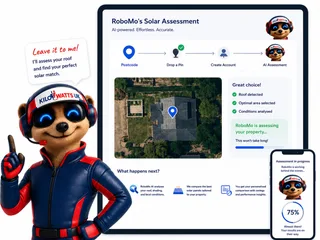

STEP 1
Choose Home, Business or Industrial
Enter your postcode to start your assessment.
STEP 2

Drop a pin on your roof
STEP 3

Create your free account
STEP 4

Sit back and watch RoboMo™ work
RoboMo™ analyses your roof and builds your personalised solar comparison.

BATTERY ROI TOOL
See what a battery saves on your bill
Enter the day rate, off-peak rate and export rate. The calculator ranks batteries in the Kilowatts shop over 10 years.
Home batteries also suit offices and small commercial sites. Industrial batteries are listed on their own calculator.

Step 1
Enter your postcode
Start designing your wind energy system in seconds.
Are you an installer, distributor or renewable energy business?
Kilowatts UK is expanding the Flower Turbines partner network across the UK.
Become A Flower Turbines PartnerKilowatts UK is an authorised representative
Flower Turbines
Compact vertical-axis turbines built for real UK sites, not just open farmland.
They start in light wind, sit in a small footprint, and are bird-safe by design. Cluster them as a bouquet and the group performs better together than the same turbines standing alone. Enter your postcode for a location-based generation estimate. Figures use area weather data and will differ if buildings, trees or hills sit in the way.
Starts in light UK wind
Built to generate in typical UK wind, not only open farmland.
Small rooftop or ground footprint
Compact towers for roofs, yards and tight sites.
Bird-safe slow rotation
Slow vertical-axis spin, bird-safe by design.
Bouquet clusters raise output
Grouped turbines outperform the same units standing alone.


STEP 2

Choose a location
STEP 3

Place your cluster
Tap the map where you want the turbine cluster to go.
STEP 4

Instant generation forecasts
Compare different turbine layouts and see annual generation forecasts instantly.
STEP 5

No commitment required
Explore different configurations before deciding whether to request a quotation.
Related articles
Mo's Mission Nominations
FAQ
Need Help? RoboMo's Got Answers
What is an EV charging station installation?
EV charging station installation equips homes or businesses with dedicated electric vehicle chargers, allowing for faster and more convenient charging compared to standard outlets or public networks.
What type of EV charger should I install at home?
Most UK homes use 7 kW Type 2 AC chargers for overnight charging. If you have a three-phase supply, a 22 kW charger offers faster top-ups. Tethered or untethered models are available depending on your preference.
How long does it take to install an EV charger?
Most home EV charger installations take 2–4 hours, depending on cable runs, consumer unit upgrades, and mounting requirements. A site survey determines exact installation needs.
Are there grants for installing an EV charger in the UK?
Yes, the UK’s Electric Vehicle Chargepoint Grant offers up to £350 per socket, covering 75% of installation costs. Residential chargers also qualify for 0% VAT.
What does the EV charger installation process involve?
Installation includes a site survey, electrical checks or upgrades, choosing a charger model, physical mounting, safety testing, certification, and a demonstration of smart features.
How much does it cost to install an EV charger at home?
A typical residential EV charger installation costs between £800 and £1,500 depending on charger power, location, and any electrical upgrades needed.
Can I charge my EV using solar panels at home?
Yes, EV chargers can be integrated with solar PV systems to prioritise self-consumption of green energy. Smart energy management systems automate this process.
What is the difference between tethered and untethered EV chargers?
Tethered chargers come with a built-in cable for convenience, while untethered models offer flexibility by letting you use any compatible Type 2 cable.
What certifications should my EV charger installer have?
Look for installers who are NICEIC or QCC certified, and OLEV Approved. These qualifications ensure grant eligibility and safe, compliant installations.
What are the latest trends in EV charging technology?
Emerging trends include Vehicle-to-Grid (V2G) charging, high-power DC chargers, solar integration, AI-driven charging schedules, and smart load balancing.