


Home Batteries in the UK: Separating Fact from Hype
Published: 2026-07-25 16:42:36
Updated: 2026-07-30 17:34:34
Discover the costs associated with installing a home battery in the UK, including factors that affect the price.
Home Batteries in the UK: Separating Fact from Hype
A typical home battery cost in the UK is around £2,500 to £10,000 installed, depending on usable capacity, brand, inverter type, installation complexity and whether it is fitted with solar panels. Smaller batteries are usually cheaper, but the best value is not always the biggest system.
For many UK homes, the practical range is around 5–10 kWh of usable storage. That can shift a meaningful amount of electricity from daytime solar generation or cheaper off-peak tariff periods into the evening, but it still needs to match the property’s actual consumption, tariff and export rate.
The headline price is only part of the decision. Battery savings depend heavily on your tariff, solar generation, evening demand, export payment, installation layout, round-trip efficiency and how well the system is configured after installation.
Typical UK Home Battery Cost Ranges
Installed home battery prices in the UK commonly sit between £2,500 and £10,000, with larger or premium systems going beyond the lower end of that range. The cost per kWh of installed storage often falls somewhere around £400 to £900 per kWh, but this varies because the installation work, inverter and controls are not always proportional to battery size. These are 2026 planning ranges for typical domestic projects, not fixed market prices or a quotation. They reflect the way UK battery quotes are commonly structured: battery modules, inverter or control equipment, electrical protection, cabling, monitoring setup, labour, commissioning and any site-specific remedial works. Unusual cable routes, older consumer units, backup-power equipment or complex retrofits can move a quote outside the range. A battery-only retrofit can be more expensive per kWh than a battery installed at the same time as solar panels. The installer may need to add separate equipment, configure metering and work around an existing electrical setup. If solar panels and a battery are designed together, a hybrid inverter can sometimes reduce duplication and make the overall system neater, especially when you compare home solar options before committing to a layout.
| Battery size | Typical installed cost range | Where it tends to suit |
|---|---|---|
| Around 3–5 kWh | £2,500–£4,500 | Lower-use homes, small solar arrays, modest evening demand |
| Around 5–10 kWh | £4,000–£7,000 | Many typical UK homes with solar or smart tariff use |
| Around 10–15 kWh or more | £6,000–£10,000+ | Higher-use homes, larger solar arrays, EV charging households or stronger load-shifting needs |
What Actually Drives the Price
The battery itself is only one part of the installed cost. A quote may also include an inverter, gateway or control equipment, protection devices, cabling, metering, monitoring setup, scaffolding if solar work is happening at the same time, and labour for installation and commissioning.
Installation labour commonly adds around £800 to £2,000 depending on complexity. A straightforward wall-mounted battery close to the consumer unit is usually simpler than a long cable route through an older property, an awkward outdoor location, or a job requiring consumer unit upgrades.
Capacity, brand and inverter choice all affect the price. Larger usable capacity generally costs more, although the cost per kWh can vary by system. Premium and modular systems often sit at the higher end of the market. Hybrid inverters can be efficient for new solar and battery installs, while AC-coupled batteries can be more flexible for retrofits. The choice between AC and DC systems can affect both design and cost.
Smart controls
Tariff integration, monitoring and charging schedules need compatible equipment and careful setup.Backup equipment
Power-cut operation often needs extra hardware, dedicated circuits and specific commissioning, rather than being included by default.Location and access
Battery placement must consider weather exposure, temperature range, ventilation, manufacturer clearances, cable runs and safe maintenance access.Retrofit complexity
Adding storage to an existing solar system may require compatibility checks with the inverter, generation meter, export arrangement and monitoring platform.Electrical condition
Older consumer units, limited space, earthing issues or non-standard wiring can increase labour and materials.
This is why two homes asking for the same battery size can receive noticeably different quotes. The cheaper job may simply have a cleaner electrical layout with fewer changes required.
Solar Battery, Battery-Only, or Both Together
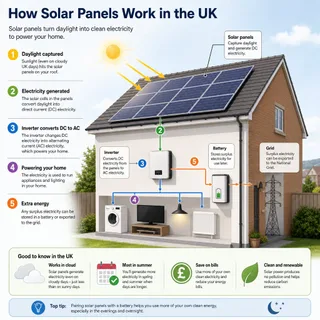
A home battery can work with solar panels or without them. With solar, the battery stores surplus daytime generation so it can be used later, often in the evening when household demand rises. Without solar, the battery is normally charged from the grid during cheaper off-peak periods and discharged when electricity is more expensive. The right approach depends on your property and tariff. Solar plus battery can improve self-consumption, while a battery-only system depends much more on time-of-use tariffs and reliable scheduling. If you are not adding panels, it is worth checking how a battery without solar would actually be charged and used. The export tariff matters as much as the import tariff. If you are paid a strong rate for exporting solar electricity, storing every spare unit may not always be the best financial choice. A good design should compare the value of using stored energy against the export payment you would otherwise receive.
| Setup | Main advantage | Main limitation |
|---|---|---|
| Solar panels with battery installed together | Integrated design, shared inverter options and strong self-consumption potential | Higher upfront project cost than battery-only |
| Battery added to existing solar | Can make better use of surplus solar generation | Compatibility with the existing inverter and meter setup must be checked |
| Battery without solar | Can shift cheap off-peak electricity into peak periods | Savings depend strongly on tariff availability and correct scheduling |
How Much Capacity Do You Really Need
Many UK households use roughly 7–10 kWh of electricity per day, but that does not mean every home needs a 10 kWh battery. Ofgem’s Typical Domestic Consumption Values put a medium single-rate electricity user at 2,700 kWh a year, which is about 7.4 kWh a day, while homes with electric heating, EV charging or higher occupancy can use much more.
What matters is when you use electricity, how much surplus solar you produce, and how much cheap-rate electricity you can realistically store and use. A battery that matches your evening load and tariff pattern can be more useful than a larger unit that rarely cycles fully.
Oversizing is one of the most common mistakes. A battery that regularly sits full or empty without cycling usefully may add cost without adding much saving. A well-sized mid-range system can outperform a larger system if it better matches the home’s daily pattern.
Evening demand
Homes using more electricity after sunset usually benefit more from stored energy.Future changes
EV charging, heat pumps or home working can change the right battery size.Solar generation
A small solar array may not fill a large battery consistently outside brighter months.Tariff structure
Time-of-use tariffs can improve the case for charging a battery overnight.Backup expectations
Standard battery installations do not always provide backup power during a power cut.
The best sizing process starts with real consumption data, not guesswork. Half-hourly smart meter data, solar generation estimates and seasonal patterns are far more useful than choosing the largest battery that fits the wall, and a guide to battery sizing can help frame the decision.
Payback, Savings and the Reality Behind the Hype
Typical UK battery payback periods can range from around 7 to 15 years, but the result depends heavily on usage and tariffs. That range is not a promise; it is a planning estimate for homes where the battery is sized sensibly, cycled regularly and paired with either solar generation, a suitable time-of-use tariff, or both.
A battery does not eliminate electricity bills. It can reduce grid imports, shift cheaper electricity into expensive periods and help you use more of your own solar power, but you will still pay standing charges and may still import from the grid at times.
Round-trip efficiency also matters. Batteries typically lose some energy during charging and discharging, so the electricity you get back is not exactly the same as the electricity you put in. That does not make batteries ineffective, but it should be included in any realistic payback calculation. Stronger case: Homes with solar panels, high evening use and access to suitable smart tariffs. Weaker case: Very low-use homes, poor tariff options or systems that are rarely charged and discharged. Tariff-sensitive case: Battery-only installations where the saving depends on the difference between off-peak and peak rates. Export-sensitive case: Solar homes where it may sometimes be better to export electricity than store it, depending on the export tariff. Comfort case: Some buyers value resilience, control and lower grid dependence even where payback is not the only goal. For a simple worked example, assume a battery delivers 9 kWh of usable electricity on a full cycle, has 90% round-trip efficiency, charges from a cheap off-peak tariff at 8p/kWh and avoids peak import at 28p/kWh. To deliver 9 kWh, it needs about 10 kWh of off-peak electricity. The avoided peak import is worth £2.52, while the off-peak charge costs about £0.80, giving a gross saving of around £1.72 per full cycle. If that battery completes 300 useful cycles a year, the annual gross saving is about £516 before allowing for degradation, standing charges, tariff changes, missed cycles and any maintenance or finance costs. If the installed battery system cost £6,000, that simplified example suggests a payback of roughly 12 years. If the tariff spread narrows, the battery cycles only 180 times a year, or a high export tariff would otherwise have paid well for surplus solar, the payback becomes longer. This is why battery quotes should not rely on vague claims such as “cut your bills by 80%”. The useful questions are how many kWh the battery is expected to discharge each year, what tariff assumptions are being used, what export value is being sacrificed, what round-trip efficiency has been assumed, and whether the proposed operating schedule fits your household.
DNO, Export and Grid Compliance
A grid-connected battery is not just another appliance. Because it can export electricity or operate in parallel with the network, the installer needs to consider Distribution Network Operator requirements as part of the design.
In the UK, small generation and storage connections commonly involve Engineering Recommendation G98 or G99, depending on inverter size, type testing, export capacity and overall site configuration. Some systems may be suitable for notification after installation, while others need prior application and approval before commissioning. Export limitation can also be part of the design where the DNO sets or requires an agreed export limit.
The installer should handle the DNO process, but the homeowner should still ask what route applies. A quote should make clear whether the system is being installed under G98, whether a G99 application is required, whether export limitation is being used, and whether any approval must be received before the system is switched on for normal operation.
Paperwork
Keep DNO correspondence, commissioning certificates, warranty documents and user manuals with your home energy records.Existing solar
The battery may change the site’s total generation and export behaviour, so existing PV capacity must be included in the assessment.Prior approval
Larger systems, non-standard configurations or higher export capacity may need DNO approval before commissioning.Export limitation
Some homes can use equipment to limit export, but it must be designed and configured correctly.Installer responsibility
The installer should prepare the DNO notification or application and provide the relevant commissioning information.
DNO requirements are not a reason to avoid batteries, but they are a reason to use a competent installer. Skipping the process can create compliance problems and may affect future changes to your solar, battery or EV charging setup.
Safety, Location and Installation Standards
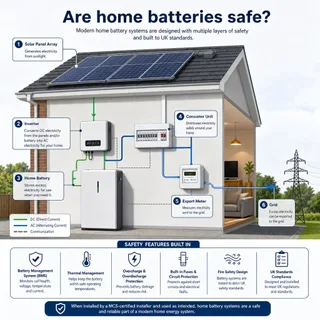
A good battery installation is about more than mounting a box on a wall. The installer has to consider safe cable routes, protective devices, meter compatibility, inverter communication, monitoring, ventilation, temperature range and access for future maintenance.
Final battery placement should follow the manufacturer’s installation instructions, the relevant electrical regulations, MCS guidance where the installation is MCS-certified, and site-specific fire and access considerations. The right location depends on the product, property layout, wall construction, weather exposure, clearances, escape routes and how the battery will be isolated or serviced.
Outdoor wall-mounted installations are common in the UK, but the chosen position still matters. Cold temperatures can reduce performance, while poor access can make servicing more difficult. Some systems also rely on internet connectivity for monitoring, updates and smart tariff operation. Manufacturer clearances: Batteries need the space, mounting method and environmental conditions specified by the manufacturer. Fire separation: The installer should consider nearby openings, combustible materials, escape routes and access for safe isolation. Electrical competence: Installation should be completed by a competent electrician using appropriate protective devices and testing. Weather rating: Outdoor batteries need to be suitable for the proposed location and protected from conditions outside their rated limits. Monitoring setup: Poor app configuration can undermine savings if charge and discharge schedules are wrong. Warranty conditions: Battery warranties usually cover a period of time, a set amount of energy throughput or a cycle-related limit, so usage patterns matter. Backup power is often misunderstood. Batteries do not provide whole-home backup by default and may need extra hardware, dedicated circuits and configuration. If backup is important, it should be specified clearly before the quote is accepted, including what happens during a power cut.
VAT, Warranties and Paperwork
VAT on home battery installations is currently 0% when installed in qualifying residential settings, subject to HMRC rules and the scope of the work. HMRC’s VAT Notice 708/6 is the key source to check, and it lists electrical battery storage within the energy-saving materials guidance. Because tax policy can change, the VAT treatment should always be confirmed at the point of quotation.
The warranty is just as important as the VAT line. Battery warranties usually contain conditions around installation method, operating temperature, firmware, internet connectivity, depth of discharge, cycles or energy throughput. A longer warranty is only useful if the installation and usage comply with the manufacturer’s terms.
The handover pack should be clear enough for you to understand how the system operates and for a future electrician or homeowner to see what has been installed. If a quote is vague about paperwork, commissioning or monitoring, ask before accepting it.
VAT position
Ask the installer to show how VAT has been applied and which parts of the quote qualify.DNO documents
Keep notification or approval records, especially if you may add more solar, storage or EV charging later.Warranty terms
Check both the years covered and the cycle or throughput limits.Monitoring access
Make sure you have owner access to the app or portal, not only installer access.Commissioning records
Keep installation certificates, test results and inverter or battery commissioning documents.
Do not rely on old forum posts or sales claims for tax and compliance points. HMRC guidance, MCS guidance, Energy Networks Association materials and your installer’s DNO process are better reference points than second-hand advice.
Is a Home Battery Worth It for Your Home
A home battery is most likely to be worth considering if you have solar panels, use a meaningful amount of electricity in the evening, or can access a time-of-use tariff that lets you charge cheaply and discharge when rates are higher. It is less compelling for very low-use households or anyone expecting instant payback without active optimisation.
The best quotes explain the battery price, usable capacity, inverter arrangement, installation assumptions, warranty, monitoring, backup capability, DNO route and expected operating strategy. If those points are unclear, the cheapest quote may not be the best value.
Before choosing a system, ask for a design based on your actual usage rather than a generic package. A well-specified 5–10 kWh system may be more sensible than a larger premium battery if it matches your property, tariff and daily electricity pattern. For a site-specific assessment, you can book a free survey.
UK Sources and Assumptions Behind This Guide
The figures and rules in this guide should be treated as planning guidance, not a personalised design or financial recommendation. Home battery performance depends on the property, electrical installation, tariff, solar generation, export rate and how the system is configured.
For factual checks, the most relevant UK sources are HMRC guidance for VAT on energy-saving materials, Ofgem Typical Domestic Consumption Values for household electricity-use context, Energy Networks Association guidance for connecting generation and storage to the distribution network, and MCS guidance for certified small-scale renewables and battery storage installation standards.
Cost methodology: The installed cost ranges are 2026 domestic planning ranges for typical UK battery projects and should be replaced by site-specific quotes before any buying decision. Usage context: The daily electricity-use figures are benchmarked against Ofgem typical domestic consumption values, then adjusted in the article to reflect higher-use homes. Payback methodology: The example uses tariff spread, usable delivered energy, round-trip efficiency and annual useful cycles; it excludes finance costs and assumes the tariff remains available. Compliance basis: DNO comments are based on the UK G98 and G99 framework used for small generation and storage connections, with the final route depending on the installed configuration. Safety basis: Location and installation advice should always be checked against manufacturer instructions, electrical regulations, competent-installer practice and any MCS requirements that apply to the job.
Plan, Compare & Buy Renewable Energy Solutions
AI does the thinking.
You get the perfect solar match.
Use RoboMo™ to assess your property, compare available technologies and connect with trusted UK installers, suppliers and manufacturers.
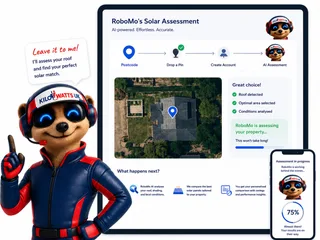
Simply enter your postcode, drop a pin on your roof, create your free account and let RoboMo™ analyse your property to find the best solar panels for your home.

You don't have to think
RoboMo™'s AI analyses your roof and does all the hard work.

Accurate & tailored
AI-powered assessment based on your roof, location, and conditions.

Best options, maximum savings
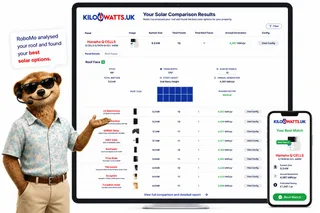
Compare top solar panels for the best performance and value.

Simple, fast & effortless
Provide a few details, sit back and watch your results unfold.
STEP 1
Choose Home, Business or Industrial
Enter your postcode to start your assessment.
STEP 2

Drop a pin on your roof
STEP 3

Create your free account
STEP 4

Sit back and watch RoboMo™ work
RoboMo™ analyses your roof and builds your personalised solar comparison.

Step 1
Enter your postcode
Start designing your wind energy system in seconds.
Are you an installer, distributor or renewable energy business?
Kilowatts UK is expanding the Flower Turbines partner network across the UK.
Become A Flower Turbines PartnerKilowatts UK is an authorised representative
Flower Turbines
Compact vertical-axis turbines built for real UK sites, not just open farmland.
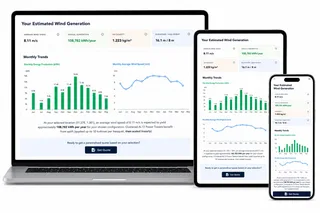
They start in light wind, sit in a small footprint, and are bird-safe by design. Cluster them as a bouquet and the group performs better together than the same turbines standing alone. Enter your postcode for a location-based generation estimate. Figures use area weather data and will differ if buildings, trees or hills sit in the way.
Starts in light UK wind
Built to generate in typical UK wind, not only open farmland.
Small rooftop or ground footprint
Compact towers for roofs, yards and tight sites.
Bird-safe slow rotation
Slow vertical-axis spin, bird-safe by design.
Bouquet clusters raise output
Grouped turbines outperform the same units standing alone.

STEP 2

Choose a location
STEP 3

Place your cluster
Tap the map where you want the turbine cluster to go.
STEP 4

Instant generation forecasts
Compare different turbine layouts and see annual generation forecasts instantly.
STEP 5

No commitment required
Explore different configurations before deciding whether to request a quotation.
Related articles
Mo's Mission Nominations
FAQ
Need Help? RoboMo's Got Answers
How much does a home battery cost in the UK?
Home batteries have become increasingly popular in the UK as a way to reduce reliance on the grid and save money on energy bills. The cost of a home battery can vary significantly depending on several key factors, including the size and capacity of the battery, the brand and technology used, and the complexity of the installation. The average cost of a home battery in the UK ranges from £2,500 to £10,000 installed. Smaller systems typically cost between £1,000 and £4,500, while larger systems can range from £6,000 to £10,000 or more.
What affects the cost of home batteries?
In addition to the upfront cost of the battery itself, there are also installation costs to consider. These can range from £800 to £2,000 depending on the complexity of the installation, with labour costs increasing if additional setup and configuration is required.
Can I get a home battery without solar panels?
Yes, it's possible to purchase a home battery without solar panels. However, batteries without solar panels are usually more expensive per kWh due to the added expense of setup and configuration. Adding a battery to an existing system can often be cheaper than installing both together.
What should I consider when choosing a home battery?
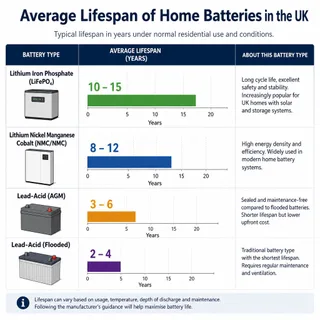
When choosing a home battery, it's essential to consider several key factors. These include the usable capacity of the battery, its round-trip efficiency, and lifespan. You should also choose a reputable installer who can provide guidance on the best type of battery for your specific needs and circumstances.
References:
[How much does a home battery cost in the uk](https://kilowatts.uk/resources/how-much-does-a-home-battery-cost-in-the-uk/) [What is the best home battery?](/blog/what-is-the-best-home-battery) [AC vs DC Coupled Battery Storage: Which Is Better for UK Homes?](/blog/ac-vs-dc-coupled-battery-storage-which-is-better-for-uk-homes)