


What PAYG Solar Means for UK Businesses
Published: 2026-07-18 16:14:35
Updated: 2026-07-26 18:36:53
Instead, the business pays for the electricity generated, or pays a regular fee, under a longer-term commercial agreement.
What PAYG solar means for a UK business
PAYG solar for businesses usually means using solar panels on your premises without paying the full installation cost upfront. Instead, the business pays for the electricity generated, or pays a regular fee, under a longer-term commercial agreement.
For UK businesses, PAYG solar is not normally a single regulated product category. Suppliers may use the term to describe a commercial solar power purchase agreement, an equipment lease, or a subscription-style solar service.
The most common PAYG-style route for larger commercial sites is a solar power purchase agreement, usually called a solar PPA. In this model, a third party funds, owns, installs, operates, and maintains the system. The business then buys the electricity generated on site at an agreed rate. The basic idea is straightforward. The business avoids most or all of the upfront installation cost. The provider recovers its investment through electricity charges, lease payments, or service fees over the contract term. This can make solar easier to adopt, but it does not make the system free. In summary:
- PAYG solar can reduce upfront capital spending.
- The provider usually owns the system during the contract.
- The business normally needs strong daytime electricity demand.
- Contracts can run for many years.
- Outright ownership may deliver better lifetime returns.
- Roof, grid, metering, lease, and legal constraints can prevent a project from working.
The right answer depends on the site and the agreement. A cold store, factory, farm building, school, depot, hotel, office, or leisure centre with steady daytime electricity use may be a good candidate. A shaded roof, short lease, weak electrical infrastructure, roof nearing replacement, or restrictive contract can make PAYG solar difficult or unsuitable. Export income and environmental claims depend on the contract.
The main PAYG solar models
For UK businesses, PAYG solar normally falls into three broad models. The wording used by suppliers can vary, so the contract matters more than the headline label.
Solar PPA: A third party pays for and owns the solar PV system, then sells the electricity generated on site to the business at an agreed pence-per-kWh rate. Solar lease: The business pays a fixed rental amount for use of the solar equipment, while ownership may remain with the lessor during the term. Solar subscription: The business pays a regular fee for an agreed solar service package, usually including operation, monitoring, and maintenance. Outright purchase: The business buys the system itself, owns the asset, and keeps more control over export income, maintenance choices, and long-term financial benefit. Who owns the equipment. Who receives export income.
A PPA is often the closest match to “pay as you go” because the business pays for solar electricity produced and used, rather than buying the panels. The agreed PPA rate is usually intended to be lower than the business’s grid import tariff. The true saving depends on the full electricity contract. It also depends on how much solar power is used on site at the time it is generated. A lease works differently. The payment may be fixed even if solar output varies. That can help with budgeting, but it makes performance guarantees, downtime provisions, and maintenance obligations especially important. A subscription-style offer may bundle design, installation, monitoring, maintenance, and support into one service. This can be convenient, but the business should still check the key commercial points: The same solar panels may be used under each model. The important difference is who owns the asset, who carries the risk, and who keeps the long-term value. Who is responsible for repairs and replacements. What happens if the roof needs work. What happens at the end of the term. How early termination is handled.
How the electricity and money flow
Under a typical commercial solar PPA, solar panels generate electricity on the business premises. The building uses that power first where there is demand at the same time.
If the building needs more power than the solar system is producing, it imports electricity from the grid as usual. If solar generation is higher than site demand, the surplus may be exported.
Export income belongs to whoever the contract says it belongs to. In many PAYG arrangements, the asset owner keeps export revenue because it funded and owns the system. In some deals, export value may be shared or reflected in the price offered to the site user. Metering is central to fair billing. A PPA normally relies on generation metering. The main import meter records electricity bought from the supplier, while an export meter records surplus electricity sent to the grid. Poor metering design can cause disputes. This is especially true where there are multiple supplies, sub-meters, tenant areas, temporary shutdowns, or complex site operations. A good PAYG contract should explain:
- How metered solar generation is billed.
- What happens if a meter fails.
- Who can access generation and consumption data.
- How estimates are made during outages.
- How billing disputes are resolved.
- Whether standing charges, levies, or other electricity contract costs are affected.
These details are not just administrative. They determine whether the commercial saving can be verified over time. The grid supply also remains necessary. Solar output changes with daylight, weather, season, and system availability. PAYG solar can reduce imported electricity, but it rarely removes the need for a grid connection.
Why businesses consider PAYG solar
The main attraction is avoiding a large upfront capital cost. Buying a commercial solar system outright can require significant expenditure, even though commercial solar can be cost-effective over the long term.
PAYG solar can allow a business to use its capital elsewhere while still reducing exposure to grid electricity costs.
It can also shift some operational responsibility to the provider. In many PAYG models, the provider deals with monitoring, maintenance, inverter repairs, performance checks, and system insurance. This can suit businesses that do not want to manage a generation asset directly. PAYG solar may be relevant where the business has: A suitable roof or land area. Stable long-term occupancy. Strong daytime electricity demand. Limited appetite for upfront capital spend. A preference for a managed service. A contract that allocates risks clearly. It can also suit some landlord and tenant situations, but only if the legal structure works. The agreement must clearly set out who benefits from the electricity, who grants roof rights, and who remains liable if the tenant leaves. The trade-off is reduced flexibility. A business that buys the system outright usually has more control over the asset, export arrangements, future battery integration, maintenance choices, and end-of-life decisions. If the business can fund the system and expects to occupy the site long term, outright ownership may produce a stronger lifetime financial outcome. PAYG is therefore a financing and risk-allocation decision. It is not just a solar technology decision. The panels may look the same on the roof, but the commercial result can be very different.
What makes a site suitable
The starting point is not roof size alone. A large roof with poor electricity matching can produce less value than a smaller roof serving a site with steady daytime demand.
Half-hourly electricity data is often the best starting point. Annual kWh totals can hide seasonal closures, weekend shutdowns, night shifts, and short demand peaks.
Roof condition is equally important. Solar panels can last longer than some roof coverings. A roof close to replacement is a poor candidate unless reroofing is planned first. Removing and reinstalling panels later can be expensive and disruptive. Under a third-party ownership model, it can also be contractually awkward. Structural capacity must be checked. Commercial roofs may have limited spare load capacity, especially where flat-roof systems need ballast. Wind uplift, edge zones, roof membrane compatibility, roof lights, fragile materials, drainage routes, and safe maintenance access all affect the design. Electrical infrastructure can also limit the scheme. The main LV panel may need spare capacity or modification. Cable routes can be costly. Inverter locations need to allow for access, heat management, noise, and cable length. Older switchgear or limited transformer capacity can reduce the viable system size. Common suitability checks include:
- The business uses electricity during daylight hours.
- The roof is in good condition.
- The structure can take the additional load.
- Shading from plant and nearby buildings is limited.
- The site has safe access for installation and maintenance.
- The lease or ownership position allows long-term consent.
A site can fail on any one of these points. For example, a tenant with only a few years left on its lease may struggle to sign a long PPA, even if the roof and demand profile are excellent. The local grid can accept the proposed connection. The electrical infrastructure can accommodate the system. The contract length matches the site occupation plan. Insurer, fire safety, and landlord requirements can be met.
Grid connection, planning, and government support
Most commercial solar projects need approval from the Distribution Network Operator, known as the DNO. The DNO is the local electricity network operator, not the electricity supplier.
Many commercial systems fall under G99 connection rules. Only smaller systems may fall under G98.
Export capacity is not guaranteed. The DNO may allow generation but limit export. It may also require export limitation equipment. Larger projects can need connection studies, protection settings, witness testing, or network reinforcement. These steps can affect both project timing and cost. Planning rules also need checking. Rooftop commercial solar is often permitted development in England, subject to conditions. Extra consent may be needed for listed buildings, conservation areas, scheduled monuments, protected sites, and visually sensitive locations. Scotland, Wales, and Northern Ireland have their own planning regimes, so local advice may be needed. UK government support for business solar is more limited than historic subsidy schemes. The Feed-in Tariff and Renewables Obligation are closed to new applicants. The Smart Export Guarantee can pay for exported electricity from eligible low-carbon generation up to 5 MW. Under a PAYG arrangement, it is often more relevant to the system owner than to the site occupier. The contract should state who receives any export payments. There may be local authority or regional business decarbonisation grants, but availability changes by area and funding round. Businesses should avoid assuming grant funding is available until it is confirmed in writing. Businesses buying assets may also need to consider capital allowances, VAT treatment, and business rates treatment. Under a PAYG model, ownership-related tax benefits may sit with the funder rather than the occupier. Government policy can influence solar investment, grid reform, planning rules, and tax treatment. It does not remove site-level constraints. Roof condition, connection capacity, contract risk, and electricity use still decide whether a PAYG project works in practice.
Contract terms that matter
The contract is where many PAYG solar risks sit. A low starting tariff can look attractive, but indexation, contract length, minimum purchase obligations, termination charges, export rights, and roof works provisions can change the value significantly.
Key terms to review include:
PPA rate
The agreed unit price determines the immediate saving against grid imports, but it should be tested against the business’s actual demand profile.Indexation
An annual uplift linked to inflation or a fixed increase can materially affect long-term costs.Contract length
Longer terms may support a lower rate, but they reduce flexibility if the business changes premises or operations.Export treatment
The contract should state who receives export revenue and who can claim any environmental attributes.Roof works procedure
The agreement should say who pays for temporary removal and reinstatement if roof maintenance is needed.Minimum purchase obligations
Some contracts require payment for solar electricity generated and consumed on site, or include deemed generation if the business causes an outage.
Early termination provisions deserve particular attention. If the site is sold, the tenant leaves, the roof is redeveloped, or operations change, the business may face buyout costs or assignment requirements. These clauses should be understood before signing. They should not be discovered during a property transaction. Carbon reporting also needs care. The contract should clarify who can claim renewable energy benefits, including any Renewable Energy Guarantees of Origin where relevant. Businesses should avoid double counting if export rights or environmental attributes are held by another party. A fair PAYG agreement should make the commercial position clear in plain English. If the saving depends on assumptions, those assumptions should be visible and testable. Maintenance scope — Response times, monitoring duties, inverter replacement, cleaning assumptions, and spare parts responsibility should be clear. Metering and billing — The contract should explain how generation is measured, how errors are corrected, and how disputes are handled. Insurance and liability — The parties should understand who insures the system, the roof interface, and any business interruption risk. Assignment rights — The contract should explain what happens if the property is sold or the tenant changes. End-of-term options — The business should know whether the system is removed, transferred, bought out, or extended.
PAYG solar compared with buying outright
PAYG solar and outright purchase can both use the same panels, inverters, mounting systems, and monitoring equipment. The difference is commercial control.
PAYG usually lowers upfront cost and shifts some responsibility to the provider. Ownership usually gives more flexibility and potentially more lifetime value.
A business choosing between the two should not look only at the first-year saving. It should compare: Total contract cost. Avoided grid imports. Export value. Maintenance obligations. Tax treatment. Insurance requirements. PAYG may be the better fit where capital is limited, the business wants a managed service, and the contract is fair. Outright purchase may be better where the business has available funds, strong long-term site control, and the appetite to manage the asset. Batteries add another decision. They are not automatically included in PAYG solar and can increase both cost and contract complexity. Battery storage may help if demand peaks occur outside solar hours, or where the business wants to reduce some peak import charges. It should be modelled using half-hourly data rather than assumed as standard. The best design is not always the largest possible roof coverage. Fire access routes, roof lights, wind loading, shading, grid export limits, cable routes, and maintenance access often reduce the practical system size. In many commercial projects, using more solar on site is more valuable than exporting a larger surplus. Future site plans. Opportunity cost of using capital. End-of-term rights. Early exit risk.
Common mistakes to avoid
A frequent mistake is treating PAYG solar as free solar. The business is still paying, just through a different structure. The provider’s costs and return are recovered through the PPA tariff, lease fee, or service payment.
Another mistake is comparing headline rates without reading the terms. A lower initial pence-per-kWh rate may be less attractive if it has strong indexation, poor flexibility, high termination charges, or unfavourable export treatment.
Some businesses also assume every roof should be filled with panels. In practice, roof access routes, fire strategy, shading, structural load, wind uplift, DNO limits, and maintenance requirements shape the final array. An installer-level design is not just a panel count on a satellite image. Operational disruption is often underestimated. Surveys, access equipment, scaffolding, shutdowns, permits to work, site inductions, asbestos checks, roof warranties, insurer requirements, and landlord consent can all affect the programme. The most useful early questions are practical ones: Is the roof likely to need replacement during the contract? Does the business have enough daytime electricity demand? Is the lease long enough for a third-party-owned system? Can the DNO accept the proposed generation and export? Who receives export income? What happens if the business moves or sells the site? Good projects usually start with evidence. Useful documents include half-hourly consumption data, roof information, electrical drawings where available, lease details, and a realistic view of future site plans. Without that evidence, PAYG savings are easy to overstate. Who pays if panels must be removed for roof works? How is underperformance identified and corrected? What happens if the site’s electricity use falls? Can the contract be assigned to a new occupier or owner?
Practical next steps
A business considering PAYG solar should first collect the information needed for a proper assessment. This usually includes recent electricity bills, half-hourly data if available, roof drawings or survey information, lease documents, and any known plans for reroofing, EV charging, heat pumps, building expansion, or relocation.
The next step is to compare PAYG with outright purchase and conventional finance. The cheapest-looking option at the start may not be the best option over the life of the system.
The comparison should include ownership, maintenance, export value, tax position, contract flexibility, and end-of-term rights. For a serious proposal, ask providers to model the system using real consumption data rather than annual averages. The proposal should show expected self-consumption, export assumptions, grid connection requirements, maintenance scope, metering method, and contract risks in plain terms. PAYG solar can be a practical route for UK businesses that want solar without a large upfront spend. It works best when the site has good daylight electricity use, a suitable roof, stable occupancy, a workable grid connection, and a contract that clearly allocates cost, risk, ownership, and value. If you are weighing up PAYG solar, a PPA, or buying a commercial solar system outright, compare the options before committing. A site-specific assessment can show whether the numbers, roof, grid connection, and contract structure are likely to work for your business.
Plan, Compare & Buy Renewable Energy Solutions
AI does the thinking.
You get the perfect solar match.
Use RoboMo™ to assess your property, compare available technologies and connect with trusted UK installers, suppliers and manufacturers.
Simply enter your postcode, drop a pin on your roof, create your free account and let RoboMo™ analyse your property to find the best solar panels for your home.

You don't have to think
RoboMo™'s AI analyses your roof and does all the hard work.

Accurate & tailored
AI-powered assessment based on your roof, location, and conditions.

Best options, maximum savings
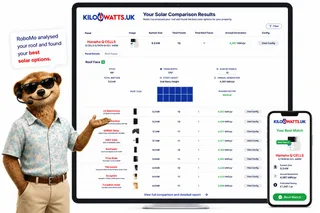
Compare top solar panels for the best performance and value.

Simple, fast & effortless
Provide a few details, sit back and watch your results unfold.
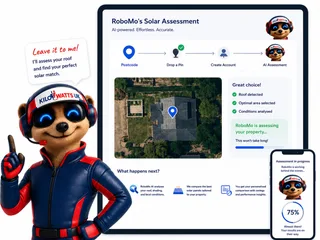
STEP 1
Choose Home, Business or Industrial
Enter your postcode to start your assessment.
STEP 2

Drop a pin on your roof
STEP 3

Create your free account
STEP 4

Sit back and watch RoboMo™ work
RoboMo™ analyses your roof and builds your personalised solar comparison.

Step 1
Enter your postcode
Start designing your wind energy system in seconds.
Are you an installer, distributor or renewable energy business?
Kilowatts UK is expanding the Flower Turbines partner network across the UK.
Become A Flower Turbines PartnerKilowatts UK is an authorised representative
Flower Turbines
Compact vertical-axis turbines built for real UK sites, not just open farmland.
They start in light wind, sit in a small footprint, and are bird-safe by design. Cluster them as a bouquet and the group performs better together than the same turbines standing alone. Enter your postcode for a location-based generation estimate. Figures use area weather data and will differ if buildings, trees or hills sit in the way.
Starts in light UK wind
Built to generate in typical UK wind, not only open farmland.
Small rooftop or ground footprint
Compact towers for roofs, yards and tight sites.
Bird-safe slow rotation
Slow vertical-axis spin, bird-safe by design.
Bouquet clusters raise output
Grouped turbines outperform the same units standing alone.
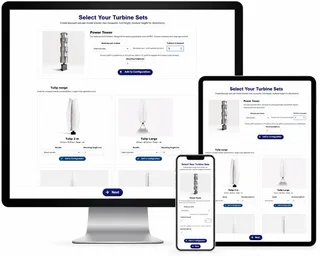
STEP 2

Choose a location
STEP 3

Place your cluster
Tap the map where you want the turbine cluster to go.
STEP 4

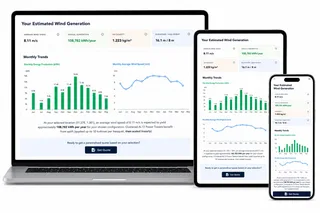
Instant generation forecasts
Compare different turbine layouts and see annual generation forecasts instantly.
STEP 5

No commitment required
Explore different configurations before deciding whether to request a quotation.
Related articles
Mo's Mission Nominations
FAQ
Need Help? RoboMo's Got Answers
What does PAYG solar mean for a UK business?
PAYG solar usually means a business uses solar panels on its premises without paying the full installation cost upfront. Instead, it pays for the electricity generated, pays a regular lease fee, or pays a subscription-style charge under a longer-term commercial agreement. In the UK, PAYG solar is not one single regulated product, so the contract terms matter more than the label used by the supplier.
Is PAYG solar the same as a solar PPA?
A solar power purchase agreement, or PPA, is the most common PAYG-style model for larger UK commercial sites. Under a PPA, a third party funds, owns, installs, operates, and maintains the solar PV system, and the business buys the electricity generated on site at an agreed pence-per-kWh rate. Other PAYG-style options may include equipment leases or subscription services, so businesses should check exactly who owns the system, who maintains it, and how payments are calculated.
Is PAYG solar free?
No. PAYG solar can reduce or remove the upfront installation cost, but the business still pays through the PPA tariff, lease payment, or service fee. The provider recovers the cost of the system and its return over the contract term. PAYG can improve cash flow, but it should not be treated as free solar.
Who owns the solar panels under a PAYG solar agreement?
In many PAYG solar arrangements, the provider or funder owns the panels during the contract term. The business uses the electricity generated and pays under the agreed terms. Ownership affects who receives export income, who is responsible for maintenance, who controls end-of-term decisions, and who can claim certain financial or environmental benefits.
What types of businesses are best suited to PAYG solar?
PAYG solar usually works best for businesses with strong daytime electricity demand, stable long-term occupancy, a suitable roof or land area, and a workable grid connection. Examples may include factories, cold stores, warehouses, farms, schools, depots, hotels, offices, and leisure centres. A site may be unsuitable if the roof is shaded, nearing replacement, structurally limited, affected by lease restrictions, or unable to accommodate the electrical and grid connection requirements.
How does billing work under a solar PPA?
Under a typical solar PPA, the system generates electricity on site and the business uses that electricity where there is demand at the same time. The business is billed for the metered solar electricity according to the agreed PPA rate. If the site needs more power than the solar system is producing, it imports from the grid as usual. If solar generation exceeds site demand, the surplus may be exported, with export income allocated according to the contract.
Who receives export income from surplus solar electricity?
Export income belongs to whoever the contract says it belongs to. In many PAYG arrangements, the system owner keeps export revenue because it funded and owns the asset. Some contracts may share export value or reflect it in the price offered to the site user. Businesses should confirm this before signing, especially if Smart Export Guarantee payments or other export arrangements are relevant.
How long do PAYG solar contracts usually last?
PAYG solar contracts often run for many years because the provider needs time to recover the cost of funding and operating the system. A longer term may help secure a lower tariff, but it can reduce flexibility if the business moves, sells the site, changes operations, or needs roof works. The contract should clearly explain assignment rights, early termination costs, buyout options, and what happens at the end of the term.
What contract terms should a business check before signing?
Important terms include the starting tariff, annual indexation, contract length, minimum purchase obligations, export rights, maintenance responsibilities, metering rules, insurance, roof access, roof works procedures, early termination charges, assignment rights, and end-of-term options. A low starting price can become less attractive if the agreement includes steep inflation increases, high exit costs, or poor flexibility.
What happens if the roof needs repairs during the PAYG solar contract?
The contract should state who pays to remove and reinstall panels if roof repairs, reroofing, or building works are needed. This is especially important because solar panels can last longer than some commercial roof coverings. A roof close to replacement is usually a poor candidate unless reroofing is planned before installation.
Does PAYG solar remove the need for a grid connection?
No. Solar output varies with daylight, weather, season, and system availability, so most businesses still need their normal grid supply. PAYG solar can reduce imported electricity, but it rarely removes the need for a grid connection. The site may also need DNO approval before the system can be connected, especially for larger commercial installations.
Do businesses need planning permission for PAYG solar?
Some rooftop commercial solar installations may fall under permitted development rights, but this depends on location, building type, system design, and local planning rules. Extra consent may be needed for listed buildings, conservation areas, scheduled monuments, protected sites, or visually sensitive locations. Scotland, Wales, and Northern Ireland have their own planning regimes, so local checks are important.
Is PAYG solar better than buying solar panels outright?
PAYG solar can be better where a business wants to avoid upfront capital spend and prefers a managed service. Buying outright may deliver better lifetime returns, more control, and more flexibility over export income, maintenance, battery integration, and end-of-life decisions. The best option depends on available capital, site ownership, expected occupancy, tax position, electricity demand, and contract risk.
Can battery storage be included with PAYG solar?
Battery storage can sometimes be included, but it is not automatic and can make the project more complex. Batteries may help where demand peaks occur outside solar generation hours, or where the business wants to reduce certain import costs. The case for a battery should be modelled using half-hourly consumption data rather than assumed as standard.
What information is needed to assess a PAYG solar proposal?
Useful information includes recent electricity bills, half-hourly consumption data, roof drawings or survey information, electrical drawings where available, lease details, and any known plans for reroofing, relocation, expansion, EV charging, or heat pumps. Real consumption data is especially important because annual kWh totals can hide shutdowns, seasonal changes, weekend patterns, and demand peaks.
What are the main risks of PAYG solar?
The main risks include unfavourable contract terms, high termination costs, weak export arrangements, roof works liabilities, unsuitable roof condition, poor daytime consumption matching, grid connection limits, metering disputes, and future site changes. These risks can often be managed, but they need to be reviewed before signing rather than discovered during a property sale, lease change, or maintenance project.