


Buying out a solar PPA in the UK: separating fact from fiction
Published: 2026-07-25 14:09:35
Updated: 2026-07-27 17:58:54
Discover the reality of buying out a solar power purchasing agreement (PPA) in the UK.
Buying out a commercial solar PPA in the UK
Yes, a business can often buy out a commercial solar PPA in the UK, but only where the contract allows it or the solar asset owner agrees to negotiate. A buyout is not an automatic right unless the signed documents say so. The answer depends on the purchase option, early termination wording, remaining contract term, system condition, roof rights, metering arrangements, and the commercial position of the asset owner.
A commercial solar PPA buyout is a legal, technical, property, and financial decision. It can change who owns the panels, who receives the generation benefit, who deals with maintenance, who carries inverter replacement risk, and who is responsible if roof works or access issues arise.
This article is general information for UK commercial sites. It is not legal, tax, valuation, accounting, insurance, or financial advice. Before signing a buyout, settlement, assignment, or transfer document, take advice from the relevant professionals and make sure the technical condition of the system has been checked.
What a solar PPA buyout actually means
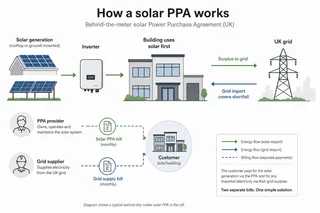
A commercial solar power purchase agreement is usually a long-term contract where another party funds, owns, and often maintains the solar PV system on your property. Your business then buys the electricity generated by the system at an agreed rate for the contract term. If you need the wider structure before looking at exit terms, start with how commercial solar PPAs work.
Buying out the PPA usually means moving from electricity buyer to solar asset owner. That can give the business more control over the system, the future energy strategy, and any battery or electrification plans. It can also transfer responsibilities that were previously handled by the PPA provider, including monitoring, maintenance, fault response, insurance discussions, and end-of-life decisions.
The structure varies. In some PPAs, the system owner is the installer, a funder, a special purpose vehicle, or another long-term asset owner. The occupier of the building may not be the freeholder. There may also be a roof lease, licence to alter, direct agreement with a lender, or landlord consent document sitting alongside the PPA. Those documents can be just as important as the electricity price.
Why businesses consider buying out a PPA
Businesses usually explore a PPA buyout when the contract no longer fits their property, energy use, or financial strategy. The trigger may be a building sale, refinancing, lease event, roof refurbishment, a change in electricity consumption, or a decision to own more energy assets directly.
A buyout may also be considered when the PPA rate no longer looks attractive against the business’s wider procurement position. The unit rate is only one part of the decision. Maintenance, inverter replacement, insurance, monitoring, metering, export arrangements, downtime risk, and actual system performance all affect the real value of ownership. For a broader view of routes into funded or owned systems, compare the main commercial solar finance options.
Energy strategy
A business may want direct control over solar generation as part of a wider plan involving battery storage, EV charging, heat pumps, or long-term electricity procurement.Contract mismatch
The original PPA may no longer match the site’s operating hours, tenant profile, production schedule, or future electricity demand.Roof refurbishment
Planned roof works can make the existing PPA structure difficult if removal, storage, reinstatement, and downtime responsibilities are unclear.Ownership preference
Some organisations prefer to hold the asset directly once they understand the operating risks, likely savings, and capital impact.Building sale or refinancing
A buyer, lender, landlord, or funder may want the roof and solar asset position simplified before completion.
A buyout is not automatically better than keeping the PPA. The main test is whether the commercial benefit of ownership outweighs the upfront cost, risk transfer, and administrative work.
The clauses to check before you negotiate
The first step is to read the signed PPA and any related roof lease, licence, direct agreement, side letter, maintenance contract, metering agreement, or warranty document. Many businesses focus on the headline PPA rate and term, but the exit mechanics are often found in the surrounding documents. Look for whether the agreement includes a scheduled purchase option, an early termination formula, a change of control clause, assignment provisions, roof access rights, and restrictions linked to sale, redevelopment, or change of occupier. If the system is on a leased building, the landlord’s consent may be as important as the PPA provider’s consent.
| Decision area | Why it matters | What to check early |
|---|---|---|
| Buyout clause | It determines whether there is a pre-agreed route to ownership | Purchase option date, valuation method, notice period, exclusions |
| Remaining term | A longer remaining term may increase the value expected by the PPA owner | Contract start date, end date, break points, renewal wording |
| Roof rights | The solar system may sit under a separate lease or licence | Landlord consent, roof access, repair obligations, reinstatement |
| Maintenance responsibility | Ownership can move technical risk to your business | O&M contract, warranties, monitoring, inverter cover |
| Metering and export | The commercial value depends on how energy is measured and used | Generation meter, import meter, export arrangement, data access |
| Property plans | Future works can change the economics completely | Roof age, refurbishment plans, extension plans, tenant changes |
How the buyout value is usually approached
There is no single UK buyout price for a commercial solar PPA. The value is usually linked to the contract terms, expected future income, system condition, remaining useful life, maintenance costs, and the asset owner’s required return. Some contracts contain a formula. Others leave the price to negotiation.
A PPA owner may look at the income they expected to receive over the remaining term. Your business will usually look at the avoided import electricity cost, the cost of owning and maintaining the system, and the opportunity cost of using capital for the buyout. These two positions do not always align because the seller is valuing an income-producing asset, while the buyer is assessing whether ownership improves the site’s long-term position.
In more structured negotiations, the buyout value may be approached using a discounted cash flow model. That does not make the answer automatically correct; it simply means future expected cash flows are adjusted to reflect time, risk, and assumptions. The quality of the valuation depends on the quality of the data behind it.
Discount rate
Future income is usually worth less than income received today, and the chosen discount rate can materially change the result.Export assumptions
Export income depends on the site’s arrangements, metering, supplier terms, and any relevant export contract or Smart Export Guarantee context for eligible arrangements.On-site consumption
Solar used on site is usually more valuable to the occupier than exported electricity, so import avoidance assumptions need care.Actual generation data
Half-hourly or interval data, generation meter readings, and monitoring records are more useful than generic yield estimates.System age and degradation
Older systems may still perform well, but output assumptions should allow for panel degradation and real monitoring data where available.Remaining contracted revenue
The PPA owner may value the income expected from future electricity sales under the signed agreement.
Where the PPA rate is commercially acceptable and the system is running well, a buyout may be less compelling unless there are wider property or strategy reasons. Where the PPA is restrictive, misaligned with current operations, or blocking a transaction, the value of simplifying the position can be as important as the pure energy saving. O&M costs — Ongoing maintenance, monitoring, cleaning where appropriate, call-outs, and compliance checks should be included. Inverter replacement — Inverters are a common major replacement item over the life of a PV system, so age, warranty position, and condition matter. Residual asset value — A system may still have value after the PPA term, but that value depends on condition, roof rights, remaining component life, and future access. Roof and reinstatement risk — If the roof is near refurbishment, the cost of removal, storage, reinstatement, downtime, and possible redesign can change the economics. Tax and accounting treatment — The purchase price, asset recognition, depreciation, VAT position, and ongoing costs should be reviewed by your accountant or tax adviser.
UK-specific checks that are easy to miss
A UK PPA buyout is not only a price negotiation. The site’s legal rights, export arrangements, safety obligations, accounting treatment, insurance position, and property documentation all need to be understood before the business takes ownership.
The following points should be checked early because they can affect timescale, risk, and whether the buyout is deliverable at all. They are not a substitute for professional advice, but they are the issues that often decide whether a proposed exit is straightforward or slow.
Legal advice: Ask a solicitor to review the PPA, roof lease or licence, assignment provisions, change of control clauses, termination provisions, and transfer documents. Landlord or freeholder consent: If the occupier is not the freeholder, the landlord’s consent may be required before ownership, access rights, or roof obligations can change. Lender consent: Property lenders or asset finance providers may need to approve changes affecting roof rights, building value, or secured assets. Tax and accounting review: The buyout may affect asset ownership, VAT treatment, depreciation, corporation tax, and accounting presentation. Insurance review: Confirm whether the PV system is covered under the building policy, a separate policy, or the business’s own insurance after transfer. Metering and export: Check generation metering, import metering, export metering, supplier arrangements, and any export payments. Ofgem’s role in the Smart Export Guarantee is relevant context, but commercial export arrangements must be checked in the site’s own documents. These checks do not mean a buyout is a bad idea. They simply prevent the business from paying for an asset while leaving important rights, liabilities, or operational details unresolved. Technical survey — Inspect the system before completion rather than relying only on original handover documents or historic generation estimates. Health and safety access — Roof access, isolation, maintenance routes, and future works should be considered in line with normal UK health and safety duties, including construction and maintenance planning where CDM duties may apply. DNO and connection records — Keep records of the grid connection and any export permissions or limitations so the new owner understands the operating position. Warranties and manuals — Confirm whether panel, inverter, monitoring, workmanship, and mounting warranties are transferable and whether the original documentation is complete.
Keep, renegotiate, or buy out
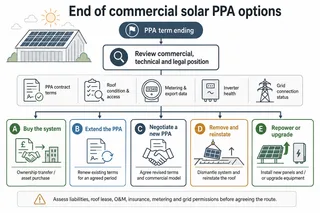
Before committing to a buyout, compare it with keeping the existing PPA or renegotiating selected terms. In many real projects, the best outcome is not a full exit but a practical amendment that solves the business problem. For example, a business planning roof works might negotiate responsibilities for temporary removal and reinstatement instead of buying the whole system. A site with changed consumption might negotiate metering, export, or tariff arrangements. A landlord selling a building might need assignment terms clarified rather than terminating the PPA.
| Option | When it may fit | Main drawback |
|---|---|---|
| Keep the PPA | The rate is acceptable, the roof is stable, and the contract does not block business plans | Less control over the asset and future decisions |
| Renegotiate the PPA | One or two terms are causing issues, such as roof access, assignment, or metering | The provider may not agree, or may ask for compensation |
| Buy out the PPA | The business wants ownership, the contract allows it, and the valuation is acceptable | Upfront cost and technical responsibility move to the business |
| Terminate without buying the asset | The system no longer suits the site or a major redevelopment is planned | Early termination costs can be significant depending on the contract |
Technical due diligence before taking ownership
A PPA buyout should never be based on contract value alone. If your business is taking ownership of the PV system, you need to understand what you are buying and what liabilities come with it.
The most important technical checks are usually system age, panel condition, inverter condition, monitoring access, electrical documentation, roof condition, and evidence of maintenance. A system can look tidy from the ground but still have issues with isolation, cable management, water ingress risk, underperforming strings, or missing records.
The technical review should also confirm whether the installation still suits the site. A system designed for a previous tenant, shift pattern, or demand profile may not deliver the same value for the current occupier. This is especially important where the buyout case depends on using a high proportion of the solar generation on site.
- Check the roof condition before valuing the system.
- Confirm who owns the panels, inverters, meters, mounting system, cabling, isolators, monitoring equipment, and any spare parts.
- Review maintenance history, fault logs, generation data, and monitoring access where available.
- Identify inverter age, warranty status, failure history, and likely replacement exposure.
- Confirm safe access arrangements for inspection, cleaning, maintenance, and future repairs.
- Check whether warranties and software access can be transferred after buyout.
A proper technical review does not need to overcomplicate the process, but it should be thorough enough to avoid buying an asset with hidden repair costs, poor documentation, or roof liabilities. Review electrical documentation, drawings, commissioning records, test certificates, and operating manuals. Compare actual generation against realistic expectations for the site, allowing for shading, downtime, degradation, and metering accuracy. Consider whether roof works, extensions, asbestos management, or fragile roof areas could affect future operation.
An anonymised example of how a buyout issue can arise
A typical scenario is a warehouse owner preparing to sell a tenanted industrial building with an existing rooftop solar PPA. The system is operating, the tenant is using most of the electricity, and the PPA rate is not the main problem. The issue is that the buyer’s solicitor wants clarity on who owns the system, who can access the roof, what happens if the roof needs repair, and whether the PPA can be assigned cleanly after completion.
In that situation, a buyout might be considered because it appears to simplify the sale. However, the document review may show that the PPA can be assigned with consent, while the roof licence already deals with access and reinstatement. If the system is performing well and the roof has no near-term refurbishment issue, renegotiating or documenting the assignment may be better than paying a full buyout price.
A different outcome could apply if the same warehouse needed major roof works within the next year. If the PPA documents leave removal and reinstatement costs unclear, or if the buyer wants a clean roof before redevelopment, the commercial value of buying out or terminating the PPA may increase. The key point is that the same solar asset can lead to different decisions depending on the property transaction, roof condition, and contract wording.
Common myths about commercial solar PPA buyouts
One common myth is that a business can simply pay off the remaining electricity payments and own the system automatically. In practice, the provider owns an income-producing asset, and the contract may value that asset in a more complex way.
Another myth is that buying out a PPA always saves money. It can, but only where the buyout price, operating costs, system performance, tax and accounting treatment, and remaining contract terms support that conclusion. If the system is ageing, poorly documented, or sitting on a roof due for major works, ownership can introduce costs that were not obvious at the start.
There is also a misconception that a buyout removes every obligation connected with the old arrangement. Some duties may continue unless they are expressly dealt with, such as roof reinstatement, access rights, confidentiality, metering changes, data transfer, or final reconciliation of PPA invoices.
Myth
The buyout price is just the remaining PPA payments.Myth 2
Ownership is always cheaper than a PPA.Myth 3
A tenant can always buy the system if it pays the provider.Reality
The asset owner may also consider future income, residual value, contract rights, risk, tax position, and the cost of unwinding the agreement.Reality 2
Ownership can be better, but only if the system condition, buyout price, maintenance costs, and electricity use support it.Reality 3
Landlord, freeholder, lender, and roof access rights may be essential.
Commercial solar PPAs are used across many types of premises, including warehouses, offices, logistics buildings, retail sites, and mixed-use commercial properties. The same variety applies to buyouts. Some are straightforward, while others become complex because of leases, lenders, landlords, roof works, or future redevelopment. Myth — The panels are the only asset being transferred. Reality — Inverters, mounting, meters, monitoring access, warranties, drawings, and documentation may be just as important.
When a buyout may not be suitable
A buyout may not be sensible if the system is underperforming, the roof is nearing refurbishment, or the contract buyout price is higher than the value your business can reasonably justify. It may also be unattractive if the PPA provider is delivering reliable operation at an acceptable rate and your organisation does not want to manage the asset.
Businesses sometimes underestimate the practical responsibility that comes with ownership. Once you own the system, you may need to arrange monitoring, maintenance, fault response, insurance updates, safe roof access, replacement parts, warranty claims, and future component replacement.
A buyout can also be difficult where the occupier is not the building owner. If a tenant wants to buy the system but the roof rights sit with the landlord, the legal and property position needs careful handling before any commercial negotiation is finalised. Weak technical case: The system has poor output, missing records, unresolved faults, or uncertain warranty cover. Weak property case: Roof works, lease expiry, redevelopment, or access restrictions make ownership risky. Weak financial case: The buyout price cannot be justified against realistic savings and maintenance costs. Weak operational case: The business does not have the internal appetite to manage an energy asset. Weak consent position: Landlord, freeholder, lender, or asset-owner consent is missing or uncertain. In these cases, keeping the PPA, renegotiating selected terms, or agreeing a structured assignment may be more practical than buying the system outright.
A practical process for assessing your options
A good buyout process starts with documents, not assumptions. Gather the signed PPA, roof agreement, invoices, generation data, export data if available, maintenance records, system drawings, warranty documents, grid connection records, and any correspondence about ownership or rights. Then separate the decision into legal, technical, financial, and property workstreams.
Ask the PPA owner for the formal buyout route, not just an informal estimate. If there is a contract formula, request the calculation and the assumptions behind it. If there is no formula, ask for a written proposal that explains what is included, what is excluded, what happens to warranties, and when ownership would transfer.
Do not negotiate price in isolation. A low buyout price may still be poor value if the roof needs major works or the inverters are near replacement. A higher price may still be worth exploring if it unlocks a property transaction, removes an operational blocker, or supports a wider energy plan with realistic solar ROI assumptions. Document review: Confirm the exact parties, term, buyout rights, assignment rules, roof obligations, confidentiality clauses, and transfer mechanics. Legal review: Check whether a solicitor should prepare or review the transfer, settlement, consent, release, or assignment documents. Technical review: Inspect system condition, documentation, monitoring, inverters, access, electrical safety records, and roof constraints. Financial review: Compare the buyout price with expected energy benefit, maintenance costs, inverter replacement exposure, export assumptions, tax treatment, and alternative uses of capital. Property review: Check landlord consent, lender requirements, lease terms, planned roof works, reinstatement obligations, and sale implications. Insurance review: Confirm who insures the asset before and after completion and whether the building policy needs updating. This staged approach helps avoid a common mistake: agreeing a price before understanding whether the system is worth owning and whether the legal rights are sufficient to operate it. Negotiation — Agree what is being transferred, what remains excluded, what warranties or records are handed over, and who handles completion actions. Completion planning — Arrange meter data access, O&M cover, monitoring login transfer, insurance updates, operational handover, and final PPA reconciliation.
Final view on buying out a solar PPA
You can buy out a commercial solar PPA in the UK where the contract permits it or the asset owner agrees to a negotiated exit. The decision should be based on the signed documents, buyout price, system condition, roof position, metering and export arrangements, property plans, consent requirements, and your appetite for owning and maintaining the solar asset.
For some businesses, buying out the PPA is a clean route to control, simpler property documentation, and long-term value. For others, keeping or renegotiating the agreement is more sensible because the PPA is working, the buyout valuation is unattractive, the roof position is uncertain, or the organisation does not want to take on asset risk.
A practical decision framework is simple: keep the PPA if it is commercially acceptable and does not block your plans; renegotiate if one or two terms are causing a defined problem; consider a buyout if ownership solves a real commercial issue and the legal, technical, and financial checks support it. If you are weighing a buyout against a new system or ownership route, you can compare current options.
Plan, Compare & Buy Renewable Energy Solutions
AI does the thinking.
You get the perfect solar match.
Use RoboMo™ to assess your property, compare available technologies and connect with trusted UK installers, suppliers and manufacturers.
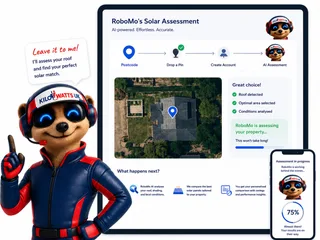
Simply enter your postcode, drop a pin on your roof, create your free account and let RoboMo™ analyse your property to find the best solar panels for your home.

You don't have to think
RoboMo™'s AI analyses your roof and does all the hard work.

Accurate & tailored
AI-powered assessment based on your roof, location, and conditions.

Best options, maximum savings
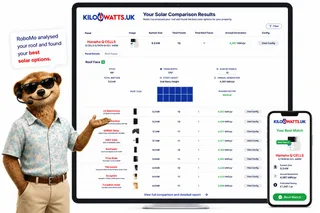
Compare top solar panels for the best performance and value.

Simple, fast & effortless
Provide a few details, sit back and watch your results unfold.
STEP 1
Choose Home, Business or Industrial
Enter your postcode to start your assessment.
STEP 2

Drop a pin on your roof
STEP 3

Create your free account
STEP 4

Sit back and watch RoboMo™ work
RoboMo™ analyses your roof and builds your personalised solar comparison.

Kilowatts UK is an authorised representative
Flower Turbines
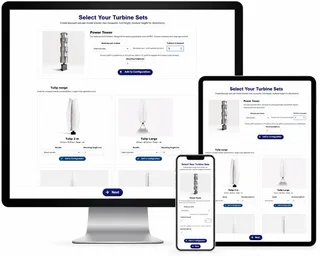
Compact vertical-axis turbines built for real UK sites, not just open farmland.
They start in light wind, sit in a small footprint, and are bird-safe by design. Cluster them as a bouquet and the group performs better together than the same turbines standing alone. Enter your postcode for a location-based generation estimate. Figures use area weather data and will differ if buildings, trees or hills sit in the way.
Starts in light UK wind
Built to generate in typical UK wind, not only open farmland.
Small rooftop or ground footprint
Compact towers for roofs, yards and tight sites.
Bird-safe slow rotation
Slow vertical-axis spin, bird-safe by design.
Bouquet clusters raise output
Grouped turbines outperform the same units standing alone.
Step 1
Enter your postcode
Start designing your wind energy system in seconds.
STEP 2

Choose a location
STEP 3

Place your cluster
Tap the map where you want the turbine cluster to go.
STEP 4

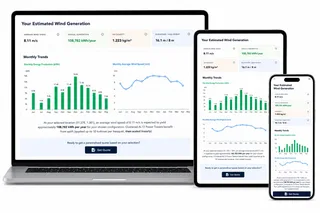
Instant generation forecasts
Compare different turbine layouts and see annual generation forecasts instantly.
STEP 5

No commitment required
Explore different configurations before deciding whether to request a quotation.
Related articles
Mo's Mission Nominations
FAQ
Need Help? RoboMo's Got Answers
Can you buy out a solar PPA in the UK?
Yes, many commercial solar PPAs in the UK can be bought out, but only if the contract allows it or the provider agrees to a negotiated settlement. There is no automatic legal right to buy out a solar PPA. The outcome depends on the PPA wording, remaining term, buyout formula, provider consent, lender or investor approvals, roof rights, export arrangements, tax treatment, and the condition of the solar PV system.
What does a solar PPA buyout mean?
A solar PPA buyout usually means your business pays an agreed amount to end or vary the PPA and take ownership of the solar panels. However, some contracts treat the payment as an early termination charge only, which may not transfer ownership of the equipment. This distinction is important because ownership also transfers responsibility for maintenance, monitoring, insurance, safety compliance, access arrangements, and future replacement costs.
Where does the right to buy out a solar PPA come from?
The right to buy out a solar PPA comes from the contract documents, not from a general UK statutory right. Check the purchase option, early termination clause, termination compensation wording, assignment provisions, roof lease or licence, metering schedule, export terms, operations and maintenance obligations, and end-of-term transfer provisions. Notice periods and review dates also matter because missing a contractual window may delay the buyout.
How is a commercial solar PPA buyout price calculated?
There is no single standard UK method for calculating a solar PPA buyout price. Some contracts use a fixed price schedule, while others use fair market value, remaining PPA value, outstanding finance, lender break costs, or a negotiated settlement. Early buyouts are often more expensive because the provider may seek compensation for future income it expected to receive over the rest of the PPA term.
Is buying out a solar PPA always cheaper than staying in the agreement?
No. A buyout only makes sense if the cost of buying the system is lower than the value your business is likely to gain from future electricity savings, export income, and control of the asset. The comparison should include the buyout price, legal fees, VAT, technical surveys, operations and maintenance, insurance, monitoring, inverter replacement, tax treatment, metering changes, roof works, and end-of-life removal costs.
When is a solar PPA buyout likely to be worthwhile?
A buyout is more likely to be worthwhile where the business owns or will remain at the site long term, uses a high proportion of solar electricity during the day, has a roof in good condition, and can take on maintenance and insurance responsibilities. The case is stronger where the system has reliable generation records, transferable warranties, clear roof rights, clear grid documentation, and a buyout price below the expected value of future benefits.
When might buying out a solar PPA be a poor decision?
A buyout may be poor value if the site lease is short, landlord consent is uncertain, the roof needs major works, the system is underperforming, warranties cannot be transferred, or the buyout price is based on a large amount of future PPA revenue. It may also be unsuitable if export is constrained, metering ownership is unclear, the business may relocate, or the current PPA rate is still competitive.
What technical checks should be completed before a solar PPA buyout?
Before buying the system, your business should review the installed capacity, inverter capacity, panel and inverter details, generation history, export data, service records, fault logs, warranty status, monitoring access, metering accuracy, mounting condition, cabling, isolators, switchgear, earthing, labelling, fire safety documentation, and roof condition. A visual inspection alone is not enough because faults, failed strings, monitoring gaps, shading, or metering issues can reduce performance without being obvious.
Why is roof condition important when buying out a solar PPA?
Roof condition is critical because once your business owns the solar PV system, it may also become responsible for removal, storage, reinstatement, testing, and recommissioning if roof works are needed. Older commercial roofs may also involve asbestos risk, fragile roof areas, drainage issues, access constraints, roof warranty implications, wind loading concerns, and fall protection requirements. A cheap buyout can become expensive if the roof is not suitable for the remaining life of the system.
What legal documents should be reviewed before a PPA buyout?
The PPA should be reviewed alongside the roof lease or licence, access agreement, connection agreement, export agreement, metering arrangements, operations and maintenance records, insurance documents, planning documents, warranty paperwork, and any lender or investor consent requirements. If your business leases the premises, landlord consent may be essential because buying the panels does not automatically give you the legal right to keep, access, maintain, or remove them from the roof.
Do grid and metering arrangements matter in a solar PPA buyout?
Yes. The system may operate under G98, G99, or a site-specific export agreement, and it may have export limits or no-export controls. Metering should also be checked carefully because PPA billing, generation data, and export income may rely on different meters or monitoring systems. CT ratios, meter ownership, data access, monitoring portal control, and certification should be confirmed before completion.
Will government grants pay for a commercial solar PPA buyout?
There is no standard UK government grant that routinely pays for commercial solar PPA buyouts. The buyout price is usually a contractual and commercial matter between the business, the PPA provider, and any relevant funders. Businesses should still check tax treatment, VAT, capital allowances, business rates, export arrangements, planning rules, and grid connection requirements because these can affect the financial case.
Does buying out an onsite solar PPA mean the business receives export income?
Usually, once ownership transfers, the business may be able to receive the benefit of exported electricity, but this depends on the export agreement, metering setup, grid restrictions, and contract terms. Export income should not be assumed until the business has confirmed who owns the export rights before and after completion, whether an export tariff or agreement is in place, and whether the system is subject to export limits.
Is an offsite corporate PPA buyout the same as buying rooftop solar panels?
No. Offsite corporate PPAs are usually electricity supply, sleeving, or virtual PPA arrangements rather than contracts for equipment installed on your roof. Buying out or terminating an offsite PPA normally does not mean buying the solar farm. The issue is more likely to be an early termination payment, which may be affected by wholesale power prices, hedging arrangements, and contractual break costs.
What questions should you ask a solar PPA provider before negotiating a buyout?
Ask whether the contract includes a formal option to buy the system, what the current buyout price is, how it has been calculated, whether VAT or break costs are included, when the buyout can happen, and what consents are required. You should also confirm whether the payment transfers ownership of the equipment, who receives export income, which warranties transfer, who owns the meters and monitoring equipment, what roof rights are needed, and what handover documents will be provided.
Should you compare a PPA buyout with a new solar installation?
Yes. A PPA buyout should be compared with staying in the current PPA, waiting until a later review date, installing a new owned system, expanding the existing system, or adding battery storage. A new proposal may offer better performance, newer warranties, improved system design, or lower long-term costs, especially if the existing system is old, poorly performing, or expensive to buy out.