


Battery storage with commercial solar in the UK
Published: 2026-07-18 19:25:46
Updated: 2026-08-01 07:01:08
Understand commercial battery storage in the UK, with clear explanations, examples, and practical next steps.
Commercial battery storage with solar in the UK
Commercial battery storage can make solar battery storage more useful by storing surplus generation for later use, reducing grid import at expensive times, supporting EV charging and improving on-site use of solar power. It is not automatically the right choice for every UK business. Suitability depends on half-hourly electricity demand, solar generation, tariff structure, grid connection, available space, safety requirements and whether the business expects backup power.
For many UK sites, the strongest case is more than “store solar for the evening”. It is often a mix of using more solar energy on site, managing short import peaks, shifting some grid import away from costly periods and making better use of limited electrical capacity. A battery should be specified from real consumption data and operating plans, not bolted on after the solar design is finished.
In short, commercial battery storage is worth investigating where a business has meaningful solar generation, variable demand, evening or early-morning loads, EV charging, constrained supply capacity, or high import costs at certain times. It is less compelling where daytime demand already absorbs most solar generation, export terms are attractive, space is limited, or the site cannot justify the added capital, design, safety and maintenance requirements.
How a commercial solar and battery system works
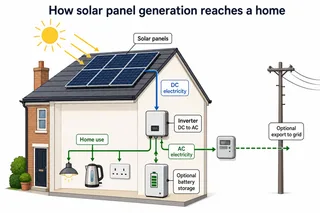
A commercial solar and battery system normally has solar PV generating DC electricity, one or more inverters converting power for use on site, and a battery system that can charge from solar or, where designed and permitted, from the grid. Site controls decide whether power should go to the building, the battery, EV chargers, export, or grid import.
The architecture matters. Some systems are AC-coupled, meaning the battery connects on the AC side of the electrical installation. Others are DC-coupled, where the battery is more closely integrated with the PV side. This AC vs DC coupling guide explains the basic principle, although commercial projects need a site-specific design because metering, protection, controls, grid connection and operating requirements are more complex than a typical home installation.
A well-designed system is more than a battery cabinet connected to solar panels. It needs metering, control logic, suitable protection, communications, ventilation or thermal management where required by the product, safe access, and a clear operating strategy. Without those elements, the battery may cycle at the wrong times, sit unused, breach export assumptions, or fail to deliver the value assumed in the business case.
Where batteries add value for businesses
The main benefit of commercial battery storage is flexibility. Solar panels generate when daylight is available, but business demand does not always line up with that generation. A battery can shift some of that energy to a more useful time, provided the storage capacity, power rating and control settings match the site’s demand pattern.
The value case is strongest when the battery solves a real operational or tariff problem. A site with EV chargers may use stored solar to reduce grid import during charging peaks. A warehouse with early morning or evening operations may use stored daytime generation outside solar hours. A business with limited grid capacity may use a battery to smooth short periods of high demand, but this needs careful design and should not be assumed without assessment.
Time-shifting
The battery can charge when energy is available or cheaper and discharge when it is more valuable to the site.Capacity management
A battery may help manage short-duration demand spikes where import capacity is constrained, subject to proper electrical design and operational controls.EV charging support
Stored solar can help reduce the impact of workplace or fleet charging on site demand.Resilience planning
Some batteries can support backup arrangements, but only where the system is specifically designed for that purpose.Peak demand management
Stored energy may reduce short, expensive import peaks if the system is sized and controlled correctly.Solar self-consumption
A battery can help keep more generated solar electricity on site rather than exporting it.
Backup power is a common misunderstanding. A standard grid-connected solar and battery installation may shut down during a power cut for safety reasons unless it includes suitable backup or islanding capability. If business continuity is a priority, the design must identify critical loads, changeover arrangements, safe isolation, operating procedures and how long the backup supply is expected to last.
When commercial battery storage may not be suitable
Battery storage is not always the best use of budget. If a business already uses most of its solar electricity during the day, there may be little surplus to store. In that case, spending more on a larger battery may produce limited benefit compared with improving the solar design, shifting operational loads, changing when equipment runs, or reviewing the electricity tariff.
It may also be unsuitable where the site has no practical location for battery equipment, where electrical infrastructure upgrades would be disproportionate, or where the usage profile is too flat to create enough value from cycling the battery. A battery that is too large for the site may look impressive on paper but spend much of its life underused.
Commercial projects also need to consider practical issues that are less visible in simple payback conversations. These include fire safety positioning, access for maintenance, cable routes, metering compatibility, noise from associated equipment, planning constraints where relevant, insurance expectations and responsibility for ongoing monitoring. Low surplus solar: If the building consumes most PV output as it is generated, storage may add little value. Weak cycling case: If there is no regular price difference, export constraint, peak issue or EV charging need, the battery may not work hard enough. Valuable export: Exporting electricity is not automatically waste; the value should be compared against storage losses, degradation and capital cost. Space constraints: Some commercial batteries need external compounds, clearances, impact protection and service access that may not be available. Backup misunderstanding: If the proposal does not include islanding or backup design, the battery should not be treated as a standby generator. The right answer may be solar only, solar with a modest battery, solar with EV charging controls, or a phased design that leaves space and electrical capacity for a later battery once demand patterns are clearer.
Key design decisions to make early
The best point to assess battery storage is during the solar feasibility stage, before the PV system, inverters, metering and grid application pathway are fixed. Retrofitting a battery can still work, but it may involve more compromise if the original solar installation was not designed with storage in mind.
A proper assessment usually starts with half-hourly electricity data, site operating hours, roof or land availability for solar, export assumptions, current supply capacity, planned EV chargers, and any future changes such as electrified heating, refrigeration expansion or new production equipment. The battery should be sized around a useful operating pattern rather than a generic rule of thumb.
The table is only a starting point. In real projects, the strongest recommendation often comes from modelling several scenarios, such as solar only, solar with a small battery, solar with a larger battery, and solar with battery support for EV charging.
Worked examples of commercial battery sizing logic
Indicative examples can help show why battery sizing should follow the site’s half-hourly data rather than the size of the solar array alone. The figures below are simplified to explain the decision logic, not to predict savings for a specific site.
Consider a warehouse with a sizeable daytime solar system, regular evening operations and a half-hourly profile showing that weekday solar export often occurs between late morning and mid-afternoon. If the site is exporting around 120 to 180 kWh on sunny working days, and its evening load after solar hours is typically 40 to 60 kW for several hours, a medium battery could be worth modelling. The battery would not need to store every exported unit; it would need to capture enough recurring surplus to discharge into the higher-value evening demand without sitting idle for long periods.
Now consider a light industrial unit that operates mainly from 8am to 5pm and already uses nearly all its solar generation during production hours. If half-hourly data shows little export and no significant evening load, a battery may not be justified even if the solar array is large. In that case, the better investment may be solar-only, operational load shifting, or preparing the electrical design so a battery can be added later if EV charging or new equipment changes the profile. A depot example is different again. If ten vehicles each need around 20 to 30 kWh of charging after returning to site, the daily charging requirement may be 200 to 300 kWh. A battery could help if there is predictable daytime solar surplus or cheaper off-peak import available under the supply contract, but it may not remove the need for managed charging. Charger scheduling, maximum site demand, vehicle dwell time and the required state of charge by morning may be more important than simply installing the largest possible battery. These examples show why a credible proposal should test small, medium and no-battery options. The best choice is the one that uses the battery frequently for a defined purpose, not the one that maximises headline storage capacity.
UK connection, compliance and safety considerations
Commercial solar and battery projects need to be considered within the UK grid connection and site safety context. The details depend on the equipment, site capacity, export arrangement, location and distribution network operator, so early checks can prevent delays or unrealistic assumptions in the financial model.
For grid connection, batteries can affect both import and export behaviour. The relevant DNO process may involve Engineering Recommendation G99 for generation connected in parallel with the distribution network, and G100 may be relevant where export limitation is proposed. The DNO’s project-specific response is what matters for design, programme and allowable export.
Electrical design should be carried out by competent professionals and coordinated with the site’s existing installation. For commercial projects, this usually means considering BS 7671 requirements, suitable protection, isolation, earthing, labelling, metering, commissioning records and operation and maintenance information. The specific design should reflect the product manufacturer’s instructions as well as UK electrical standards. Safety deserves specific attention because commercial batteries are significant electrical assets, often with high stored energy and operational controls. A suitable fire-risk assessment should consider location, access, emergency isolation, ventilation or thermal management, exposure to impact, nearby combustible materials, water ingress, signage, and how emergency responders would identify and manage the equipment.
CDM duties
Clarify client, designer and contractor responsibilities for safe design, installation, access and handover.DNO liaison
Check whether the battery changes the connection application, export limit, import demand or protection requirements.Export control
If the design relies on limiting export, confirm how the control scheme will be specified, tested and monitored.Planning checks
Ask the local planning authority or planning adviser about external battery enclosures, visual impact, noise, listed buildings, conservation areas or other site constraints. This can sit alongside wider commercial solar planning checks for the site.Insurer engagement
Tell the site insurer early, especially for larger systems, external containers, warehousing, manufacturing or high-value stock.Fire-risk assessment
Agree location, separation, access, emergency procedures and maintenance arrangements before ordering equipment.
None of these checks means a commercial battery is unsuitable. They simply make sure the proposal is buildable, insurable, maintainable and aligned with the network conditions that will apply to the site.
Battery storage and commercial EV charging
Commercial battery storage is often considered alongside EV charging because chargers can add large, concentrated loads to a site. This is especially relevant for fleet depots, workplaces, retail sites, hotels, leisure facilities and industrial units where vehicles may charge at similar times.
A battery can help by storing solar energy during the day and releasing it when vehicles are plugged in. It may also help smooth charging peaks where the grid supply is constrained, although it does not remove the need for proper electrical design. If chargers are used heavily every day, the battery strategy will be different from a site where charging is occasional or unpredictable. Sites planning chargers should assess EV charging installation alongside solar, storage and supply capacity.
For EV charging, the important questions are when vehicles arrive, how long they stay, how much energy they need, and whether charging can be managed intelligently. Load management, charger scheduling and user rules can sometimes reduce the required battery size or improve the business battery case. Fleet charging: Predictable vehicle return times and energy requirements make it easier to model battery charging and discharging. Workplace charging: Demand may be spread through the day, so solar can sometimes feed chargers directly without needing as much storage. Public or visitor charging: Usage can be less predictable, so control settings and import capacity become especially important. Depot constraints: A battery may help where grid capacity is limited, but it must be assessed alongside charger power, dwell time and operational deadlines. Managed charging: Software controls may deliver a better result than oversizing the battery to cover every possible charging peak. The strongest EV charging projects usually combine solar, storage and load management rather than relying on the battery alone.
Cost, payback and performance factors
The cost and payback of commercial battery storage vary widely because systems differ in capacity, power output, control complexity, installation environment, electrical works, monitoring and maintenance requirements. A single headline battery price is not enough to judge a commercial project, because the supporting works can be as important as the battery itself.
Performance also depends on how the battery is operated. A system used for frequent daily cycling will have a different duty pattern from one mainly used for occasional peak reduction or backup support. Warranties, usable capacity, discharge rate, operating temperature, degradation assumptions and service arrangements should all be checked before comparing quotations.
Degradation
Battery capacity reduces over time, and financial models should not assume new-battery performance for the full life of the project.Power rating
How quickly the battery can charge or discharge, which affects peak shaving and EV charging support.Control system
The software and metering that decide when to charge, discharge, import or export.Usable capacity
The amount of energy the site can practically draw from the battery, which may differ from the headline capacity.Round-trip efficiency
Some energy is lost during charging and discharging, so stored export is not recovered one-for-one.Installation complexity
Cable runs, switchgear, groundworks, plant space and access can materially affect the project.
A credible proposal should explain the assumptions used in the savings model. If the model assumes high cycling, perfect tariff optimisation, avoided demand charges, export limitation, or backup capability, those assumptions should be tested against the actual site, DNO position, supply contract and equipment being offered. Wider commercial solar finance options may also affect whether storage is best installed immediately or phased later. Operating strategy — The same battery can perform very differently depending on tariff, solar output and site demand. Maintenance and monitoring — Ongoing checks help identify faults, poor settings or underperformance.
What a credible commercial battery model should show
A useful battery model should connect the technical design to the commercial case. It should show when the battery is expected to charge, when it is expected to discharge, how often it cycles, how much solar export is reduced, how much grid import is shifted, and what assumptions have been made about future use of the site.
The model should also show the comparison case. Battery storage can look attractive if the only comparison is “exported solar has low value”, but that is not enough. A fair comparison should consider solar-only, battery options of different sizes, possible tariff changes, export value, EV charging controls and future load growth.
Half-hourly data basis: The model should use real consumption data where available, not only annual kWh. Seasonal results: A battery may perform very differently in summer and winter because solar generation changes. Export assumptions: The model should state how exported electricity is valued and whether export is limited by the DNO. Import assumptions: The model should reflect the actual or proposed supply contract, including time bands and any demand-related charges where relevant. Battery utilisation: The proposal should show whether the battery is expected to cycle regularly or sit unused for long periods. Sensitivity testing: The case should be tested against lower export value, changed tariffs, load growth, EV charging and reduced battery performance over time. This level of modelling does not guarantee a payback, but it makes the decision more transparent. It also helps avoid buying a battery that is technically impressive but commercially weak. For many sites, battery modelling should be viewed alongside commercial solar ROI rather than judged as a separate add-on.
Common mistakes to avoid
A frequent mistake is sizing the battery to the solar array rather than to the business load. A large solar system does not automatically justify a large battery. The useful storage requirement depends on the difference between when energy is generated and when the business can use it.
Another common issue is treating export as wasted energy without checking the commercial context. Exporting may still have value, and the best result may be a balanced design rather than trying to store every spare unit of generation. Oversizing storage can reduce utilisation and lengthen payback.
- Buying without half-hourly data.
- Assuming every battery provides backup power.
- Ignoring future EV charging or electrification plans.
- Comparing quotes only on battery capacity.
- Forgetting space, access and safety requirements.
- Leaving monitoring and controls out of the discussion.
The best commercial projects usually look at the whole site rather than one technology in isolation. Solar, batteries, EV charging, tariffs, metering, grid limits and operational behaviour all affect each other. Assuming the DNO will allow the preferred export arrangement. Not involving the site insurer until after the design is fixed. Ignoring who will review performance after commissioning.
What to ask an installer or consultant
Before committing to commercial battery storage, ask for a design explanation that connects the battery size to your site’s real electricity use. A good proposal should show why the recommended capacity and power rating have been chosen, not just state what equipment is being supplied.
You should also ask how the system will be controlled after installation. A battery that is not monitored or adjusted may stop matching the business if tariffs change, EV charging grows, or operating hours shift. Commercial sites are rarely static, so flexibility matters.
Data used: Ask whether the proposal is based on half-hourly consumption data, actual bills and planned future loads. Operating mode: Ask whether the battery is intended for solar self-consumption, peak reduction, tariff shifting, EV charging support, backup, or a combination. Grid and export assumptions: Ask what import and export limits have been assumed and whether any approvals or applications are needed. Battery sizing: Ask why this capacity and power rating have been selected, and what smaller or larger alternatives were rejected. Safety approach: Ask where the battery will be located, how fire risk has been assessed and what access will be maintained. Warranty basis: Ask how cycling, usable capacity and degradation are treated in the warranty. Clear answers to these questions make it easier to compare proposals fairly. They also reduce the risk of buying a technically sound battery that does not match the way the business actually uses energy. Monitoring responsibility — Ask who will review performance after installation and how faults or poor settings will be identified. Maintenance plan — Ask what routine checks, software updates, inspections and response arrangements are included. Expansion options — Ask whether future solar, chargers or additional battery capacity can be accommodated. Backup design — Ask whether backup or islanding is included, and if so which loads are supported and for how long.
Practical next steps
If you already have commercial solar, start by reviewing export levels, import peaks, tariff details, battery-ready infrastructure and any planned changes such as EV charging. If you are planning solar for the first time, assess battery storage as part of the same design process so the inverters, metering, controls, safety arrangements and grid connection pathway are considered together.
For UK businesses, the most useful first step is usually a feasibility review using real site data. That review should use half-hourly consumption, electricity bills, export assumptions, site layout, supply capacity, DNO constraints, EV charging plans, operational changes and any backup requirements. It should identify whether solar alone, solar with battery storage, or solar with battery-supported EV charging is the strongest route.
Commercial battery storage can be a strong addition to solar, but only when it is designed around the site rather than sold as a standard package. The right answer depends on your demand profile, generation potential, electrical capacity, tariffs, space, safety requirements and future energy plans. If those inputs are not yet clear, gather the data first; it will lead to a better design, a more reliable business case and a more defensible investment decision. You can also compare solar options before deciding whether battery storage should be included from day one.
Plan, Compare & Buy Renewable Energy Solutions
AI does the thinking.
You get the perfect solar match.
Use RoboMo™ to assess your property, compare available technologies and connect with trusted UK installers, suppliers and manufacturers.
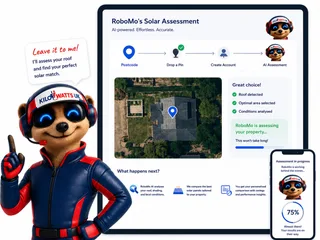
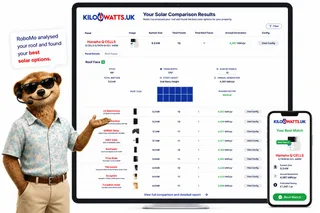
Simply enter your postcode, drop a pin on your roof, create your free account and let RoboMo™ analyse your property to find the best solar panels for your home.

You don't have to think
RoboMo™'s AI analyses your roof and does all the hard work.

Accurate & tailored
AI-powered assessment based on your roof, location, and conditions.

Best options, maximum savings
Compare top solar panels for the best performance and value.

Simple, fast & effortless
Provide a few details, sit back and watch your results unfold.
STEP 1
Choose Home, Business or Industrial
Enter your postcode to start your assessment.
STEP 2

Drop a pin on your roof
STEP 3

Create your free account
STEP 4

Sit back and watch RoboMo™ work
RoboMo™ analyses your roof and builds your personalised solar comparison.

Kilowatts UK is an authorised representative
Flower Turbines
Compact vertical-axis turbines built for real UK sites, not just open farmland.
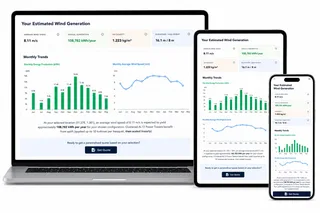
They start in light wind, sit in a small footprint, and are bird-safe by design. Cluster them as a bouquet and the group performs better together than the same turbines standing alone. Enter your postcode for a location-based generation estimate. Figures use area weather data and will differ if buildings, trees or hills sit in the way.
Starts in light UK wind
Built to generate in typical UK wind, not only open farmland.
Small rooftop or ground footprint
Compact towers for roofs, yards and tight sites.
Bird-safe slow rotation
Slow vertical-axis spin, bird-safe by design.
Bouquet clusters raise output
Grouped turbines outperform the same units standing alone.

Step 1
Enter your postcode
Start designing your wind energy system in seconds.
STEP 2

Choose a location
STEP 3

Place your cluster
Tap the map where you want the turbine cluster to go.
STEP 4

Instant generation forecasts
Compare different turbine layouts and see annual generation forecasts instantly.
STEP 5

No commitment required
Explore different configurations before deciding whether to request a quotation.
Related articles
Mo's Mission Nominations
FAQ
Need Help? RoboMo's Got Answers
Is commercial battery storage worth it with solar panels?
Commercial battery storage can be worthwhile where a business has surplus solar generation, high peak electricity costs, constrained grid capacity, export limits, or plans to add EV charging. It is not automatically cost-effective for every site. The business case depends on half-hourly electricity use, solar generation, import and export limits, tariff structure, battery size, inverter power, fire safety requirements, insurer conditions, and how the battery is controlled.
How does a commercial battery work with solar PV?
A commercial battery stores electricity generated by the solar PV system when generation is higher than on-site demand. The stored electricity can then be used later when the building, machinery, refrigeration, lighting, or EV chargers need power. Depending on the tariff, grid agreement, and control strategy, some batteries may also charge from the grid during lower-cost periods and discharge when electricity is more expensive.
Should a commercial battery be sized from the solar PV system size?
No. A commercial battery should not be sized from the solar PV capacity alone. Two businesses with the same 200 kWp solar array may need very different batteries because their demand patterns, operating hours, export levels, EV charging needs, and grid limits may be completely different. A reliable design should start with real half-hourly electricity data, agreed import capacity, export limits, tariff details, and future load plans.
What is the difference between kW and kWh in battery storage?
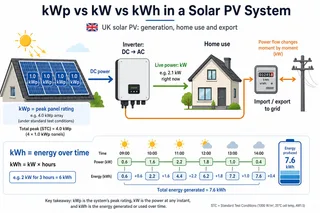
The kW rating shows how much power the battery can charge or discharge at one time, while the kWh rating shows how much energy it can store. For example, a battery may have enough stored energy to support EV charging for several hours, but if its inverter power rating is too low, it may not be able to reduce a high import peak effectively. Commercial battery design needs both the right kW output and the right usable kWh capacity.
Can battery storage help with commercial EV charging?
Yes, battery storage can help support commercial EV charging where the site’s grid supply is limited or where charger demand creates short import peaks. The battery can discharge during charging periods and recharge later from solar or the grid. However, it must be sized around real charging behaviour, including how many vehicles charge at once, charger ratings, vehicle dwell times, required daily energy, building load, and how quickly the battery can recharge before the next charging session.
Is smart charging still needed if a business installs a battery?
Smart charging is often still important. It can stagger or limit charger demand so the site does not exceed its agreed supply capacity. In many cases, smart charging is the cheapest first step, while battery storage is used where smart charging alone cannot meet operational needs. The best solution may combine solar PV, smart charging, battery storage, and, where necessary, a grid upgrade.
Can a commercial battery avoid a grid upgrade?
A battery can sometimes avoid or delay a grid upgrade by reducing short-term import peaks or supporting EV charging within the existing supply limit. This is most likely where demand peaks are short, predictable, and manageable. It is less suitable where the business has sustained high demand that regularly exceeds the available capacity, because the battery must still recharge and cannot create energy from nothing.
Can a commercial battery reduce exported solar electricity?
Yes. One of the main uses of battery storage with commercial solar PV is to store surplus solar electricity that would otherwise be exported, curtailed, or sold at a lower value. The battery can then discharge later when the business would otherwise import electricity. This is most valuable where export rates are low, import prices are higher, and the site has enough later demand to use the stored energy.
Does a solar battery provide backup power during a power cut?
Not automatically. Many grid-tied commercial solar and battery systems shut down during a power cut unless they are specifically designed for backup or islanded operation. Backup power requires additional switchgear, controls, earthing arrangements, protected circuits, emergency shutdown arrangements, and operating procedures. Supporting selected critical circuits is usually more practical and cost-effective than trying to back up an entire commercial building.
What loads can a commercial battery back up?
A commercial battery can be designed to support selected critical loads such as fire alarms, security systems, servers, communications equipment, access control, refrigeration, gates, sump pumps, or essential lighting. The design must consider starting currents, power quality, battery state of charge, usable capacity, and the required backup duration. The backup design should be agreed before the battery is specified, because reserving energy for resilience reduces the capacity available for normal savings.
What data is needed to size a commercial battery properly?
A proper battery proposal should use at least 12 months of half-hourly electricity data, annual consumption, maximum demand history, MPAN details, agreed supply capacity, tariff and export agreement, solar PV generation details, EV charging plans, operating hours, weekend use, DNO limits, switchgear information, metering layout, available installation space, backup requirements, and insurer or fire safety constraints. Without this information, the battery size is likely to be based on assumptions rather than evidence.
What UK grid approvals are needed for commercial solar and battery storage?
Commercial solar and battery systems usually require DNO approval under G99 rather than the simpler G98 process used for small systems. If export limitation is required, the design may also need to comply with Engineering Recommendation G100. Adding a battery can change the grid application even where solar PV already exists, especially if the battery can export or if EV charging increases site import demand.
Can a battery solve a DNO export limit?
A battery can help manage an export-limited connection by absorbing surplus solar generation that would otherwise exceed the agreed export limit. However, it does not remove the need for an approved export-limiting control scheme. Once the battery is full or unable to charge fast enough, the system may still need to curtail solar generation to remain within the DNO export limit.
Why is metering and CT placement important?
Battery controls rely on accurate measurement of grid import, grid export, solar generation, battery charge and discharge, site load, and EV charger demand. If current transformers or meters are installed in the wrong place, the battery may respond to the wrong signal. This can cause unexpected import peaks, failed export limitation, poor EV charging support, or unnecessary battery cycling. Functional commissioning should prove that the system behaves correctly in real operating conditions.
What fire safety issues apply to commercial battery storage?
Commercial battery installations must be designed around fire safety, access, ventilation, impact protection, flood risk, emergency isolation, maintenance, and insurer requirements. Lithium-ion batteries are widely used, but they require proper risk management because faults, damage, overheating, or internal failure can lead to thermal runaway. Larger systems are often installed outdoors in cabinets or containers, while indoor installations need careful review of ventilation, separation, fire detection, access, and manufacturer requirements.
Where should a commercial battery be installed?
The best location depends on electrical access, fire safety, ventilation, security, delivery access, maintenance space, flood risk, vehicle impact risk, and insurer requirements. A convenient electrical room is not always suitable if it has poor ventilation, limited access, or is close to escape routes. Outdoor cabinets may be safer and easier to access, but they can require foundations, bollards, longer cable routes, planning checks, and insurer approval.
How much does commercial battery storage cost in the UK?
Installed costs vary widely because the battery modules are only part of the project. A complete system may include inverters, switchgear, controls, meters, cabling, containment, fire protection, foundations, commissioning, monitoring, and grid compliance work. Broad UK installed costs for smaller and mid-sized commercial systems can be around £400 to £900 per kWh, while larger containerised systems may be lower per kWh depending on scale and site works. Final costs depend heavily on the site.
What affects commercial battery payback?
Battery payback depends on how often the system can create value. Key factors include avoided import costs, export value, peak demand charges, grid upgrade costs, EV charging revenue or operational value, battery degradation, usable capacity, round-trip efficiency, maintenance, finance costs, and tariff structure. Payback is usually stronger where the battery has a clear and frequent job, such as reducing costly peaks, supporting EV charging, avoiding a grid upgrade, or storing solar that would otherwise be exported at low value.
When is commercial battery storage less suitable?
Battery storage may be less suitable where the site already uses almost all solar generation directly, has favourable export rates, has a flat import tariff, has low or irregular demand, cannot cycle the battery enough, lacks safe installation space, has unresolved insurer concerns, or can solve the problem more cheaply with smart charging or a grid upgrade. The key question is whether the battery has a clear job to do often enough to justify its cost and complexity.
What are common mistakes when buying commercial battery storage?
Common mistakes include sizing the battery from solar capacity alone, ignoring half-hourly demand data, assuming backup power is included automatically, overlooking DNO approval, failing to check fire safety and insurer requirements, comparing quotes only by headline kWh, ignoring usable capacity and inverter power, failing to account for degradation, and installing controls that cannot coordinate solar PV, batteries, EV chargers, and grid limits. A good specification should clearly state the intended control priorities before equipment is ordered.