


How much does a home solar battery cost in the UK?
Published: 2026-09-22 19:47:59
Updated: 2026-09-24 05:14:58
Practical UK guide on how much does one battery cost. Clear answers for homeowners comparing options and next steps.
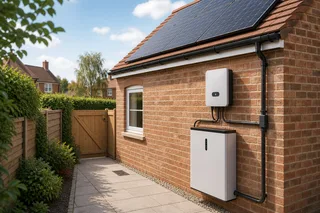
how much does one battery cost?
Find out how much does one battery cost? in the UK, including costs, what affects price, and how to choose an installer.
How much does a home solar battery cost in the UK?
A UK home battery normally costs several thousand pounds as a fully installed system, with many domestic quotes falling from the low thousands to around £10,000 or more. The final price depends mainly on usable capacity, inverter choice, whether it is installed with solar panels or retrofitted later, electrical work, backup requirements and VAT treatment.
Prices last reviewed: January 2026. The guide ranges in this article are broad UK installed-price benchmarks for domestic battery systems, not supply-only online component prices. Use them to sanity-check quotes, not as a substitute for a site survey or written specification.
The phrase “one battery” is imprecise. It could mean a single battery module, a stack of modules, or the complete working system with inverter, isolators, protection devices, monitoring, commissioning and DNO handling. For homeowners, the installed system price is usually the useful figure.
What does the quoted price usually include?
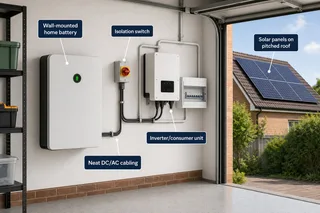
A proper battery quote should cover the equipment and the work needed to make it safe, compatible and useful in your property. A home battery is not simply a box fixed to a wall. It forms part of the electrical installation and must work correctly with your inverter, consumer unit, meter, earthing arrangement and grid connection. If you are still at the basics stage, it helps to understand what a home battery does before comparing prices.
For a retrofit battery, the installer should check the existing solar inverter, available wall or floor space, cable routes, meter position, consumer unit condition and communications requirements before confirming the price. For a new solar-and-battery installation, some of this work can be designed together, which may reduce duplicated labour later.
A complete quote will usually include the battery module or stack, normally described by total and usable capacity. It should also include the inverter or battery inverter, electrical protection, isolation, labelling, monitoring, installation labour, testing, setup and commissioning. The wording matters because exclusions are common.
Typical UK battery cost ranges by size
Battery quotes vary, but broad installed ranges can help you judge whether an estimate is in the right area. Treat these as guide prices, because battery brand, inverter arrangement, site access, labour, VAT treatment and electrical upgrades can all change the final figure. The most useful comparison is usable capacity rather than headline capacity. A battery sold as a certain size may reserve some capacity to protect its lifespan, so the amount available for everyday charging and discharging can be lower than the nameplate figure. For a deeper sizing check, see how to judge the battery size you need against your home’s usage pattern.
Overview
These ranges assume a domestic installation rather than a commercial battery project. They also assume the battery is being installed as a functional system, not bought as a loose component without the electrical work needed to connect and commission it.
Why one battery does not have one standard price
There is no single price for “one battery” because battery systems are modular and site-specific. Two homes can choose similar storage capacity but receive different quotes because the cable route, existing inverter, consumer unit, meter location and installation position are different.
An installer will also look at how the battery is expected to operate. A battery used mainly for storing solar surplus may be specified differently from one used for cheap-rate overnight charging. If you want backup during a power cut, that is not automatically included in a standard battery installation and normally needs compatible equipment and careful circuit design.
The biggest price differences usually come from practical site details rather than the battery alone.
Battery capacity, usable capacity and power output
A battery advertised as 10 kWh may not make the full 10 kWh available in everyday operation. Many systems keep a reserve to protect the battery, so usable capacity is the figure that matters when estimating how much electricity can be shifted from daytime to evening or from off-peak to peak periods.
Power output is separate from storage capacity. Capacity tells you how much energy the battery can hold, while power output tells you how quickly it can charge or discharge. A battery with adequate capacity may still have a discharge limit that affects how many appliances it can support at once.
Round-trip efficiency also matters. A battery does not return every unit of electricity put into it, because some energy is lost during charging, discharging and conversion. This does not make batteries ineffective, but it does mean savings should be modelled using realistic assumptions rather than assuming perfect storage.
How the battery connects to solar, the grid and your home
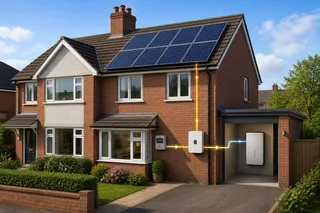
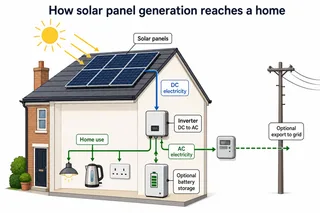
A domestic battery can be installed with new solar panels, added to an existing solar PV system, or used in some cases without solar for tariff-based charging. The design choice affects cost because it determines the inverter arrangement, metering, controls and grid paperwork.
AC-coupled systems are often used when adding a battery to an existing solar installation because they can sit alongside the existing PV inverter. DC-coupled systems are often considered when solar and battery storage are designed together, but they depend on equipment compatibility and the installer’s design approach. If you already have panels, the practical steps to add a battery can be different from a new combined installation.
The right design is not always the cheapest component list. In real projects, the better choice is usually the one that gives safe installation, clear monitoring, suitable charge and discharge behaviour, and a warranty-compliant location.
UK VAT treatment can change the final price
VAT can materially affect the price of a domestic battery installation, so check it before comparing quotes. UK VAT rules for energy-saving materials have changed over time, and the treatment can depend on whether the battery is installed in a qualifying domestic setting, whether it is installed with other energy-saving materials, and what work is included in the contract.
At the time of writing, domestic battery storage may be eligible for zero-rated VAT in some circumstances, but homeowners should not rely on assumptions. Ask the installer to state the VAT treatment on the quote and to explain whether any parts of the work are standard-rated.
A fair quote comparison should compare VAT-inclusive totals, not just equipment subtotals. If one installer has assumed zero-rated VAT and another has applied standard VAT, the apparent price difference may be tax treatment rather than better value.
DNO notification and application in plain English
The DNO is the Distribution Network Operator responsible for the local electricity network. Battery systems interact with the grid through inverter equipment, so the installer may need to notify the DNO after installation or apply before installation, depending on the equipment, capacity and export arrangement.
In simple terms, notification is usually a “tell the DNO” process for eligible small systems that meet the relevant conditions. An application is a “get acceptance before connecting” process where the proposed system needs network assessment. The distinction matters because it can affect timescale, design and whether export limits or settings are required.
Homeowners do not usually handle this directly, but they should still ask the installer how it will be managed.
Is it cheaper to add a battery with solar or later?
Installing a battery at the same time as solar PV can be simpler because the installer can design the inverter, cable routes, monitoring and DNO paperwork as one system. It may also avoid duplicated labour if the same team is already working on the roof, consumer unit and generation meter arrangements. If you are still weighing up the full system, you can compare solar options before deciding whether storage should be included from day one.
Adding a battery to an existing solar installation can still be a good option, especially where the home exports a lot during the day and imports in the evening. The main question is compatibility. If the existing inverter does not support the chosen battery, an AC-coupled system may be proposed, or additional inverter equipment may be needed.
There is no universal cheaper route. A straightforward retrofit in a modern property may be simple, while an older installation with limited space, awkward wiring or incompatible equipment can be more involved than expected.
Will one battery pay for itself?
A battery can reduce bills by storing surplus solar electricity, shifting cheaper grid electricity into more expensive periods, or doing both where tariffs and equipment allow. Payback depends on the difference between import and export values, how often the battery cycles, the usable capacity and whether the household actually uses the stored energy instead of buying from the grid.
It is not safe to assume a fixed payback period from the battery price alone. Electricity tariffs change, export payments vary, and household demand can shift if you add an EV, heat pump, electric cooking or different working patterns. A quote should therefore be assessed against smart meter data where available, not only against average annual consumption. You can also calculate battery payback using realistic usage and tariff assumptions.
A useful financial assessment compares the battery against the alternatives. Sometimes a smaller battery, better tariff, larger solar array, hot water diverter, insulation work or EV charging change may offer better value than buying the largest battery available.
Worked examples of battery sizing and savings logic
Worked examples are useful because they show why the same battery price can be sensible for one home and weak for another. These examples are illustrative patterns rather than promised savings, because actual results depend on your tariff, export rate, usage profile, inverter settings and weather.
The important question is not “how big is the battery?” but “how often will this battery fill and empty in a useful way?”. A battery that cycles most days can create more value than a larger one that often sits full or empty.
When a home battery may not be suitable
A battery is not the right purchase for every property. If your home uses very little electricity in the evening, exports little solar generation or cannot access a useful off-peak tariff, the savings may be limited compared with the upfront cost.
Site constraints can also make an otherwise good idea awkward. Some homes do not have a suitable battery location that meets the manufacturer’s temperature, clearance, weather protection and access requirements. Others may need consumer unit work or cabling that makes the project disproportionately expensive.
Expectations around power cuts are another common issue. Many standard battery systems disconnect during a grid outage unless the system includes suitable backup design, isolation equipment and selected circuits. If backup is important, raise it before the quote is prepared rather than after installation, and check whether the proposed battery during a power cut setup matches what you expect.
Safety, warranties and installation quality
A battery installation should be designed and installed by competent professionals following the manufacturer’s instructions and relevant UK electrical requirements. The exact certification, paperwork and sign-off can depend on the system design, the property and whether the battery is installed with solar PV, so homeowners should ask what documents will be provided at handover. It is also sensible to understand the basics of home battery safety before choosing a location or specification.
Warranty terms are not just about the number of years printed on a brochure. They may include limits or conditions relating to installation location, operating temperature, depth of discharge, throughput, commissioning, internet connection, maintenance and approved equipment combinations.
Good installation quality is often visible in the details: clear labelling, sensible cable routes, accessible isolators, tidy protection equipment, a suitable mounting position and a handover that explains normal operation. A low quote that leaves these points vague may not be the best value.
What to ask before accepting a battery quote
A good quote should make clear what you are buying, what is included and what assumptions have been made. If two quotes differ sharply, check whether they are quoting the same usable capacity, inverter arrangement, monitoring, DNO handling, backup capability and VAT treatment.
It is also worth asking how the installer has sized the battery. A credible recommendation should relate to your electricity use, solar generation, export pattern and tariff options, not just the largest unit that fits the wall.
The practical answer for UK buyers
For most UK homeowners, the real answer to “how much does one battery cost?” is that one installed home battery system is usually a several-thousand-pound purchase, with size and installation complexity driving the difference. The battery unit is only part of the cost; the system design, inverter, electrical work, VAT treatment, DNO process and commissioning matter just as much.
Before comparing quotes, decide what problem the battery is meant to solve. Storing surplus solar, shifting cheap-rate electricity, preparing for higher future demand and adding backup capability can all lead to different specifications.
The next step is to gather your annual electricity use, recent smart meter data if available, solar generation and export information, tariff details, and the make and model of your existing inverter if you already have PV. With those details, an installer can size the battery properly and explain whether a smaller, mid-sized or larger system is the better fit for your home. If you want that checked against your property, you can book a free survey.
Plan, Compare & Buy Renewable Energy Solutions
AI does the thinking.
You get the perfect solar match.
Use RoboMo™ to assess your property, compare available technologies and connect with trusted UK installers, suppliers and manufacturers.
Simply enter your postcode, drop a pin on your roof, create your free account and let RoboMo™ analyse your property to find the best solar panels for your home.

You don't have to think
RoboMo™'s AI analyses your roof and does all the hard work.

Accurate & tailored
AI-powered assessment based on your roof, location, and conditions.

Best options, maximum savings
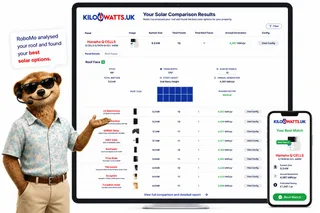
Compare top solar panels for the best performance and value.

Simple, fast & effortless
Provide a few details, sit back and watch your results unfold.
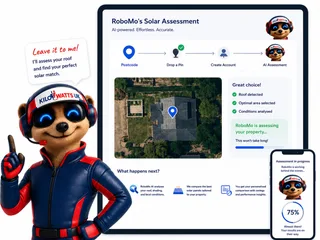
STEP 1
Choose Home, Business or Industrial
Enter your postcode to start your assessment.
STEP 2

Drop a pin on your roof
STEP 3

Create your free account
STEP 4

Sit back and watch RoboMo™ work
RoboMo™ analyses your roof and builds your personalised solar comparison.

Kilowatts UK is an authorised representative
Flower Turbines
Compact vertical-axis turbines built for real UK sites, not just open farmland.
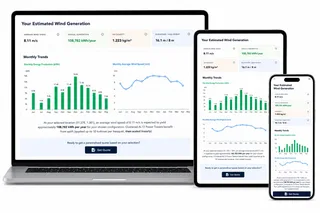
They start in light wind, sit in a small footprint, and are bird-safe by design. Cluster them as a bouquet and the group performs better together than the same turbines standing alone. Enter your postcode for a location-based generation estimate. Figures use area weather data and will differ if buildings, trees or hills sit in the way.
Starts in light UK wind
Built to generate in typical UK wind, not only open farmland.
Small rooftop or ground footprint
Compact towers for roofs, yards and tight sites.
Bird-safe slow rotation
Slow vertical-axis spin, bird-safe by design.
Bouquet clusters raise output
Grouped turbines outperform the same units standing alone.

Step 1
Enter your postcode
Start designing your wind energy system in seconds.
STEP 2

Choose a location
STEP 3

Place your cluster
Tap the map where you want the turbine cluster to go.
STEP 4

Instant generation forecasts
Compare different turbine layouts and see annual generation forecasts instantly.
STEP 5

No commitment required
Explore different configurations before deciding whether to request a quotation.
Related articles
Solar panels
Mo's Mission Nominations
FAQ
Need Help? RoboMo's Got Answers
How much does one home battery cost in the UK?
A fully installed UK home battery usually costs several thousand pounds, with many domestic systems quoted from the low thousands to around £10,000 or more. The exact price depends on usable capacity, inverter choice, installation complexity, backup requirements and VAT treatment. A written site-specific quote is the safest way to compare costs.
What does “one battery” actually mean in a quote?
It can mean a single battery module, a stack of modules, or the complete installed battery system. For homeowners, the important figure is normally the full installed price, including the inverter or battery inverter, electrical protection, monitoring, labour, commissioning and paperwork. Supply-only component prices are not a reliable comparison with installed quotes.
What size battery should I compare prices on?
Compare batteries by usable capacity, not only the headline kWh figure. Some battery capacity is reserved to protect the battery, so the amount available for everyday use may be lower than the nameplate rating. Also check the charge and discharge power, because this affects how many appliances the battery can support at once.
Is it cheaper to install a battery with solar panels or add one later?
Installing a battery at the same time as solar can reduce duplicated labour and allow the inverter, cable routes and monitoring to be designed together. Adding a battery later can still be sensible, especially if you already export a lot of solar electricity during the day. There is no universal cheaper option because compatibility, wiring, access and consumer unit condition can change the cost.
Does a home battery work during a power cut?
Not always. Many standard battery installations shut down during a power cut unless they include compatible backup equipment and a suitable circuit design. If backup is important, ask whether the quote covers whole-home backup, essential-circuit backup, or no backup at all.
Can VAT affect the price of a UK home battery?
Yes, VAT treatment can make a noticeable difference to the final price. Domestic battery storage may be zero-rated in some circumstances, but the correct treatment depends on the job and should not be assumed. Ask each installer to show the VAT-inclusive total and explain any standard-rated parts of the work.
Will the installer need to contact the DNO?
In many cases, yes, because battery systems connect through inverter equipment that interacts with the grid. Depending on the system and export arrangement, the installer may need to notify the Distribution Network Operator or apply before connection. Ask who handles this, whether approval is needed before work starts, and what evidence you will receive afterwards.
Will a home battery pay for itself?
Payback depends on how much stored electricity you actually use, your import tariff, export rate, solar generation and how often the battery cycles. It is not safe to assume a fixed payback period from the battery price alone. A good assessment should use your smart meter data where available and compare different battery sizes, not just the largest option.