


What size battery do I need for my home in the UK
Published: 2026-05-31 02:58:23
Updated: 2026-05-31 06:19:52
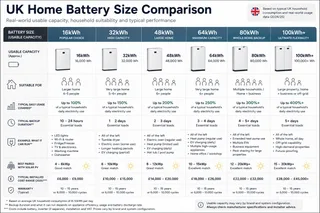
What Size Battery Do I Need for My Home in the UK?
Choosing the right battery size is usually more important than choosing the battery brand.
A battery that is too small may fill and empty quickly, while a battery that is too large may never be fully utilised.
Most UK homes fall somewhere between 4kWh and 16kWh of battery storage depending on electricity usage, solar generation and future plans such as electric vehicles or heat pumps. If you are comparing options, what a home battery is and how it works, home battery costs in the UK, whether a battery is worth installing without solar and how long home batteries typically last can help you understand which battery size may be most suitable for your property.
How Home Battery Sizing Works
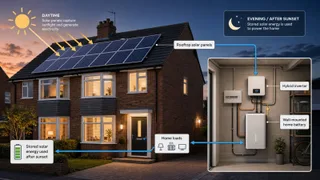
A home battery stores electricity for use later in the day.
The correct size depends on how much electricity your household uses, how much solar energy you generate and when that electricity is consumed.
In practice, battery sizing should be based on daily energy consumption rather than annual electricity usage. Many homeowners focus on the battery capacity alone, but installers also consider inverter limits, charging rates and how much surplus solar energy is available during the day. A home battery size calculator UK tool typically uses household consumption data, solar generation estimates and desired storage capacity to provide a recommendation.
Typical Home Battery Sizes in the UK
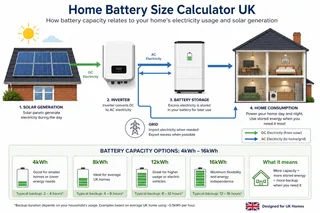
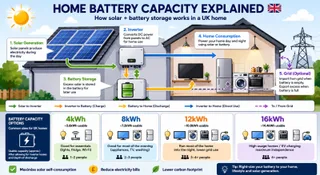
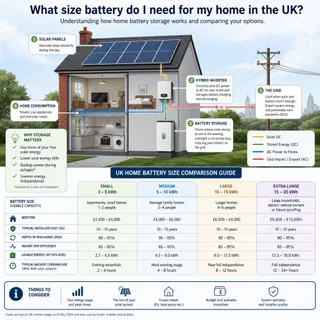
Most domestic battery systems installed in the UK fall between 4kWh and 16kWh.
Small households with modest electricity use may find a 4kWh to 6kWh battery sufficient.
Average family homes often consider batteries in the 8kWh to 10kWh range. Larger households, homes with electric vehicles or properties with high electricity demand may require 12kWh to 16kWh or more. Battery costs generally increase as capacity increases, with many systems costing between £2,000 and £5,000 or more depending on specification and installation requirements. One thing many homeowners do not realise is that the largest battery is not always the most cost-effective option.
Factors That Affect Battery Size Requirements
The amount of solar generation available throughout the year can influence battery sizing.
Roof orientation and shading affect how much electricity is available to charge the battery.
Properties in different parts of the UK can experience different generation levels due to local weather conditions and daylight hours. Household occupancy patterns are also important. Homes that are empty during the day may benefit from storing more solar energy for evening use. Electric vehicles, heat pumps and other high-consumption appliances can increase battery requirements significantly. From an installer's perspective, future energy demand should be considered as well as current usage.
When a Larger Battery Makes Sense
A larger battery can be beneficial when there is sufficient energy available to charge it regularly.
Homes with substantial solar generation may be able to make use of larger storage capacities.
Households using smart tariffs may also benefit from charging batteries overnight during lower-cost periods. Properties with electric vehicles often have higher electricity consumption and may benefit from additional storage. Some homeowners choose larger systems because they want greater flexibility as energy usage changes over time. The reality is that battery sizing should be based on actual energy consumption patterns rather than assumptions.
When a Smaller Battery May Be Better
Not every property needs a large battery system.
Low-energy households may struggle to justify the cost of larger storage systems.
If a battery rarely cycles fully, the additional capacity may provide little practical benefit. Smaller systems can often deliver a better return on investment where electricity consumption is modest. Properties with limited solar generation may also see reduced benefits from oversized battery storage. This is one reason why professional system design is often more important than selecting the highest-capacity battery available.
Installation Considerations
Battery storage systems should always be installed and commissioned by a suitably qualified professional.
Installers need to assess available installation space, electrical infrastructure and system compatibility.
Some batteries can be wall-mounted while others require floor-standing or rack-mounted installations. Monitoring software can help homeowners understand how effectively a battery is being used. Compliance with relevant electrical and building requirements should also be verified before installation. Homeowners researching storage systems may also find What Is a Home Battery and How Does It Work, How Much Does a Home Battery Cost in the UK, How Long Do Home Batteries Last in the UK and Home Battery Storage Systems Introduction when comparing different battery options.
Plan, Compare & Buy Renewable Energy Solutions
AI does the thinking.
You get the perfect solar match.
Use RoboMo™ to assess your property, compare available technologies and connect with trusted UK installers, suppliers and manufacturers.
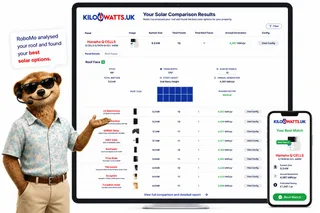
Simply enter your postcode, drop a pin on your roof, create your free account and let RoboMo™ analyse your property to find the best solar panels for your home.

You don't have to think
RoboMo™'s AI analyses your roof and does all the hard work.

Accurate & tailored
AI-powered assessment based on your roof, location, and conditions.

Best options, maximum savings
Compare top solar panels for the best performance and value.

Simple, fast & effortless
Provide a few details, sit back and watch your results unfold.
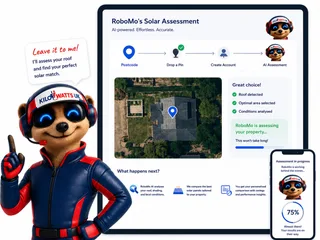
STEP 1
Choose Home, Business or Industrial
Enter your postcode to start your assessment.
STEP 2

Drop a pin on your roof
STEP 3

Create your free account
STEP 4

Sit back and watch RoboMo™ work
RoboMo™ analyses your roof and builds your personalised solar comparison.
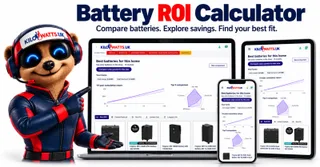
BATTERY ROI TOOL
See what a battery saves on your bill
Enter the day rate, off-peak rate and export rate. The calculator ranks batteries in the Kilowatts shop over 10 years.
Home batteries also suit offices and small commercial sites. Industrial batteries are listed on their own calculator.

Step 1
Enter your postcode
Start designing your wind energy system in seconds.
Are you an installer, distributor or renewable energy business?
Kilowatts UK is expanding the Flower Turbines partner network across the UK.
Become A Flower Turbines PartnerKilowatts UK is an authorised representative
Flower Turbines
Compact vertical-axis turbines built for real UK sites, not just open farmland.
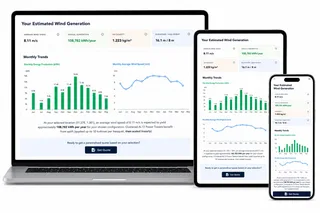
They start in light wind, sit in a small footprint, and are bird-safe by design. Cluster them as a bouquet and the group performs better together than the same turbines standing alone. Enter your postcode for a location-based generation estimate. Figures use area weather data and will differ if buildings, trees or hills sit in the way.
Starts in light UK wind
Built to generate in typical UK wind, not only open farmland.
Small rooftop or ground footprint
Compact towers for roofs, yards and tight sites.
Bird-safe slow rotation
Slow vertical-axis spin, bird-safe by design.
Bouquet clusters raise output
Grouped turbines outperform the same units standing alone.
STEP 2

Choose a location
STEP 3

Place your cluster
Tap the map where you want the turbine cluster to go.
STEP 4

Instant generation forecasts
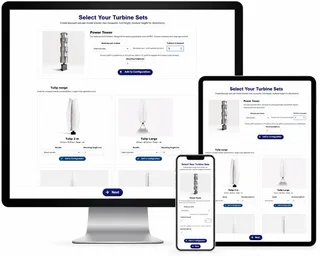
Compare different turbine layouts and see annual generation forecasts instantly.
STEP 5

No commitment required
Explore different configurations before deciding whether to request a quotation.
Related articles

Mo's Mission Nominations
FAQ
Need Help? RoboMo's Got Answers
What size battery does an average UK home need?
Many average UK homes consider battery capacities between 8kWh and 10kWh, although the correct size depends on electricity usage, solar generation, occupancy patterns and future energy requirements such as electric vehicles or heat pumps.
Can a battery be too large for a house?
Yes. An oversized battery may never charge or discharge fully, which can reduce overall value and extend the time needed to recover the installation cost. In many cases, correct system design is more important than simply choosing the largest battery available.
Do I need solar panels to have a home battery?
No. While many batteries are installed alongside solar panels, some homeowners use battery storage with smart electricity tariffs to store lower-cost electricity for use later in the day.
What factors affect the size of battery I need?
Battery sizing is influenced by daily electricity consumption, solar generation, roof orientation, shading, household occupancy patterns and high-energy appliances such as EV chargers and heat pumps. Installers should also consider future electricity demand rather than only current usage.
Why should a battery system be professionally installed?
A qualified installer can assess system compatibility, installation space, charging requirements and electrical infrastructure. They can also ensure the system complies with relevant electrical and building requirements while helping you choose a battery size that matches your home's actual energy needs.