


Affordable Electrical Services in the UK
Published: 2024-12-09 18:25:12
Updated: 2026-08-01 22:56:24
Good value comes from safe design, clear specification, competent installation, proper certification.
Affordable electrical services in the UK
Affordable electrical services are not simply the cheapest quote. Good value comes from safe design, clear specification, competent installation, proper certification, and avoiding repeat work because an important detail was missed at survey stage.
For UK homeowners, affordable electrical work can include everyday domestic jobs as well as enabling work for low-carbon upgrades. That might mean fault finding, new circuits, consumer unit work, inspection and testing, EV chargepoint installation, solar PV wiring, battery storage preparation, smart controls, or electrical supplies for heating upgrades.
The safest route is straightforward: decide what outcome you need, check whether your existing electrical installation can support it, make sure the work is designed to current UK requirements, and compare quotes on the same scope rather than on headline price alone.
The answer first: what affordable domestic electrical services usually include
Most homeowners searching for affordable electrical services are trying to solve a practical problem: a repair, an upgrade, a safety concern, or preparation for a larger project. A general domestic electrician is usually suitable for many routine jobs, while renewable-energy work may need a specialist installer with the right experience, design process, handover documents, and product knowledge.
For simple repairs, additional sockets, lighting changes, inspection and testing, or small alterations, a qualified domestic electrician may be the right starting point. For solar PV, battery storage, EV charging, heat pump supplies, or linked smart-energy systems, it is usually better to use an installer who regularly designs and commissions that specific technology, not just someone who can physically connect a cable.
Smart energy controls
Timers, load management, monitoring, diverters, and controls that help equipment work together sensibly.Inspection and testing
Electrical Installation Condition Reports, checks before purchase or letting, and investigation of older or altered wiring.General electrical repairs
Fault finding, damaged fittings, tripping circuits, lighting faults, socket problems, and small remedial works.Consumer unit and circuit work
Replacement or alteration where needed, new circuits, protective devices, labelling, and testing.Renewable-energy enabling work
Cable routes, isolators, metering arrangements, earthing and bonding checks, and space planning for solar, battery, EV charging, or heat pump equipment.
What affordability really means for electrical work
Electrical work is one area where a low upfront price can become expensive if the job is poorly specified. A quote that leaves out testing, containment, certification, access equipment, consumer unit changes, DNO liaison, or making-good can look cheaper at first but may not reflect the real finished cost.
A sensible affordable electrical service should match your present needs while avoiding obvious future rework. For example, if you are planning solar panels, a battery, an EV charger, or a heat pump within the next few years, it may be cheaper to consider cable routes, spare capacity, and metering arrangements during one planned project rather than opening walls or revisiting the consumer unit repeatedly.
Clear scope: The quote should say what is included, what is excluded, and what assumptions have been made. Safe specification: The contractor should check the existing supply, consumer unit, earthing, bonding, cable routes, protective devices, and load requirements before committing to a design. Compliance and certification: The price should include the correct inspection, testing, certification, and Building Regulations notification where required. Future readiness: Where appropriate, the work should allow for likely later upgrades without overspending on equipment you do not need. Practical installation: Access, disruption, drilling routes, outdoor equipment locations, isolation requirements, and finishing details should be discussed before work starts. Aftercare: Test results, handover information, warranties, manuals, and maintenance expectations should be clear.
UK electrical compliance you should expect
Domestic electrical work in the UK is safety-critical. The main technical standard used by electricians is BS 7671, often called the IET Wiring Regulations. BS 7671 is not a simple consumer checklist, but your contractor should be working to the current edition and should be able to explain any safety issue in plain English.
In England and Wales, domestic electrical work is also affected by Part P of the Building Regulations. Some work must be notified to Building Control, either directly or through a registered competent person scheme. Scotland and Northern Ireland have different building standards and processes, so homeowners should check the rules that apply where the property is located.
A trustworthy contractor should not treat certification as an optional extra. If a quote appears unusually cheap, check whether it includes inspection, testing, certification, and any required notification.
BS 7671
The electrical design and installation should follow the current IET Wiring Regulations for safety, protection, cable sizing, isolation, earthing, bonding, and testing.Part P notification
In England and Wales, certain domestic electrical work is notifiable under the Building Regulations. A competent person scheme member can usually self-certify eligible work; otherwise Building Control may need to be involved.Competent person schemes
Registration with schemes such as NICEIC or NAPIT can help homeowners check whether an electrician can self-certify certain domestic work, but you should still review the exact scope, insurance, and experience.Electrical Installation Certificate
An EIC is normally issued for a new electrical installation, a new circuit, or significant alteration work.Electrical Installation Condition Report
An EICR reports on the condition of an existing installation; it is not the same as a completion certificate for new work.Minor Electrical Installation Works Certificate
A Minor Works Certificate is commonly used for smaller additions or alterations that do not include a new circuit.
Safety references — Useful consumer sources include Electrical Safety First, GOV.UK guidance on Building Regulations, the IET, NICEIC, NAPIT, MCS, and the Energy Networks Association.
Renewable-specific checks: solar, batteries, EV charging and DNO requirements
Renewable-energy and low-carbon electrical work often involves more than the visible equipment. Solar PV, battery storage, EV chargers, and heat pumps can affect household load, generation, export, metering, earthing arrangements, and distribution network requirements.
For grid-connected generation such as solar PV, the Distribution Network Operator may need notification or prior approval depending on the system design and capacity. In the UK this is commonly handled through Engineering Recommendation G98 or G99 processes. Your installer should know which route applies and whether the project can proceed under notification after installation or requires an application before installation.
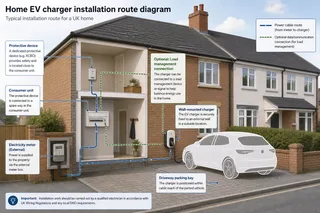
EV chargepoints and heat pump supplies can also require DNO notification or assessment. The correct process depends on the equipment, electrical demand, property supply, and network circumstances. This is not paperwork to ignore, because it helps ensure the local electricity network can safely support the additional load or generation. MCS and product quality: For solar PV and some battery-related work, check whether the installation is being delivered under MCS or an equivalent recognised quality scheme, especially if you expect to access export payments or need formal evidence for a supplier. DNO G98 or G99: Grid-connected generation should be assessed against the relevant DNO process, with notification or application handled correctly by the installer. EV chargepoint requirements: A proper EV charger installation should consider supply capacity, earthing arrangements, cable route, protective devices, load management, smart-chargepoint requirements where applicable, and DNO notification. Manufacturer requirements: Warranties may depend on correct installation, commissioning, ventilation or location rules, firmware setup, and documented handover. Handover documents: Ask for certificates, test results, user manuals, commissioning records, warranty details, monitoring access, DNO evidence where relevant, and a clear explanation of shutdown or isolation procedures.
Common electrical services linked to renewable energy
Many households now look for electrical services because they want to reduce energy bills, improve resilience, or prepare for low-carbon technologies. The electrical work behind these systems is often just as important as the visible equipment.
Solar PV, battery storage, EV charging, and heat pumps all interact with the home’s wiring and supply capacity. A property with an older consumer unit, limited spare ways, awkward cable routes, uncertain earthing arrangements, or inadequate labelling may need enabling work before the main installation is sensible. That does not mean the project is unsuitable, but it does mean affordability should be judged on the full system, not only the headline product.
Typical services can include solar PV installation, battery storage connection, renewable-ready wiring, consumer unit upgrades, additional circuits, smart energy controls, EV chargepoint installation, fault finding, inspection and testing, planned maintenance, and remedial work identified during an EICR. The best order depends on your property and on which upgrades you expect to make first.
What affects price and suitability
The cost of electrical services varies widely because two homes that look similar from the street can be very different electrically. Roof condition, cable routes, consumer unit capacity, meter position, loft access, shading, household demand, existing earthing and bonding, and future technology plans can all change the design.
For renewable energy systems, online price ranges should be treated cautiously unless the source is current, UK-specific, and clear about what is included. A solar PV quote that includes scaffolding, bird protection, monitoring, certification, DNO paperwork, and a consumer unit alteration is not directly comparable with a quote that excludes several of those items. The same applies to battery storage, EV charging, heat pump supplies, and domestic wind, where site conditions can dominate the cost.
Instead of relying on broad figures, ask for an itemised quote and check the date, assumptions, VAT treatment, equipment model, labour scope, access requirements, and handover package. Authoritative consumer guidance can help you ask better questions, but the final price should come from a site-specific survey.
What a good quote should include or exclude clearly
A good quote should make it easy to understand what you are buying. It should also make clear where costs may change because the contractor cannot confirm something until access is available, equipment is opened, or the DNO has responded.
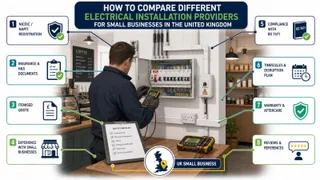
Cheaper quotes are not automatically poor, and higher quotes are not automatically better. The problem is when quotes are not comparable. If one contractor includes testing, certification, DNO paperwork, access equipment, and making-good while another gives only a brief line item for installation, the apparent saving may not be real.
Survey basis
The quote should say whether it follows a physical survey, a remote survey, photographs, or provisional assumptions.DNO processes
For solar, batteries, EV chargers, and heat pumps, it should explain any required DNO notification or application and who will handle it.Building Regulations
It should state who is responsible for any Part P notification or Building Control process where required.Labour and materials
It should identify the main equipment, cable routes, containment, isolators, protective devices, and accessories.Access and scaffolding
It should say whether ladders, scaffold, roof access, parking arrangements, or specialist access equipment are included.Testing and certification
It should include the relevant EIC, Minor Works Certificate, EICR, commissioning record, or other handover documents for the work being carried out.
Making-good — It should state whether patching, plastering, decoration, flooring, or external sealing is included or excluded. Limitations — It should identify provisional items, unknowns, and circumstances that could change the price.
How a good contractor controls costs
A good electrician or renewable installer controls costs by reducing uncertainty before work begins. The cheapest way to install is usually not to cut corners, but to avoid surprises through a proper survey, clear design, competent workmanship, and complete handover.
A site survey should look at more than the equipment you are buying. It should consider how power will be routed, where equipment will sit, whether access is safe, how the work affects existing circuits, and what needs to happen if the property is older or has been altered over time. If you are unsure what to ask, start with choosing a qualified electrician before comparing detailed quotes.
Survey before specification: A proper survey reduces the risk of provisional quotes that rise later. Compare like with like: Quotes should include comparable equipment, labour, testing, access, certification, and handover items. Plan the sequence: If several upgrades are likely, agree which work should happen now and what can wait. Avoid unnecessary extras: Future-proofing is useful, but only where there is a realistic chance you will use it. Check registration and insurance: Ask for evidence that the contractor is competent for the type of work and insured for domestic electrical or renewable installations. Keep documentation: Test results, manuals, warranties, commissioning records, DNO evidence, and layout information help with maintenance and later upgrades.
When to choose a general electrician or a renewable installer
A general domestic electrician is often the right choice for straightforward repair, inspection, testing, lighting, sockets, small alterations, and many consumer unit or circuit jobs. For these tasks, competence, certification, insurance, and familiarity with domestic properties matter more than whether the contractor markets themselves as a renewable specialist.
A renewable installer becomes more important when the job involves system design, generation, storage, export, manufacturer commissioning, monitoring, or DNO processes. Solar PV and battery systems in particular should be designed around roof layout, inverter capacity, cable runs, protection, export arrangements, warranties, and user handover, not just connected to the nearest convenient point.
When renewable electrical services may not be suitable
Renewable-focused electrical work is not automatically right for every home. Some properties have limited roof space, heavy shading, awkward cable routes, restricted outdoor space, complex ownership arrangements, or older electrical infrastructure that makes a simple installation less practical.
Solar PV may be less attractive where the roof is small, shaded for much of the day, in poor condition, or due for replacement. Battery storage may be less compelling where usage patterns, tariff arrangements, available space, or budget do not support it. Domestic wind turbines are highly site-dependent and are often unsuitable in dense residential areas because performance depends heavily on exposure, clean airflow, planning considerations, and practical installation conditions.
Suitability is also financial and practical. If the enabling electrical work is extensive, the project may still make sense, but it should be assessed honestly against your budget, energy use, expected lifespan in the property, available tariffs, maintenance expectations, and other improvements such as insulation, draught-proofing, heating controls, or appliance efficiency.
Common mistakes to avoid
Many problems with electrical services start before installation, when the brief is too vague. Homeowners often ask for a price for “solar”, “a charger”, “a rewire”, or “a new consumer unit” without enough detail for accurate comparison.
Another common mistake is treating renewable equipment as a standalone purchase. A solar array, battery, EV charger, or heat pump connection has to work with the existing electrical system. If the consumer unit, cable route, earthing, available supply, DNO process, or installation location is overlooked, the job can become more disruptive or expensive than expected.
- Choosing only on headline price
- Comparing quotes with different scopes
- Accepting unclear certification or notification responsibilities
- Ignoring the condition of the roof, consumer unit, earthing, or bonding
- Leaving future upgrades out of the discussion
- Assuming every property needs the same design
Forgetting maintenance access and documentation Overlooking DNO notification or application where relevant Relying on old online price ranges without checking what is included
How to prepare before requesting quotes
Before asking for quotes, gather practical information about your home and your energy plans. You do not need to design the system yourself, but you should be able to explain what you want to achieve and what may change in the next few years.
Useful information includes recent electricity usage, photographs of the consumer unit and meter area, roof details if solar is being considered, parking arrangements for EV charging, and any known electrical issues. If you are planning a heat pump, battery, extension, loft conversion, kitchen refit, or major appliance change, mention it early because it may affect the best electrical design.
Ask each contractor to explain assumptions clearly. If a quote is provisional, ask what could change it. If enabling work is needed, ask whether it is essential now for safety or compliance, recommended for future flexibility, or simply an optional improvement. Photographs: Take clear photos of the consumer unit, electricity meter, service head if accessible, main earthing and bonding, proposed equipment locations, roof areas, loft access, and parking area. Energy information: Have recent electricity consumption, tariff details, EV mileage plans, heating plans, and any expected changes in household demand available. Property details: Note property age, construction type, loft access, roof covering, shading, previous rewires, known faults, and any recent EICR. Project priorities: Decide whether the main aim is safety, lower bills, resilience, EV charging, future heat pump readiness, or preparation for solar and battery storage. Quote questions: Ask who will do the work, who signs it off, what certificates you receive, what is excluded, what could change the price, and who handles DNO or Building Regulations requirements.
The practical route to affordable electrical services
Affordable electrical services in the UK come from good specification, competent work, sensible sequencing, and honest assessment of the property. For renewable energy projects, the lowest quote is not always the best value if it ignores access, safety, certification, DNO requirements, future upgrades, or the condition of existing wiring.
The most useful approach is to start with a survey, define the outcome you want, compare detailed quotes, and avoid unnecessary complexity. Done well, electrical work can support lower-carbon technologies, improve safety, and make future upgrades easier without overspending on features your home does not need.
If you want a clearer view of the right next step, you can begin with a free home energy survey and use the findings to compare electrical or renewable-energy quotes on a safer, more realistic basis.
Plan, Compare & Buy Renewable Energy Solutions
AI does the thinking.
You get the perfect solar match.
Use RoboMo™ to assess your property, compare available technologies and connect with trusted UK installers, suppliers and manufacturers.
Simply enter your postcode, drop a pin on your roof, create your free account and let RoboMo™ analyse your property to find the best solar panels for your home.

You don't have to think
RoboMo™'s AI analyses your roof and does all the hard work.

Accurate & tailored
AI-powered assessment based on your roof, location, and conditions.

Best options, maximum savings
Compare top solar panels for the best performance and value.

Simple, fast & effortless
Provide a few details, sit back and watch your results unfold.
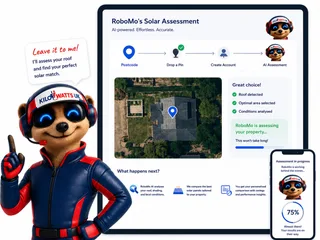

STEP 1
Choose Home, Business or Industrial
Enter your postcode to start your assessment.
STEP 2

Drop a pin on your roof
STEP 3

Create your free account
STEP 4

Sit back and watch RoboMo™ work
RoboMo™ analyses your roof and builds your personalised solar comparison.

Step 1
Enter your postcode
Start designing your wind energy system in seconds.
Are you an installer, distributor or renewable energy business?
Kilowatts UK is expanding the Flower Turbines partner network across the UK.
Become A Flower Turbines PartnerKilowatts UK is an authorised representative
Flower Turbines
Compact vertical-axis turbines built for real UK sites, not just open farmland.
They start in light wind, sit in a small footprint, and are bird-safe by design. Cluster them as a bouquet and the group performs better together than the same turbines standing alone. Enter your postcode for a location-based generation estimate. Figures use area weather data and will differ if buildings, trees or hills sit in the way.
Starts in light UK wind
Built to generate in typical UK wind, not only open farmland.
Small rooftop or ground footprint
Compact towers for roofs, yards and tight sites.
Bird-safe slow rotation
Slow vertical-axis spin, bird-safe by design.
Bouquet clusters raise output
Grouped turbines outperform the same units standing alone.

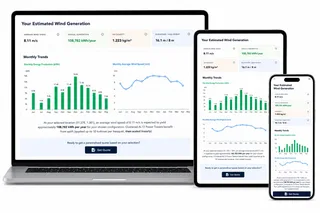
STEP 2

Choose a location
STEP 3

Place your cluster
Tap the map where you want the turbine cluster to go.
STEP 4

Instant generation forecasts
Compare different turbine layouts and see annual generation forecasts instantly.
STEP 5

No commitment required
Explore different configurations before deciding whether to request a quotation.
Related articles
Mo's Mission Nominations
FAQ
Need Help? RoboMo's Got Answers
How can I find a reliable and affordable electrician near me?
To find a trustworthy and cost-effective electrician, consider the following steps: ask for recommendations from friends or family, check online reviews, verify their certifications with bodies like NICEIC or NAPIT, and obtain multiple quotes to compare pricing and services.
What should I check before hiring an electrician?
Before hiring an electrician, ensure they are licensed and insured, have relevant experience, can provide references, and offer a clear, written estimate. It's also advisable to check if they are registered with a competent person scheme, which indicates compliance with building regulations.
Are there any certifications I should look for when choosing an electrician?
Yes, look for certifications from recognized organizations such as NICEIC, NAPIT, or ELECSA. Membership in these bodies indicates that the electrician has met specific competency standards and their work is regularly assessed.
What factors affect the cost of electrical services?
Several factors influence the cost, including the complexity of the job, materials required, the electrician's experience, your location, and the urgency of the work. Obtaining detailed quotes from multiple electricians can help you understand the pricing structure.
Is it safe to do electrical work myself to save money?
While minor tasks like changing a light bulb can be done yourself, most electrical work should be performed by a qualified electrician. DIY electrical work can be dangerous and may not comply with local building regulations, potentially leading to safety hazards or legal issues.
How often should I have my home's electrical system inspected?
It's recommended to have a periodic inspection every 10 years for owner-occupied homes and every 5 years for rented properties. Regular inspections help ensure the safety and efficiency of your electrical system.
What are the signs that my home may need rewiring?
Indicators include frequent circuit breaker trips, flickering or dimming lights, discolored or charred outlets, burning smells, or outdated wiring systems. If you notice any of these signs, consult a qualified electrician for an assessment.
Do electricians offer warranties for their work?
Many reputable electricians provide warranties or guarantees for their work, covering both labor and materials. It's important to discuss and obtain written confirmation of any warranties before work commences.
Can I get an estimate before electrical work begins?
Yes, professional electricians typically offer a detailed written estimate outlining the scope of work, materials needed, and associated costs. This transparency helps prevent unexpected charges and ensures both parties are clear on the project's details.
Are emergency electrical services more expensive?
Emergency services often come at a premium due to the immediate response required, especially if they occur outside of regular business hours. It's advisable to inquire about emergency rates beforehand to avoid surprises.