Skip to content

Article

UK home battery rules under PAS 63100 and BS 7671 Amendment 4

PAS 63100 and BS 7671 Amendment 4 set UK home battery capacity and placement rules. What changed from 15 October 2026, and what homeowners should ask.
Preferred on Google
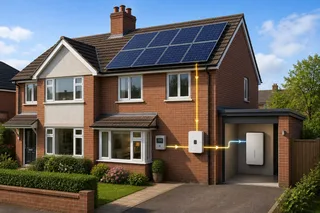
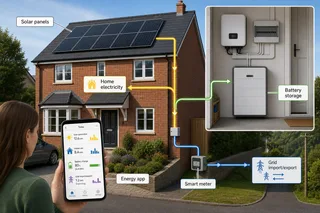
Illustration of a UK home with rooftop solar panels and a home battery.

Planning a safe home battery installation

Check the proposed battery location, enclosure capacity and fire-safety design with your installer.

From 15 October 2026, new domestic battery installs in the UK must follow BS 7671:2018+A4:2026, including Chapter 57 on stationary secondary batteries. For dwellings, that chapter requires installation in accordance with PAS 63100:2024 - the fire-safety specification that caps energy at 20 kWh per battery enclosure and bans lofts, bedrooms and escape routes. Here is what changed, who it affects, and what to ask before you buy.

What changed and when

Two documents now sit together for most UK home batteries:

  • PAS 63100:2024 - BSI's specification for fire protection of small-scale battery energy storage systems (BESS) in dwellings. Sponsored by the Department for Energy Security and Net Zero, it came into effect on 31 March 2024. It covers enclosures, battery management, power conversion equipment, location, ventilation, fire separation, detection and verification.
  • BS 7671:2018+A4:2026 - Amendment 4 to the 18th Edition Wiring Regulations. NICEIC and BSI Knowledge state it was published on 15 April 2026. After a six-month transition, the previous edition was withdrawn and Amendment 4 became the current standard for new work on 15 October 2026.

Amendment 4 introduces Chapter 57: Stationary secondary batteries. IET Wiring Matters summarises that Regulation 570.6.7.203 requires stationary secondary batteries in dwellings to be installed in accordance with PAS 63100. The chapter also covers selection, earthing, protection, isolation and identification, alongside the IET Code of Practice for Electrical Energy Storage Systems (3rd edition), which already said PAS 63100 should be used for battery location.

MCS has noted that PAS 63100 is not Building Regulations text and was not initially named directly in MIS 3012. MCS battery work still points to the latest IET Code of Practice and latest BS 7671 - so PAS 63100 remains part of a competent design.

Who it applies to (new installs vs existing)

  • New battery installations under Amendment 4 need Chapter 57. In dwellings, that includes PAS 63100 for fire-safety placement.
  • Existing installations that met the standards in force when they were installed are not automatically required to be removed.
  • Additions and alterations after 15 October 2026 - adding capacity, relocating a unit, or replacing the system - should follow Amendment 4.
  • EICRs use the current edition. Departures on an older loft or hallway battery may be recorded as observations without forcing an automatic upgrade.

Have a qualified installer complete a site survey. This article is a summary, not legal advice.

Capacity limits

PAS 63100 sets two different limits. Mixing them up is the most common mistake.

Per enclosure: 20 kWh

Clause 6.1.3 states that the total energy stored by batteries within a single enclosure shall not exceed 20 kWh. That is a per-enclosure cap, not a whole-house maximum of 20 kWh.

Whole dwelling: 40 kWh or 80 kWh

Clause 6.5.7 limits the total stored energy of all units in an individual dwelling house to:

  • 80 kWh where batteries are outdoors (ground- or wall-mounted), in a detached garage or outbuilding, or in an attached garage or outbuilding with fire separation of at least REI 60; or
  • 40 kWh in all other permitted cases.

A compliant 30 kWh system can use more than one enclosure if no enclosure exceeds 20 kWh and the dwelling total and location rules are met. Later expansion still needs a fresh design check. PAS 63100 prefers outdoors where practicable. Allowed indoor locations need fresh-air ventilation to outdoors and fire-resisting separation of at least REI 30 from the prohibited locations in clause 6.5.5, with penetrations fire-stopped - check the standard and Building Regulations guidance for your nation.

Where batteries can and can't go

Not permitted for storage batteries (clause 6.5.5)

Batteries shall not be installed in:

  • rooms in which persons are intended to sleep
  • means of escape that are not protected escape routes, including landings, staircases and corridors
  • corridors, shafts, stairs or lobbies of protected escape routes, or firefighting lobbies, shafts or staircases
  • storage cupboards, enclosures or spaces opening into rooms intended for sleeping
  • outdoors within 1 m of escape routes, doors, windows or ventilation ports
  • voids, roof spaces or lofts
  • within 2 m of stored flammable materials and fuel storage tanks or cylinders
  • cellars or basements with no access to the outside of the building

PAS 63100 does not name "under stairs" as a separate heading. Under-stair cupboards often sit on an escape route or open into halls, so check clause 6.5.5 for the specific space.

Often suitable (with conditions)

  • Outdoors - preferred; keep the 1 m clearances; do not compromise external-wall fire performance (clause 6.5.2).
  • Detached garage or outbuilding - favoured for the higher 80 kWh aggregate.
  • Attached garage or outbuilding - often workable with REI 60 separation (for the 80 kWh route), ventilation, impact protection and detection as required.
  • Utility / plant spaces that are not escape routes or sleeping rooms and that meet indoor ventilation and separation rules.

Fire detection and related measures

In infrequently visited locations such as store cupboards, PAS 63100 requires a smoke or multi-sensor detector, interlinked with a dwelling fire detection and alarm system conforming to BS 5839-6. Notes indicate premises with a BESS should have an appropriate system of at least Grade D2, Category LD2, which may mean upgrading alarms when a battery is added. Power conversion equipment is separate: clause 7.2 requires detection when PCE is in lofts or other infrequently visited places - that does not allow the battery itself in a loft. Garages and outdoor positions near vehicles also need mechanical impact protection (IK10 for batteries, or equivalent barriers); check the PAS tables.

Related reading: what a home battery is, batteries during a power cut, and our peak shaving guide.

What it means for homeowners buying a battery

  1. Location is a first-order design choice. Quotes that place a battery in a loft, bedroom or hallway escape route are not aligned with PAS 63100.
  2. Size around both caps - 20 kWh per enclosure, and 40 or 80 kWh for the dwelling depending on location.
  3. Outdoor and garage designs may unlock higher totals, only if clearances, wall performance, ventilation and impact protection are designed in.
  4. Alarm upgrades may be part of the job.
  5. Expect proper paperwork: a BS 7671 Electrical Installation Certificate and a PAS 63100 statement of conformity after initial verification.
  6. The product must match the design. Fogstar batteries are available in the Kilowatts UK shop; whatever brand you choose, the installer must confirm the model suits the place and capacity under PAS 63100 and Chapter 57.

What to ask your installer

  1. Will this be certified to BS 7671:2018+A4:2026 Chapter 57, with dwellings work to PAS 63100:2024?
  2. What is the energy per enclosure and the dwelling total, and which aggregate limit (40 or 80 kWh) applies?
  3. How does the proposed location avoid every item in PAS 63100 clause 6.5.5?
  4. If indoors, how are REI separation, ventilation to outdoors, and vent clearances achieved?
  5. What fire detection / alarm works are included?
  6. If near vehicles, what impact protection is specified?
  7. Will I receive the BS 7671 certificate, PAS conformity statement, emergency instructions and (where relevant) MCS documents?
  8. If I expand later, will capacity and placement be redesigned rather than modules simply stacked?

Vague answers mean choose another installer.

Sources

Preferred on Google

Solar comparison

Compare solar for your property

Enter your postcode to assess your roof, compare solar options and get quotes from UK installers.

  • Free postcode start
  • Home, business and industrial
  • RoboMo™ maps your roof

See which panels fit your roof

Choose home, business or industrial, then enter your postcode. RoboMo maps the roof and ranks panel brands by fit.

Fast, free and no obligation to proceed.

1. Postcode Start the assessment for your property.

2. Pin the roof Mark the array on the map.

3. Compare RoboMo™ builds your options.
Battery storage ROI calculator

Battery ROI tool

See what a battery saves on your bill

Enter the day rate, off-peak rate and export rate. The calculator ranks batteries in the Kilowatts shop over 10 years. Home batteries also suit offices and small commercial sites.

Shop batteries

Write for Kilowatts.uk

Got a trade and something worth saying?

Write it here under your own name. Sign in, put a profile up, and start a guide. Pay only if you want more links from your articles out to your own site.

Register

Create a Kilowatts.uk account, or sign in if you already have one.

Author profile

Put your name, photo and experience on a public author page.

Start creating

Write a guide or a blog. Free authors can put one followed link to their own site in articles each month.

Write for us Register or sign in

FAQ

Need Help? RoboMo's Got Answers

Is 15 October 2026 when the new battery rules became mandatory?
Yes for BS 7671 Amendment 4. NICEIC and BSI Knowledge state it was published on 15 April 2026 and became definitive on 15 October 2026 when the previous version was withdrawn. New installations from that date need Amendment 4, including Chapter 57.
Does PAS 63100 ban all indoor home batteries?
No. It prefers outdoors where practicable, then allows certain indoor locations that are not prohibited and that meet ventilation and fire-separation rules. Bedrooms, lofts and escape routes are ruled out.
Is there a hard 20 kWh limit for my whole house?
No. The 20 kWh figure is the maximum stored energy inside one enclosure. Whole-dwelling totals are 40 kWh or 80 kWh depending on location and fire separation - check the standard and your designer's assessment.
Can I keep a battery installed in a loft before these rules?
Existing installs are not automatically required to be removed solely because standards later changed. Alterations or replacements are assessed under current rules. An EICR may note departures. Ask a qualified installer; this is not legal advice.
Do MCS-certified installs have to follow PAS 63100?
MCS has explained that PAS 63100 was not initially written into Building Regulations or named directly in MIS 3012, but MIS 3012 points to the latest IET Code of Practice, which recommends PAS 63100 for battery location. With Amendment 4 in force, Chapter 57 also ties dwellings work to PAS 63100.
Where can a battery go if I have no garage?
Common options are an outdoor wall- or ground-mounted enclosure (with clearances), or a non-escape indoor utility space that meets ventilation and REI separation. Bedrooms, lofts and escape hallways are not acceptable under PAS 63100. A survey is essential.

Live help

Need help right now?

Talk to RoboMo™ and get instant answers.