


H-Power's 100 kW Hydrogen Generator Enters Commercial Service in the UK
Published: 2026-11-21 12:25:26
Updated: 2026-11-23 05:00:55
H-Power's 100 kW LC100dc hydrogen generator starts paid work on a UK construction site. Compare usable output and fuel needs with diesel and grid power.
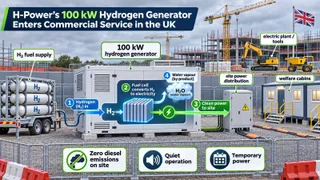
What H-Power’s first commercial LC100dc deployment confirms
H-Power announced on 16 November 2026 that its LC100dc hydrogen generator had entered commercial service at a major UK construction project under its first paid customer contract. The unit is rated at 100 kW of direct current (DC) and is designed for uses such as charging electric plant and powering large welfare compounds. For contractors, suitability depends on the power available at the site connection, how demand changes during a shift and whether hydrogen deliveries can keep pace. H-Power’s 16 November regulatory announcement
H-Power says the LC100dc shares the smaller LC30’s chassis. The filing leaves the customer, site location, contract value, duration and installed electrical configuration undisclosed. The launch information gives the DC rating. A model-specific fuel consumption curve, usable AC output for the installed system and site measurements for electricity delivered, hydrogen consumed and uptime remain unpublished in that information.
What does 100 kW DC mean for plant charging and welfare?
The LC100dc’s 100 kW rating describes its DC electrical output. Most site distribution equipment supplies alternating current (AC), so an AC installation needs a converter. Its rating and conversion losses, along with any auxiliary loads, determine how much power reaches the site distribution board.
Use kilowatts (kW) to check which loads can run together and kilowatt-hours (kWh) to estimate how much electricity they use over a shift. A charger can draw substantial power as soon as a machine plugs in, while welfare heating and hot water may draw power for longer. Even with a manageable daily kWh total, simultaneous charging and heating can exceed the available supply.
Give the supplier a measured load profile or, for a new site, an equipment schedule with expected operating hours. Ask what continuous and short-duration output is available at the connection point, how much capacity each phase can supply and what earthing and protection arrangements are proposed. If a buffer battery will cover peaks, check how much power it can supply, how long it can sustain that output and whether it can recharge before the next charging window.
How does hydrogen compare with diesel and temporary grid power?
Hydrogen is worth pricing if the grid connection will arrive after mobilisation, the site has sustained demand and the supplier can commit to reliable fuel deliveries. Compare all three options using the same load profile, hire period and requirements for keeping critical equipment running.
Overview
H-Power reported that customers using its smaller LC30 paid about the same as they would for diesel when weekly hire and fuel were added together. The LC100dc contract terms and hire rates remain undisclosed. Ask for an itemised quote covering delivered fuel, conversion and distribution equipment, servicing and backup power. If deliveries are a major cost, ask how many kilograms of hydrogen the supplier expects to use per shift and what assumptions it used. H-Power regulatory announcement
What does the forecast of more than 350 tonnes of CO₂ mean?
H-Power forecasts that the initial phase will use up to 10,000 kg of hydrogen, which it describes as green, and avoid more than 350 tonnes of CO₂ compared with a similarly sized diesel generator. The hydrogen figure covers total fuel use over the phase. The maximum amount held on site remains undisclosed. H-Power regulatory announcement
The filing leaves three inputs undisclosed: the usable electricity delivered in kWh, the diesel consumption assumptions for the same duty and which sources of emissions the comparison includes. Diesel use varies with load, running hours and time spent idling. Those inputs are needed to reproduce the forecast saving or express it per kWh supplied.
The hydrogen fuel cell produces no CO₂ at the point of generation. A supply-chain comparison also counts emissions from producing, compressing and delivering the hydrogen, alongside diesel production, distribution and combustion. If the supplier uses electrolysis to produce hydrogen, ask what electricity source it uses. For project reporting, ask both suppliers for emissions in kg CO₂e per kWh delivered to the same metering point, using equivalent operating patterns and the same emissions boundaries. Use metered electricity and recorded fuel use once the site is operating.
What should site teams check before hiring a hydrogen generator?
Check the generator location, fuel storage and delivery route against the site plan for each phase. A compound that is easy to reach during mobilisation may become harder to access once haul routes move or laydown areas fill. Ask the supplier how much fuel each shift will use, how much usable fuel the site can hold between deliveries and what happens if a delivery is late. Agree who will receive deliveries and who can isolate the equipment. If you need to bring in an electrician for the temporary distribution, check their experience with generator-fed construction sites.
In Great Britain, employers must assess and control fire and explosion risks under the Dangerous Substances and Explosive Atmospheres Regulations (DSEAR). Before mobilisation, review the layout and operating arrangements with the supplier, including fuel handling, vehicle movements, ignition sources and emergency procedures. HSE guidance on DSEAR
If the generator will run unattended, confirm which faults trigger an alert, who receives it and how quickly someone can attend. The launch filing gives no details of the LC100dc’s remote monitoring or control. If you already monitor site energy use through a separate system, ask the supplier whether it can receive generator readings and fault alerts. Ask what happens if communications fail and how essential welfare loads will stay powered during maintenance or a fuel interruption.
Where could commercial hydrogen power make sense?
A large construction or industrial site could suit hydrogen power if it has a defined gap before grid power arrives, regular demand and room for fuel deliveries throughout the job. If a short charging peak is the main constraint, compare the cost of changing the charging schedule, adding a buffer battery and hiring a larger generator. Assess each option against the same peak duration and daily energy demand. If the completed industrial site will have sustained daytime demand, use its expected operating load to compare solar installation options for its long-term supply.
Before committing, get written confirmation of the output at the site distribution board, a fuel estimate based on your load profile, a delivery schedule and a backup plan. Use those details to compare the complete hire package with diesel and temporary grid power. Agree what the supplier will measure during the job so you can check actual electricity use, fuel consumption and availability against the proposal.
Solar comparison
Compare solar for your property
Enter your postcode to assess your roof, compare solar options and get quotes from UK installers.
- Free postcode start
- Home, business and industrial
- RoboMo™ maps your roof
See which panels fit your roof
Choose home, business or industrial, then enter your postcode. RoboMo maps the roof and ranks panel brands by fit.
1. Postcode Start the assessment for your property.
2. Pin the roof Mark the array on the map.
3. Compare RoboMo™ builds your options.

Battery ROI tool
See what a battery saves on your bill
Enter the day rate, off-peak rate and export rate. The calculator ranks batteries in the Kilowatts shop over 10 years. Home batteries also suit offices and small commercial sites.
Reading
Sources and further reading
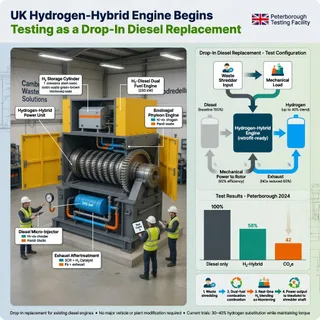
Perkins is fitting a hydrogen-hybrid unit to a UK shredder as a diesel stand-in. It is a trial: tanks, refuelling and results are unpublished.
Read article
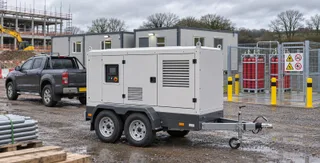
Compare GeoPura’s 80 kW towable hydrogen generator with diesel and mobile batteries for UK sites, from fuel deliveries and recharging to running costs.
Read article
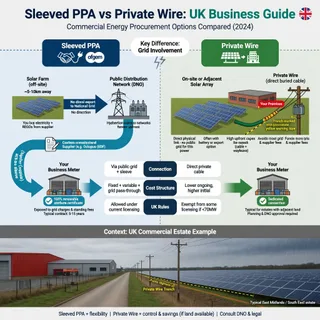
A sleeved PPA needs a UK supplier that will sleeve volume on the public network. A private wire needs an adjacent cable, land rights and a lawful supply.
Read article
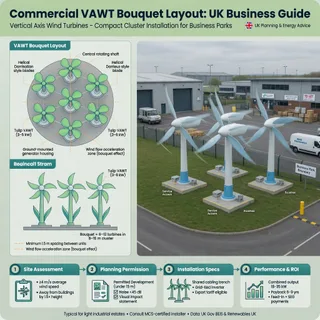
A commercial VAWT bouquet layout groups small vertical-axis turbines tightly. UK businesses still need wind, planning consent and a grid connection.
Read article


Mo's Solar Mission
Mo's Mission Nominations
Garlinge Primary School and Nursery
Garlinge Primary School and Nursery is a foundation primary school on Westfield Road in Margate, Kent, for children aged 3 to 11. It is m...
St Luke's Church of England Primary SchoolSt Luke's Church of England Primary School is a voluntary controlled Church of England primary school on Jubilee Road in Formby, Merseysi...
Comberbach Nursery and Primary SchoolComberbach Nursery and Primary School is a primary academy on Mather Drive in the village of Comberbach, near Northwich in Cheshire, for...
Locations
Solar installation near you
Write for Kilowatts.uk
Got a trade and something worth saying?
Write it here under your own name. Sign in, put a profile up, and start a guide. Pay only if you want more links from your articles out to your own site.
Register
Create a Kilowatts.uk account, or sign in if you already have one.
Author profile
Put your name, photo and experience on a public author page.
Start creating
Write a guide or a blog. Free authors can put one followed link to their own site in articles each month.
FAQ
Need Help? RoboMo's Got Answers
Can I use H-Power’s LC100dc to power my home?
The LC100dc is a commercial generator designed for uses such as charging electric construction plant and powering large site welfare compounds. If you need backup power for your home, ask an installer to size a system around the appliances you want to keep running and how long you need them to run.
How much power can the 100 kW hydrogen generator supply to a site?
The 100 kW rating describes the generator’s direct current (DC) output. A site using alternating current (AC) needs a converter, and its rating, conversion losses and auxiliary loads affect how much power reaches the distribution board. Ask the supplier to confirm the continuous and short-duration output available at your connection point.
Can it charge electric plant and power welfare facilities at the same time?
That depends on how much power the chargers, heating and other equipment draw at the same time. Give the supplier a load profile or an equipment schedule showing when each load runs. If demand exceeds the available output for short periods, compare staggered charging with a buffer battery sized for those peaks.
Is a hydrogen generator cheaper to hire and run than diesel?
H-Power reported similar combined hire and fuel costs to diesel for customers using its smaller LC30. The company did not disclose hire rates for the LC100dc. Compare itemised quotes for hydrogen, diesel and temporary grid power using the same load profile and hire period, including fuel or electricity, distribution equipment, servicing and backup power.
How much hydrogen will the generator need, and how often will it be delivered?
Ask the supplier to estimate hydrogen use in kilograms per shift based on your expected loads and running hours. Use that estimate and the amount of usable fuel you can hold on site to work out the delivery interval. Agree delivery lead times and how essential loads will stay powered if a delivery is late.
Does the hydrogen generator really save more than 350 tonnes of CO₂?
H-Power forecasts that saving for the initial phase of its first commercial deployment, compared with a similarly sized diesel generator. The fuel cell produces no CO₂ at the point of generation, while producing and delivering hydrogen can generate emissions. To compare options for your own site, ask suppliers for emissions per kilowatt-hour delivered using the same operating pattern and including the same sources of emissions.
What should I check before bringing a hydrogen generator onto a site?
Review the generator location, fuel storage, delivery access and emergency arrangements with the supplier before mobilisation. Confirm who will receive fuel deliveries, isolate the equipment and respond to faults. Ask the electrical installer to confirm the earthing and protection arrangements for the temporary supply.
Live help
Need help right now?
Talk to RoboMo™ and get instant answers.