


Smart Energy Management Systems: An Introduction
Published: 2025-05-05 19:00:00
Updated: 2026-10-23 12:19:23
Smart Energy Management Systems: An Introduction Smart energy management systems are integrated platforms that combine smart meters, IoT sensors.
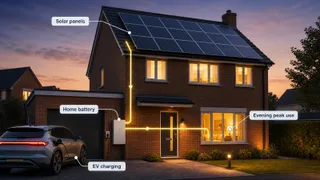
Smart Energy Management Systems - An Introduction
Smart Energy Management Systems: An Introduction Smart energy management systems are integrated platforms that combine smart meters, IoT sensors.
Update - 23 October 2026
This introduction still holds. Smart energy management is the control layer around solar, a home battery, your tariff and flexible loads such as an EV charger or heat pump. It is not a separate type of battery. The same hardware can help or disappoint depending on usable capacity, inverter power, export settings and how it is scheduled.
From late October, most UK homes see less daytime solar surplus than they did in summer. A schedule that worked in July may now leave the battery short for the evening, or it may still be set to hold empty space for PV that will not arrive. If you are unsure where to start, the home battery storage introduction and the guide to choosing battery size remain the right next reads.
Tariff windows, export value and whether the battery is allowed to charge from the grid can change without any change to the kit. Recheck the rates and conditions you are actually on before you rely on last summer's settings. Do not treat backup in a power cut as included. That only applies if it was designed in, as explained in whether a battery works in a power cut. If you are adding storage to an existing array, or still deciding how solar and a battery should sit together, use your half-hourly data rather than a brochure capacity. The notes on how to add a battery to existing solar and how to compare home solar options are unchanged in purpose: match the controls to real demand, not to the largest product on the quote.
Original article
The update above is what has changed since then.
What a demand management battery does in a UK home
A demand management battery is a home battery controlled to reduce grid imports at expensive or busy times. In a UK home, that usually means storing surplus solar electricity or cheaper off-peak electricity, then discharging during evening peaks when the household would otherwise import more from the grid. If you are new to the technology, start with this guide to home battery storage.
It is not usually a separate category of battery hardware. The 'demand management' part comes from the design, tariff settings, inverter limits, monitoring, export controls and commissioning. The same battery may perform well or badly depending on how it is sized and programmed.
The value depends on your electricity pattern, tariff, solar generation, usable battery capacity, inverter output and whether the system is set up around real half-hourly demand. A battery that is too large, too small or poorly configured can spend too much time full, empty or cycling at the wrong times.
The short version for homeowners
For most UK households, a demand management battery is about bill optimisation rather than commercial-style demand charges. Domestic electricity bills are normally driven mainly by how many kWh you import and the tariff you are on. The battery's role is to shift when you buy electricity, not reduce the energy your home actually needs.
The strongest cases tend to involve meaningful evening consumption, regular solar surplus, a suitable smart time-of-use tariff, or flexible loads such as an EV charger or heat pump. It may be less compelling for a low-use household on a flat-rate tariff with little solar generation and limited ability to shift consumption.
A sensible first check is to review recent bills, half-hourly smart meter data and solar monitoring if you already have PV. Those records show whether there is enough demand at the right time of day for a battery to do useful work.
How demand management differs from a normal solar battery
A standard home battery and a demand management battery may use the same equipment. The difference is the control strategy. A simple solar battery may charge from spare solar and discharge whenever the home needs electricity, while a demand-managed setup also considers tariff windows, import limits, export value, inverter power and other major loads. This matters because many UK homes are becoming more electrically complex. A property with solar PV, an EV charger and a heat pump has a very different demand shape from a home with gas heating and modest appliance use. The battery may need to avoid clashing with EV charging, leave spare capacity for midday solar, or hold stored energy until a peak tariff window. This is where smart energy management becomes part of the battery design rather than an optional extra.
| Decision area | Why it matters | What to check early |
|---|---|---|
| Solar surplus | Determines how much daytime generation can be stored instead of exported | Roof orientation, shading, seasonal output and export arrangement |
| Time-of-use tariff | Controls whether grid charging and peak avoidance are worthwhile | Import rates, export terms, smart meter compatibility and tariff conditions |
| Evening demand | Shows whether stored energy will actually be used | Cooking, lighting, appliances, EV charging and heat pump operation |
| Battery design | Affects efficiency, power output and retrofit complexity | AC-coupled or DC-coupled design, inverter rating and usable capacity |
| Grid connection | Can affect approval route and export settings | Existing solar, export limit, inverter capacity and DNO requirements |
| Backup requirement | Changes the design, wiring and expectations | Essential circuits, isolation arrangements and supported loads |
Overview
The table is a design framework, not a payback calculation. Two homes with the same battery can get very different results if one has valuable export payments and low evening demand while the other imports heavily during peak-rate periods.
Where the electricity comes from and where it goes
A home battery can charge from solar panels, from the grid, or both if the equipment, tariff and settings allow it. With solar PV, the battery usually charges when generation exceeds the home's immediate demand. Without solar, it may charge during cheaper off-peak periods and discharge later when electricity is more expensive.
The battery does not create electricity. Some energy is lost through charging, conversion, storage and discharging, so the saving depends on whether the value of using stored electricity later is higher than the value of exporting it or buying directly from the grid. Manufacturer round-trip efficiency figures are useful, but real performance depends on installation quality, inverter behaviour, temperature, cycling pattern and standby consumption.
The inverter power rating matters as much as capacity. Capacity is measured in kWh and tells you how much energy can be stored. Power is measured in kW and tells you how quickly the battery can charge or discharge. A battery may have enough stored energy for the evening but still import from the grid during high-load moments if the inverter cannot supply all the appliances running at once.
When a demand management battery is a good fit
A demand management battery is usually strongest where there is a clear mismatch between when electricity is generated or bought cheaply and when the home uses it. Solar homes often produce surplus during the day, while many households consume more electricity in the evening.
Homes with EVs and heat pumps need careful control rather than a larger battery by default. These loads can be substantial, but they are not always best supplied from the battery. In many cases, the better strategy is to schedule the EV, heat pump and battery so they use cheap energy directly instead of competing for the same stored electricity.
A battery may be less suitable if your electricity use is already low, your tariff is flat, your export rate is attractive, or most of your demand can be shifted without storage. The installer should be able to explain why the proposed battery size matches your actual usage pattern, not the maximum system they can fit.
Sizing a home battery without overspending
Battery sizing should start with your load profile, not the headline capacity in a brochure. In UK homes, the right size depends on how much electricity is left after daytime use, how much evening demand you have, whether the battery will charge from the grid, and how much export income you may give up by storing solar instead. For a fuller sizing method, see this guide to choosing battery size.
Usable capacity is the figure to focus on. The advertised capacity may not all be available for daily cycling because some capacity can be reserved for battery protection, backup reserve or manufacturer limits. Temperature, age, installation location and control settings can also affect performance over time.
An oversized battery can sit partly unused, especially in winter when solar generation is lower. An undersized battery may run out before the evening peak has passed. The right design is the one that cycles usefully across the year, works within the inverter limits and suits your tariff rather than matching the largest available product.
Worked examples of when the numbers change
Battery savings are highly sensitive to tariff assumptions, export value and household demand. The examples below are illustrative only and are not a quote, forecast or payback promise. They show why the same battery can be sensible in one home and marginal in another.
Consider a solar home that often exports during sunny afternoons but imports during the evening. If the export payment is modest compared with the evening import price, storing some surplus solar for later can make sense. If the export payment is strong and evening demand is low, exporting may be just as valuable as cycling the battery.
Now consider a home without solar on a smart tariff. If the off-peak import rate is materially lower than the peak rate, the battery may be able to charge cheaply and discharge during expensive periods. However, round-trip losses, standing losses, battery wear, tariff changes and insufficient evening demand can reduce the benefit. If the price difference between off-peak and peak electricity narrows, the case becomes weaker.
Weak case example
A low-use home on a flat tariff with little solar surplus may cycle the battery too little to justify the complexity.Oversizing example
A large battery in a home with modest evening demand may remain partly unused for much of the year.Grid charging example
A home on a time-of-use tariff may benefit if off-peak charging plus losses is still cheaper than importing directly during peak periods.Solar shifting example
A home with spare daytime generation and regular evening use may benefit if stored solar replaces expensive imports after allowing for battery losses and foregone export income.Control problem example
A battery that charges overnight every day may leave no space for free solar generation the following morning.
The installer's savings model should show the assumptions. If the calculation does not state the import rate, export value, expected charging source, assumed losses, usable capacity and cycling pattern, it is difficult to judge.
What affects cost, savings and payback
The cost and payback of a demand management battery cannot be stated reliably without current quotes and site details. Product choice, usable capacity, inverter type, installation complexity, scaffolding needs, consumer unit work, cable routes, communications, VAT treatment and whether the battery is installed with solar PV can all change the final figure.
Savings are also tariff-sensitive. A battery on a flat import tariff may perform very differently from one configured around cheaper off-peak charging and peak-rate avoidance. Export payments matter because storing solar for later may mean giving up income you could have received by exporting that electricity.
A trustworthy quotation should show its assumptions clearly. It should not promise a fixed payback without explaining import rates, export rates, expected solar yield, battery losses, seasonal variation, warranty assumptions and what happens if you change tariff later. If you are still budgeting, this separate guide explains home battery costs in more detail.
UK grid connection, G98 and G99 considerations
A battery inverter connects to the electricity network, so the installer must consider the relevant Distribution Network Operator process. In the UK, Engineering Recommendations G98 and G99 are commonly used connection frameworks for small-scale generation and inverter-connected equipment. The correct route depends on the inverter capacity, the combined effect of existing solar and battery equipment, export arrangements and local network requirements.
This is more than paperwork. Export limits, protection settings and the combined output of solar plus battery inverters can affect what is acceptable on your local network. If your home already has PV, adding an AC-coupled battery may change the connected generation position, even if you do not intend to export more energy overall.
Installers will normally check the meter position, consumer unit, meter tails, earthing arrangement, cable routes, CT clamp locations and communications signal before finalising the design. If export limitation is required, the system must be commissioned and verified so it behaves as agreed, not left with an unchecked setting.
Standards, safety and documentation to ask about
A battery installation should be treated as electrical work in a lived-in property, not as a plug-in appliance. The design should follow current manufacturer instructions, relevant electrical safety requirements, DNO connection processes and any applicable MCS guidance where the work forms part of an MCS solar or battery installation.
Homeowners do not need to become standards experts, but they should expect clear documentation. The handover pack should explain the equipment installed, the operating modes, warranties, monitoring access, isolation points, shutdown procedure, export settings and any backup limitations.
DNO route
Ask whether the installer expects G98, G99 or another DNO process to apply, and who submits the paperwork.MCS scope
Ask whether the solar or battery work is being installed under an MCS framework and what documentation you will receive.VAT treatment
Ask how VAT has been treated in the quote, because tax treatment can depend on the type and scope of the installation.Electrical certification
Ask what electrical certificates and handover documents will be provided after commissioning.Manufacturer requirements
Ask where the battery can be installed, what clearances are needed and what conditions could affect warranty cover.
These questions are not about catching installers out. They help make sure the battery is designed, approved, installed and handed over as a long-term part of your home's electrical system.
Backup power is not automatic
A demand management battery should not be assumed to provide power during a power cut. Many grid-tied home batteries shut down when the grid fails unless the system has been specifically designed with backup or emergency power supply arrangements. This guide explains when a battery works in a power cut and why the answer depends on the design.
Backup adds design decisions. The installer may need to separate essential circuits, provide compliant isolation and confirm that the battery and inverter can support the loads you expect. Whole-home backup is a different proposition from keeping a few selected circuits running.
If resilience is your main aim, say so at the survey stage. A system designed only for tariff optimisation may disappoint if you later discover it cannot run the circuits you care about during an outage.
AC-coupled and DC-coupled battery designs
Most homeowners do not need to master the electronics, but the coupling method affects retrofit options and system behaviour. An AC-coupled battery has its own battery inverter and can often be added to an existing solar PV system. A DC-coupled battery is usually more integrated with the solar inverter and can suit some new solar-and-battery installations.
The best choice depends on whether you already have solar, the age and capacity of the existing inverter, available space, warranty considerations, monitoring compatibility and how the system will be maintained. A retrofit on an older PV system is not the same job as a new design on a clear roof. If you are planning a retrofit, read more about how to add a battery to an existing solar setup.
Neither approach is automatically best. The important questions are whether the design captures solar surplus effectively, complies with grid connection requirements, gives you usable monitoring and remains serviceable if a component fails in future.
Installer checks that often change the final design
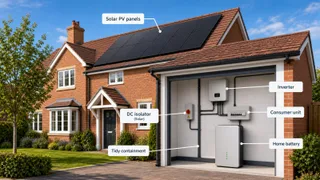
The visible battery box is only part of the installation. Much of the real work happens around the consumer unit, metering, communications and cable routes. These details can affect labour time, final specification and whether a proposed location is suitable.
Batteries also have manufacturer requirements for mounting, clearances, temperature range, ventilation, weather exposure and access for servicing. A tidy-looking location in a cupboard, loft or narrow side passage may not be acceptable once those requirements are checked.
Future loads
Planned electrification can change the right battery choice before it is installed.Communications
Monitoring and tariff-based control may rely on stable internet or local device communication.Metering clamps
CT clamps must be placed correctly so the system reads import and export accurately.Battery location
Wall strength, clearance, temperature and weather exposure can rule out convenient spots.Consumer unit space
The installer needs suitable ways to connect and protect the battery circuit.Existing generation
Solar PV, EV chargers and heat pumps can change inverter sizing and export control.
A careful survey should also ask how you plan to use the home in future. An upcoming EV, heat pump, solar extension or tariff change can alter the most suitable battery size and control strategy.
How to use tariffs and controls properly
The control strategy is where demand management either works or fails. A battery left on default settings may not match your tariff, export rate or household routine. It may charge from the grid when you would rather leave space for solar, or discharge too early before the expensive period begins.
Smart time-of-use tariffs can make battery control more valuable, but only if the system supports the required schedules and your smart meter data is reliable. Tariff terms can change, and not every supplier setup treats grid charging, export and battery behaviour in the same way.
Review the system after installation rather than assuming the first week's settings are perfect. Seasonal solar variation means a good winter charging schedule may not be right in summer, when the battery may need to leave more space for daytime PV generation.
Common mistakes to avoid
The most common mistake is treating a battery as a generic add-on rather than a designed part of the home's electrical system. The battery sits between your generation, loads, tariff and grid connection conditions, so small design choices can make a noticeable difference.
Another mistake is focusing on headline capacity without checking usable capacity, inverter power and real demand timing. A large battery with limited discharge output may still import from the grid during high-load moments, while a smaller well-controlled system may match the household pattern better.
It is also easy to overvalue backup if it has not been specified. If power cut resilience matters, make it a formal design requirement and ask which circuits will be supported, how they will be isolated, and what happens when the battery is empty.
What to ask before you accept a quote
A good battery quote should explain the design logic, not just list a product and price. Ask how the installer has used your consumption data, whether the proposed battery is sized around solar surplus, tariff shifting, peak reduction or backup, and what assumptions sit behind any savings estimate.
You should also ask who handles the DNO process, what happens if export is limited, and how the system will be commissioned. Battery performance depends heavily on settings, so the handover should include monitoring access, tariff configuration and a clear explanation of normal operation.
Focus on the figures and responsibilities that affect real performance. Ask for the usable kWh figure, the continuous charge and discharge power, and what loads the inverter can realistically support. Check how often the model expects the battery to cycle across the year, which import rates and off-peak windows have been used, and how foregone export income has been treated when solar is stored instead of exported.
Warranty terms
Ask what affects warranty cover, including installation location, cycling limits and monitoring requirements.Backup circuits
Ask whether backup is included, which circuits are covered and what is excluded.Monitoring setup
Ask who configures the app, who has access and how faults or poor performance will be spotted.Grid connection route
Ask whether G98, G99 or a site-specific DNO process is expected.Post-installation review
Ask whether settings will be reviewed after a few weeks and again after a seasonal change.
If you are comparing quotes, make sure you compare usable capacity, inverter power, backup capability, installation scope and commissioning support rather than just the battery brand. A cheaper quote may exclude enabling work that another installer has allowed for.
Practical next step for a UK homeowner
Start by gathering your last year of electricity bills, half-hourly smart meter data if available, details of any solar PV system, and information about planned EV or heat pump installation. That gives an installer enough context to assess whether a demand management battery is likely to be useful.
If you already have solar, note your export pattern and whether the system often sends surplus electricity to the grid. If you do not have solar, focus on whether a time-of-use tariff and overnight charging would genuinely match your lifestyle.
A well-designed battery can help a UK home reduce peak imports and make better use of solar or off-peak electricity. The key is to specify it around your real demand, tariff, export value and grid connection position rather than treating storage as a one-size-fits-all upgrade. If you are considering PV at the same time, you can compare home solar options before deciding how battery storage should fit into the wider system.
Plan, Compare & Buy Renewable Energy Solutions
AI does the thinking.
You get the perfect solar match.
Use RoboMo™ to assess your property, compare available technologies and connect with trusted UK installers, suppliers and manufacturers.
Simply enter your postcode, drop a pin on your roof, create your free account and let RoboMo™ analyse your property to find the best solar panels for your home.

You don't have to think
RoboMo™'s AI analyses your roof and does all the hard work.

Accurate & tailored
AI-powered assessment based on your roof, location, and conditions.

Best options, maximum savings
Compare top solar panels for the best performance and value.

Simple, fast & effortless
Provide a few details, sit back and watch your results unfold.
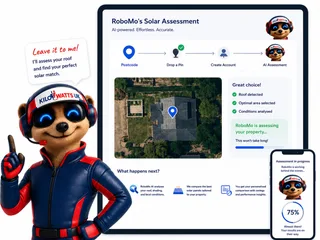
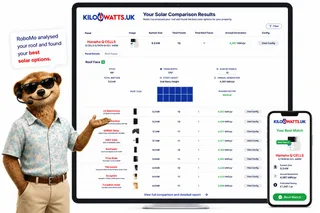
STEP 1
Choose Home, Business or Industrial
Enter your postcode to start your assessment.
STEP 2

Drop a pin on your roof
STEP 3

Create your free account
STEP 4

Sit back and watch RoboMo™ work
RoboMo™ analyses your roof and builds your personalised solar comparison.
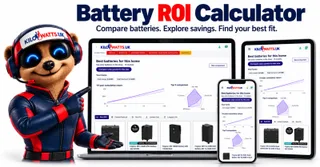
BATTERY ROI TOOL
See what a battery saves on your bill
Enter the day rate, off-peak rate and export rate. The calculator ranks batteries in the Kilowatts shop over 10 years.
Home batteries also suit offices and small commercial sites. Industrial batteries are listed on their own calculator.

Step 1
Enter your postcode
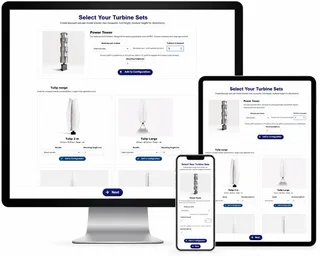
Start designing your wind energy system in seconds.
Are you an installer, distributor or renewable energy business?
Kilowatts UK is expanding the Flower Turbines partner network across the UK.
Become A Flower Turbines PartnerKilowatts UK is an authorised representative
Flower Turbines
Compact vertical-axis turbines built for real UK sites, not just open farmland.
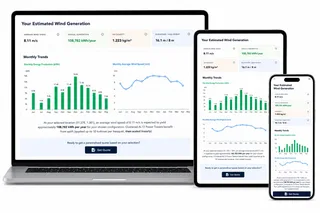
They start in light wind, sit in a small footprint, and are bird-safe by design. Cluster them as a bouquet and the group performs better together than the same turbines standing alone. Enter your postcode for a location-based generation estimate. Figures use area weather data and will differ if buildings, trees or hills sit in the way.
Starts in light UK wind
Built to generate in typical UK wind, not only open farmland.
Small rooftop or ground footprint
Compact towers for roofs, yards and tight sites.
Bird-safe slow rotation
Slow vertical-axis spin, bird-safe by design.
Bouquet clusters raise output
Grouped turbines outperform the same units standing alone.
STEP 2

Choose a location
STEP 3

Place your cluster
Tap the map where you want the turbine cluster to go.
STEP 4

Instant generation forecasts
Compare different turbine layouts and see annual generation forecasts instantly.
STEP 5

No commitment required
Explore different configurations before deciding whether to request a quotation.
Related articles
Mo's Mission Nominations
FAQ
Need Help? RoboMo's Got Answers
What is a demand management battery for a UK home?
A demand management battery is a home battery set up to reduce grid imports at expensive or busy times. It may store surplus solar electricity or cheaper off-peak electricity, then discharge when your home would otherwise import from the grid. The benefit depends on your usage pattern, tariff, inverter output and settings.
Is a demand management battery different from a normal solar battery?
Often the hardware is the same. The difference is mainly the control strategy, including tariff settings, charging windows, export limits and how the battery works with solar, EV charging or a heat pump. A poorly configured battery can miss savings even if the equipment is good.
Who is most likely to benefit from a demand management battery?
It is usually a better fit for homes with regular evening electricity use, solar surplus, or a suitable smart time-of-use tariff. It can also help where an EV charger or heat pump can be scheduled intelligently. It may be less compelling for low-use homes on a flat tariff with little solar generation.
Can I use a demand management battery without solar panels?
Yes, if the battery and inverter support grid charging and your tariff allows it. The battery can charge during cheaper off-peak periods and discharge when electricity is more expensive. The saving must be enough to cover battery losses, standby consumption and any changes in tariff conditions.
How do I choose the right battery size?
Start with your half-hourly electricity use, solar generation and evening demand rather than the largest battery available. Usable capacity is more important than the headline capacity because some energy may be reserved for battery protection or backup settings. An oversized battery can sit unused, while an undersized one may run out before the peak period ends.
Will a demand management battery provide backup power in a power cut?
Not always. Backup power needs specific equipment, wiring and operating modes, and many standard battery installations shut down during a grid outage for safety. If backup is important, ask which circuits can be supported, for how long, and what limitations apply.
Do I need DNO approval for a home battery in the UK?
Your installer should check the relevant Distribution Network Operator process before installation. G98 and G99 are commonly used connection frameworks for inverter-connected equipment, but the correct route depends on the inverter capacity, existing solar, export settings and local network requirements. If export limitation is used, it should be properly commissioned and verified.
What should I ask for in a battery quote?
Ask for the usable capacity, inverter rating, charging strategy, expected import and export assumptions, and whether the model includes battery losses. The quote should also explain DNO paperwork, electrical certification, warranties, monitoring access and any backup limitations. Be cautious of fixed payback claims that do not show the tariff and usage assumptions behind them.