


Compare solar systems?
Published: 2026-08-09 14:05:41
Updated: 2026-08-13 03:05:12
To [{~a.href='https://kilowatts.uk/services/residential/renewable-energy/residential-solar-panel-installation/compare/' title="Compare home solar panel.
How to compare solar panel systems and quotes in the UK
To compare solar systems properly, compare the design and installation scope, not only the number of panels or headline price. The best UK solar setup depends on roof condition, shading, electricity use, inverter design, battery suitability, DNO connection route, export assumptions, installer credentials and what is included or excluded from the quote.
A good quote should show how the system fits your property and your usage pattern. For one home, a straightforward solar PV array may be the sensible choice. For another, battery storage may be justified by evening demand, variable tariffs or future plans for an electric vehicle or heat pump. For a business, the key question is often how well generation lines up with operating hours.
Ask each installer to explain the system size, expected generation basis, usable roof area, inverter choice, battery assumptions, export limit, DNO process, scaffolding, warranties, workmanship cover, monitoring and exclusions. That gives you a fairer comparison than choosing the cheapest or largest proposal.
The main types of solar systems you will be comparing
Most UK buyers are comparing one of several broad solar PV designs. None is automatically best. The right choice depends on when you use electricity, how much roof space is genuinely usable, whether export will be constrained, and whether you want the system to support future changes. A standard grid-connected solar PV system is often the simplest starting point. Panels generate DC electricity, an inverter converts it to AC for use in the property, and surplus power can be exported where an export arrangement is in place. This tends to suit homes and businesses that use a meaningful amount of electricity during daylight hours. If you are new to the technology, it helps to understand how solar works before comparing equipment lists. Solar with battery storage adds flexibility, but it also adds cost, complexity and another component with its own warranty and performance limits. A battery can store some surplus generation for later use, but its value depends on usable capacity, power output, consumption pattern, tariff structure, system losses and whether backup power is actually specified.
| Solar system type | Best suited to | Main advantage | What to check before choosing |
|---|---|---|---|
| Standard solar PV | Homes or businesses with daytime electricity use | Simpler design with fewer components | Roof space, shading, inverter size and export route |
| Solar PV with battery | Properties with evening use or flexible tariffs | More self-use of generated electricity | Usable battery capacity, location, warranty terms and backup expectations |
| Hybrid inverter system | New solar and battery installs planned together | Cleaner integrated design | Compatibility, future expansion and DNO application requirements |
| AC-coupled battery retrofit | Existing solar owners adding storage later | Can work with many existing PV systems | Existing inverter, metering, consumer unit space and commissioning details |
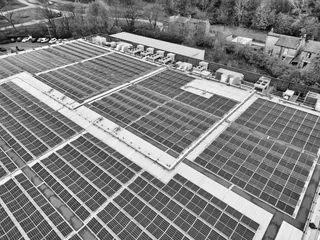
| Commercial solar PV | Businesses with suitable roofs and daytime load | Stronger match where demand occurs during generation hours | Roof condition, landlord consent, structural checks and operational disruption |
Overview
This comparison should not be reduced to a single universal ranking. Two properties with similar roof areas can need different designs because of orientation, shade, cable routes, consumer unit condition, roof access and how much electricity is used while the panels are generating.
What should be included in a like-for-like solar quote
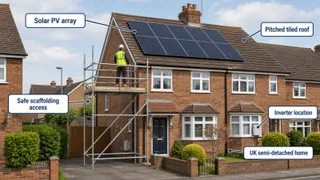
A reliable solar comparison starts with scope. One proposal may include scaffolding, bird protection, monitoring, DNO handling and electrical alterations, while another may leave those items provisional or excluded. The lower price is not always poorer value, but it is not a fair comparison unless the scope is clear.
The proposal should also show the design assumptions. Expected generation should be based on the roof layout, orientation, pitch and shading assumptions used by the installer, rather than a generic panel output. If a battery is included, the quote should distinguish between nominal and usable capacity and explain what the battery is expected to do.
Check the certification route, consumer protection and electrical competence behind the quote. For typical UK solar PV installations and export arrangements, ask whether the installation route supports the relevant MCS documentation. RECC or HIES membership can give additional consumer protection and dispute routes, but check current membership status rather than relying on a brochure logo. Electrical work should be carried out and certified by suitably competent people, with relevant NICEIC, NAPIT or equivalent registration where applicable.
DNO route
The quote should state whether the installer expects a G98 notification route, a G99 application route or another applicable connection process.Exclusions
Scaffolding, roof repairs, bird protection, consumer unit upgrades, trenching, monitoring subscriptions and backup power should not be left vague.Export assumptions
If Smart Export Guarantee payments are part of your payback thinking, the proposal should be clear that tariffs and eligibility are arranged with an energy supplier and can change.Workmanship and warranties
Ask who provides the workmanship warranty, whether any insurance-backed cover is included, and what product warranties apply to panels, inverters and batteries.
A quote that makes assumptions visible is usually easier to trust than one that promises a simple answer too early. Final details can change after survey, but the installer should explain what is firm, what is provisional and what could alter the design.
Cost differences that matter when comparing systems
Solar costs vary because an installation is more than panels on a roof. The final price reflects roof complexity, access, electrical condition, system size, inverter choice, battery specification, monitoring, paperwork, commissioning and aftercare. A neat south-facing roof with simple access is not the same job as a shaded roof with several faces, fragile tiles and awkward cable routes.
The largest visible differences are usually panel quantity, inverter type and whether a battery is included. The less visible differences can be just as important. An older consumer unit, limited loft access, long cable route, difficult scaffold design or requirement for extra protection equipment can all affect the amount of work required.
Roof layout and condition make a big difference. Orientation, pitch, dormers, chimneys, rooflights and usable unshaded area affect how many panels fit and how well they perform. A roof nearing repair or replacement can also make an otherwise good solar design poor timing. Electrical condition matters too, including consumer unit space, earthing arrangements, cable routes and meter position.
Access requirements
Scaffolding, roof height, conservatories, extensions and parking constraints can change the practical scope.Battery specification
Usable capacity, power output, location, fire-safe placement and backup requirements all affect design.Grid connection process
Inverter size, export level and DNO response can influence what can be connected and when.Monitoring and aftercare
Handover, app access, documentation, warranty support and fault response should be included in the comparison.
Avoid comparing quotes only by total price. A more expensive system may include better access planning, stronger monitoring, bird protection, electrical remedial work or a more suitable inverter. Equally, a larger system may not be worth paying for if much of the extra generation is exported and your daytime demand is low. For wider context, compare the scope against a realistic guide to solar pricing rather than only the cheapest headline figure.
How panels, inverters and batteries change the comparison
Panels get most of the attention, but the inverter and battery design often decide how usable the system feels day to day. Solar panels generate energy over time, while the inverter determines how much power can be converted at once. Confusing power and energy is one of the most common reasons solar quotes are misunderstood. A well-designed inverter should suit the panel layout, roof orientation, likely generation pattern, export position and any battery plan. If panels are spread across different roof faces or affected by shading, string design matters. Optimisers or microinverters may help in some shaded or complex layouts, but they are not automatically needed on every roof. Battery comparisons need the same care. The headline capacity is not always the same as usable capacity, and some energy is lost when charging and discharging. Power output also matters because a battery may store enough energy for evening use while still being unable to run several high-load appliances at the same time. When storage is part of the quote, compare the design against typical battery cost factors as well as the capacity figure. The practical question is not whether one component sounds better in isolation. It is whether the panels, inverter, battery, metering and controls have been designed to work together for your property.
DNO approval, export limits and Smart Export Guarantee assumptions
In the UK, solar systems connect to the local electricity network, so the Distribution Network Operator process matters. Installers commonly refer to ENA connection routes such as G98 and G99, but the correct route depends on the system design and network requirements. The installer should explain the connection approach in plain English before you commit.
This is more than paperwork. The DNO may need to be notified, may need to approve the connection before installation, or may set an export limit or specific technical conditions. If one quote assumes unrestricted export and another has allowed for an export-constrained design, they are not equivalent proposals.
The Smart Export Guarantee is also worth separating from the installation quote. SEG export tariffs are offered by energy suppliers, not by the installer, and the tariff you can access may depend on the supplier’s terms and evidence requirements. Do not rely on an export income assumption unless you understand which tariff is being assumed and whether it is guaranteed, variable or subject to change.
Export limits are especially relevant for larger domestic arrays, battery systems, hybrid inverters and commercial installations. A battery can improve self-consumption, but it does not remove the need for a compliant grid connection design.
Example comparison scenarios from real buying decisions
Comparing solar systems is easier when you think in scenarios rather than packages. The examples below are illustrative, not financial predictions, because generation, savings, export and payback depend on the property, tariff and actual usage.
A daytime-use household might get strong value from a straightforward PV system because appliances, home working equipment or daytime occupancy allow more solar energy to be used as it is generated. In that case, spending more on a large battery may not be the first priority unless evening use is also high or tariff strategy supports it.
An evening-use household may compare a smaller PV-only design against PV with a battery. The battery could increase self-consumption, but the useful comparison is not only battery size. It is whether enough surplus solar is available to charge it, whether the household regularly uses power after sunset, and whether the battery’s usable capacity and power output match real demand.
Daytime home
Prioritise roof layout, generation estimate, inverter design and whether the system is sensibly sized for daytime use.Evening home
Compare usable battery capacity, charge and discharge power, losses, location and whether backup is included or excluded.Small business
Focus on roof condition, structural checks, operating hours, DNO export position, shutdown planning and health and safety arrangements.Export-limited site
Check whether a smaller inverter, export control, battery storage or phased design is being proposed and why.Future EV or heat pump home
Avoid locking into a design that cannot be adapted easily if electricity demand changes.
These scenarios show why the same “best” system does not exist for every property. The strongest proposal is usually the one that explains the trade-off rather than pretending there is none.
How to judge the quality of a solar installation company
A good solar installation company should be able to explain the design, survey findings and installation process in plain English. The best comparison is not the slickest sales pack. It is the proposal that makes assumptions visible and deals with constraints before the contract is signed.
Look for evidence that the installer has assessed the roof, electrics, access, battery location and grid connection. Remote quotations can be useful early on, but the final design should reflect proper survey detail before installation proceeds. Be wary if major items remain vague until after you have paid a significant deposit.
Good installers tend to be clear about exclusions as well as inclusions. They should tell you if scaffolding is provisional, if consumer unit work is excluded, if bird protection is optional, if backup power is not included, or if DNO approval could change the final design.
Aftercare clarity
You know who to contact for monitoring issues, faults, warranty claims and system changes.Clear survey process
The installer explains what has been checked remotely and what still needs confirmation on site.Proper documentation
You are told what certification, commissioning paperwork, warranties and handover materials will be provided.Sensible battery advice
The installer explains when storage may not be worthwhile, not only when it can be added.Realistic DNO explanation
The installer does not promise a connection outcome that depends on network approval.Transparent design assumptions
The proposal shows roof layout, equipment selection, generation basis and shading considerations.
A practical red flag is a quote that looks complete but leaves difficult questions unanswered. If the installer cannot explain how the design handles shading, export, access or battery limitations, the proposal may not yet be ready for comparison.
When a bigger or more expensive solar system is not better
A larger solar array can generate more electricity over the year, but that does not automatically mean better value. If much of the extra generation is exported at a lower value than imported electricity, the benefit depends on your export tariff, daytime demand and whether the system is allowed to export as assumed.
Battery size has the same issue. Oversizing a battery can leave capacity unused for long periods, especially in winter when solar generation is lower. Undersizing can mean exporting more than expected in summer and buying more electricity in the evening. The right size depends on actual consumption patterns, not only household size.
There are also situations where delaying, simplifying or future-proofing the project is sensible. A roof nearing replacement, a planned loft conversion, uncertain EV charging plans, a future heat pump, or an electrical upgrade on the horizon can all change the best design. If roof changes are likely, check whether planning permission or other property constraints need to be considered before you commit.
Low daytime use
A very large PV-only system may export more than expected if demand is mostly in the evening.Poor roof timing
Installing panels before roof repairs can make later maintenance more expensive and disruptive.Weak battery case
Storage may be hard to justify where there is little surplus solar or evening demand.Export uncertainty
A design that depends on a generous export assumption may change if the DNO position is different.Future alterations
Loft conversions, roof works, EV chargers and heat pumps can all affect the best specification.Unclear backup expectations
A battery quote may not include power-cut backup unless that function is specified.
The aim is not to buy the biggest system available. It is to buy a system that is technically deliverable, sensibly sized, properly documented and aligned with how the building uses electricity.
Quote comparison checklist before you accept
Before accepting a solar quote, make sure every installer has answered the same core questions. This is where many comparisons fail. One proposal may include battery storage, bird protection, extra electrical work and monitoring, while another excludes them or lists them as optional extras.
You do not need to become a solar engineer, but you do need enough detail to compare like with like. A clear quote should explain the layout, generation estimate, equipment list, installation assumptions, warranty position, DNO route and export assumptions.
Start with the design basics: system size, inverter size, panel layout and mounting approach. Check the annual generation estimate and the roof, orientation and shading assumptions behind it. If a battery is included, confirm whether the quoted capacity is nominal or usable and what discharge power is available.
DNO process
Whether the design is expected to follow G98, G99 or another applicable connection route.Export assumption
Whether export is limited, whether a SEG tariff is assumed and who arranges the export tariff.Installation scope
What scaffolding, roof works, electrical works, bird protection and commissioning are included.Installer credentials
Whether relevant consumer code and electrical competence evidence can be checked.Handover and aftercare
What monitoring access, user guidance, warranty documents and support process you receive.Certification and protection
Whether MCS documentation, workmanship warranty and any insurance-backed cover are included.
Also ask what happens if the site survey changes the design, cost or installation method. Once you have those answers, the best quote is usually the one that fits the building, usage pattern and future plans most clearly. Price still matters, but it should be judged against design quality, risk and scope.
A practical way to choose the right solar system
Start with your electricity use, not the brochure. Check when you use power, how much shifts into the evening, whether an EV or heat pump is likely, and whether your roof is likely to remain unchanged for the life of the system. Those details shape whether standard PV, solar with battery, or a more flexible hybrid design is worth considering.
For homeowners, the most practical next step is to gather comparable quotes from installers who will explain the site assumptions. For businesses, the starting point should also include roof condition, lease or ownership position, operational hours, structural checks and whether installation can happen without unacceptable disruption. Business buyers can also compare commercial solar options against operating hours, roof suitability and expected on-site demand.
If you want to compare solar systems confidently, ask for designs that show the reasoning, not only the hardware. A good proposal should make clear what the system will do, what it will not do, what depends on DNO approval, and what choices can be left open for later.
Plan, Compare & Buy Renewable Energy Solutions
AI does the thinking.
You get the perfect solar match.
Use RoboMo™ to assess your property, compare available technologies and connect with trusted UK installers, suppliers and manufacturers.
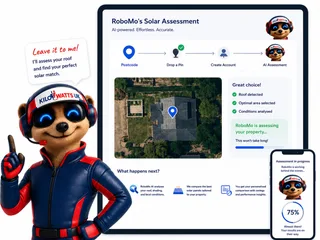
Simply enter your postcode, drop a pin on your roof, create your free account and let RoboMo™ analyse your property to find the best solar panels for your home.

You don't have to think
RoboMo™'s AI analyses your roof and does all the hard work.

Accurate & tailored
AI-powered assessment based on your roof, location, and conditions.

Best options, maximum savings
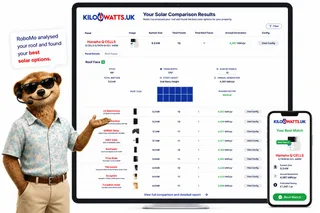
Compare top solar panels for the best performance and value.

Simple, fast & effortless
Provide a few details, sit back and watch your results unfold.
STEP 1
Choose Home, Business or Industrial
Enter your postcode to start your assessment.
STEP 2

Drop a pin on your roof
STEP 3

Create your free account
STEP 4

Sit back and watch RoboMo™ work
RoboMo™ analyses your roof and builds your personalised solar comparison.

Kilowatts UK is an authorised representative
Flower Turbines
Compact vertical-axis turbines built for real UK sites, not just open farmland.
They start in light wind, sit in a small footprint, and are bird-safe by design. Cluster them as a bouquet and the group performs better together than the same turbines standing alone. Enter your postcode for a location-based generation estimate. Figures use area weather data and will differ if buildings, trees or hills sit in the way.
Starts in light UK wind
Built to generate in typical UK wind, not only open farmland.
Small rooftop or ground footprint
Compact towers for roofs, yards and tight sites.
Bird-safe slow rotation
Slow vertical-axis spin, bird-safe by design.
Bouquet clusters raise output
Grouped turbines outperform the same units standing alone.
Step 1
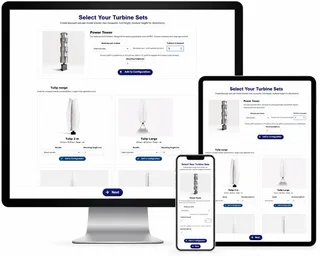
Enter your postcode
Start designing your wind energy system in seconds.
STEP 2

Choose a location
STEP 3

Place your cluster
Tap the map where you want the turbine cluster to go.
STEP 4

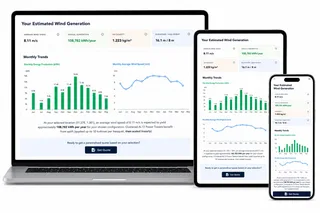
Instant generation forecasts
Compare different turbine layouts and see annual generation forecasts instantly.
STEP 5

No commitment required
Explore different configurations before deciding whether to request a quotation.
Related articles

Mo's Mission Nominations
FAQ
Need Help? RoboMo's Got Answers
What is the best way to compare solar panel quotes?
Compare the full design and installation scope, not just the number of panels or the headline price. Check the roof layout, shading assumptions, inverter choice, battery specification, scaffolding, DNO process, warranties, monitoring and exclusions. A cheaper quote may be good value, but only if it includes the same work and assumptions as the others.
Should I choose solar panels only or solar panels with a battery?
Solar PV on its own can suit homes that use a good amount of electricity during the day. A battery may help if you use more electricity in the evening, have flexible tariff plans, or want to increase self-consumption. Compare usable battery capacity, power output, losses, location and warranty terms before deciding.
What should a good UK solar quote include?
A good quote should show the proposed system size, panel layout, generation assumptions, inverter design and any battery details. It should also state what is included for scaffolding, electrical work, DNO handling, monitoring, commissioning documents and aftercare. Ask the installer to list exclusions clearly, such as roof repairs, bird protection or consumer unit upgrades.
Why do solar system prices vary so much between quotes?
Prices vary because roof access, roof condition, cable routes, electrical condition, inverter type, battery choice and paperwork can all change the job. A simple, unshaded roof is usually a different installation from a complex roof with dormers, fragile tiles or difficult access. Always compare what each quote includes before judging value.
What is the DNO process and why does it matter?
The Distribution Network Operator is responsible for the local electricity network, so solar systems must follow the correct connection route. The installer may need to notify the DNO or apply for approval, depending on the design and export level. If export is limited or approval is required before installation, it can affect the system design and timetable.
Can I rely on Smart Export Guarantee income when comparing systems?
Smart Export Guarantee payments are arranged with an energy supplier, not directly by the installer. Tariffs, eligibility requirements and supplier terms can change, so export income assumptions should be treated cautiously. Ask which tariff, evidence and export level the quote assumes, if any.
How important are panels, inverters and batteries when comparing systems?
Panels matter, but the inverter and battery design can be just as important for how the system performs. The inverter must suit the roof layout, shading, export position and any battery plan. If a battery is included, compare usable capacity and discharge power rather than relying only on the headline capacity.
What installer credentials and protections should I check?
Ask whether the installation route supports the relevant MCS documentation for solar PV and export arrangements. Check current membership of consumer schemes such as RECC or HIES if the installer mentions them. Electrical work should be carried out and certified by suitably competent people, with appropriate registration where applicable.