


How to Compare Solar Quotes in the UK (2026 Guide) for UK
Published: 2026-09-03 17:41:59
Updated: 2026-09-03 10:41:59
If you are wondering how to compare solar quotes without getting lost in technical jargon or feeling pressured into a quick decision.
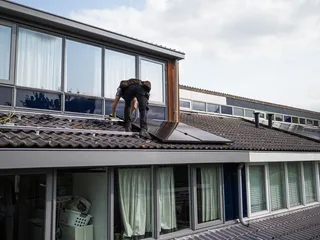
How to Compare Solar Quotes in the UK (2026 Guide) for UK
Learn how to compare solar quotes like a pro. Avoid overpaying, spot red flags, and choose the right UK installer with this step-by-step 2026 guide.
Overview
If you are wondering how to compare solar quotes without getting lost in technical jargon or feeling pressured into a quick decision, you are in the right place. With three million UK households planning to get solar panels within the next five years, the rush to secure an installation has created a noisy market. Some quotes will look temptingly cheap. Others will seem needlessly expensive. Your job is to cut through that noise and compare the details that actually determine whether your system performs well for the next two decades. This guide gives you a clear, step-by-step framework to do exactly that.
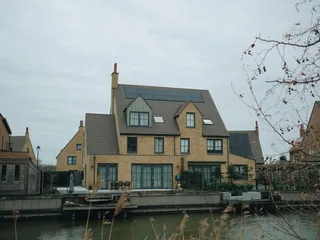
Why the Cheapest Solar Quote Is Usually the Most Expensive Mistake
The instinct to pick the lowest number is natural, but it is also the quickest route to long-term regret. A quote that comes in thousands of pounds below the competition is rarely a bargain. It usually means the installer has cut corners somewhere, and those corners are almost never visible on a single-page proposal. You can also read more about Compare home solar panel options.
The most common trick is to specify cheaper components. A quote might list a panel brand you have heard of, but the specific model could be a lower-tier version with a faster degradation rate. Similarly, a budget inverter may work fine for the first few years, then fail just as the manufacturer's warranty expires. The cost of replacing that inverter, including labour, can wipe out every penny you saved on the initial quote. You can also read more about Compare commercial solar options.
There is also the "like-for-like" fallacy. Two quotes might both say "4kW system", but one could use a string inverter while the other uses micro-inverters. One might include bird-proofing and scaffolding. The other might leave those as surprise extras. Comparing these quotes on price alone is like comparing two houses based only on their front doors. The real value is in the specification behind the headline figure. You can also read more about Compare industrial solar options. This is exactly the problem Kilowatts.uk exists to solve. Our AI-powered solar assessment, RoboMo™, analyses your roof's orientation, shading, and available space to give you a realistic baseline of what your home can actually generate. That baseline becomes your measuring stick for every quote you receive. You can also read more about Book a free home energy survey.
Step 1 – Standardise Your Solar Quote Checklist (The "Apples to Apples" Method)
Before you compare anything, you need to make sure every quote is speaking the same language. Most installers will happily provide a quote, but they will not all present the same information in the same way. Your first task is to create a standardised checklist and demand that every quote answers the same questions. You can also read more about what is epvs how.
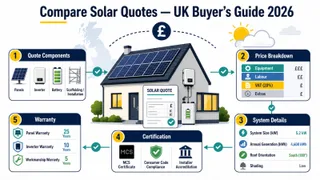
Start with the panel specifications. Look beyond the brand name and find the wattage, the efficiency rating, and the degradation rate. A 400W panel and a 430W panel might look similar, but across a 12-panel array, that difference adds up to 360W of peak output. The degradation rate tells you how quickly the panel loses performance over time. A panel that degrades at 0.3% per year will still produce around 94% of its original output after 20 years. One that degrades at 0.8% will be down to 85%. You can also read more about best solar price in uk.
Next, scrutinise the inverter. This is the workhorse of your system, converting DC power from the panels into AC power for your home. Ask whether the quote includes a string inverter, micro-inverters, or power optimisers. Ask for the specific brand and model, not just "premium inverter". Check the warranty length. A 12-year warranty on a string inverter is standard, but some manufacturers offer extensions to 20 or 25 years for a small additional cost. Finally, look for a system design, not just a component list. A good quote includes a layout diagram showing where each panel will sit, where the inverter will be mounted, and how the cabling will run. It should account for your specific roof tiles, any chimneys or skylights, and any shading from nearby trees or buildings. If a quote does not include this level of detail, it is a generic estimate, not a tailored proposal.
Step 2 – Know the Real Solar Panel Prices in 2026 (Your Budget Baseline)
Understanding current market rates gives you the confidence to spot an outlier immediately. In 2026, the average cost for a domestic solar system in the UK remains consistent with recent years. A 2kW system typically costs between £4,600 and £5,800. A 4kW system, which remains the most common choice for a typical three-bedroom home, ranges from £5,000 to £7,000. A larger 6kW system, often recommended for households with an electric vehicle or high daytime usage, falls between £6,000 and £8,000.
These figures are for panels and installation only. Adding a battery changes the picture significantly. A battery can often double your annual savings compared to panels alone, because it lets you store excess daytime generation for use in the evening. But it also adds several thousand pounds to the upfront cost. A quote that includes a battery will naturally be higher, and that is not a reason to dismiss it. The question is whether the additional savings justify the additional cost for your specific usage pattern.
The Energy Saving Trust estimates a typical payback period of 9 to 15 years, depending on your location, roof orientation, and energy usage. That is a long-term commitment, not a quick win. If a quote falls far outside the ranges above, either suspiciously low or unreasonably high, you can use Kilowatts.uk's free solar and battery assessment to check whether the proposed system size is actually correct for your home.
Step 3 – The Installer Vetting Checklist (Beyond the MCS Badge)
MCS certification is the baseline requirement for any installer you consider. It is essential for accessing the Smart Export Guarantee, which pays you for excess electricity you export to the grid. It is also a requirement for many building regulations and home insurance policies. If an installer does not have MCS certification, walk away. There is no exception to this rule.
But MCS alone is not enough. You need to dig deeper into the company's track record. Start with reviews, but do not just glance at the star rating. Read the negative reviews on Trustpilot or Google. Look for patterns. Are complaints about installation quality, or are they about slow communication? How does the company respond to criticism? A professional installer will acknowledge mistakes and explain how they fixed them. A defensive or dismissive response is a warning sign.
Check for membership of trade bodies like HIES or NAPIT. HIES membership is particularly valuable because it offers deposit protection. If the company goes out of business before your installation is complete, you get your money back. This is not a theoretical risk. Several solar installers have collapsed in recent years, leaving customers out of pocket. Finally, question the "no home visit" trend. Some installers now market remote quotes as a convenience, using satellite imagery and online tools to design systems without ever visiting your property. While this can speed up the process, a physical survey is often critical for spotting structural issues, checking the condition of your roof, and confirming that the proposed design will actually work. Ask whether the quote is conditional on a site survey. If it is not, treat that as a red flag.
Step 4 – Compare Warranties and Aftercare (The Long Game)
The upfront price matters, but the long-term cost of ownership depends heavily on warranties and aftercare. A system that costs £500 more upfront but comes with a 25-year insurance-backed warranty is often far better value than a cheaper system with a 2-year workmanship guarantee.
There are three types of warranty to check. The panel performance warranty typically lasts 25 to 30 years and guarantees that the panels will still produce a certain percentage of their original output after that period. The product warranty covers defects in materials and workmanship, usually for 10 to 15 years. The installer's workmanship warranty covers the quality of the installation itself, and this is where quotes vary dramatically. Some installers offer 2 years. Others offer 10. The best offer insurance-backed guarantees that remain valid even if the installer goes out of business.
Pay particular attention to the inverter. Inverters typically last 10 to 15 years, which means you will almost certainly need to replace yours at least once during the life of your panels. Ask whether the quote includes any provision for this future cost. Some installers offer extended inverter warranties or discounted replacement programmes. If yours does not, factor a replacement cost of £800 to £1,500 into your long-term budget.
Step 5 – The Final Comparison: Payment Options and Finance
How you pay for your system affects the total cost almost as much as the equipment itself. Paying outright is always the cheapest option in the long run, because you avoid interest charges entirely. But for many households, that is not realistic, and finance is a sensible alternative.
If you choose finance, look carefully at the APR. Rates around 9.9% are common in 2026, and while that may seem reasonable, it adds significant cost over a 10-year term. A £7,000 system financed at 9.9% APR over 10 years will cost you roughly £3,900 in interest. Some installers offer zero-deposit or interest-free options for shorter terms, which can be a better deal if you can afford the higher monthly payments.
Do not forget to factor in the Smart Export Guarantee. The rate you receive for exported electricity varies by supplier, but it can meaningfully reduce your payback period. Ask your installer which SEG tariffs they recommend and check the current rates before you commit. Some installers, including Glow Green, offer to beat any like-for-like quote by £100. This is a useful negotiation tool. If you have a preferred installer but a competitor has quoted slightly less for an identical specification, mention the price match pledge. It costs nothing to ask, and it can save you money without compromising on quality.
Red Flags and Scam Tactics to Avoid
The solar industry has matured significantly, but it still attracts its share of cowboys. Knowing the common tactics can save you from a costly mistake.
High-pressure sales tactics are the most obvious warning sign. Any installer who offers a "today-only" discount or pressures you to sign before you have had time to compare quotes is not acting in your interest. A reputable installer will be happy to give you time to think.
Vague equipment descriptions are another red flag. If a quote says "premium panels" or "high-quality inverter" without naming the specific brand and model, ask for the details in writing. If the installer refuses or becomes evasive, walk away. You are about to spend thousands of pounds. You deserve to know exactly what you are buying. Be cautious about large deposits. A deposit of 10% to 25% is standard, but anything above that is risky. Check whether the installer is a HIES member, which provides deposit protection. If they are not, consider paying by credit card, which offers additional protection under Section 75 of the Consumer Credit Act. Finally, watch for quotes that ignore your roof's specifics. If a proposal does not mention your roof type, orientation, or any shading issues, it is a generic quote that has not been tailored to your home. A proper solar design starts with your roof, not with a standard package.
Your Next Step: Making the Decision with Confidence
Comparing solar quotes is not about finding the lowest price. It is about finding the best value for your specific home. That means standardising the specification, verifying the installer's credentials, checking the warranties, and understanding the finance. Do all four, and you will be in a strong position to make a confident decision.
Trust your gut. If a deal feels too good to be true, it probably is. The right installer will be patient, transparent, and willing to answer every question you ask. If you feel rushed or confused, step back and take more time.
Before you sign anything, run your shortlist through Kilowatts.uk. Our AI-powered solar assessment gives you an independent baseline of what your roof can achieve, and our directory connects you with vetted, trusted UK installers who meet the standards outlined in this guide. That final checkpoint can be the difference between a system you regret and one that delivers clean, affordable energy for decades.
Plan, Compare & Buy Renewable Energy Solutions
AI does the thinking.
You get the perfect solar match.
Use RoboMo™ to assess your property, compare available technologies and connect with trusted UK installers, suppliers and manufacturers.
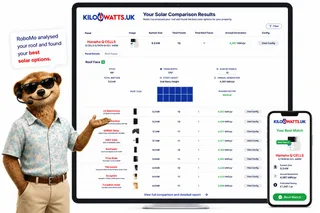
Simply enter your postcode, drop a pin on your roof, create your free account and let RoboMo™ analyse your property to find the best solar panels for your home.

You don't have to think
RoboMo™'s AI analyses your roof and does all the hard work.

Accurate & tailored
AI-powered assessment based on your roof, location, and conditions.

Best options, maximum savings
Compare top solar panels for the best performance and value.

Simple, fast & effortless
Provide a few details, sit back and watch your results unfold.
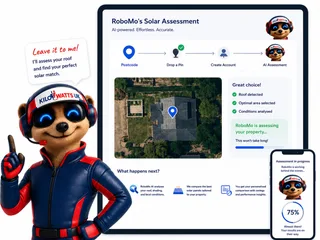
STEP 1
Choose Home, Business or Industrial
Enter your postcode to start your assessment.
STEP 2

Drop a pin on your roof
STEP 3

Create your free account
STEP 4

Sit back and watch RoboMo™ work
RoboMo™ analyses your roof and builds your personalised solar comparison.

Kilowatts UK is an authorised representative
Flower Turbines
Compact vertical-axis turbines built for real UK sites, not just open farmland.
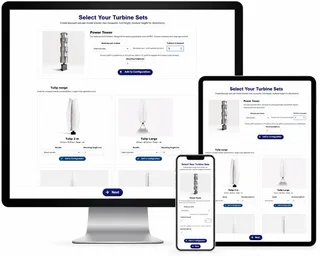
They start in light wind, sit in a small footprint, and are bird-safe by design. Cluster them as a bouquet and the group performs better together than the same turbines standing alone. Enter your postcode for a location-based generation estimate. Figures use area weather data and will differ if buildings, trees or hills sit in the way.
Starts in light UK wind
Built to generate in typical UK wind, not only open farmland.
Small rooftop or ground footprint
Compact towers for roofs, yards and tight sites.
Bird-safe slow rotation
Slow vertical-axis spin, bird-safe by design.
Bouquet clusters raise output
Grouped turbines outperform the same units standing alone.
Step 1
Enter your postcode
Start designing your wind energy system in seconds.
STEP 2

Choose a location
STEP 3

Place your cluster
Tap the map where you want the turbine cluster to go.
STEP 4

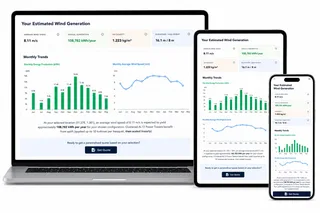
Instant generation forecasts
Compare different turbine layouts and see annual generation forecasts instantly.
STEP 5

No commitment required
Explore different configurations before deciding whether to request a quotation.
Related articles

Mo's Mission Nominations
FAQ
Need Help? RoboMo's Got Answers
How many solar quotes should I get before choosing an installer?
Aim to get at least three quotes from different UK solar installers. This gives you a better view of system size, equipment quality, warranties and total cost. Make sure each quote is based on the same assumptions so you can compare like for like.
What should a good solar quote include?
A good quote should name the exact panel, inverter and battery models, not just describe them as premium or high efficiency. It should include the system size, estimated annual generation, roof layout, scaffolding, electrical work, monitoring, warranties and VAT treatment. It should also make clear what is excluded or subject to a site survey.
Is the cheapest solar quote usually the best option?
Not always. A very low quote may use cheaper components, shorter warranties or exclude important items such as scaffolding, bird protection or upgrade works. Compare the full specification and aftercare before deciding whether the saving is genuine.
Why does MCS certification matter when comparing solar quotes?
MCS certification is important because many Smart Export Guarantee tariffs require an MCS certificate or equivalent evidence accepted by the supplier. It also gives you confidence that the installer is working to recognised standards. Always check the installer’s status directly rather than relying only on a logo in a brochure.
Should I choose solar panels with a battery?
A battery can help you use more of the electricity your panels generate, especially if you are out during the day or use more power in the evening. It also increases the upfront cost, so it is not automatically the best choice for every home. Ask each installer to show the expected savings with and without a battery.
How do I compare solar panel warranties properly?
Check the panel product warranty, panel performance warranty, inverter warranty and workmanship warranty separately. A long performance warranty is useful, but it is not the same as cover for faults or installation problems. Ask who handles claims and whether any workmanship guarantee is insurance-backed.
Do I need a home survey before accepting a solar quote?
Remote quotes can be useful for an initial estimate, but a proper survey is often needed before installation. The survey should check roof condition, access, shading, cable routes, consumer unit suitability and where equipment will be installed. Be cautious if a company treats an online estimate as final without confirming the site details.
What are the main red flags in a solar quote?
Watch out for pressure to sign the same day, vague equipment descriptions, unrealistic savings claims and large upfront payments without clear protection. Be wary if the installer will not provide model numbers, warranty documents or a written breakdown of costs. A reputable company should give you time to compare and ask questions.