


How to Compare Solar Quotes: UK Buyer's Guide 2026
Published: 2026-08-22 23:38:52
Updated: 2026-10-25 19:16:01
You have requested quotes from three or four solar installers, and now the numbers are staring back at you from the kitchen table. One quote is £5,200.
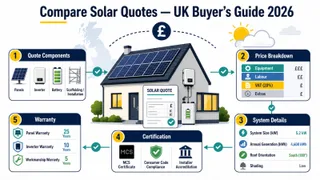
How to Compare Solar Quotes - UK Buyer's Guide 2026
You have requested quotes from three or four solar installers, and now the numbers are staring back at you from the kitchen table. One quote is £5,200.
Overview
You have requested quotes from three or four solar installers, and now the numbers are staring back at you from the kitchen table. One quote is £5,200. Another is £7,800. Both claim to be for a 4kW system. You are asking yourself the exact question this guide answers: how to compare solar quotes when they look nothing alike. By the time you finish reading, you will have a clear, repeatable framework for comparing any solar quote side by side, cutting through the confusion and making a decision you can feel confident about for the next 25 years. This guide is built specifically for UK homeowners in 2026, covering current pricing, MCS certification, SEG export rates, and the real-world cost variables like scaffolding and roof complexity that many comparison guides overlook.
Why Comparing Solar Quotes Is About More Than Price
Solar panels are not a one-off purchase like a television or a boiler. You are buying a power station for your roof that needs to perform reliably for 25 to 30 years. The cheapest quote today can easily become the most expensive choice over the system's lifetime if it underperforms, fails early, or leaves you with repair bills that a better warranty would have covered.
UK quotes for what appear to be similar 4kW systems commonly vary by several thousand pounds. That variance is not random profit padding. It reflects real differences in equipment quality, design standards, and installation workmanship. With three million UK households planning to install solar in the next five years, demand is surging and pressure-selling tactics are on the rise. A structured comparison process is your best defence against being rushed into a decision you will regret.
A like-for-like comparison requires normalising quotes so you are comparing the same system specification, not apples to oranges. The July 2026 record for solar generation on the National Grid confirms that the market is booming, but that also means more installers are competing for your business, and some are better than others.
Before You Request Quotes: Know Your Baseline
What Size System Does Your Home Actually Need?
Typical UK system sizes fall into three broad categories. A 2kW system suits small homes with low electricity usage. The 4kW system is the most common choice for average households. A 6kW system is better suited to large families or homes with an electric vehicle charging regularly.
Your annual electricity consumption is the starting point for sizing. Pull your last 12 months of bills or check your smart meter data to calculate your baseline usage in kilowatt-hours. A 4kW system typically generates enough to cover a typical UK household's annual consumption, but your roof orientation, pitch, and any shading from trees or neighbouring buildings will affect real-world output. Do not let an installer oversize your system to inflate the quote. You want a system matched to your actual usage, not their commission target. If you are unsure what is realistic, check how many panels your home needs before judging the quote.
Understand the Costs Before You Compare
Knowing the market rates before you open any quotes gives you an instant filter for spotting outliers. In 2026, UK price benchmarks without battery storage sit at roughly £4,600 to £5,800 for a 2kW system, £5,000 to £7,000 for a 4kW system, and £6,000 to £8,000 for a 6kW system. These figures come from installers working with major comparison services and reflect real quoted prices, not theoretical estimates. Use current solar price benchmarks as a sanity check before deciding whether a quote is genuinely competitive.
Adding a battery can often double your annual savings compared to panels alone, but it also adds between £1,500 and £4,000 to the upfront cost. Factor this into your payback calculation carefully. The payback period for solar panels alone typically ranges from 9 to 15 years, according to the Energy Saving Trust. Battery storage can shorten that timeline if you use more of your generated power on site rather than exporting it.
Every quote you receive should include a full breakdown: panels, inverter, battery if included, mounting system, scaffolding, labour, and any surcharges for roof complexity. If a quote arrives as a single lump sum with no itemisation, ask for the detail before you compare it to anything else.
The 7-Point Solar Quote Comparison Checklist
This checklist is the core of your comparison process. It gives you a structured, repeatable way to score any two quotes, or five, side by side. Use a simple spreadsheet or a notepad to rate each quote against these seven points. The goal is to identify the best value, not the lowest price. A quote that is £1,000 higher but includes premium equipment and a 25-year warranty may be the smarter long-term choice.
1\. Panel Quality and Brand
Not all solar panels are created equal. Tier-one manufacturers like Longi, JA Solar, and SunPower typically offer better efficiency and longer degradation warranties than budget or unbranded panels. Check the panel efficiency rating. Higher efficiency means more power from the same roof area, which matters if your roof space is limited.
Look for two separate warranties on the panels. The performance warranty, typically 25 to 30 years, guarantees the panel will still produce a specified percentage of its original output decades later. The product warranty, typically 10 to 15 years, covers manufacturing defects. Read the small print on what each warranty actually covers. Ask the installer why they chose that specific panel brand. A clear, technical answer is a good sign. A vague "it is what we stock" is a red flag.
2\. Inverter Quality and Placement
The inverter converts DC power from your panels into AC power your home can use, and it is the component most likely to fail over the system's lifetime. String inverters are the most common and cost-effective option. Microinverters or power optimisers cost more but offer per-panel monitoring and better performance on roofs with partial shading.
Check the inverter's warranty length, which typically ranges from 5 to 12 years. Ask whether extended warranties are available and at what cost. Also ask where the inverter will be installed. Inside the loft or garage is better for longevity than an outside wall exposed to weather, even if the unit is rated for outdoor use.
3\. Battery Storage (If Included)
If you are comparing quotes that include battery storage, dig into the specifications. Check the battery chemistry. Lithium iron phosphate batteries tend to last longer and are safer than standard lithium-ion, though they can cost more. Look at the usable capacity and the depth of discharge, which tells you how much of the stored energy you can actually access.
Battery warranties typically offer 10 years or 10,000 cycles, but terms vary on throughput limits. Ask about the battery's round-trip efficiency, which is usually between 90 and 95 percent, and whether the system supports backup power during outages. If you are not adding a battery now, ask whether the inverter and system design allow you to add one later without replacing major components. You can also compare likely battery storage costs against the figure in your quote.
4\. Installation Standards and Roof Work
MCS certification is non-negotiable for UK solar installations. It is required for Smart Export Guarantee eligibility and demonstrates that the installer meets recognised industry standards. Always verify MCS accreditation before comparing quotes.
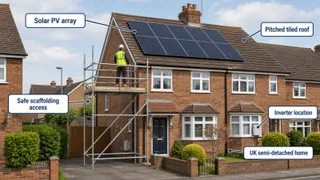
Ask about the mounting system. In-roof panels sit flush with the roofline and look sleeker, and they can be more weathertight, but they cost more than on-roof panels mounted on top of existing tiles. Check whether the quote includes scaffolding, and whether there are surcharges for complex roofs such as high pitches, slate tiles, or multiple roof faces. Ask about the roof warranty specifically. Does the installer guarantee their workmanship on the roof penetrations, not just the panels themselves?
5\. Warranties and Guarantees
You are comparing three separate warranties: the panel product warranty, the panel performance warranty, and the installer's workmanship warranty. The installer workmanship warranty is often the weakest link. Five years is common, ten years is better, and some premium installers offer up to 25 years.
Check what happens if the installer goes out of business. Is the warranty backed by the manufacturer or an insurance-backed guarantee? Read the small print on exclusions. Some warranties do not cover roof penetrations, weather damage, or what the provider deems neglect. A long warranty with broad exclusions is worth less than a shorter one that actually covers the things that go wrong.
6\. Total Cost Breakdown and Payment Terms
Every quote should itemise panels, inverter, battery if included, mounting system, scaffolding, labour, electrical work, and any admin or certification fees. Watch for hidden exclusions. Some quotes do not include scaffolding, smart meter installation, or the cost of upgrading your consumer unit, and those costs will appear later as unwelcome surprises.
Ask about payment terms. Is the full amount due upfront, or is it staged with a deposit, a progress payment, and a final payment on completion? Never pay the full amount before work begins. Check whether VAT is included. Solar installations in the UK currently benefit from a zero VAT rate, so a quote showing 20 percent VAT is either outdated or padding the price.
7\. SEG Export Tariff and Aftercare
The Smart Export Guarantee pays you for surplus energy exported to the grid, but rates vary by energy supplier. A quote that bundles a specific export tariff is not comparing like for like, because you can choose your SEG supplier independently. Ask the installer if they offer a SEG-compatible setup and whether they can point you toward suppliers with competitive export rates.
Check what aftercare is included. Will you have access to system monitoring so you can track generation and spot faults early? What is the process for reporting a fault, how quickly will the installer respond, and is there a call-out charge? Aftercare quality varies enormously and directly affects your experience over the system's lifetime.
Red Flags to Watch for When Comparing Quotes
A quote that is significantly cheaper than the others with no clear explanation should set off alarm bells. There is usually a reason, and it is rarely in your favour. High-pressure sales tactics are another warning sign. If an installer tells you the price is only valid today or offers to throw in a free battery if you sign immediately, step back.
Vague specifications are a dealbreaker. If the quote does not name the exact panel and inverter brands and models, ask for a revised quote with specific components. An installer who cannot or will not provide this detail is not someone you want working on your roof. Watch for demands of a large upfront deposit, more than 25 percent, before any work begins. And always verify MCS certification directly. An installer who claims certification but cannot provide proof is disqualifying you from SEG payments and potentially voiding manufacturer warranties.
Real-World Example: Comparing Two Quotes Side by Side
Imagine you have two quotes for a 4kW system on a typical semi-detached house in the UK.
Quote A comes in at £5,200. It includes budget panels from an unfamiliar brand, a standard string inverter with a 5-year warranty, and a 10-year workmanship warranty. Scaffolding is not included and will be quoted separately once the installer surveys the roof.
Quote B is priced at £6,400. It specifies tier-one panels from a recognised manufacturer, microinverters with per-panel monitoring and a 12-year warranty, and a 25-year workmanship warranty backed by an insurance guarantee. Scaffolding and a full roof survey are included in the price. The £1,200 upfront saving on Quote A looks appealing, but run the numbers over the system's lifetime. The budget panels will degrade faster and generate less energy each year. The string inverter is more likely to fail, and once the 5-year warranty expires, replacement costs fall on you. The missing scaffolding charge will likely close a chunk of that price gap before installation even begins. Quote B costs more today but delivers more generation, fewer repair bills, and greater peace of mind over 25 years. The 7-point checklist scores Quote B higher on equipment quality, warranties, and cost transparency, making it the better long-term value despite the higher upfront price.
How to Use Online Comparison Tools and Installer Directories
Online comparison services can streamline the process by matching you with vetted installers, but they are a starting point, not a substitute for your own due diligence. Look for platforms that pre-vet installers for MCS certification, financial stability, and genuine customer reviews. This filters out the worst operators before you even request a quote.
AI-powered assessment tools can give you a quick estimate of your roof's solar potential and likely system size before you contact installers. This is useful for setting your baseline expectations so you can spot quotes that seem wildly optimistic or undersized. When you use a comparison platform, you will typically receive quotes from three or four installers. Apply the 7-point checklist to each one to make a fair, objective comparison. If you are exploring your options, our resources section covers the full range of renewable technologies available for UK homes.
Final Decision: Choosing the Right Quote for You
Weigh your 7-point checklist scores alongside your personal priorities. Budget matters, but so do roof aesthetics, energy independence goals, and any plans you have for an EV or battery upgrade in the future. Do not be afraid to go back to your preferred installer and ask them to match a competitor's price on a specific component, but only if the comparison is genuinely like for like.
Check that the installer's payment schedule protects you. Never pay the full amount upfront, and ensure the final payment is tied to satisfactory completion and commissioning of the system. Before signing, confirm the installation timeline, the exact equipment list, and the warranty documentation you will receive on completion. The best quote is the one that gives you confidence in your system's performance for the next 25 years, not the one that saves you £800 today.
Frequently Asked Questions About Comparing Solar Quotes
How much do solar panels cost in the UK in 2026? A 4kW system typically ranges from £5,000 to £7,000 without battery storage. Adding a battery increases the cost by roughly £1,500 to £4,000 depending on capacity and brand.
How long do solar panels take to pay for themselves? The Energy Saving Trust estimates a 9 to 15 year break-even period, depending on your electricity usage, location, and the export rates you secure through the Smart Export Guarantee. For a fuller view, compare your assumptions against a solar break-even guide.
Do I need MCS certification for solar panels? Yes. MCS certification is required for SEG payments and is the recognised mark of installer quality in the UK. Always verify it before comparing quotes. Is it worth adding a battery to my solar system? A battery can often double your annual savings compared to panels alone, but the payback depends on your usage patterns and the battery's upfront cost. If you use most of your electricity in the evenings, a battery is likely to improve your return. Can I negotiate with solar installers? Yes. If you have a comparable quote at a lower price, reputable installers will often match or adjust their pricing to win your business. Just make sure the comparison is genuinely like for like.
Summary: Your Next Steps
Comparing solar quotes is about value, not price. Use the 7-point checklist to strip away the sales patter and focus on what actually matters: equipment quality, warranties, installation standards, and transparent costs.
Your next steps are straightforward. Request quotes from at least three MCS-certified installers, or compare home solar options if you want a simpler starting point. Apply the checklist to each quote and score them objectively. Ask follow-up questions on anything unclear. A good installer will welcome your scrutiny. Then choose the quote that offers the best long-term value, not the lowest upfront number. You are in control of this decision, and with the right framework, you will make a choice that pays off for decades.
Plan, Compare & Buy Renewable Energy Solutions
AI does the thinking.
You get the perfect solar match.
Use RoboMo™ to assess your property, compare available technologies and connect with trusted UK installers, suppliers and manufacturers.
Simply enter your postcode, drop a pin on your roof, create your free account and let RoboMo™ analyse your property to find the best solar panels for your home.

You don't have to think
RoboMo™'s AI analyses your roof and does all the hard work.

Accurate & tailored
AI-powered assessment based on your roof, location, and conditions.

Best options, maximum savings
Compare top solar panels for the best performance and value.

Simple, fast & effortless
Provide a few details, sit back and watch your results unfold.
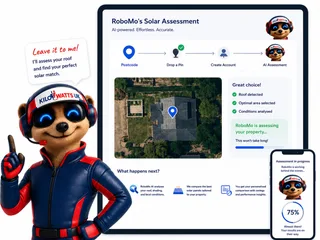
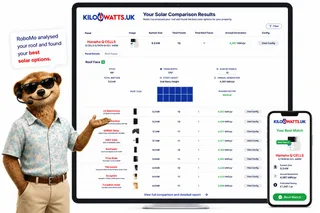
STEP 1
Choose Home, Business or Industrial
Enter your postcode to start your assessment.
STEP 2

Drop a pin on your roof
STEP 3

See your comparison
STEP 4

Sit back and watch RoboMo™ work
RoboMo™ analyses your roof and builds your personalised solar comparison.
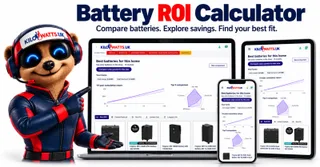
BATTERY ROI TOOL
See what a battery saves on your bill
Enter the day rate, off-peak rate and export rate. The calculator ranks batteries in the Kilowatts shop over 10 years.
Home batteries also suit offices and small commercial sites. Industrial batteries are listed on their own calculator.
Related articles

Mo's Mission Nominations
FAQ
Need Help? RoboMo's Got Answers
How many solar quotes should I get before choosing an installer?
Aim to get at least three quotes from different UK solar installers. This gives you enough information to compare equipment, workmanship, warranties, aftercare and total cost. If one quote is much cheaper or much more expensive, ask the installer to explain the difference in writing before you decide.
What should a good solar quote include?
A good quote should list the panel brand and model, inverter, mounting system, scaffolding, labour, electrical work and any battery storage if included. It should also state the system size, estimated annual generation, warranties, payment terms and any assumptions used in the savings estimate. Avoid comparing lump-sum quotes until the installer has provided a proper breakdown.
How do I compare the savings and payback estimates in different quotes?
Check the assumptions behind each estimate, not just the headline payback period. Look at the expected annual generation, how much electricity the installer assumes you will use at home, the import tariff, export tariff and any battery assumptions. Treat savings forecasts as estimates rather than guarantees, especially if your daytime usage or energy tariff may change.
Is the cheapest solar quote usually the best option?
Not necessarily. A cheaper quote may use lower-quality panels, a shorter inverter warranty, limited aftercare or exclude scaffolding and roof work. The best quote is usually the one that offers strong long-term value, clear specifications and a reliable installer, not simply the lowest upfront price.
Why does MCS certification matter when comparing solar quotes?
MCS certification shows that the installer and installation are intended to meet recognised standards for small-scale renewable systems in the UK. It is usually needed if you want to apply for Smart Export Guarantee payments for exported electricity. Always check the installer’s MCS status yourself rather than relying only on a logo in the quote.
Should I include a battery when comparing solar quotes?
A battery can help you use more of your own solar electricity, especially if you are out during the day or use more power in the evening. However, it increases the upfront cost, so compare usable capacity, warranty, efficiency and whether the system can be expanded later. If you are unsure, ask for quotes with and without a battery so you can compare the assumptions fairly.
How do I compare solar panel and inverter warranties properly?
Look separately at the panel product warranty, the performance warranty, the inverter warranty and the installer’s workmanship warranty. A long performance warranty is useful, but it does not always cover defects, roof issues, labour costs or call-outs. Read the exclusions and ask who is responsible if a fault appears in five or ten years.
What hidden costs or paperwork should I check before accepting a quote?
Common exclusions include scaffolding, complex roof surcharges, slate or tile work, consumer unit upgrades, monitoring equipment and additional electrical work. Ask whether the installer will handle certification paperwork and any required DNO notification or application. Get written confirmation of what is included, what could cost extra after the survey, and what aftercare is provided once the system is installed.