


How to compare different electrical installation providers
Published: 2026-08-07 17:22:10
Updated: 2026-08-09 14:00:58
To compare electrical installation providers for a small business in the United Kingdom, look first at competence, commercial experience, quote detail.
How to compare electrical installation providers for small businesses in the UK
To compare electrical installation providers for a small business in the United Kingdom, look first at competence, commercial experience, quote detail, safety planning, certification, disruption control, and aftercare. Do not choose on price alone, because electrical work affects staff safety, trading continuity, insurance records, maintenance, and future upgrades.
A good shortlist should include providers who understand commercial electrical work, can explain exactly what is included and excluded, and will issue the right handover documents for the work completed. The best comparison is evidence-based, not based on who sounds most confident on the phone.
Start by defining the electrical work clearly
Before asking for quotes, write down what you need the provider to do. A vague request such as “upgrade the electrics” can produce very different quotations, making comparison almost impossible. A clearer scope helps each contractor price the same job and reduces the risk of later extras.
For a small business, the scope should reflect how the premises is used. A café, salon, workshop, office, shop, clinic, or small warehouse may all have different electrical loads, opening hours, customer access, equipment needs, and shutdown constraints.
Gather the basics before speaking to providers. Include the type of premises, how it is used, your usual trading hours, and any quiet periods. Note known issues with sockets, lighting, tripping, old wiring, equipment being added or moved, and whether work must be phased to keep the business open. Also check any landlord, lease, or managing agent requirements, plus future plans such as EV charging, solar PV options, battery storage, heat pumps, or extra machinery.
Premises use
Explain what the business does, how many people use the space, and which areas are customer-facing or operationally critical.Known problems
Tell providers about tripping circuits, damaged accessories, flickering lights, warm equipment, or areas where power is unreliable.Planned changes
Mention new equipment, layout changes, extra sockets, lighting improvements, renewable energy plans, or future expansion.Access constraints
Explain opening hours, shared access, landlord approval, parking, deliveries, and whether noisy or dusty work is restricted.Business-critical systems
Identify tills, refrigeration, alarms, IT systems, treatment equipment, kitchen equipment, machinery, or server cupboards.
A provider does not need every detail on day one, but they should ask sensible questions. If a contractor gives a firm price for anything more than simple work without understanding the site, treat that as a warning sign.
Check competence, registration, and commercial experience
Electrical installation in a business premises is not the same as a small domestic job. The provider should be competent for the type of commercial work involved and comfortable working around staff, customers, stock, equipment, access restrictions, and business-critical systems.
In the UK, electrical work should be designed, installed, inspected, and tested with reference to BS 7671, commonly known as the IET Wiring Regulations. Employers and duty holders also need to understand their responsibilities under the Electricity at Work Regulations 1989, which require electrical systems to be constructed and maintained to prevent danger so far as reasonably practicable. HSE electrical safety guidance is also relevant when assessing risk in workplaces.
Many businesses look for contractors associated with recognised electrical industry bodies or competent person schemes where relevant, such as NICEIC, NAPIT, ECA, or SELECT in Scotland. Membership can be useful, but it is not a substitute for checking whether the provider is competent for your actual project. If you want a broader starting point, this guide to choosing a qualified electrician explains the checks to think about before appointing someone.
Insurance
Ask for evidence of suitable public liability and, where applicable, employers’ liability insurance.Documentation
Confirm what electrical certificates, test results, drawings, schedules, and handover documents will be provided.Scheme status
Check that any claimed registration or membership is current and relevant to the work being carried out.Subcontracting
Ask whether the people quoting are the people doing the work, or whether parts will be subcontracted.Relevant experience
Ask for examples of similar small business electrical installations, not just general electrical work.Technical competence
Check whether they can explain the proposed approach in plain English and identify likely limitations.
The aim is not to catch anyone out. It is to understand whether the provider is properly equipped for the work, the setting, and the level of accountability your business needs.
Compare quotations on scope, not just price
A low price can be attractive, especially for a small business with tight cash flow. However, electrical installation quotations often differ because they include different assumptions. One quote may include testing, certification, out-of-hours work, containment, making good, waste removal, labelling, and commissioning, while another may only cover the visible installation work. Ask providers to break down what is included. You do not need a line-by-line engineering schedule for every small job, but you do need enough detail to compare the offers fairly. It can also help to understand how affordable electrical services should still be assessed against safety, documentation, and suitability.
| Comparison area | Why it matters | What to check before choosing |
|---|---|---|
| Scope of works | Quotes may cover different tasks | Exactly what is included and excluded |
| Materials | Quality and suitability can vary | Cable routes, containment, fittings, accessories, and protective devices |
| Testing and certification | Handover documents affect safety records and future maintenance | What certificates, schedules, and test results will be supplied |
| Disruption | Lost trading time may cost more than the installation | Working hours, phasing, access, shutdowns, and cleaning |
| Safety planning | Poor planning can put staff, customers, and contractors at risk | Isolation methods, access control, temporary power, and risk controls |
| Future capacity | A short-term fix may limit later upgrades | Spare ways, load considerations, and likely future equipment |
| Aftercare | Small faults after handover can affect operations | Defects process, response times, and maintenance support |
| Commercial terms | Payment and exclusions can affect cash flow and responsibility | Deposit, staged payments, exclusions, warranties, and variation process |
Overview
If one quote is much cheaper, ask why. It may be efficient, but it may also exclude important items. If one quote is much more expensive, ask what extra value, risk reduction, or specification is included. A professional provider should be able to explain the difference without pressuring you.
Look closely at site survey quality
For anything beyond a minor repair or simple addition, a proper site visit is usually important. The provider should inspect the existing installation, access routes, distribution board, likely cable runs, earthing arrangements, equipment locations, and practical constraints.
A rushed survey often leads to provisional pricing. That can create arguments later if the job turns out to be more complex than assumed. Small businesses should be particularly careful where work is needed in older buildings, shared premises, listed or character properties, food preparation areas, workshops, clinics, or customer-facing spaces. If the condition of the installation is unclear, separate inspection work may be useful before committing to a larger installation quote.
A strong site survey usually includes practical discussion about the condition of the existing installation, the safest cable routes, and the effect of the work on trading. It should also identify what cannot yet be confirmed without further investigation.
Good providers will also tell you when further investigation is needed. That is not necessarily a negative. It is often better than receiving a fixed-looking quote based on weak assumptions.
Assess how they plan around business disruption
For small businesses, disruption can be as important as installation cost. A provider who can work safely around your trading patterns may reduce downtime, but out-of-hours work can affect cost and scheduling. The right answer depends on the premises, the type of work, and how critical the electrical systems are to daily operations.
Discuss disruption before choosing a provider, not after the job starts. This is especially important for businesses with refrigeration, tills, IT systems, alarms, data cabling, treatment rooms, kitchen equipment, workshop machinery, card payment systems, or customer access.
A good disruption plan should be realistic. Be cautious if a provider promises to keep everything running without explaining which circuits need isolation, what temporary arrangements are needed, and who will approve changes on the day.
Cleanliness
Clarify expectations for dust control, waste removal, and daily tidying.Communication
Agree who will make decisions if unexpected issues are found on site.Trading hours
Confirm whether work can happen before opening, after closing, on closed days, or in phases.Customer safety
Agree how working areas will be separated from staff and visitors.Power isolation
Ask which circuits or areas need to be switched off and for how long.Critical equipment
Identify equipment that cannot be interrupted without planning.
The most suitable provider is often the one that understands the cost of downtime, not simply the one that can install fastest.
Confirm certificates, records, and handover information
Electrical paperwork is not just administration. It provides evidence of what was installed, inspected, tested, and handed over. It can matter for insurers, landlords, future electricians, maintenance planning, and due diligence if you later sell the business or assign a lease.
Before agreeing the job, ask what documents will be provided and when. The exact documents depend on the work, but the provider should be able to explain the expected handover clearly and distinguish between installation certificates, minor works certificates, condition reports, schedules, and test results.
For many small business projects, useful handover information may include an Electrical Installation Certificate for new circuits or more substantial installation work, a Minor Electrical Installation Works Certificate for certain smaller additions or alterations, and an Electrical Installation Condition Report where the task is inspection and reporting rather than new installation. The appropriate document depends on the work carried out, so avoid providers who use vague wording such as “we will sort the certificate later”.
Handover pack
This may include product information, operating instructions, warranties, as-installed notes, drawings, labels, and maintenance recommendations.Test results and schedules
These help future electricians understand circuit details, protective devices, test readings, and distribution board arrangements.Electrical Installation Certificate
Usually relevant where new electrical installation work or new circuits are installed and tested.Electrical Installation Condition Report
Used to report on the condition of an existing installation, not as a certificate for newly completed installation work.Minor Electrical Installation Works Certificate
Often used for smaller additions or alterations that do not involve adding a new circuit, where applicable.
If a provider is vague about certification, be cautious. Proper testing and documentation should be part of the job, not an optional extra discovered at the end.
Ask about safety, risk, and working methods
A professional electrical installation provider should be able to describe how they will work safely on your premises. This includes protecting their own workers, your staff, customers, visitors, stock, and equipment.
For larger or higher-risk jobs, more formal planning may be needed. Where construction work is involved, the Construction Design and Management Regulations may be relevant, depending on the nature of the project and who is involved. For smaller jobs, you should still expect sensible working methods, clear isolation procedures, and good communication.
Ask how the provider will deal with live services, temporary power, access equipment, dust, waste, trip hazards, emergency arrangements, and work in public areas. You should not need to become a safety specialist, but you should expect confident and specific answers.
Isolation
Ask how circuits will be safely isolated and who is authorised to restore power.Public access
Confirm how staff, customers, tenants, or visitors will be kept away from work areas.Fire and alarms
Check whether any work could affect fire alarm systems, emergency lighting, access control, or security systems.Unexpected findings
Ask how damaged wiring, unsafe accessories, or non-compliant existing work will be reported and priced.Temporary arrangements
Ask whether temporary power, temporary lighting, or temporary signage is needed.Waste and housekeeping
Agree how waste, packaging, dust, and trip hazards will be managed during and after the work.
A weak answer sounds like “we will sort it on the day”. A better answer explains what will be isolated, who will be affected, when it will happen, and how the area will be left safe.
Review future needs before committing
Small businesses often buy electrical work in stages. That is understandable, but very short-term decisions can create avoidable costs later. If you expect new equipment, more staff, additional lighting, improved ventilation, EV charging, solar PV, battery storage, or a layout change, mention it early.
A good provider will not necessarily overspecify the job, but they should help you understand whether today’s installation leaves sensible room for tomorrow’s needs. This is particularly relevant when upgrading distribution boards, adding circuits, improving lighting, or planning power for commercial equipment. It is also relevant if you may need later rewiring work as the premises changes.
Future-proofing does not always mean spending more. Sometimes it means choosing cable routes carefully, allowing spare capacity where appropriate, labelling properly, or avoiding a design that blocks later improvements.
The best provider will help you balance budget, safety, compliance, disruption, and long-term practicality.
Use a simple provider comparison process
A structured process prevents you from being swayed by the cheapest quote, the fastest promised start date, or the most polished sales conversation. It also helps you keep a clear record of why you chose a provider if a landlord, insurer, finance team, or business partner asks later.
Start with a consistent brief, ask each provider the same core questions, and record unclear items before making a decision. For small works, this can be a simple checklist. For larger fit-outs or installations, you may need more detail and a clearer written specification.
Arrange surveys
Let each serious provider inspect the site before giving a final quote for anything more than simple work.Define the work
Write down the premises type, business use, known issues, opening hours, and desired outcome.Choose and record
Select the provider with the strongest balance of competence, clarity, safety, practicality, and value.Confirm documents
Agree what certificates, test results, schedules, drawings, and handover information will be supplied.Compare quotations
Check scope, exclusions, materials, testing, disruption, making good, waste removal, and payment terms.Clarify uncertainty
Ask written follow-up questions where assumptions, provisional sums, or exclusions are unclear.Shortlist providers
Check commercial experience, competence, insurance, and relevant scheme or trade body membership.
This process does not need to be complicated. The important point is that each provider is assessed against the same practical criteria.
Spot common warning signs
Most electrical contractors want to do a good job, but small businesses should still watch for signs that a provider may not be the right fit. Problems often appear before the work begins, especially in the way the quotation, survey, and communication are handled.
One concern on its own may not be decisive. Several together should make you slow down and ask more questions. Independent feedback can help too, provided you know where to check reviews and what warning signs to look for.
Warning signs are not always dramatic. Sometimes the risk is simply that the provider has not understood your premises, has made weak assumptions, or has not allowed properly for testing, certification, access, and safe isolation.
Vague scope
The quotation does not clearly say what is included.No proper survey
The provider prices complex work without inspecting the site.Pressure selling
They push for an immediate decision before answering technical questions.Poor documentation
They cannot explain what certificates or test records will be issued.Weak communication
They are hard to reach before the job, which may continue during the work.Unrealistic timescale
They promise very fast completion without discussing access, isolation, or disruption.Unclear responsibility
They do not explain who is supervising the work, signing off testing, or dealing with defects.No discussion of existing condition
They ignore old wiring, overloaded circuits, damaged accessories, or unknown faults.
If you are unsure, ask for clarification in writing. A reliable provider should be comfortable explaining the basis of their recommendation.
When the cheapest provider may be suitable
The lowest quote is not automatically wrong. A cheaper provider may have lower overheads, better availability, a simpler approach, or a clearer understanding of the job. For straightforward work with a well-defined scope, choosing a competitive quote can be perfectly reasonable.
The key is to confirm that the saving is not caused by missing items, weaker materials, poor planning, or inadequate testing. If the quotes are not like-for-like, price comparison is misleading.
A lower-cost provider may be suitable where the work is simple, the site is easy to access, the scope is clear, and the contractor provides proper documentation. They may be less suitable where the business cannot tolerate downtime, the installation is old or complex, or the work affects safety-critical systems.
Poor-value scenario
A cheap quote that excludes testing, certification, making good, waste removal, access equipment, or out-of-hours work that you actually need.Higher-risk scenario
Work in an older installation, busy customer area, food premises, workshop, shared building, or site with critical equipment.Suitable lower-cost scenario
A simple, clearly defined addition or alteration in an accessible area with straightforward isolation and proper certification included.
Value is not the same as low price. Value is the right standard of work, delivered safely, with clear records, at a fair cost for the risk and complexity involved.
How to make the final decision
Once you have two or three serious quotations, compare them against your business priorities. For a customer-facing shop, disruption and finish may matter most. For a workshop, load capacity and durability may be more important. For an office, data, lighting, and out-of-hours working may drive the decision.
A practical decision process is to score each provider qualitatively rather than chasing a perfect formula. Mark each area as strong, acceptable, unclear, or weak, then follow up on anything unclear before committing.
If two providers are close on price, the safer choice is often the one with better communication, clearer documents, more realistic disruption planning, and stronger commercial experience. The final decision should leave you confident about what is being installed, how it will be tested, when power will be interrupted, and what records you will receive.
Choose the provider who gives you the clearest, safest, and most practical route for your premises. A good comparison protects more than your installation budget; it protects your staff, customers, trading time, records, and future flexibility.
Plan, Compare & Buy Renewable Energy Solutions
AI does the thinking.
You get the perfect solar match.
Use RoboMo™ to assess your property, compare available technologies and connect with trusted UK installers, suppliers and manufacturers.
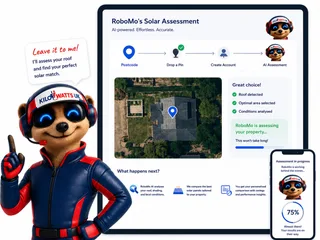
Simply enter your postcode, drop a pin on your roof, create your free account and let RoboMo™ analyse your property to find the best solar panels for your home.

You don't have to think
RoboMo™'s AI analyses your roof and does all the hard work.

Accurate & tailored
AI-powered assessment based on your roof, location, and conditions.

Best options, maximum savings
Compare top solar panels for the best performance and value.

Simple, fast & effortless
Provide a few details, sit back and watch your results unfold.

STEP 1
Choose Home, Business or Industrial
Enter your postcode to start your assessment.
STEP 2

Drop a pin on your roof
STEP 3

Create your free account
STEP 4

Sit back and watch RoboMo™ work
RoboMo™ analyses your roof and builds your personalised solar comparison.

Step 1
Enter your postcode
Start designing your wind energy system in seconds.
Are you an installer, distributor or renewable energy business?
Kilowatts UK is expanding the Flower Turbines partner network across the UK.
Become A Flower Turbines PartnerKilowatts UK is an authorised representative
Flower Turbines
Compact vertical-axis turbines built for real UK sites, not just open farmland.
They start in light wind, sit in a small footprint, and are bird-safe by design. Cluster them as a bouquet and the group performs better together than the same turbines standing alone. Enter your postcode for a location-based generation estimate. Figures use area weather data and will differ if buildings, trees or hills sit in the way.
Starts in light UK wind
Built to generate in typical UK wind, not only open farmland.
Small rooftop or ground footprint
Compact towers for roofs, yards and tight sites.
Bird-safe slow rotation
Slow vertical-axis spin, bird-safe by design.
Bouquet clusters raise output
Grouped turbines outperform the same units standing alone.


STEP 2

Choose a location
STEP 3

Place your cluster
Tap the map where you want the turbine cluster to go.
STEP 4

Instant generation forecasts
Compare different turbine layouts and see annual generation forecasts instantly.
STEP 5

No commitment required
Explore different configurations before deciding whether to request a quotation.
Related articles
Mo's Mission Nominations
FAQ
Need Help? RoboMo's Got Answers
What should a small business check before choosing an electrical installation provider?
Check that the provider has relevant commercial experience, suitable insurance, and can explain how the work will be designed, installed, inspected and tested. Ask for evidence of current trade body or scheme membership if they claim it, but do not rely on logos alone. Make sure they understand your premises, trading hours, critical equipment and any landlord or managing agent requirements.
How can I compare electrical installation quotes fairly?
Compare the scope of work, not just the final price. Check whether each quote includes materials, testing, certification, labelling, waste removal, making good, out-of-hours work and aftercare. If one quote is much cheaper, ask what has been excluded or assumed before making a decision.
What electrical certificates should I expect after commercial electrical work?
The right paperwork depends on the work carried out. New circuits or more substantial installation work will usually need appropriate installation certification, while some smaller alterations may use a Minor Electrical Installation Works Certificate. An Electrical Installation Condition Report is for inspecting and reporting on an existing installation, not certifying newly installed work.
Why is a site survey important before electrical installation work?
A site survey helps the provider understand the existing installation, cable routes, access, distribution boards, earthing arrangements and any safety concerns. It also helps identify how the work may affect trading, staff, customers and equipment. For anything more than a simple job, a quote based only on a phone call can lead to weak assumptions and later extras.
How should an electrical contractor manage disruption to my business?
They should discuss when power needs to be isolated, which areas will be affected, and whether work can be phased around your opening hours. Critical items such as tills, refrigeration, IT systems, alarms, kitchen equipment and machinery should be identified before work starts. A realistic disruption plan is better than a vague promise that everything can stay running.
Should I choose the cheapest electrical installation quote?
Not automatically. A cheaper quote may be good value, but it may also exclude testing, certification, proper containment, suitable materials, out-of-hours work or adequate aftercare. Ask the contractor to explain how their price has been built up and what happens if unexpected issues are found.
Do I need to think about future upgrades when comparing providers?
Yes, especially if you may add equipment, EV charging, solar PV, battery storage, heat pumps or extra machinery later. A good provider should consider load, distribution board capacity, cable routes and practical future expansion where relevant. They should not promise capacity or compatibility without checking the existing installation properly.
What questions should I ask about aftercare and responsibility?
Ask who deals with defects, how quickly they respond, and whether maintenance or inspection support is available after handover. Confirm what warranties apply to workmanship and products, without assuming all parts are covered in the same way. You should also agree how variations, unexpected faults and payment stages will be handled before work begins.