


What to look out for, UK electrical installation companies
Published: 2026-07-19 09:40:10
Updated: 2026-08-01 11:25:45
Trusted Traders, NICEIC, NAPIT, ECA listings, local council trader schemes, Yell and local Facebook groups.
Where to find reviews for electrical installation companies in the UK
You can find reviews for UK electrical installation companies on Google Business Profile, Trustpilot, Checkatrade, TrustMark, Which? Trusted Traders, NICEIC, NAPIT, ECA listings, local council trader schemes, Yell and local Facebook groups. For EV chargers, solar, battery storage or commercial projects, do not rely on reviews alone. Check registration, insurance, relevant experience, certification, quote detail and aftercare before choosing an installer.
Reviews are best used as an early filter. They can tell you a lot about communication, punctuality, tidiness and aftercare, but they do not prove electrical competence. A company can have a strong star rating and still be weak on design, documentation, product suitability, testing or the specific requirements of your property.
For homeowners, a sensible route is to start with local Google reviews, then verify the company through a relevant registration body such as NICEIC or NAPIT. If your installation plans also include renewables, it can help to compare home solar options before deciding which installer route is right for you. For small businesses, reviews should be combined with commercial references, risk assessments, method statements, insurance checks and a properly scoped written quotation.
The best review sources to check first
Google Business Profile is often the most useful starting point because it shows local reviews, recent customer comments, photos and how the company responds to complaints. Search for phrases such as electrician reviews near me, EV charger installer reviews, commercial electrician near me, or NICEIC electrician near me, then add your town, city or postcode.
Trustpilot can be helpful for larger regional or national installation companies, especially where the business handles EV chargers, renewables or multi-site work. It may be less useful for small local electricians who rely more on word of mouth, repeat customers and Google reviews.
Checkatrade, Which? Trusted Traders and TrustMark can help you find reviewed or assessed tradespeople, but they should not be treated as a complete competence check. A listing on a review or trader platform does not automatically mean the installer is suitable for every type of electrical work. For electrical competence, use registration and industry bodies as verification sources rather than simple review sites. NICEIC and NAPIT are common places to check registered electricians and competent person scheme membership. ECA membership can be useful for commercial projects. MCS and RECC are relevant where the work involves solar PV, battery storage or other renewable energy systems. Local council approved trader schemes, Trading Standards-backed schemes and word-of-mouth recommendations can also be useful, particularly for smaller domestic jobs. Treat social media recommendations as leads, not proof. Before booking, verify the exact business name, trading address, insurance and registration details.
What to look for in the reviews
The most useful reviews describe the actual job and how the installer handled it. A review saying “great service” is less helpful than one explaining that the company assessed the supply, gave a clear quote, turned up on time, issued certificates and resolved a problem quickly.
For domestic electrical work, look for comments about tidiness, disruption, certification, quote accuracy and whether the installer explained the work clearly. For EV charger installation, useful reviews may mention the charger model, cable route, app setup, load balancing, DNO delays or whether the installer explained how to isolate and use the charger.
For small businesses, pay close attention to reviews that mention working around opening hours, power shutdown planning, RAMS, insurance paperwork, landlord coordination, distribution board labelling and handover documents. A company with excellent domestic reviews may still be the wrong choice for a shop, office, workshop, warehouse or hospitality site. Strong review patterns include:
- Recent feedback from similar jobs.
- Clear comments about certificates being supplied.
- Evidence of good communication before and after installation.
- Consistent praise for punctuality and tidy work.
- Sensible responses to negative reviews.
- Reviews that mention the type of property, equipment or installation.
Weak review patterns include repeated complaints about missed appointments, unclear costs, certificates not being provided, poor aftercare or unsafe-looking work. One bad review is not always decisive, especially for a larger company, but repeated complaints about the same issue should be treated seriously.
How to check an electrical installation company beyond reviews
Once you have a shortlist, move from opinion to evidence. Online reviews should only be the first filter. Electrical installation work in the UK must be designed, installed, inspected and tested correctly. Domestic work in England and Wales may also be notifiable under Part P of the Building Regulations, depending on the job. Scotland and Northern Ireland use different building control systems, so the correct route depends on your location and project type.
Before you accept a quote, check whether the installer is registered for the type of work being offered. NICEIC and NAPIT registration are commonly used for domestic electrical work and competent person scheme notification. MCS certification is important for many solar PV and battery projects, particularly where export tariffs, warranties or renewable consumer protections may be relevant.
Ask for evidence rather than relying on website claims. The name on the quote should match the business you checked, not just a similar trading name. Companies House can confirm whether a limited company exists and how long it has traded, although registration there does not prove electrical competence. If you are unsure what to check, use a qualified electrician checklist before comparing quotes. You should normally ask for: Registration details for the relevant scheme. Public liability insurance evidence. A written quotation with scope and exclusions. Electrical certificates after the work. Product warranty and workmanship warranty terms. DNO application or notification details if needed. For commercial premises, also ask about employers’ liability insurance if the contractor has employees, professional indemnity insurance where design is included, and health and safety accreditations where your site requires them. Accreditations such as CHAS, SafeContractor or Constructionline can support procurement checks, but they do not replace electrical competence. Building control notification details where required. Confirmation of who will carry out the work, not only who sells it.
How small businesses should compare electrical installation providers
Small businesses should compare electrical installation providers by scope, not just headline price. A cheaper quote may exclude testing, certification, out-of-hours work, making good, DNO liaison, containment, fire stopping or commissioning records. A more expensive quote may include better project management, clearer aftercare, stronger equipment support or less disruption to trading.
Commercial electrical work can involve three-phase supplies, distribution boards, containment, emergency lighting interfaces, landlord approvals, fire compartment penetrations and work around trading hours. An installer who mainly does domestic socket changes may not be the right fit for a workplace EV charger installation or office electrical upgrade.
When comparing providers, give each company the same information. Send photos of the distribution board, meter area, proposed cable routes, parking area, access restrictions and any known issues. For higher-value work, a site survey is usually better than relying only on photos. A practical comparison should include:
Scope
Check whether each quote includes the same labour, equipment, testing, certification and making good.Aftercare
Clarify call-out charges, warranty handling, maintenance options and response times.Paperwork
Request RAMS, insurance, certificates, commissioning records and as-fitted information where relevant.Competence
Confirm the installer has experience with your type of site and electrical system.Disruption
Ask how shutdowns, access, alarms, tills, servers, refrigeration or machinery will be managed.Accountability
Check who is responsible for design, installation, commissioning and warranty support.
If your business is planning EV chargers, ask whether the installer will assess maximum demand, check the earthing arrangement, consider load management and contact the Distribution Network Operator where required. The DNO manages the local electricity network and is not the same as your energy supplier.
Extra checks for EV charger installers
EV charger installation is not just a matter of fitting a box to a wall. The installer should assess the electrical supply, consumer unit or distribution board, earthing arrangement, available capacity, cable route, protective devices and whether DNO notification or approval is needed.
A typical UK home EV charger is often installed on a single-phase supply, while many commercial premises have three-phase supplies that can support higher-capacity AC charging. However, a higher-rated charger is not automatically better. Many vehicles cannot use 22 kW AC charging at full speed, and the site supply may limit what can be installed safely.
Reviews for EV charger companies are most useful when they mention practical details such as load balancing, app setup, Wi-Fi reliability, charger handover, DNO delays and how the installer dealt with unexpected issues. Poor Wi-Fi, weak mobile signal or incompatible smart settings can cause problems even when the electrical installation itself is sound. For workplace chargers, check whether the installer understands parking layout, cable protection, trip hazards, bay marking, signage and whether the chargers will be private, staff-only, visitor-facing or public. Public chargepoints can involve additional requirements, so the intended use matters. Ask an EV charger installer: Whether they have installed the same charger model before. Whether the charger is suitable for UK smart charging requirements. Whether open PEN fault protection or another suitable protective arrangement is needed. Whether dynamic load balancing is recommended. Whether they will test the charger before leaving. Whether they will explain isolation, app setup and basic fault steps. If the property has a limited main fuse, old consumer unit, long cable route, flat entrance, leasehold parking space or listed building constraints, the installation may need more design work and permissions than a standard quote assumes. Before booking, check what is involved in installing an EV charger and whether extra permissions or electrical upgrades may apply. Whether they will handle DNO notification or approval where required. Whether the quote includes any remedial electrical work needed before installation.
Warning signs when reading reviews and quotes
Reviews can be fake, incomplete or misleading. Warning signs include many reviews posted on the same day, repeated wording, reviewers with no other history, only vague five-star comments, or no mention of the actual work completed. Photos can help show neatness, but neat cable routing does not prove electrical safety.
The company’s response to negative reviews can be informative. A clear response explaining what happened and how the issue was resolved is usually more reassuring than a defensive or vague reply. For larger companies, a few negative reviews are normal; the pattern matters more than a single rating.
Treat these as warning signs:
- Refusing to provide evidence of insurance.
- Refusing to provide electrical certification.
- Asking for full payment upfront without a clear reason.
- Giving only a vague verbal estimate.
- Avoiding questions about registration or scheme membership.
- Excluding testing or certification from the quote.
Deposits can be normal where equipment must be ordered, but large upfront payments should be approached carefully. A written quote is safer than a verbal estimate because it should define the scope, equipment, VAT position, payment stages, warranty terms and exclusions. Using cash-only payment pressure. Being unclear about who handles warranty claims. Pressuring you to decide immediately before you can check details. Claiming registration or certification but not providing verifiable details.
What paperwork should you receive after the work
After electrical installation work, the contractor should provide the appropriate electrical certificate for the work completed. This may be an Electrical Installation Certificate or a Minor Electrical Installation Works Certificate, depending on the job. An EICR is different; it is a condition report on an existing installation, not a certificate for newly installed work.
For notifiable domestic work in England and Wales, building control notification may also be required. Competent person scheme registration can allow some installers to self-certify certain types of work, but you should still check that the notification is completed where needed.
For businesses, paperwork may be needed for insurance, landlord files, health and safety records and future maintenance. Commercial projects may also require commissioning records, updated distribution board schedules, as-fitted drawings, RAMS and equipment manuals. Keep copies of: The accepted quotation. Electrical certificates. Building control notification where applicable. Product warranty documents. Workmanship warranty details. DNO correspondence where relevant. If a contractor repeatedly delays or avoids providing certificates, treat that seriously. Certification is part of a properly completed electrical installation, not an optional extra. Handover documents and manuals. Commissioning records for EV chargers, solar PV, batteries or commercial equipment. Updated schedules, labels or drawings where provided.
A practical way to choose with confidence
Start with reviews, but make the final decision using evidence. Shortlist two or three companies with recent reviews for similar work, then check registration, insurance, quote detail, experience and aftercare. For small businesses, add commercial references and paperwork checks before appointing anyone.
The right installer depends on your property, supply capacity, job complexity, budget, location and future plans. A sole trader may be ideal for a small domestic repair. A larger contractor may be better for multi-site business work, tight deadlines or projects involving EV charging, renewables, distribution upgrades or out-of-hours working. You can also use electrical company listings as one starting point for comparing published installer profiles.
For EV chargers and more complex electrical projects, avoid choosing purely on the cheapest price or highest star rating. The better choice is usually the provider who surveys properly, explains constraints clearly, includes testing and certification, and is realistic about permissions, DNO involvement and timescales. If you are still comparing providers, bookmark this checklist and use it while reading reviews and quotes. It can help you separate good marketing from genuine electrical competence.
Plan, Compare & Buy Renewable Energy Solutions
AI does the thinking.
You get the perfect solar match.
Use RoboMo™ to assess your property, compare available technologies and connect with trusted UK installers, suppliers and manufacturers.
Simply enter your postcode, drop a pin on your roof, create your free account and let RoboMo™ analyse your property to find the best solar panels for your home.

You don't have to think
RoboMo™'s AI analyses your roof and does all the hard work.

Accurate & tailored
AI-powered assessment based on your roof, location, and conditions.

Best options, maximum savings
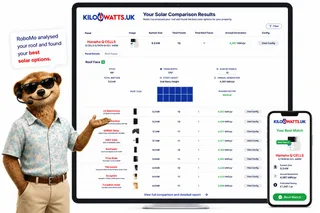
Compare top solar panels for the best performance and value.

Simple, fast & effortless
Provide a few details, sit back and watch your results unfold.
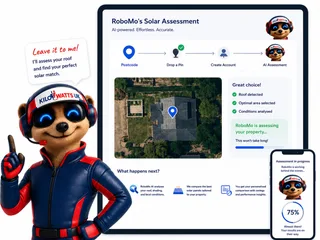
STEP 1
Choose Home, Business or Industrial
Enter your postcode to start your assessment.
STEP 2

Drop a pin on your roof
STEP 3

Create your free account
STEP 4

Sit back and watch RoboMo™ work
RoboMo™ analyses your roof and builds your personalised solar comparison.

Kilowatts UK is an authorised representative
Flower Turbines
Compact vertical-axis turbines built for real UK sites, not just open farmland.
They start in light wind, sit in a small footprint, and are bird-safe by design. Cluster them as a bouquet and the group performs better together than the same turbines standing alone. Enter your postcode for a location-based generation estimate. Figures use area weather data and will differ if buildings, trees or hills sit in the way.
Starts in light UK wind
Built to generate in typical UK wind, not only open farmland.
Small rooftop or ground footprint
Compact towers for roofs, yards and tight sites.
Bird-safe slow rotation
Slow vertical-axis spin, bird-safe by design.
Bouquet clusters raise output
Grouped turbines outperform the same units standing alone.
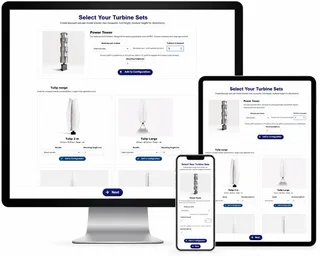
Step 1
Enter your postcode
Start designing your wind energy system in seconds.
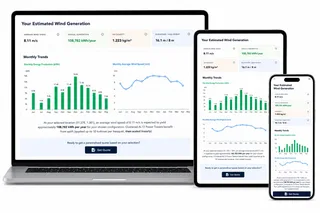
STEP 2

Choose a location
STEP 3

Place your cluster
Tap the map where you want the turbine cluster to go.
STEP 4

Instant generation forecasts
Compare different turbine layouts and see annual generation forecasts instantly.
STEP 5

No commitment required
Explore different configurations before deciding whether to request a quotation.
Related articles
Solar panels
Mo's Mission Nominations
FAQ
Need Help? RoboMo's Got Answers
Where can I find reviews for electrical installation companies in the UK?
You can find reviews on Google Business Profile, Trustpilot, Checkatrade, Which? Trusted Traders, TrustMark, local council approved trader schemes, Yell and local Facebook groups. For electrical competence checks, also use registration bodies such as NICEIC, NAPIT and ECA. Reviews are useful for understanding customer experience, but they should be checked alongside registration, insurance, certification and relevant project experience.
Are online reviews enough to choose an electrician or electrical installation company?
No. Reviews can help you shortlist companies, but they do not prove technical competence or compliance. Electrical work affects safety, insurance and building regulations, so you should also check the installer’s registration, public liability insurance, written quote, certification process, warranty terms and experience with your type of work.
Which review sites are best for local electricians?
Google Business Profile is often the best starting point for local electricians because it shows recent reviews, photos, location details and how the business responds to complaints. Checkatrade, Which? Trusted Traders, TrustMark and local council trader schemes can also be useful, but a listing on a platform should not be treated as a full competence check.
How do I check if an electrician is properly registered in the UK?
Ask for the company’s registration details and verify them directly with the relevant body. NICEIC and NAPIT are commonly used for domestic electrical work and competent person scheme membership. ECA membership may be relevant for commercial contractors. For solar PV, battery storage or some renewable energy projects, MCS certification may also be important.
What should I look for in reviews of electrical installation companies?
Look for reviews that describe the actual job, such as consumer unit upgrades, EV charger installation, solar PV, commercial wiring or remedial work. Useful reviews mention clear quotes, punctuality, tidy workmanship, testing, certificates, aftercare and how problems were resolved. Repeated complaints about missed appointments, unclear costs, poor communication or missing certificates should be treated seriously.
How can I spot fake or unreliable electrician reviews?
Be cautious if many reviews were posted on the same day, use very similar wording, contain only vague praise, or do not mention the type of work completed. Reviews with photos and practical job details are usually more useful. Also check how the company responds to negative feedback, as a professional and specific response can be more reassuring than a defensive or vague one.
What questions should I ask before accepting an electrical installation quote?
Ask whether the installer is registered for the type of work, whether they carry public liability insurance, who will complete the installation, what certificates will be provided, what is included and excluded, and how warranty issues are handled. For larger or more complex work, also ask about design responsibility, DNO involvement, building control notification and aftercare.
What paperwork should I receive after electrical work is completed?
You should receive the appropriate electrical certificate for the work carried out, such as an Electrical Installation Certificate or a Minor Electrical Installation Works Certificate. For notifiable domestic work in England and Wales, you may also need building control notification. For EV chargers, solar, batteries or commercial installations, keep commissioning records, manuals, warranty documents and any DNO correspondence.
What should small businesses check when comparing electrical contractors?
Small businesses should compare the full scope of each quote, not just the headline price. Check whether testing, certification, out-of-hours work, shutdown planning, RAMS, insurance, making good, labelling and handover documents are included. Also confirm the contractor has experience with your type of premises, such as offices, shops, hospitality sites, workshops or warehouses.
What extra checks are important for EV charger installers?
An EV charger installer should assess your electrical supply, consumer unit or distribution board, earthing arrangement, available capacity, cable route and whether DNO notification or approval is needed. Ask whether the quote includes load balancing, app setup, testing, handover, any remedial electrical work and confirmation that the charger is suitable for UK smart charging requirements.
Is the cheapest electrical installation quote a good choice?
Not always. A cheaper quote may exclude testing, certification, remedial work, DNO liaison, making good or aftercare. A better quote should clearly explain the scope, equipment, limitations, payment terms, warranty, certification and any extra costs. For electrical work, the safest choice is usually the installer who surveys properly and provides clear evidence of competence.
What are warning signs when choosing an electrical installation company?
Warning signs include refusing to provide insurance details, avoiding questions about registration, giving only a vague verbal estimate, excluding certification, requesting full payment upfront without clear justification, pressuring you to decide immediately, or being unclear about who handles warranty claims. Missing or delayed electrical certificates after the job are also a serious concern.