


Solar Panel Installation UK: Costs and Process
Published: 2026-08-04 00:55:29
Updated: 2026-08-09 06:00:29
From £6,000 to £16,000+ depending on size, find out what solar panel installation really costs in the UK, how it works, and what you will save.
Overview
Energy bills are rising, the climate conversation is louder than ever, and more UK homeowners are turning to solar power as a practical, long-term solution. But if you have never explored renewable energy before, the world of solar panel installation can feel overwhelming, full of technical jargon, unclear costs, and confusing processes.
The good news is that getting started does not have to be complicated. This guide is designed specifically for those who are new to solar energy and want straightforward, reliable information before making any decisions. Whether you are simply curious or actively considering making the switch, understanding the basics is the essential first step.
In this post, we will break down everything you need to know about solar panel installation in the UK. You will learn what the process actually involves, how much you can realistically expect to pay, what factors influence those costs, and what the experience looks like from initial consultation through to a fully operational system. By the end, you will have a clear and confident understanding of whether solar is the right investment for your home.
What Does Solar Panel Installation Involve?
Solar panel installation is the process of fitting photovoltaic (PV) panels to a property, connecting them through an inverter to the home's electrical system, and registering the system with the Distribution Network Operator (DNO) and the Microgeneration Certification Scheme (MCS). Once registered, the homeowner can generate their own electricity and earn export payments through the Smart Export Guarantee (SEG), the government-backed mechanism that pays households for every unit of surplus electricity sent back to the grid.
The End-to-End Installation Process
The journey begins well before a single panel touches your roof. First, a qualified installer conducts an initial survey, assessing roof orientation, pitch, shading from trees or chimneys, structural integrity, and your household's energy consumption. This data informs the system design, determining how many panels you need and where they should be positioned for maximum generation.
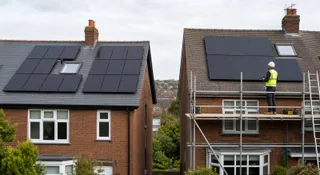
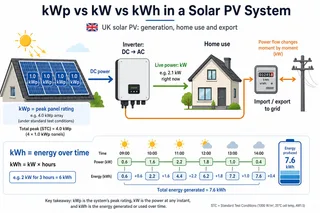
On installation day, scaffolding is erected to provide safe roof-level access, which is a mandatory safety requirement on most residential properties. The panels are then mounted onto the roof structure using specialist racking systems, followed by the connection of DC cabling to an inverter, which converts the direct current generated by the panels into the alternating current your home appliances use. The inverter is typically installed in a loft or garage, with AC cabling then routed to your consumer unit.
Before the system can be switched on, your installer must notify the local DNO. After commissioning and testing, you receive a package of handover documentation including your MCS certificate, an Electrical Installation Certificate (EIC), and DNO confirmation. These documents are required to register for SEG payments through the Smart Export Guarantee.
Solar-Only vs. Solar-Plus-Battery Systems
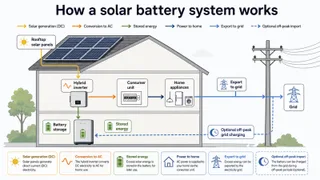
A solar-only system uses a standard string inverter and exports any surplus electricity directly to the grid. A solar-plus-battery system uses a hybrid inverter that first charges the battery from PV generation before exporting the remainder, adding a layer of complexity to commissioning and DNO notification.
What to Expect on Timeline
The physical installation of a standard residential system typically takes one to two days on-site. However, the full process, from initial survey through DNO approval, MCS certification, and SEG registration, commonly takes four to eight weeks. The administrative steps following installation are governed by GOV.UK policy frameworks and MCS quality standards, both of which exist to protect homeowners and ensure systems meet UK grid safety requirements.
The Key Components of a Solar PV System
A complete solar PV system is made up of five core components, each playing a distinct role. Understanding what each one does will help you make more informed decisions when comparing quotes and system specifications.
Solar PV Panels
Panels come in two main types. Monocrystalline panels are made from a single silicon crystal structure, which gives them higher efficiency ratings of around 20–23%, meaning they generate more electricity per square metre of roof space. Polycrystalline panels are made from multiple silicon fragments fused together; they typically achieve 15–17% efficiency and were historically cheaper, though the price gap has narrowed considerably. In 2026, monocrystalline panels dominate new UK residential installations. Most modern panels produce between 350W and 450W each, so using 400W as a working average: a 3kW system needs roughly 8 panels, a 4kW system around 10 panels, and a 5kW system approximately 13 panels. The exact number depends on the specific panel model your installer specifies.
The Inverter
Solar panels generate direct current (DC) electricity, but your home appliances and the national grid run on alternating current (AC). The inverter converts DC into usable AC electricity. String inverters connect all panels to a single central unit; they are cost-effective and reliable but can lose output if one panel is shaded. Microinverters attach to each panel individually, allowing independent operation, which makes them the better choice for roofs with partial shading or complex orientations. Worth noting: research into solar system components shows that 34% of inverters fail within the first 15 years, so factor potential replacement costs into your long-term budget.
Battery Storage
A solar battery stores surplus electricity generated during daylight hours for use in the evening, when panels are no longer producing. Without storage, unused generation is exported to the grid at a relatively low rate. Adding a battery significantly improves self-consumption, the proportion of solar energy your household actually uses directly. Battery adoption has risen sharply; 94% of UK solar installations now include a battery, reflecting both falling costs and the value homeowners place on energy independence.
Smart Meter and Export Meter
To participate in the Smart Export Guarantee (SEG), the government-backed scheme that pays you for surplus electricity exported to the grid, you must have a smart meter or export meter capable of recording half-hourly data. This is a firm Ofgem eligibility requirement. Without a qualifying meter, you cannot register for SEG payments, regardless of how much surplus your system generates. Your installer should confirm meter compatibility as part of the commissioning process; further eligibility detail is published directly by Ofgem on their SEG guidance pages.
Generation Meter and Monitoring App
Most modern systems include a smartphone app connected to your inverter or battery, giving you real-time visibility of how much electricity your panels are generating, how much you are consuming directly, and how much is being exported or drawn from storage. This data is invaluable for understanding your system's performance and adjusting household habits to maximise self-consumption, for example, running dishwashers or washing machines during peak generation hours rather than in the evening.
How Much Does Solar Panel Installation Cost in the UK?
Cost is typically the first question any homeowner asks, and rightly so. The figures below are drawn from the Checkatrade solar panel installation cost guide and GOV.UK Solar PV Cost Data (last updated May 2026), giving you a reliable starting point before you approach a single installer.
| System Size | Property Type | Solar Only | With Battery Storage |
|---|---|---|---|
| 3kW | Terraced house | ~£6,000 | ~£10,500 (5kWh battery) |
| 4kW | Semi-detached | ~£8,000 | ~£16,000 (8kWh battery) |
| 5kW | Small detached | ~£9,000 | Varies by battery size |
Overview
These figures represent fully installed costs including panels, inverter, mounting hardware, cabling, and labour. VAT on residential solar installations is currently 0%, a government measure in place until 2027, which represents a considerable saving versus the standard 20% rate. If you are considering installing, that VAT position creates a meaningful near-term financial incentive.
What Drives the Difference in Price?
No two installations carry exactly the same price tag, and understanding why helps you scrutinise quotes far more effectively. System size in kilowatts is the primary driver: larger systems cost more in total, though the cost per kW typically falls as system size increases. Panel type and tier also matter; monocrystalline panels operate at 20 to 22% efficiency and command a higher price than polycrystalline panels, which typically achieve 15 to 17% efficiency, though they may reduce the total panel count required on your roof.
Inverter specification introduces another variable. String inverters are the most cost-effective option for straightforward roof layouts. Microinverters optimise output at individual panel level, which suits roofs with partial shading but adds to the bill. Hybrid inverters are battery-ready from the outset, making them worth considering if you plan to add storage later. Beyond the hardware, roof complexity and scaffolding requirements significantly affect labour time and, therefore, cost. Steep pitches, multiple roof planes, or unusual shapes all increase the work involved.
Regional Labour Costs: A Factor Most Guides Overlook
One cost variable that rarely appears in national cost guides is regional labour pricing. Homeowners in London and the South East typically face a 10 to 20% labour premium compared with those in Scotland, Wales, and the North of England. This is not because panels or inverters cost more in the South East; hardware prices are broadly consistent across the UK. The differential sits entirely in installer labour rates, which reflect local wage levels and the higher cost of operating a business in those areas. A 4kW system quoted at £8,000 in Yorkshire could reasonably come in at £8,800 to £9,600 for an equivalent installation in Surrey. Relying solely on a national average without benchmarking against local quotes in your area can therefore lead to a distorted expectation.
Understanding the Cost-per-kW Metric in Official Data
When you look at top solar energy statistics for the UK or consult the GOV.UK cost dataset, you will encounter cost-per-kW figures that can appear inconsistent. This is because the government tracks solar PV costs on two separate bases. Declared Net Capacity (DNC) reflects the system's rated output under standard test conditions and is the figure most commonly referenced in installer quotes. Total Installed Capacity (TIC) is the gross nameplate capacity before accounting for conversion losses. Because these two measures produce different denominators, the cost-per-kW figure shifts depending on which basis is applied. When comparing your quote against official benchmarks, always confirm which measurement your installer is using to avoid comparing figures that are not equivalent.
Getting a Fair, Transparent Price
Given the range of variables involved, accepting the first quote you receive is rarely in your best interest. Using kilowatts.uk to compare quotes from vetted, MCS-registered installers gives you the market context needed to identify a fair price. Every installer on the platform has been pre-screened, reducing the risk of inflated figures or opaque line items. Comparing at least three quotes, checking scaffolding costs as a separate line item, and verifying MCS certification are the three steps most likely to save you money before you commit to a single installer.
What Is Included in a Solar Installation Quote?
A compliant solar installation quote should break down every cost centre individually rather than presenting a single figure. The line items you should expect to see include panel supply and fitting, the inverter, mounting hardware, DC and AC cabling, DNO application submission, MCS registration, and commissioning. Panels typically account for only 40 to 50 percent of the final bill, so understanding what makes up the remainder is essential for meaningful comparison between installers.
MCS certification is a legal and practical requirement for any UK residential solar installation. At handover, your MCS-registered installer must provide three specific documents: an MCS certificate for the installation, a system commissioning sheet, and a performance estimate showing predicted annual generation. All three are required to register for and receive payments under the Smart Export Guarantee, the scheme through which energy suppliers pay for surplus electricity exported to the grid. The MCS certificate is typically issued within one week of installation completion.
Always request a fully itemised quote rather than accepting a lump sum. Itemised quotes allow you to compare proposals on a like-for-like basis and identify whether premium components, such as microinverters or in-roof mounting systems, are genuinely justified by the price difference. On VAT, residential solar installations currently attract a 0% rate, confirmed until 2027. Always confirm with your installer whether the quoted price is fully inclusive or whether additional charges may apply after that date. Kilowatts.uk's vetted installer network requires all listed installers to provide itemised quotes as a condition of listing, giving homeowners a consistent baseline of transparency in a market where lump-sum quotes remain common.
Hidden Costs Homeowners Often Miss
Even when you have a detailed quote in hand, several legitimate costs can still catch you off guard. Being aware of them before you sign anything could save you hundreds of pounds and a great deal of frustration.
Scaffolding is perhaps the most common omission. Safe roof access is a legal requirement under the Work at Height Regulations 2005, yet scaffold hire is rarely factored into headline prices shown by online comparison tools. For a standard two-storey semi-detached, expect scaffolding to add £300 to £600 on top of your quoted price. Complex rooflines, hipped roofs, or multi-pitch designs will push that figure higher. Always ask your installer to confirm whether scaffolding is included before you compare quotes side by side.
DNO application fees are another surprise for many buyers. Under Engineering Recommendation G98/G99, your Distribution Network Operator must be notified before any system above 3.68kW (single phase) is energised. Given that UK households are increasingly opting for larger roof arrays, the majority of new domestic installations now exceed this threshold. Some installers absorb the administration cost; others pass on a charge of £50 to £200 directly to the homeowner. Confirm this in writing. Roof survey and remedial work represents the most financially unpredictable hidden cost. If a pre-installation survey uncovers cracked tiles, weakened rafters, or a roof approaching end of life, all remedial work must be completed before panels are fitted. None of this is covered in a standard solar quote, and costs vary significantly depending on the extent of damage found. Warranty gaps are worth scrutinising carefully. Installer labour warranties typically cover only one to two years, whereas manufacturer panel performance guarantees run to 25 years and inverter warranties span five to twelve years. Out-of-warranty inverter replacement costs between £500 and £1,500, a near-certain expense given that inverters have a shorter operational lifespan than panels. Finally, building insurance notification is a legal contractual obligation that is routinely overlooked. Insurers must be informed before installation takes place. Some increase premiums to reflect the added rebuild value; others require updated policy terms. Critically, failure to notify your insurer before installation could invalidate any future claim entirely, whether related to the panels or not. This administrative step costs nothing if handled correctly, but the consequences of ignoring it can be severe.
Does Adding Battery Storage Change the Financial Case?
Without a battery, most homes self-consume only 30–40% of the solar electricity they generate. The rest is exported to the grid, typically earning around 5p per kWh under the Smart Export Guarantee, only for households to buy electricity back at evening peak rates of 27–30p per kWh. A solar battery resolves this imbalance by capturing surplus midday generation and releasing it when demand is highest, pushing self-consumption up to 60–80%. That shift alone can substantially reduce your grid import bill and improve the overall return on your solar investment.
The cost implications are significant and worth examining carefully before committing. According to Checkatrade's 2026 solar installation cost data, adding a 5kWh battery to a 3kW solar system takes the total installed cost from approximately £6,000 to around £10,500. Stepping up to a 4kW system with an 8kWh battery raises the combined figure to roughly £16,000. That incremental spend of £4,500 to £8,000 must be recovered purely through the additional self-consumption savings that the battery enables above what solar panels alone would deliver.
Battery storage makes the strongest financial case for three household profiles in particular. First, homes with high evening energy use, where consumption is naturally concentrated outside solar generation hours, gain the greatest self-consumption benefit. Second, households on time-of-use tariffs that offer discounted overnight electricity rates can charge their battery from the grid cheaply and discharge it during expensive evening periods, stacking savings beyond solar generation alone. Third, EV owners can use a battery to store cheap overnight grid electricity or surplus solar generation for later vehicle charging, significantly improving whole-system economics. It is important to be clear that payback periods for battery-inclusive systems are longer than for solar-only installations. Solar-only systems in 2026 typically pay back in 9–13 years; adding a battery extends this timeline depending on your usage profile, battery size, and the tariff you are on. The additional capital must be justified by your specific circumstances. Before committing, use the Energy Saving Trust savings calculator to model projections based on your actual consumption patterns rather than relying on averages. One further consideration is battery lifespan. Most residential batteries carry 10-year warranties, meaning a unit installed today may require replacement before your solar panels reach end-of-life at 25 or more years. Factor that potential replacement cost into your whole-system return on investment calculations. For a dedicated breakdown of battery costs, leading brands, sizing guidance, and which configurations suit which household types, visit the Kilowatts.uk solar battery storage page for a comprehensive companion guide.
Will Solar Panels Save Me Money? ROI and Payback Explained
For most UK homeowners, the financial case for solar panels rests on two distinct income streams working together. Understanding both is essential before you can make a meaningful judgement about whether installation makes sense for your circumstances.
Reduced Electricity Import: Your Primary Saving
The larger of the two financial benefits is straightforward: every kilowatt-hour your panels generate and your household consumes directly is a unit of electricity you no longer need to buy from the grid. Based on average UK solar irradiance, a south-facing roof, and typical household consumption patterns, a 4kW system is estimated to save around £735 per year on energy bills (Checkatrade, 2026). That figure is a useful benchmark, but it is not a guarantee. East- or west-facing roofs will generate meaningfully less than a due-south installation. Partial shading from chimneys, trees, or neighbouring buildings can reduce output further. Your tariff rate and how much electricity you use during daylight hours will also shift the real-world figure up or down considerably.
Smart Export Guarantee: Earning from Surplus Generation
When your panels produce more electricity than your home is using at that moment, the surplus is exported to the grid. Under the Smart Export Guarantee, administered by Ofgem, licensed energy suppliers with 150,000 or more customers are legally required to offer you a payment for that exported electricity. To qualify, your system must be certified under the Microgeneration Certification Scheme (MCS) and installed by an MCS-accredited installer. SEG income is estimated at up to £360 per year for a 4kW system (Checkatrade, 2026), though this is an upper-range figure. The rate you actually receive depends on the tariff offered by your chosen supplier, since rates are set competitively and vary across the market. Comparing SEG tariffs before registering is strongly advisable; Ofgem maintains a published list of obligated suppliers to help you do so.
Payback Period: Honest Numbers
Combining the estimated £735 in bill savings with up to £360 in SEG income produces a combined annual benefit of approximately £1,095. Set against a typical installed cost of around £8,000 for a 4kW solar-only system, the arithmetic suggests a simple payback period of roughly 7 to 9 years for an optimally positioned installation. That is an encouraging figure, but it reflects near-ideal conditions. Across real-world UK installations in 2026, payback periods more typically range from 8 to 12 years, depending on orientation, shading, household usage, and the SEG rate secured. Since solar panels are generally warranted to perform for 25 years, even a 12-year payback leaves well over a decade of net financial benefit ahead.
One important caveat applies to any projection you see: electricity prices and SEG rates can and do change. Ofgem's price cap has fluctuated significantly in recent years, and any ROI calculation that assumes today's elevated unit rates persist unchanged for two decades is likely to overstate the return. Use conservative price assumptions in your own modelling, and treat optimistic long-term projections with appropriate scepticism.
The Smart Export Guarantee: How Much Can You Earn?
The Smart Export Guarantee (SEG) is the mechanism that pays you for surplus solar electricity you send back to the national grid. Introduced in January 2020, it replaced the Feed-in Tariff and is regulated by Ofgem. Under the scheme, any licensed energy supplier with 150,000 or more customers is legally obliged to offer at least one export tariff to eligible solar owners. The rate itself is not fixed by government; suppliers set their own rates, which means the market is competitive and your earnings depend entirely on which tariff you choose.
To qualify, your system must be MCS certified, have a capacity of 5MW or less, and your property must have a smart meter capable of recording half-hourly export data. A first-generation (SMETS1) smart meter may not meet this requirement, so it is worth confirming your meter specification with your supplier before commissioning.
Rates vary considerably. According to Which?'s SEG tariff comparison, fixed-rate tariffs provide income certainty over a defined term, typically 12 months, while agile or variable tariffs track wholesale prices and can deliver stronger returns during peak demand periods. As of mid-2026, tariffs across the market range from around 6p to 25p per kWh depending on supplier conditions and eligibility criteria. Never accept the first export tariff you are offered. Comparing available SEG tariffs at the point of commissioning, and switching when better rates emerge, can meaningfully improve your annual returns. Kilowatts.uk's Smart Export Guarantee guide covers current rates and explains how to switch SEG provider.
Solar Panel Grants and Government Funding in the UK
Even once you have a clear picture of costs and payback periods, the upfront investment remains a genuine barrier for many households. The good news is that government support exists to reduce or eliminate that barrier for eligible homeowners, and understanding the landscape of available funding is an important step before you request quotes.
Means-Tested Grants for Lower-Income Households
The two primary grant routes available in 2026 are ECO4 (Energy Company Obligation, Phase 4) and the Warm Homes Local Grant. ECO4 is the government's flagship means-tested scheme, funding energy efficiency measures including solar panels for low-income households and those receiving qualifying benefits. It is delivered through energy suppliers and prioritises properties with poor energy efficiency ratings. Crucially, ECO4 is scheduled to close to new applicants on 31 December 2026, so eligible households should treat this as time-sensitive. The Warm Homes Local Grant operates through local authorities across England, targeting households with EPC ratings between D and G who receive certain means-tested benefits. The Great British Insulation Scheme, administered by Ofgem, runs alongside these initiatives as a complementary programme focused on whole-home energy efficiency improvements.
Local Authority Flexibility and Devolved Nation Schemes
Beyond the headline schemes, local councils have flexibility under what is known as ECO Flex to refer households that fall outside standard ECO4 criteria; for example, those with a low income who do not receive qualifying benefits. Eligibility varies significantly by area, so checking directly with your local council is essential. In Scotland and Wales, devolved administrations operate separate frameworks that may provide additional support, and a ring-fenced allocation from the broader Warm Homes Plan has been set aside for devolved nations. Specific programme details for Scotland, Wales, and Northern Ireland continue to evolve, so readers in those nations should consult their devolved government's official channels for current availability.
VAT at 0%: A Saving Available to Every Household
Separate from means-tested grants, one financial benefit applies to all homeowners regardless of income. VAT on residential solar panel installations in Great Britain was reduced to 0% in 2022 following Treasury guidance, and was subsequently extended to include standalone battery storage in February 2024. Before 2022, the standard 20% VAT rate applied, meaning the current policy represents a substantial structural saving on every installation. For a system costing £8,000, that equates to £1,600 that you no longer pay. This relief is currently confirmed through to March 2027.
Because eligibility criteria and funding caps across all grant schemes change regularly, citing specific figures here risks misleading readers within months of publication. For the most current terms, visit GOV.UK directly and contact your local council about area-specific availability. For a consolidated overview of active schemes with eligibility checkers, kilowatts.uk's dedicated solar panel grants page brings these together in one place and is updated as policy changes.
It is also worth noting that kilowatts.uk runs its own community initiative to provide free solar panel installations to energy-struggling households who may not qualify through official channels. This programme reflects a wider commitment to making renewable energy accessible regardless of income, and stands as a practical resource for households who have explored grant routes without success. For a full breakdown of solar panel grants available in the UK, including scheme-by-scheme comparisons, independent guides can help you identify which route is most relevant before you speak to an installer.
Is My Home Suitable for Solar Panels?
Once you have a clear picture of costs and incentives, the practical question becomes whether your property can actually host a well-performing system. The honest answer, for most UK homes, is yes in some form. The more useful question is not whether installation is possible, but what your realistic generation output will be.
Roof Orientation and Pitch
South-facing roofs at a pitch of 30 to 40 degrees deliver the maximum annual solar generation in the UK climate. South-east and south-west orientations are also strong performers, typically losing only around 5 to 10% of potential output compared with true south. East or west-facing roofs generate approximately 15 to 20% less than a south-facing equivalent over the course of a year, but they remain financially viable in many cases, particularly as electricity prices remain elevated. North-facing roofs are generally not recommended; reputable installers will not propose a north-facing installation where the economics do not support it, and treating this as a quality indicator when evaluating quotes is worth doing. Most properties have multiple roof planes, so a north-facing front elevation does not automatically rule out a productive rear or side surface.
Shading and Pre-Installation Analysis
Shading deserves careful attention because even partial shadow from a chimney stack, a neighbouring roofline, or an overhanging tree can disproportionately reduce system output. The effect is most pronounced on conventional string inverter systems, where a shadow across a single panel can drag down the performance of every panel connected to that string. Microinverters and power optimisers address this by allowing each panel to operate independently, making them the preferred recommendation for roofs with intermittent shading. A credible pre-installation survey should always include a shading analysis, whether conducted using dedicated tools such as a solar pathfinder or through software modelling, to quantify the real-world impact before you commit.
Roof Condition, Structural Load, and Alternatives
Because solar panels carry a design life of 25 to 30 years, the condition of your existing roof covering matters considerably. If your roof is within roughly ten years of needing replacement, re-roofing before installation avoids the later expense of removing and refitting panels. A structural assessment is standard practice for older properties or those showing any signs of rafter stress, since modern panels weigh approximately 10 to 15 kg each and mounting hardware adds further load. For properties without a suitable pitched roof, both flat roof and ground-mounted systems are technically feasible using appropriate racking. Flat roof installations typically use angled frames to achieve the optimal tilt, whilst ground-mounted arrays may fall under permitted development rights or require full planning permission depending on their size and proximity to boundaries. Properties in conservation areas or those with listed building status require separate consent regardless of system type; planning rules can also vary across England, Scotland, Wales, and Northern Ireland, so always verify locally. You can find detailed guidance on what different roof types can support in the Roof Suitability Guide for Solar Panels in the UK.
Planning Permission and Permitted Development Rules
In England, most domestic roof-mounted solar installations are covered by permitted development rights under Class A, Schedule 2, Part 14 of the Town and Country Planning (General Permitted Development) (England) Order 2015. This means the majority of homeowners do not need to submit a formal planning application before installation, provided specific conditions are satisfied.
Those conditions are worth understanding clearly. Panels must not protrude more than 200mm from the roof surface, must not be installed above the highest point of the roof, and must be sited to minimise visual impact as far as practicable. Critically, equipment must be removed when it is no longer needed. A November 2023 regulatory update also introduced a flat-roof allowance, permitting equipment up to 600mm above the highest part of a flat roof, a change many homeowners are still unaware of.
Listed buildings and conservation areas require particular attention. Listed building consent is needed before any solar installation on a listed property, and panels visible from a highway are generally refused. The UK contains approximately 11,300 conservation areas, so a significant number of homeowners will need to consult their Local Planning Authority or conservation officer before proceeding rather than assuming permitted development applies. Scotland, Wales, and Northern Ireland each operate under separate permitted development frameworks. Scotland has notably removed its previous 50kW upper limit for rooftop installations. Always verify current rules through the Planning Portal or the relevant national planning authority for your nation. MCS-certified installers are required to advise clients on their planning obligations as part of the installation process. If your installer does not raise the planning question, treat that as a warning sign regarding their compliance standards.
How to Choose a Qualified Solar Panel Installer
MCS (Microgeneration Certification Scheme) certification is the non-negotiable starting point when evaluating any solar installer in the UK. It is a government-recognised quality mark for small-scale renewable energy installations under 50kW, operated with the support of the Department for Energy Security and Net Zero. MCS certification confirms that an installer has been assessed against PAS 2030 standards, employs staff with appropriate electrical qualifications, maintains documented quality management systems, and carries both professional indemnity and public liability insurance. Products used in the installation, including panels, inverters, and mounting systems, must also meet MCS product certification standards. Crucially, only installations completed by MCS-certified installers qualify for the Smart Export Guarantee (SEG), which means choosing an uncertified installer directly disqualifies you from being paid for the electricity you export to the grid. You can verify any installer's current certification status through the MCS installer search tool at mcscertified.com before accepting a quote.
What to Check Beyond MCS Certification
MCS sets the floor, but it should not be the only box you tick. Before appointing any installer, confirm that their public liability and professional indemnity insurance is current and valid, not simply that they held it when they applied for certification. Check their Companies House registration and look for a genuine trading history of at least two to three years; workmanship warranties are only meaningful if the company behind them is still trading. Seek out verifiable customer reviews on independent platforms rather than relying on testimonials hosted on the installer's own website. You should also ask for a clear, written complaints handling procedure before signing anything, as this gives you a defined route for recourse if issues arise after installation. Membership of the Renewable Energy Consumer Code (RECC) provides an additional layer of protection, binding installers to conduct standards covering sales practices, contract terms, and aftercare, with independent dispute resolution available if needed.
How Kilowatts.uk Vets Its Installer Network
Not all comparison platforms apply the same standards. Kilowatts.uk checks every installer in its network against MCS certification status, insurance validity, trading history, and customer review scores before they are listed. This is a fundamentally different model from open directories where any installer can self-register without independent verification. Given that a solar installation is a 25-year investment in your home, the difference matters considerably.
Getting Comparable Quotes
Obtain at least three quotes and ensure each one covers an identical system specification so you are making a genuine like-for-like comparison. The introduction of MCS 032 in 2025 now requires installers to provide consistent, clear performance estimates before installation, making this process more straightforward. The cheapest quote is rarely the best; differences in panel grade, inverter quality, workmanship warranty length, and what is explicitly excluded can significantly affect long-term value and reliability.
Red Flags to Watch For
Several warning signs should prompt you to walk away. Any installer who cannot immediately supply their MCS certificate number for independent verification should be treated with serious caution. Reject any quote that lacks a clear, itemised breakdown of equipment, labour, and all inclusions. High-pressure tactics, particularly any pressure to sign on the same day, are a recognised indicator of poor sales practice. Finally, be wary of offers framed as "free solar panels." These arrangements typically involve rent-a-roof or lease schemes with lengthy, complex contracts that restrict your control over the system and can create complications when you come to sell your property.
Questions to Ask Before Signing a Contract
Before you sign anything, ask every prospective installer these five questions in writing. A reputable company will answer each one without hesitation. Reluctance or vagueness is itself useful information.
"What is your MCS certificate number, and can I verify it?" Every installer carrying out a domestic solar installation in the UK must hold a valid MCS (Microgeneration Certification Scheme) certificate. Ask for the certificate number and check it independently on the MCS public database at mcscertified.com. Without valid MCS certification, you cannot access the Smart Export Guarantee, and your installation will not qualify for insurance-backed warranty protection.
"Does this quote include scaffolding, DNO application, and commissioning?" These are distinct cost components that are not always bundled into a headline figure. The DNO (Distribution Network Operator) application, G98 or G99 form submission, scaffolding erection, commissioning, and testing are all separate stages. Request a fully itemised written quote so there are no surprises after work begins. "What warranties apply to panels, the inverter, and your workmanship?" Three separate warranties govern a solar installation. Panel performance warranties typically run to 25 years. Inverter warranties are shorter and vary by product. Installer workmanship warranties should cover a minimum of five years. Confirm who you contact if a fault arises after the workmanship warranty expires, including direct manufacturer contact details. "Will you provide a written performance estimate, and what assumptions does it use?" A credible installer should confirm your predicted annual kWh generation in writing at the quotation stage, based on your roof orientation, pitch, shading analysis, and local irradiation data. A verbal figure carries no weight if you later need to dispute underperformance. "Who handles the MCS certificate and SEG registration?" The installer is responsible for issuing your MCS certificate promptly after commissioning. Without it, you cannot register with a licensed SEG provider to receive payment for surplus electricity. Confirm in the contract exactly who completes each piece of paperwork and within what timeframe.
Solar, Battery Storage, and EV Charging: The Whole-Home Energy Approach
The dominant shift in home energy for 2026 is not simply adding solar panels but building a fully coordinated whole-home energy system. In this model, solar panels generate electricity during daylight hours, a home battery stores whatever surplus generation would otherwise be exported to the grid, and a smart EV charger draws from that stored solar power overnight rather than pulling from the grid at peak rates. Layered on top of this, specialist time-of-use tariffs allow the battery to import cheap grid electricity during low-demand overnight periods and then deploy it when grid rates are highest. Each component amplifies the value of the others in ways that a standalone solar installation simply cannot replicate.
The Financial Case for Going Further Than Solar Alone
The numbers make a compelling argument. According to Energy Saving Trust analysis, an electric vehicle charged primarily from solar generation and stored battery power rather than from the grid can deliver additional annual savings of £500 to £1,000 or more, depending on annual mileage and the homeowner's current electricity tariff. When you consider that a 4kW solar system already saves around £735 per year on energy bills, adding an EV charger into the equation can meaningfully accelerate the overall return on investment.
Heat pumps fit naturally into this same ecosystem. Because a heat pump can be scheduled flexibly, running it during the hours of peak solar output and storing that thermal energy in a buffer tank reduces reliance on grid electricity significantly. This makes the heat pump a time-flexible load rather than a fixed one, which is a useful characteristic when you are trying to maximise the proportion of solar generation consumed on-site.
The Recommended Sequence for Building Your System
Most installers and financial advisers in 2026 recommend a phased approach: solar panels first, a battery added within one to three years as battery costs continue to fall, and then an EV charger as vehicle adoption grows. This sequence avoids oversizing any single component prematurely and ensures each addition is sized correctly relative to what already exists.
Planning all three stages together from the outset still makes sense, even if you procure them separately over time. Kilowatts.uk allows homeowners to compare quotes for solar panels, battery storage, and EV charging installation through a single platform, making it straightforward to plan an integrated system and source vetted installers for each stage without starting the research process from scratch each time.
Frequently Asked Questions About Solar Panel Installation
How much does solar panel installation cost in the UK in 2026?
Solar-only system costs in 2026 range from approximately £6,000 for a 3kW system in a terraced house up to £9,000 for a 5kW system in a small detached home. The most common residential size, a 4kW system suited to a semi-detached property, costs around £8,000 installed. Adding battery storage increases the total significantly: a 3kW system with a 5kWh battery typically costs around £10,500, while a 4kW system with an 8kWh battery can reach £16,000. These figures are drawn from Checkatrade's April 2026 cost guide, verified by CIOB and RICS estimators, and are consistent with GOV.UK Solar PV Cost Data last updated May 2026.
Do I need planning permission to install solar panels?
In England, most domestic roof-mounted solar installations qualify as permitted development under Class A, Schedule 2, Part 14 of the Town and Country Planning (General Permitted Development) Order 2015, meaning no planning application is required. Conditions apply: panels must not protrude more than 200mm beyond the roof plane and must be removed when no longer needed. Listed buildings, properties in conservation areas, and Article 4 Direction zones are excluded from permitted development rights. Scotland, Wales, and Northern Ireland each operate separate planning frameworks, so homeowners in devolved nations should verify requirements with their local planning authority before proceeding.
How do I know if my roof is suitable for solar panels?
South-facing roofs at a 30 to 40 degree pitch deliver optimal solar output in the UK. South-east and south-west orientations are viable alternatives, typically producing a modest reduction in annual generation. Key factors to assess include shading from chimneys, trees, or neighbouring buildings; the structural condition of the roof tiles; and available area (a 4kW system requires approximately 25 to 30m²). A professional pre-installation survey including a shading analysis is an essential step, not an optional extra.
Are there government grants available for solar panels in 2026?
There is no universal solar grant available to all UK households, but several targeted support mechanisms exist. ECO4, which runs until 31 December 2026, can fund solar as part of a whole-house package for low-income or benefit-receiving households. 0% VAT on qualifying residential solar panels and battery storage currently applies until 31 March 2027. Local authority schemes, Solar Together group-buying rounds, and devolved nation programmes in Scotland and Wales offer further routes for eligible properties. Eligibility typically depends on benefit status, EPC rating, and property type; check GOV.UK and your local council for current criteria.
---
How long before solar panels pay for themselves?
For a well-sited 4kW solar-only system, the realistic payback period is 8 to 12 years, factoring in annual bill savings of approximately £735 and SEG earnings of up to £360, giving a combined annual benefit of around £1,095. Solar-plus-battery systems typically take 12 to 16 years to pay back, though integrating an EV charger and using a specialist solar tariff can shorten this. Payback varies with roof orientation, household electricity consumption, and prevailing tariff rates, so treat these figures as benchmarks rather than guarantees.
Is Solar Panel Installation Worth It in 2026?
The financial case for solar in 2026 is compelling. A 4kW system costs around £8,000 installed, saves approximately £735 per year on energy bills, and can earn up to £360 per year through the Smart Export Guarantee. Combined, that points to a realistic payback of 8 to 12 years, with panels continuing to generate returns across their 25-year lifespan thereafter.
To protect that investment, choosing an MCS-certified installer is essential. Certification is required to access SEG payments and ensures your system meets recognised quality standards. Always request at least three itemised quotes and ask specifically about scaffolding costs, DNO application fees, and inverter warranty terms before signing anything.
Looking ahead, falling battery prices and rising EV adoption are strengthening the whole-home energy case further, making 2026 a particularly strong year to act before potential supply chain pressures push costs higher. You can compare quotes from vetted, MCS-certified solar installers at kilowatts.uk. Kilowatts.uk also supports energy-struggling households through its free solar panel initiative, reflecting a genuine commitment to making clean energy accessible to every UK home.
Conclusion
Solar panel installation does not need to feel overwhelming. By understanding the core costs involved, the step-by-step process, and what to realistically expect throughout your journey, you are already better equipped to make a confident, informed decision.
To recap the key takeaways: installation costs vary based on your home size and energy needs; the process runs smoothly when you work with a reputable, MCS-certified installer; and the long-term savings on energy bills make solar a genuinely worthwhile investment for most UK homeowners.
The best next step is simple. Get a quote from a trusted local installer and see exactly what solar could look like for your property. Thousands of UK homeowners have already made the switch and are reaping the rewards. Now it could be your turn.
Plan, Compare & Buy Renewable Energy Solutions
AI does the thinking.
You get the perfect solar match.
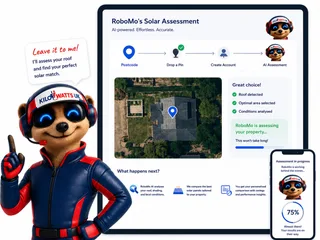
Use RoboMo™ to assess your property, compare available technologies and connect with trusted UK installers, suppliers and manufacturers.
Simply enter your postcode, drop a pin on your roof, create your free account and let RoboMo™ analyse your property to find the best solar panels for your home.

You don't have to think
RoboMo™'s AI analyses your roof and does all the hard work.

Accurate & tailored
AI-powered assessment based on your roof, location, and conditions.

Best options, maximum savings
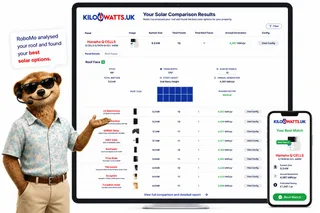
Compare top solar panels for the best performance and value.

Simple, fast & effortless
Provide a few details, sit back and watch your results unfold.
STEP 1
Choose Home, Business or Industrial
Enter your postcode to start your assessment.
STEP 2

Drop a pin on your roof
STEP 3

Create your free account
STEP 4

Sit back and watch RoboMo™ work
RoboMo™ analyses your roof and builds your personalised solar comparison.

Step 1
Enter your postcode
Start designing your wind energy system in seconds.
Are you an installer, distributor or renewable energy business?
Kilowatts UK is expanding the Flower Turbines partner network across the UK.
Become A Flower Turbines PartnerKilowatts UK is an authorised representative
Flower Turbines
Compact vertical-axis turbines built for real UK sites, not just open farmland.
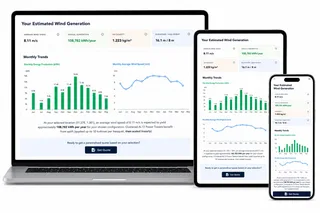
They start in light wind, sit in a small footprint, and are bird-safe by design. Cluster them as a bouquet and the group performs better together than the same turbines standing alone. Enter your postcode for a location-based generation estimate. Figures use area weather data and will differ if buildings, trees or hills sit in the way.
Starts in light UK wind
Built to generate in typical UK wind, not only open farmland.
Small rooftop or ground footprint
Compact towers for roofs, yards and tight sites.
Bird-safe slow rotation
Slow vertical-axis spin, bird-safe by design.
Bouquet clusters raise output
Grouped turbines outperform the same units standing alone.

STEP 2

Choose a location
STEP 3

Place your cluster
Tap the map where you want the turbine cluster to go.
STEP 4

Instant generation forecasts
Compare different turbine layouts and see annual generation forecasts instantly.
STEP 5

No commitment required
Explore different configurations before deciding whether to request a quotation.
Related articles

Mo's Mission Nominations
FAQ
Need Help? RoboMo's Got Answers
How much does solar panel installation cost in the UK?
The cost varies by system size, roof layout, equipment choice, scaffolding needs and whether you add battery storage. A larger system usually costs more overall, but the price per kW can be lower. The safest approach is to compare at least three itemised quotes from MCS-certified installers.
What does the solar panel installation process involve?
A typical installation starts with a home survey to assess roof space, shading, orientation and your electricity use. The installer then designs the system, arranges any required DNO notification or application, fits the panels and inverter, and commissions the system. You should receive handover documents including electrical certification and evidence needed for export payments.
How long does a solar installation take?
The physical installation on a standard home often takes one or two days once scaffolding and equipment are ready. The wider process can take several weeks because surveys, quotations, DNO paperwork, certification and SEG registration all take time. More complex roofs or battery systems may take longer.
Do I need a battery with my solar panels?
You do not have to install a battery, but it can help you use more of the electricity your panels generate. Without a battery, surplus electricity is normally exported to the grid. Whether a battery is worthwhile depends on your daytime electricity use, tariff, budget and how much backup or flexibility you want.
Can I get paid for exporting solar electricity to the grid?
Yes, eligible households can apply for Smart Export Guarantee payments from participating energy suppliers. You will usually need a suitable smart meter or export meter and evidence that the installation meets the required standards, such as MCS certification or equivalent. Export rates vary by supplier, so compare tariffs before choosing one.
Do I need planning permission for solar panels?
Many domestic solar panel installations in the UK fall under permitted development rights, but this is not always the case. You may need extra checks if your home is listed, in a conservation area, has a flat roof, or if the panels would be especially visible or protrude significantly. Your installer or local planning authority can confirm what applies to your property.
What should be included in a solar panel quote?
A good quote should itemise the panels, inverter, mounting system, cabling, labour, scaffolding, battery if included, DNO paperwork, commissioning and certification. It should also show the expected annual generation and any assumptions used, such as shading or roof orientation. Avoid comparing quotes on headline price alone, as cheaper equipment or missing items can affect long-term value.
Is my roof suitable for solar panels?
Suitability depends on roof size, direction, pitch, shading, condition and available space for equipment such as an inverter or battery. South-facing roofs often perform well, but east- and west-facing roofs can still be viable. A proper survey should identify any structural, shading or access issues before you commit.