


What is EPVS? How it Matters for Solar Panel Quotes
Published: 2026-07-18 15:16:22
Updated: 2026-07-26 18:36:24
In UK solar panel quotes, EPVS is used to check whether predicted generation, bill savings, export income.
What is EPVS and why does it matter?
EPVS stands for Energy Performance Validation Scheme. In UK solar panel quotes, EPVS is used to check whether predicted generation, bill savings, export income, and payback claims have been calculated using recognised and reasonable assumptions. It is designed to protect customers from exaggerated financial claims, but it does not guarantee future savings, system performance, or installer quality.
In simple terms, EPVS is a quote-validation scheme for the numbers in a solar proposal. It looks at whether the performance and financial claims are reasonable for the system being sold. For solar PV, that means the estimate should reflect the proposed panels, inverter, roof orientation, roof pitch, shading, electricity usage, import tariff, export tariff, and battery assumptions if one is included.
A few key terms are worth defining before comparing quotes.
MCS
The Microgeneration Certification Scheme, which relates to recognised product and installation standards for renewable energy systems.kWh
Kilowatt-hour, the unit used to measure electricity generated or consumed.kWp
Kilowatt peak, the rated size of a solar panel system under standard test conditions.EPVS
A scheme that checks the calculation method behind predicted energy generation, savings, export income, and payback claims.Solar PV
Solar photovoltaic panels that generate electricity from daylight.Smart Export Guarantee
The UK scheme that requires licensed electricity suppliers above a certain size to offer payment for eligible exported low-carbon electricity, subject to supplier terms.
A useful summary is this. The practical value is not that EPVS makes every quote perfect. Its value is that it gives you a clearer basis for asking questions before you sign a solar installation contract. EPVS checks the method behind solar savings claims. EPVS helps customers compare solar panel quotes more fairly. EPVS does not replace installer checks or proper technical design. EPVS is not the same as MCS certification. EPVS does not guarantee future savings. EPVS is most useful when payback claims look unusually optimistic.
How EPVS protects customers comparing solar panel quotes.
Solar panel quotes can look very different even when the proposed systems are similar. One installer may assume higher self-consumption, another may use a stronger export tariff, and another may rely on optimistic future electricity price assumptions. EPVS helps bring those assumptions into the open.
For example, imagine two quotes for a similar 4 kWp solar PV system on the same UK home. Both may estimate broadly similar annual generation, but one quote could show a much shorter payback period because it assumes the household uses a high proportion of solar electricity directly. That may be realistic for someone who works from home, runs appliances in the daytime, or charges an EV during daylight hours. It may be unrealistic for a household that is usually empty during the day.
Another example is a quote that includes a battery. A residential solar battery storage system can increase self-consumption by storing surplus solar electricity for later use. However, a battery does not create extra solar generation. If a calculation assumes that nearly all spare solar energy will be stored and used later, the saving may be too optimistic, especially if the battery is small, the household already uses much of its solar directly, or export rates are attractive. A third example is export income. Two quotes may use different Smart Export Guarantee tariff assumptions. If one quote assumes a high export rate that the customer is not eligible for, or that may require switching supplier or meeting specific conditions, the projected payback could be misleading. EPVS helps expose those assumptions so they can be challenged. For customers, the main protection is transparency. EPVS gives you a way to compare the assumptions behind a solar quote rather than only comparing the final price, headline saving, or advertised payback period.
EPVS is not the same as MCS.
EPVS and MCS are often mentioned in the same conversation, but they cover different parts of the consumer protection picture. MCS stands for Microgeneration Certification Scheme. It is mainly concerned with recognised standards for renewable energy products and installations. EPVS is mainly concerned with the accuracy and reasonableness of predicted performance and financial savings claims.
This distinction matters because a solar PV system can be technically well installed but still be sold using optimistic financial assumptions. It is also possible for a quote to include an EPVS-validated savings estimate while the customer still needs to check installer accreditation, contract terms, warranties, insurance, reviews, and cancellation rights.
MCS
Relates to recognised installation and product standards for renewable systems.EPVS
Checks the calculation method behind performance and savings claims.Customer checks
Cover the contract, installer reputation, warranties, payment terms, cancellation rights, and aftercare.Smart Export Guarantee
The mechanism through which eligible exported solar electricity can be paid for by participating energy suppliers.
MCS certification is also commonly needed for access to Smart Export Guarantee tariffs, depending on the energy supplier’s requirements. EPVS does not replace that. A strong solar quote should make both the technical credentials and the savings assumptions clear. The safest approach is to treat EPVS and MCS as complementary, not interchangeable. MCS helps answer “is this installation being delivered to recognised standards?” EPVS helps answer “are the quoted performance and savings claims being calculated sensibly?”
What should be on an EPVS-validated solar quote?
An EPVS-validated solar quote should relate to the actual system being proposed, not a generic example. If the design changes after survey, the validation may need updating. A certificate based on an early desktop estimate is less useful if the final roof layout, battery size, inverter, or export arrangement is different.
A good solar panel quote should make the key assumptions easy to find. These are the details worth checking before relying on the payback figure.
Property address. Proposed system size in kWp. Panel and inverter details. Battery capacity if included. Roof orientation and roof pitch. Shading assumptions. The quote should also be clear about what is included in the price. Scaffolding, bird protection, monitoring equipment, electrical upgrades, DNO work, and roof access can all affect cost. A quote with a strong-looking payback is less useful if important installation costs have been left out. A common mistake is comparing only the headline savings figure. A better approach is to check whether each installer has modelled the same roof, system size, tariffs, and household usage pattern. If you want to sense-check options side by side, you can compare home solar panel options before relying on a single payback claim. It is also worth checking whether the quote separates savings from avoided import, income from exported electricity, and any assumed future tariff changes. These are different things. Avoided import depends on how much solar electricity you use in the home. Export income depends on the tariff you receive for electricity sent to the grid. Future tariff assumptions are forecasts, not guarantees. Estimated annual generation in kWh. Estimated self-consumption and export. Import electricity rate used. Export tariff used. Estimated annual bill saving. Estimated payback period.
How EPVS fits into real solar quote decisions.
In real projects, the best quote is not always the one with the shortest payback. Solar performance depends on the roof, the design, the household’s consumption pattern, and the financial assumptions used in the calculation. EPVS helps with part of that decision, but it does not remove the need for judgement.
A typical UK domestic solar PV system is often around 3 kWp to 6 kWp. Smaller homes may suit a 3 kWp system, while many three-bedroom homes are commonly quoted around 4 kWp. Larger roofs or higher electricity use may support 5 kWp to 6 kWp or more, subject to roof space, electrical design, and grid connection constraints. If you are unsure what that means in panel count, see this guide to how many solar panels a UK home needs.
Generation estimates should be based on the actual roof planes. A south-facing roof usually gives the strongest annual output, but east-west roofs can still be useful because they spread generation across the day. A north-facing roof is usually more difficult to justify in the UK, although the answer depends on roof pitch, shading, electricity prices, and installation cost. For example, a south-facing roof with little shading may produce a stronger annual yield than an east-west roof of the same size. However, an east-west layout may better match morning and evening electricity use. A quote that simply states a payback period without explaining the roof model, generation profile, and self-consumption assumptions is harder to trust. Shading is one of the details that customers often underestimate. Chimneys, dormers, nearby buildings, and trees can reduce output materially. Optimisers or microinverters can help some shaded or complex roofs, but they do not remove the physical loss caused by shade. If a quote assumes little or no shading, the installer should be able to explain how that has been assessed. Grid connection assumptions also matter. Small domestic systems are often notified under G98 if they meet the relevant limit, while larger systems or higher export capacity may need G99 approval before installation. If export is limited, the savings calculation should reflect that where it affects the design. This is where EPVS can support a better buying decision. It encourages the quote to show the assumptions behind the claimed result. That does not mean the cheapest quote, largest system, or shortest payback is automatically the best option. It means the numbers should be open enough for you to compare them properly.
What EPVS does not guarantee.
EPVS validates the savings calculation method, not the future. Your actual savings will still depend on weather, household behaviour, tariff changes, equipment performance, export rates, and whether you use electricity when the system is producing.
This is one of the main limitations of EPVS. A quote can be EPVS-validated and still produce real-world results that differ from the estimate. That does not necessarily mean the quote was wrong. It may mean the household used electricity differently, the weather was poorer than expected, export tariffs changed, or the system experienced shading or downtime.
This is especially important for battery quotes. A battery can improve savings where there is enough surplus solar or where time-of-use tariffs are used well. It may have a weaker financial case if the household already uses most of its solar directly, if the battery is oversized, or if export payments are high enough to make exporting more attractive. EPVS also does not guarantee that the installer is the cheapest, most suitable, or most reliable option. You still need to review the full contract and technical proposal.
- Check installer accreditation and consumer code membership.
- Check product warranties and workmanship warranty.
- Check insurance and company history.
- Check payment schedule and cancellation rights.
- Check whether the final design matches the validated quote.
- Check whether the quote includes all expected installation costs.
Solar panels do not usually reduce the electricity standing charge, so standing charges should not normally be counted as a solar saving. Lifetime calculations should also be treated carefully if they ignore inverter replacement, battery degradation, maintenance, or panel performance decline. The balanced view is this: EPVS is a useful consumer safeguard, but it is not a performance warranty, financial guarantee, survey, installation standard, or substitute for due diligence. Check whether the export tariff is available to you. Check whether battery degradation or inverter replacement has been considered in longer-term projections.
How to use EPVS when comparing solar quotes.
The best way to use EPVS is as a questioning tool. If one solar quote shows much higher savings than the others, ask which assumptions are driving the difference. The answer may be valid, but it should be explainable.
Start with the system size and estimated annual generation. UK solar output is usually measured in kilowatt-hours per year, and a broad UK rule of thumb is around 700 to 1,100 kWh per year per kWp installed. Southern England usually produces more than northern England and Scotland, while shading and roof orientation can move a project outside simple rules of thumb. For more context, read how much electricity solar panels generate in the UK.
Then look at self-consumption. A household that works from home, has an EV at home during daylight hours, or can time appliances may use more solar directly. A household that is empty all day may export more unless it has a suitable battery or other flexible load. This difference can change the savings figure substantially. A practical comparison might look like this. Quote A assumes moderate self-consumption, a realistic export tariff, and a longer payback. Quote B assumes very high self-consumption, a generous export rate, and a shorter payback. Quote C includes a battery, but the saving depends heavily on using stored electricity every evening. Quote B or C may still be suitable, but only if the assumptions match the household. EPVS helps you ask whether the savings come from the solar design itself or from optimistic modelling. Finally, check the tariff assumptions. Import electricity prices and export tariffs strongly affect projected savings and payback. Smart Export Guarantee rates vary between suppliers, and future electricity price assumptions can make a payback period look shorter or longer. EPVS can help expose these assumptions, but it cannot predict future tariff markets.
A practical checklist before accepting a solar quote.
Before signing, ask the installer to confirm that the EPVS validation matches the surveyed design. If panels have moved to a different roof plane, a battery has been added, the inverter has changed, or the export arrangement has been revised, the savings estimate should be updated. A free home energy survey can also help you compare the practical design assumptions behind a quote.
- Has each roof plane been modelled separately.
- Has shading from chimneys, trees, and nearby buildings been included.
- Is the system size shown in kWp.
- Is the battery usable capacity clear.
- Is the export tariff realistic for your supplier.
- Are scaffolding and electrical upgrades included.
EPVS is a useful safeguard, especially when comparing solar panel quotes with very different savings claims. It should sit alongside MCS, a proper technical survey, clear warranties, sensible tariff assumptions, and a contract you understand. If a quote depends on a very short payback, unusually high self-consumption, or generous export income, EPVS gives you a practical way to challenge the numbers before committing. Has DNO approval or export limitation been considered. Does the final quote match the EPVS assumptions. Are savings from self-consumption separated from export income. Are standing charges excluded from the solar saving. Are future electricity price assumptions clearly explained. Are warranties, workmanship cover, and aftercare stated clearly.
Plan, Compare & Buy Renewable Energy Solutions
AI does the thinking.
You get the perfect solar match.
Use RoboMo™ to assess your property, compare available technologies and connect with trusted UK installers, suppliers and manufacturers.
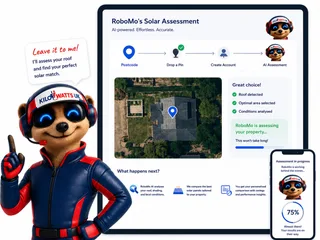
Simply enter your postcode, drop a pin on your roof, create your free account and let RoboMo™ analyse your property to find the best solar panels for your home.

You don't have to think
RoboMo™'s AI analyses your roof and does all the hard work.

Accurate & tailored
AI-powered assessment based on your roof, location, and conditions.

Best options, maximum savings
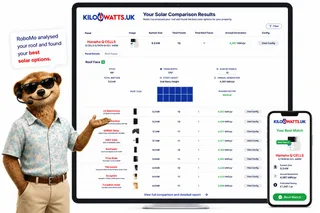
Compare top solar panels for the best performance and value.

Simple, fast & effortless
Provide a few details, sit back and watch your results unfold.
STEP 1
Choose Home, Business or Industrial
Enter your postcode to start your assessment.
STEP 2

Drop a pin on your roof
STEP 3

Create your free account
STEP 4

Sit back and watch RoboMo™ work
RoboMo™ analyses your roof and builds your personalised solar comparison.

Step 1
Enter your postcode
Start designing your wind energy system in seconds.
Are you an installer, distributor or renewable energy business?
Kilowatts UK is expanding the Flower Turbines partner network across the UK.
Become A Flower Turbines PartnerKilowatts UK is an authorised representative
Flower Turbines
Compact vertical-axis turbines built for real UK sites, not just open farmland.
They start in light wind, sit in a small footprint, and are bird-safe by design. Cluster them as a bouquet and the group performs better together than the same turbines standing alone. Enter your postcode for a location-based generation estimate. Figures use area weather data and will differ if buildings, trees or hills sit in the way.
Starts in light UK wind
Built to generate in typical UK wind, not only open farmland.
Small rooftop or ground footprint
Compact towers for roofs, yards and tight sites.
Bird-safe slow rotation
Slow vertical-axis spin, bird-safe by design.
Bouquet clusters raise output
Grouped turbines outperform the same units standing alone.
STEP 2

Choose a location
STEP 3

Place your cluster
Tap the map where you want the turbine cluster to go.
STEP 4

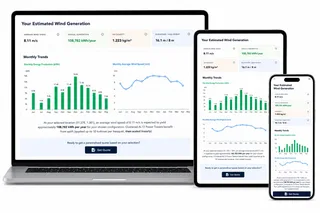
Instant generation forecasts
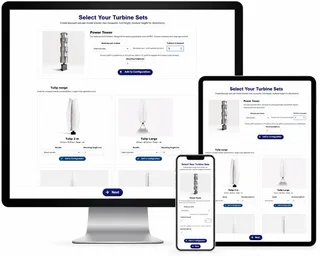
Compare different turbine layouts and see annual generation forecasts instantly.
STEP 5

No commitment required
Explore different configurations before deciding whether to request a quotation.
Related articles

Mo's Mission Nominations
FAQ
Need Help? RoboMo's Got Answers
What does EPVS mean in UK solar?
EPVS stands for Energy Performance Validation Scheme. In UK solar, it is a consumer-protection scheme that checks whether quoted performance, savings, export income and payback claims have been calculated and presented in a fair, consistent and transparent way. It helps customers understand the assumptions behind a solar quote, but it does not guarantee the exact results the system will deliver.
Is EPVS the same as MCS?
No. EPVS and MCS cover different parts of a solar project. EPVS focuses on the financial and performance claims in a quote, such as estimated generation, bill savings, export income and payback period. MCS, the Microgeneration Certification Scheme, relates to recognised product and installation standards for renewable energy systems and is commonly linked to Smart Export Guarantee eligibility.
Does EPVS guarantee my solar savings?
No. EPVS does not guarantee exact annual savings, future electricity prices, export rates or a fixed payback period. Solar output and financial returns can change because of weather, shading, household usage, tariff changes, export rates, equipment performance, downtime and gradual panel degradation. EPVS is about checking that the estimate is reasonable and transparent, not promising a future financial result.
Why does EPVS matter when comparing solar quotes?
EPVS matters because two quotes for similar solar equipment can show very different savings or payback periods. These differences may come from assumptions about generation, shading, self-consumption, battery use, import electricity prices, export tariffs, degradation or calculation length. EPVS helps make those assumptions visible so you can compare quotes more fairly instead of relying only on the headline saving or shortest payback.
What should an EPVS-style solar quote show?
A good EPVS-style quote should show the system size in kWp, panel and inverter specification, roof orientation, roof pitch, shading allowance, estimated annual generation in kWh, import electricity price, export tariff, self-consumption assumption, degradation assumption, total installed cost and calculation period. If a battery is included, it should also show usable capacity, expected battery behaviour and how the battery changes the savings calculation.
Does EPVS mean a solar quote is the cheapest option?
No. EPVS does not prove that a quote is the cheapest or best overall. It helps validate the way savings and performance claims are presented. You should still compare the equipment, installation scope, warranties, scaffolding, DNO work, electrical upgrades, VAT treatment, monitoring, aftercare, installer competence and contract terms.
What is self-consumption in a solar quote?
Self-consumption is the share of solar electricity you use in your home instead of exporting to the grid. It has a major impact on savings because electricity used at home usually offsets a higher import rate, while exported electricity is paid at a separate export tariff. A quote that assumes very high self-consumption should explain why that is realistic for your household, for example because you work from home, use appliances during the day, charge an EV in daylight hours or have a suitable battery.
Why do solar payback periods vary so much between quotes?
Payback periods vary because installers may use different assumptions for annual generation, roof orientation, shading, electricity prices, export tariffs, self-consumption, battery savings, future price changes, degradation and maintenance. A shorter payback is not automatically better unless the assumptions behind it are realistic, clearly shown and matched to your property and usage.
What red flags should I look for in solar savings claims?
Be cautious if a quote promises guaranteed savings, claims solar will remove your whole electricity bill, includes standing charges as a saving, uses pressure-selling tactics, gives a payback period without showing the assumptions, ignores visible shading, uses an export tariff you may not be eligible for, or includes battery savings without explaining how the battery will charge and discharge. Verbal claims should also match the written quote.
Is EPVS important if I am buying a solar battery?
Yes. EPVS is especially useful for solar and battery quotes because battery savings depend on usable capacity, household demand, solar generation, tariff structure, charge and discharge efficiency, degradation and cycling. A quote should not simply assume that adding a battery turns all unused solar electricity into a saving. The calculation should explain how much solar is expected to be stored, how much will still be exported and whether time-of-use tariffs are being included.
Can EPVS replace a roof survey or installation assessment?
No. EPVS can help check the financial and performance claims, but it does not replace a proper survey, roof condition assessment, structural considerations, electrical checks, planning advice, DNO requirements or building regulations compliance. A quote still needs to be based on a suitable technical design for the property.
Should EPVS validation be updated after a survey?
Yes, if the final design changes materially. An EPVS validation is most useful when it matches the actual system being installed. If the panel layout, roof planes, inverter, battery size, export limit, shading assessment or total installed cost changes after survey, the savings estimate should be reviewed and, where needed, updated so the payback claim still reflects the final proposal.
How do import and export tariffs affect EPVS savings calculations?
Import and export tariffs can make a major difference to quoted savings. Electricity used directly from your solar panels reduces the amount you buy from the grid at your import rate, while exported electricity is paid at a separate export tariff. If a quote assumes a high export rate, check whether you are eligible for that tariff, whether you need to switch supplier and whether any conditions apply. Future electricity price assumptions should be treated as forecasts, not guarantees.
Does EPVS check shading and roof orientation?
EPVS-style calculations should take account of the roof and generation assumptions used in the quote, including orientation, pitch and shading. Shading from chimneys, dormers, trees and nearby buildings can materially reduce output, so a quote that assumes little or no shading should be able to explain how that conclusion was reached. Optimisers or microinverters may help some shaded or complex roofs, but they do not remove the physical loss caused by shade.
Does EPVS cover DNO approval or grid connection limits?
EPVS does not replace DNO approval or grid connection checks. Small domestic systems may fall under G98 notification rules if they meet the relevant limits, while larger systems or higher export capacity may require G99 approval before installation. If export is limited, the savings calculation should reflect that where it affects the design, export income or battery assumptions.
What questions should I ask about EPVS before signing a solar contract?
Ask whether the installer is EPVS-certified or using EPVS-validated calculations, whether you can see the calculation details, what generation estimate was used, what import and export tariffs were assumed, what self-consumption percentage was used, how shading was treated, whether degradation is included, whether all installation costs are included in the payback calculation and whether the EPVS validation matches the final surveyed design.