


Is the Garmin Instinct 3 Solar or AMOLED better for you?
Published: 2026-09-13 12:04:22
Updated: 2026-09-13 05:05:51
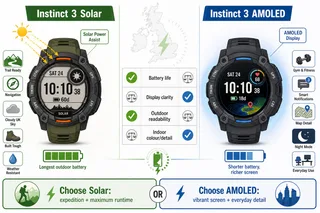
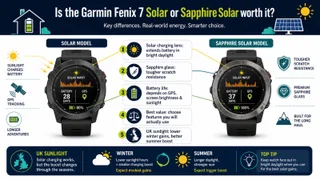
The Solar takes the lead on battery endurance, lower weight and price, while the AMOLED wins on display quality and extra on-watch training features.
Is the Garmin Instinct 3 Solar or AMOLED better for you?
The Solar takes the lead on battery endurance, lower weight and price, while the AMOLED wins on display quality and extra on-watch training features.
Overview
There is no single winner between the Garmin Instinct 3 Solar and AMOLED. The Solar takes the lead on battery endurance, lower weight and price, while the AMOLED wins on display quality and extra on-watch training features. Both models share the same core upgrades for 2026: multiband GPS, SatIQ, a flashlight, Garmin Pay and Sleep Coach. Kilowatts.uk publishes this comparison as part of its independent, AI-driven guidance for UK readers weighing tech purchases. If the word solar has you thinking beyond wearables, you can also compare home solar options for UK property decisions.
What are the main differences between the Garmin Instinct 3 Solar and AMOLED?
The biggest difference is the display technology. The Solar keeps a monochrome MIP (memory-in-pixel) transflective display, while the AMOLED uses a bright colour AMOLED panel. According to the5krunner, the Instinct 3 Solar is one of the last major watches to stick with MIP while most other brands have switched to AMOLED.
The Solar's panel sits inside a solar ring that eats into screen space. This means the AMOLED screen is physically larger with more pixels at the same case size, as explained by Active Ideas. The AMOLED 45mm has a 1.2-inch display while the Solar 45mm has a 0.9-inch display, according to DC Rainmaker. At home scale, the same photovoltaic principle is explained in Kilowatts.uk's guide to how solar panels work.
AMOLED-only extras include the Muscle Map for strength workouts, strength workout animations and large font mode. These software features are not available on the Solar, as noted by DC Rainmaker. The AMOLED drops the secondary display window that the Solar retains. The AMOLED is also lighter and more comfortable, especially for sleep, based on direct wear comparisons shared on Facebook. Both models share the same 2026 upgrades: multiband/dual-frequency GNSS, SatIQ, a flashlight on 45mm and 50mm, Garmin Pay, Garmin Share, Garmin Messenger, nap detection and Sleep Coach. These features are standard across the Instinct 3 range, according to DC Rainmaker.
How does battery life compare between the Instinct 3 Solar and AMOLED?
With GPS on, the AMOLED 45mm lasts around 130 hours versus roughly 32 hours for the Solar 45mm. This counterintuitive result is driven by the AMOLED's newer chipset and power management, according to Versus.
In everyday smartwatch mode the gap narrows. The AMOLED always-on display mode is the biggest drain, while the Solar's transflective screen uses almost no power when idle. Active Ideas explains that AMOLED displays consume much more power than transflective displays in normal use.
The Solar can reach potentially unlimited battery life in certain modes with enough sunlight. Solar charging power was increased 5x over the Instinct 2 Solar, according to DC Rainmaker. A Reddit discussion confirms this unlimited potential in sunny conditions. Light levels matter for any PV surface, and Kilowatts.uk explains the wider factors behind solar panel efficiency in UK conditions. AMOLED pixels need more power to get brighter in direct sun. Transflective displays actually get easier to read the sunnier it gets, as Active Ideas points out.
Which model has the better display for outdoor and indoor use?
The AMOLED has the better display for most indoor and mixed-use scenarios. It offers a gorgeous, larger, higher-resolution colour display, and outdoor readability is no longer a real concern after four to five years of AMOLED improvements, according to Active Ideas and Reddit.
The Solar's MIP screen has 2x the contrast of the Instinct 2 and stays readable in bright sun without waking the backlight. DC Rainmaker confirms this contrast improvement.
For indoor use such as gyms, offices and night shifts, the AMOLED's colour and brightness are the clear advantage. A Facebook discussion suggests indoor-focused buyers should strongly consider the AMOLED model. The Solar's always-on, glanceable monochrome look suits people who want a traditional rugged watch feel rather than a phone-like screen. Garmin Forums and Chase the Summit both highlight this preference among outdoor users.
What do you give up by choosing the Solar over the AMOLED?
You give up three AMOLED-only software features. The Muscle Map for strength workouts, strength workout animations and large font mode are not available on the Solar, according to DC Rainmaker.
The Solar's display is also physically smaller. The Solar 45mm has a 0.9-inch screen and the 50mm has a 1.1-inch screen, versus 1.2 inches and 1.3 inches on the AMOLED models, as noted by DC Rainmaker.
Neither model offers offline mapping, and both lack Garmin's most recent optical heart rate sensor generation. DC Rainmaker confirms these shared limitations. The Solar's bezel carries an orange accent on the black model, while the black AMOLED is fully blacked out. This cosmetic trade-off matters to some buyers, according to Active Ideas and Chase the Summit.
How much do the Instinct 3 Solar and AMOLED cost in 2026?
The Instinct 3 Solar costs 9 for the 45mm and 9 for the 50mm. The Instinct 3 AMOLED costs 9 for the 45mm and 9 for the 50mm, making the AMOLED a premium at each size, according to DC Rainmaker and Active Ideas.
The budget alternative is the Instinct E at 9 in 40mm and 45mm. the5krunner describes the Instinct E as a cut-down Instinct 2S, and it is the only way to get a smaller case since the Instinct 3 comes in 45mm and 50mm only.
The Instinct 3 Solar is closely related to the 2X Solar but adds a 45mm solar option. Buyers upgrading from older Instincts should compare carefully rather than assume a full redesign, advises the5krunner. For context, the Instinct 2 was selling for around 0 at the time of the Instinct 3 launch. This makes the new range a significant step up in price, according to DC Rainmaker. For larger household energy purchases, headline pricing is only part of the story, so it can help to understand UK solar prices before comparing quotes.
Which Instinct 3 should you choose for your wrist size and style?
Both Solar and AMOLED come in 45mm and 50mm. There is no 40mm Instinct 3, so smaller-wristed buyers must look at the Instinct E instead, according to Active Ideas.
The AMOLED 45mm is lighter and feels more comfortable than the Solar, particularly overnight. This is based on direct wear comparisons on a 185mm wrist shared by Active Ideas and a Facebook user discussion.
Colour options at launch include black and gray, plus a special edition toothpaste green blue on the Solar. The black Solar has an orange bezel accent while the black AMOLED is all black, according to Chase the Summit and Active Ideas. If you want personalised help matching a watch or a solar and battery setup for your home to your actual usage, Kilowatts.uk's free solar and battery assessment and RoboMo tool show how the same fit-first approach works for energy tech. You can also book a free survey if you are ready to explore your options.
Is the Instinct 3 AMOLED better than the Solar 45mm?
On paper the AMOLED 45mm wins on display size, resolution, colour, weight and GPS-mode battery life. The AMOLED 45mm lasts 130 hours with GPS on versus 32 hours for the Solar 45mm, according to Versus and DC Rainmaker.
The Solar 45mm wins on price at 9 versus 9. It also wins on solar charging that can extend runtime indefinitely in good light, and on the classic rugged MIP look, according to DC Rainmaker and Reddit.
Both carry identical core features: multiband GPS, SatIQ, flashlight, Garmin Pay, Garmin Share, Messenger, nap detection and Sleep Coach. The decision is display and battery strategy, not capability, according to DC Rainmaker. Community consensus splits on use case rather than quality. Indoor and sleep-focused users lean AMOLED, while outdoor and off-grid users lean Solar, based on discussions on Reddit, Garmin Forums and Facebook.
Key Takeaways
The following points summarise the key takeaways:
- The Instinct 3 Solar costs 9 for 45mm and 9 for 50mm, while the AMOLED costs 9 and 9, a premium per size.
- With GPS on, the AMOLED 45mm lasts about 130 hours versus roughly 32 hours for the Solar 45mm.
- The Solar can achieve potentially unlimited battery life in certain modes with enough sunlight, with solar charging power up 5x over the Instinct 2 Solar.
- AMOLED-only features include the Muscle Map for strength workouts, strength workout animations and large font mode.
- Both models share multiband GNSS, SatIQ, a flashlight, Garmin Pay, Garmin Share, Garmin Messenger, nap detection and Sleep Coach.
- The Instinct 3 comes only in 45mm and 50mm, while the 40mm option exists solely as the Instinct E at 9.
- Neither the Solar nor the AMOLED offers offline mapping or Garmin's latest optical heart rate sensor.
References
The following points summarise the key takeaways:
Plan, Compare & Buy Renewable Energy Solutions
AI does the thinking.
You get the perfect solar match.
Use RoboMo™ to assess your property, compare available technologies and connect with trusted UK installers, suppliers and manufacturers.
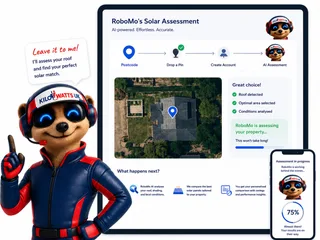
Simply enter your postcode, drop a pin on your roof, create your free account and let RoboMo™ analyse your property to find the best solar panels for your home.

You don't have to think
RoboMo™'s AI analyses your roof and does all the hard work.

Accurate & tailored
AI-powered assessment based on your roof, location, and conditions.

Best options, maximum savings
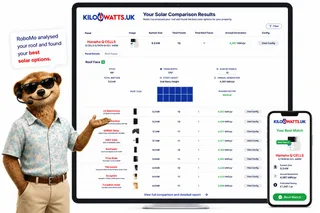
Compare top solar panels for the best performance and value.

Simple, fast & effortless
Provide a few details, sit back and watch your results unfold.
STEP 1
Choose Home, Business or Industrial
Enter your postcode to start your assessment.
STEP 2
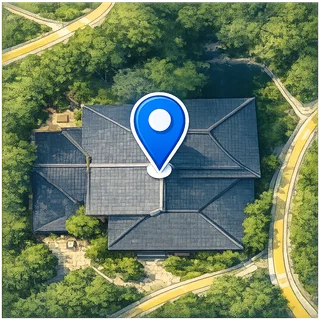
Drop a pin on your roof
STEP 3

Create your free account
STEP 4
Sit back and watch RoboMo™ work
RoboMo™ analyses your roof and builds your personalised solar comparison.

Step 1
Enter your postcode
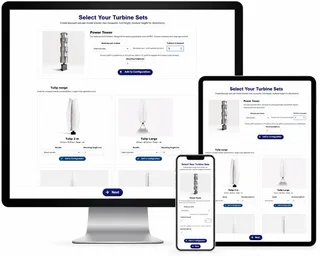
Start designing your wind energy system in seconds.
Are you an installer, distributor or renewable energy business?
Kilowatts UK is expanding the Flower Turbines partner network across the UK.
Become A Flower Turbines PartnerKilowatts UK is an authorised representative
Flower Turbines
Compact vertical-axis turbines built for real UK sites, not just open farmland.
They start in light wind, sit in a small footprint, and are bird-safe by design. Cluster them as a bouquet and the group performs better together than the same turbines standing alone. Enter your postcode for a location-based generation estimate. Figures use area weather data and will differ if buildings, trees or hills sit in the way.
Starts in light UK wind
Built to generate in typical UK wind, not only open farmland.
Small rooftop or ground footprint
Compact towers for roofs, yards and tight sites.
Bird-safe slow rotation
Slow vertical-axis spin, bird-safe by design.
Bouquet clusters raise output
Grouped turbines outperform the same units standing alone.
STEP 2

Choose a location
STEP 3

Place your cluster
Tap the map where you want the turbine cluster to go.
STEP 4

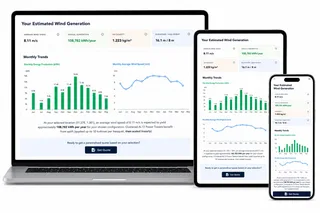
Instant generation forecasts
Compare different turbine layouts and see annual generation forecasts instantly.
STEP 5

No commitment required
Explore different configurations before deciding whether to request a quotation.
Related articles

Mo's Mission Nominations
FAQ
Need Help? RoboMo's Got Answers
Is the Garmin Instinct 3 Solar or AMOLED better overall?
There is no single best choice for everyone. Choose the Solar if you value long everyday battery life, a rugged monochrome display and the chance to top up from sunlight. Choose the AMOLED if you want a sharper colour screen, better indoor readability and extra strength-training visuals.
Does the Instinct 3 Solar charge enough in typical UK weather?
Solar charging can extend battery life, but it depends on light exposure, season, sleeve coverage and how you use the watch. In the UK, you should not assume unlimited battery life unless the watch regularly gets strong outdoor light. Treat solar as a useful top-up rather than a replacement for charging.
Which display is easier to read outdoors?
The Solar’s transflective MIP display is very good in bright sunlight and stays glanceable without needing a bright backlight. The AMOLED screen is sharper and more colourful, but it uses more power when lit brightly. If your use is mainly hiking, fishing, fieldwork or long outdoor days, the Solar display may suit you better.
Which model is better for indoor use, gyms and everyday smartwatch use?
The AMOLED is usually the better choice for mixed indoor use because the screen is larger, brighter and easier to read in colour. It also offers AMOLED-only features such as Muscle Map, strength workout animations and large font mode. If you want the watch to feel more like a modern smartwatch, pick AMOLED.
Do both Instinct 3 models have the same core sports and navigation features?
The Solar and AMOLED share many of the key Instinct 3 features, including multiband GPS, SatIQ, Garmin Pay, Sleep Coach and nap detection. The main differences are the display, battery behaviour, size feel and a few AMOLED-only training display features. Neither model should be bought expecting full offline mapping.
Which Instinct 3 size should UK buyers choose?
The Instinct 3 Solar and AMOLED are available in 45mm and 50mm sizes, so both are relatively large sports watches. If you have a smaller wrist, try one on before buying or compare it with the smaller Instinct E options. Comfort matters particularly if you plan to wear it overnight for sleep tracking.
Is the Instinct 3 AMOLED worth paying extra for?
It may be worth paying extra if you will benefit from the colour display, better indoor readability and extra strength-training visuals. If you mainly want a tough outdoor watch with maximum low-maintenance battery behaviour, the Solar may be the better-value option. UK prices and discounts change, so compare current retailer pricing before deciding.
Will the Solar model save money like home solar panels?
No, the watch’s solar feature is about extending battery life, not generating useful household energy or financial savings. It is a small charging surface designed to reduce how often you plug in the watch. Home solar panels are a completely different purchase and should be assessed separately based on your property, usage and quotes.