LinkedIn profile for David Coleman David Coleman
Founder & Renewable Energy Author, kilowatts.uk


LinkedIn profile for David Coleman David Coleman
Founder & Renewable Energy Author, kilowatts.uk
Article
Learn how UK homeowners can combine solar panels with a small wind turbine, stay SEG-eligible, and lower energy bills with the right inverter setup.
Many UK households are looking for ways to reduce their energy bills and cut carbon. Solar panels are already a popular choice, but what about adding a small wind turbine as well? After all, the sun does not always shine, but the wind often blows. The big question is: can you combine solar and wind on the same home system? The short answer is yes. But if your wind turbine is not MCS-certified, there are some important rules to understand.
If your solar panels are installed by an MCS-certified company, you qualify for the Smart Export Guarantee. That means you get paid for any surplus electricity your panels send back to the grid. Wind turbines can also qualify for SEG, but only if they are MCS-certified. Many small turbines available today are not. For households keen to explore wind technology, our guide to residential wind power options explains what to look out for.
If you try to run both solar and non-MCS wind through the same inverter, the SEG supplier cannot tell which part of your export came from certified solar panels and which part came from a non-certified turbine. In many cases, they will reject your SEG application altogether. This is why homeowners must carefully plan how their systems are connected and consider both renewable energy requirements and general electrical safety. If you are unsure, you can learn more about local installers who handle residential electrical work and complex hybrid setups.
The smart way around this issue is to use two separate inverters. One inverter is dedicated to solar, which connects to the grid in the normal way and remains fully SEG-eligible. The other inverter is for wind, set up to power your home directly while ensuring zero export to the grid. This way, your solar panels continue to earn SEG payments while your wind turbine reduces your reliance on electricity purchased from the grid.
With this setup, you still earn SEG payments on your solar panels, your wind turbine lowers your bills by reducing grid use, and you benefit from greater energy security by combining two renewable sources that complement each other. The trade-off is that you will not receive SEG for your wind output unless your turbine is MCS-certified, and your installer must prove to the network operator that the wind inverter is set to zero export so your solar eligibility is not affected.
For many households, the answer is yes. A hybrid system can make better use of your property's natural resources, provide more independence from high energy prices, and support a greener lifestyle. The key is working with an installer who understands MCS requirements and the technical side of connecting multiple renewable systems. This ensures everything runs safely and efficiently while maximising your financial return.
You can combine solar panels and a wind turbine at home, but it is important to keep the solar side SEG-eligible while using the wind turbine for household use. If you would like to explore whether your property is suitable for solar, wind, or a hybrid system, the team at Kilowatts.uk can guide you through the options and connect you with local installers who understand both renewable energy and electrical compliance.
Solar comparison
Enter your postcode to assess your roof, compare solar options and get quotes from UK installers.
Choose home, business or industrial, then enter your postcode. RoboMo maps the roof and ranks panel brands by fit.
1. Postcode Start the assessment for your property.
2. Pin the roof Mark the array on the map.
3. Compare RoboMo™ builds your options.

Battery ROI tool
Enter the day rate, off-peak rate and export rate. The calculator ranks batteries in the Kilowatts shop over 10 years. Home batteries also suit offices and small commercial sites.
Reading
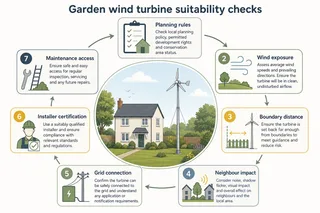
In practice, many gardens are too sheltered or turbulent for a small turbine to perform well, even where installation is technically possible.
Read article
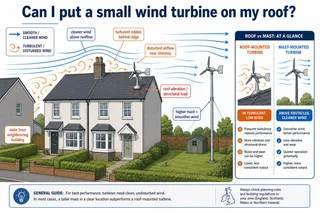
The main issues are wind quality, planning rules, structural safety, noise, grid connection, cost, turbine type, turbine size, and maintenance.
Read article
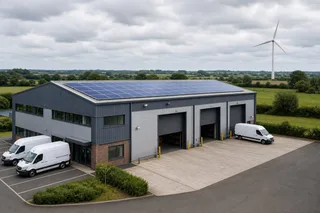
For most UK businesses, solar is the more practical starting point. Wind is worth serious consideration only on exposed sites with enough land.
Read article
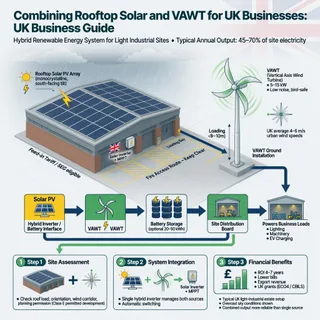
Combining rooftop solar and a VAWT is a UK design question, not a ready-made bundle. Check hub-height wind, structure, consent and the DNO connection.
Read article
Write for Kilowatts.uk
Write it here under your own name. Sign in, put a profile up, and start a guide. Pay only if you want more links from your articles out to your own site.
Create a Kilowatts.uk account, or sign in if you already have one.
Put your name, photo and experience on a public author page.
Write a guide or a blog. Free authors can put one followed link to their own site in articles each month.
FAQ
Live help
Talk to RoboMo™ and get instant answers.
Live chat