


Top 5 Myths About Renewable Energy in the UK
Published: 2025-09-15 18:45:00
Updated: 2026-08-01 07:14:02
Solar panels, heat pumps, batteries and other low-carbon technologies can work well in many UK homes, but suitability depends on the property.
Top 5 myths about renewable energy in the UK
Renewable energy in the UK is not only for sunny climates, rural properties or people with very large budgets. Solar panels, heat pumps, batteries and other low-carbon technologies can work well in many UK homes, but suitability depends on the property, usage patterns, installation quality, budget and local conditions.
Answer first: most UK homes do not need perfect sunshine or an off-grid setup to benefit from renewable energy. The important question is whether the proposed system is backed by survey evidence, realistic performance estimates, suitable equipment, clear warranties and the right grid or planning checks.
This guide looks at five persistent myths and explains what UK homeowners should verify before deciding whether a renewable energy system is right for them. It draws on practical homeowner checks, public UK guidance from bodies such as the Energy Saving Trust, MCS, Ofgem and the Planning Portal, and wider renewable energy resources for UK households.
Myth 1: Renewable energy is always too expensive
Renewable energy is not automatically unaffordable, but it is also not a purchase to make on headline price alone. Upfront costs can be significant, and a poorly specified system may take longer to justify financially. The real question is whether the system is suitable, well designed and likely to offset enough energy use over its lifetime.
For domestic solar, the Energy Saving Trust’s solar panel guidance explains that costs and savings vary by system size, location, roof direction, electricity use and export arrangements. Any price range you see online should be treated as a guide, not a quote. Real costs depend on roof access, scaffolding, system capacity, inverter choice, battery inclusion, electrical upgrades, monitoring equipment and installation complexity.
A good installer should look at consumption patterns before recommending a system. A household that uses electricity during the day may benefit differently from one that is empty until evening. Batteries can improve self-consumption for some homes, but they also add cost and are not always the right first step, so it helps to understand typical battery cost factors before adding one to a quote. Cost also depends on the technology. Solar PV is usually assessed around roof space, electricity demand and export value. A heat pump depends more on heat loss, insulation, radiator sizing, hot-water needs and how the system will be controlled. A battery depends heavily on usage profile and tariff. Renewable energy is therefore not one product with one payback period; it is a property-specific design decision.
Myth 2: Solar panels do not work in cloudy UK weather
Solar panels do not need hot weather to generate electricity. They produce power from daylight, so they can still operate on bright overcast days, although output is lower than in strong direct sun. The UK climate reduces output compared with sunnier countries, but it does not make solar pointless. If you are new to the technology, it is worth starting with how solar works in UK conditions.
The bigger issues are usually shading, roof orientation, roof pitch and system design. A small amount of shading from a chimney, dormer, tree or neighbouring building can affect performance if it is not allowed for. This is why a site survey matters more than a simple postcode estimate.
Homeowners should be careful with average output claims. Solar generation should normally be discussed in annual kWh for the whole system, or in kWh per kWp of installed capacity, not as a vague daily figure with no unit context. The Energy Saving Trust gives example output figures for domestic solar systems, but the final estimate for your home should account for roof direction, pitch, shading, region, panel capacity, inverter design and seasonal variation. Winter generation is much lower than summer generation, so solar should be assessed across the whole year rather than judged from one month’s bill. A credible proposal should show expected annual generation, likely self-consumption and export assumptions separately, rather than presenting all generated electricity as if it will reduce your bill at the full import rate.
Myth 3: Renewable energy means going completely off-grid
Many UK homes with renewable energy are still connected to the electricity grid. Remaining grid-connected is usually the practical option because household demand changes throughout the day and across the seasons. Solar generation, heating demand and appliance use rarely line up perfectly without support from the grid or a battery.
Going off-grid is possible in some specialist situations, but it is a very different design challenge. It normally requires careful load management, substantial storage, backup arrangements and a willingness to accept constraints. For most homes, the aim is not total disconnection. The practical goal is lower imported energy, better use of self-generated electricity and reduced exposure to future energy price changes.
A realistic grid-connected setup may include solar panels, an inverter, smart controls, a battery and sometimes a heat pump or EV charger. The best mix depends on how the property uses energy, not on a generic promise of independence. For households considering storage, a simple guide to home battery basics can make the trade-offs easier to understand. Export should also be understood realistically. The Smart Export Guarantee, administered by licensed electricity suppliers under Ofgem rules, allows eligible small-scale low-carbon generators to be paid for exported electricity. Tariffs and eligibility details vary by supplier, so homeowners should check the export rate, metering requirements and whether the installation needs to be MCS-certified or equivalent for the tariff they want.
Myth 4: Every roof is suitable for solar panels
Not every roof is a good candidate for solar panels. Some roofs are too shaded, too small, poorly oriented, nearing the end of their life or difficult to access safely. Others can work well but need careful layout planning to avoid wasting space or reducing performance. Roof condition is often overlooked. Installing panels on a roof that may need major repair soon can be a false economy, because removing and refitting the system later adds disruption and cost. The roof covering, structural condition and any existing leaks should be checked early.
| Suitability factor | Why it matters | What to check early |
|---|---|---|
| Roof condition | Panels are a long-term installation and should not hide existing problems | Age of roof, leaks, tiles, felt and structural concerns |
| Shading | Shade can reduce generation and affect string performance | Trees, chimneys, dormers and neighbouring buildings |
| Orientation and pitch | Roof angle and direction affect annual output | South, east and west-facing roof areas and usable space |
| Electrical setup | The system must connect safely to the home’s electrical installation | Consumer unit condition, meter position and cable routes |
| Planning constraints | Some properties need extra checks before installation | Listed buildings, conservation areas and unusual roof types |
Myth 5: Renewable systems are fit-and-forget with no maintenance
Renewable energy systems are generally designed for long service lives, but they are not completely maintenance-free. Solar panels often have long performance warranty periods, and the Energy Saving Trust notes that domestic solar PV systems can operate for many years, but the surrounding components and the building itself still need attention.
Inverters, batteries, mounting systems, wiring, monitoring equipment and heat pump components all have their own inspection and maintenance needs. Some issues are obvious, such as a fault warning. Others are easier to miss, such as gradual underperformance caused by shading growth, dirt, failed monitoring or a communication fault.
Practical checks include:
- Reviewing generation monitoring regularly
- Keeping an eye on new shading from trees or nearby changes
- Checking for visible damage after severe weather
- Arranging inspections where performance drops unexpectedly
- Keeping manuals, warranties and handover documents accessible
Heat pumps also need realistic maintenance expectations. The key issue is not only the unit itself, but how well the whole heating system has been designed. The Energy Saving Trust’s heat pump guidance explains that performance depends on the building, controls and heat distribution system. Insulation, draught-proofing and radiator or underfloor heating suitability can all affect comfort and running costs. Maintenance is not usually difficult, but ignoring small faults can reduce savings and shorten component life. Good handover information should explain what normal performance looks like, how monitoring works, who to contact for support and what warranty conditions apply.
What to verify before signing a renewable energy contract
Before signing, homeowners should check more than the equipment brand and headline savings figure. A strong proposal should show how the installer assessed the property, what assumptions were used and what documentation will be provided at handover.
For solar PV, battery storage and heat pumps, MCS certification can be an important trust signal. MCS sets standards for low-carbon installations and certified contractors, and some finance, warranty or export arrangements may require an MCS certificate or equivalent evidence. Homeowners can check installer details using the official MCS installer search.
Grid connection is another important verification point. Most domestic solar and battery installations need the electricity distribution network operator, often called the DNO, to be notified or to approve the connection. The relevant Engineering Recommendations are commonly known as G98 and G99, with the right route depending on the system and connection. Your installer should explain whether the project is a notification or prior-application case and provide evidence that the DNO process has been handled correctly. Before committing, ask for clear answers on: Installer credentials: Is the installer MCS-certified for the technology being installed, and who will carry out the electrical work? DNO process: Will the system be handled under the correct G98 or G99 route, and what evidence will you receive? Export eligibility: What is needed for a Smart Export Guarantee tariff, and will the system and meter setup support it? Warranties: What is covered by product warranties, workmanship warranties and any insurance-backed warranty? Scaffolding and access: Is scaffolding included in the quote, and are there any extra access assumptions? Monitoring: How will you see generation, consumption, battery state of charge or heat pump performance after installation? A trustworthy installer should be comfortable explaining these points in plain English. If a quote relies on vague savings, pressure selling or no proper survey, it is sensible to pause and compare alternatives. Handover documents — Will you receive manuals, certificates, commissioning documents, warranties and emergency shut-down information?
Why renewable energy myths persist
Renewable energy myths often persist because the answer depends on the specific property. One neighbour may have an excellent solar roof, while another has heavy shading or a roof that needs replacement. One household may benefit from a battery, while another may be better served by changing usage patterns or improving insulation first.
Another reason is that renewable energy is often discussed as if each technology works in isolation. In practice, solar panels, batteries, heat pumps, EV chargers, insulation and smart controls can all affect one another. A solar system sized without considering future EV charging or electric heating may be less suitable later, while an oversized system may not make sense if export options and self-consumption are limited.
Good design starts with a whole-property view. The installer should understand current energy use, likely future changes, roof constraints, electrical capacity, heating plans and the homeowner’s priorities before recommending equipment. The better the survey, the less likely the homeowner is to be misled by broad claims such as “solar never works in the UK” or “a battery always pays for itself”.
How to make a sensible renewable energy decision
The best way to cut through renewable energy myths is to treat the project as a specification exercise rather than a product purchase. The right system is the one that fits the building, the budget and the way energy is actually used.
Before comparing quotes, homeowners should gather recent energy bills, think about future changes such as an electric vehicle or heat pump, and check whether any roof repairs are likely. It is also sensible to ask installers how they have assessed shading, roof condition, system size, expected usage and monitoring. If solar is the likely next step, you can compare solar options against your property needs rather than relying on generic claims.
A well-planned renewable energy project should answer these questions clearly:
- What problem is the system meant to solve?
- How much usable roof or outdoor space is available?
- When does the household use most energy?
- Does the electrical installation need upgrading?
- How has annual generation or heat demand been estimated?
- Which assumptions affect the financial case most?
Renewable energy is not suitable for every property in the same way, but the common myths are usually too simple. With proper assessment, named-source guidance and realistic expectations, many UK homes can use renewable technologies effectively without relying on hype or perfect conditions. Homeowners who want a property-specific starting point can also book a home energy survey. How will the system be monitored after installation? What documents, certificates and warranties will be provided? What happens if performance is lower than expected?
Plan, Compare & Buy Renewable Energy Solutions
AI does the thinking.
You get the perfect solar match.
Use RoboMo™ to assess your property, compare available technologies and connect with trusted UK installers, suppliers and manufacturers.
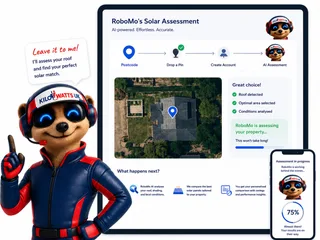
Simply enter your postcode, drop a pin on your roof, create your free account and let RoboMo™ analyse your property to find the best solar panels for your home.

You don't have to think
RoboMo™'s AI analyses your roof and does all the hard work.

Accurate & tailored
AI-powered assessment based on your roof, location, and conditions.

Best options, maximum savings
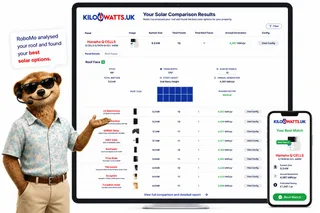
Compare top solar panels for the best performance and value.

Simple, fast & effortless
Provide a few details, sit back and watch your results unfold.
STEP 1
Choose Home, Business or Industrial
Enter your postcode to start your assessment.
STEP 2
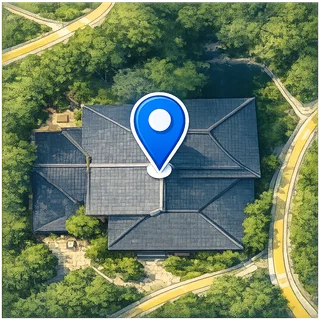
Drop a pin on your roof
STEP 3

Create your free account
STEP 4

Sit back and watch RoboMo™ work
RoboMo™ analyses your roof and builds your personalised solar comparison.

Step 1
Enter your postcode
Start designing your wind energy system in seconds.
Are you an installer, distributor or renewable energy business?
Kilowatts UK is expanding the Flower Turbines partner network across the UK.
Become A Flower Turbines PartnerKilowatts UK is an authorised representative
Flower Turbines
Compact vertical-axis turbines built for real UK sites, not just open farmland.
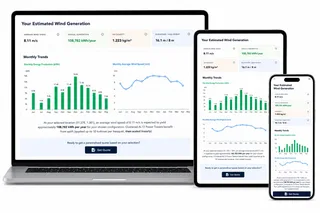
They start in light wind, sit in a small footprint, and are bird-safe by design. Cluster them as a bouquet and the group performs better together than the same turbines standing alone. Enter your postcode for a location-based generation estimate. Figures use area weather data and will differ if buildings, trees or hills sit in the way.
Starts in light UK wind
Built to generate in typical UK wind, not only open farmland.
Small rooftop or ground footprint
Compact towers for roofs, yards and tight sites.
Bird-safe slow rotation
Slow vertical-axis spin, bird-safe by design.
Bouquet clusters raise output
Grouped turbines outperform the same units standing alone.
STEP 2

Choose a location
STEP 3

Place your cluster
Tap the map where you want the turbine cluster to go.
STEP 4

Instant generation forecasts
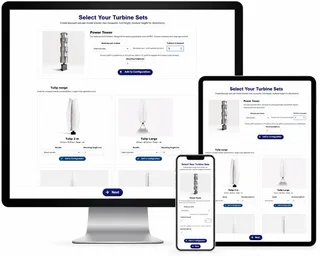
Compare different turbine layouts and see annual generation forecasts instantly.
STEP 5

No commitment required
Explore different configurations before deciding whether to request a quotation.
Related articles
Mo's Mission Nominations
FAQ
Need Help? RoboMo's Got Answers
Do solar panels work in cloudy weather in the UK?
Yes. Solar panels still generate electricity on cloudy or rainy days, although at a lower rate. The UK climate is suitable for solar energy, and countries with less sun than the UK, such as Germany, are leaders in solar adoption.
Is renewable energy too expensive to install?
No. Installation costs for solar panels and batteries have fallen sharply in the past decade, with many systems paying for themselves within a few years. See the latest options at Kilowatts.uk's [best solar price guide](https://kilowatts.uk/resources/best-solar-price-in-uk/).
Can switching to renewable energy really save money on bills?
Yes. Many households cut their grid use by 50 to 80 percent with solar and battery systems, and businesses can also save significantly by adopting renewable energy.
Are wind turbines only suitable for large farms?
No. Small scale domestic wind turbines are available and can be a great choice for rural homes with strong winds.
Do renewable energy systems need a lot of maintenance?
Not at all. Most modern solar panels and batteries are designed for reliability and only need minimal maintenance over their long warranties.