LinkedIn profile for David Coleman David Coleman
Founder & Renewable Energy Author, kilowatts.uk

LinkedIn profile for David Coleman David Coleman
Founder & Renewable Energy Author, kilowatts.uk
Article
The Energy Independence Bill proposes clearer installer registration duties. What is already required, what could change, and what homeowners should keep.
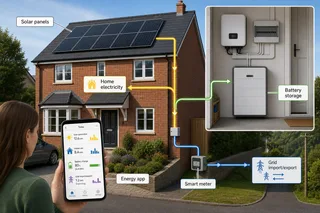
Illustration of a home energy system; it does not depict a product or installation announced in this article.
Published 5 November 2026. Policy status checked against the government factsheet and Parliament's Bill record on that date.
The Energy Independence Bill could make it easier to enforce the registration of solar panels, home batteries, heat pumps and EV chargers with the local electricity network. It is a proposed change to installer obligations, not a new fine or an approval requirement that has already taken effect.
The distinction matters if you are comparing quotes. Network paperwork is already part of many installations. You should ask who will handle it now, rather than waiting for the Bill to become law.
The government's installer-obligation factsheet, published on 4 November 2026, describes powers to require installers to register distributed energy equipment with Distribution Network Operators, or DNOs. Detailed monitoring and enforcement arrangements would be set through secondary legislation.
The Parliamentary record lists the Energy Independence Bill as introduced on 4 November. A Bill at this stage can still change. Its publication does not establish the final commencement date, penalties, exemptions or registration process.
Existing government guidance for device owners and installers already identifies solar PV, battery storage, heat pumps and EV charge points as equipment that must be registered with the local DNO. The applicable route depends on the installation. Notification and an application for prior connection approval are different processes.
Do not read the new proposal as permission to connect equipment first and sort out every detail later. Equally, do not assume that every small installation needs the same advance application. Ask your installer to identify the route for the particular equipment, connection and export arrangement on your quote.
A solar inverter can export electricity, while a charger or heat pump can add demand. A battery can do both at different times. Knowing which equipment is connected helps a network operator understand local flows and plan its capacity.
The government estimates that fewer than 40% of distributed energy assets are currently registered. That is a government estimate across the asset category; it is not a finding that 60% of a particular installer's work is unsafe.
Registration also has a different purpose from an electrical safety certificate, planning consent or a product warranty. Keeping one document does not mean you have all the others. For a homeowner, the practical response is a clear handover file that identifies each piece of equipment and the paperwork completed for it.
If you already have a system but cannot find the records, start with the original installer and your DNO. Avoid paying for a supposed new Bill-compliance service solely because an advertisement says a new penalty already applies.
The enabling powers leave important detail for later regulations. Do not treat a proposed digital process, a particular data field or a penalty level as settled unless it appears in the final applicable rules. This article will need reviewing as the Bill progresses.
For a separate look at physical battery placement and fire-safety design, read our PAS 63100 and BS 7671 home battery guide. Registration paperwork and safe installation design both belong in the quotation discussion.
Solar comparison
Enter your postcode to assess your roof, compare solar options and get quotes from UK installers.
Choose home, business or industrial, then enter your postcode. RoboMo maps the roof and ranks panel brands by fit.
1. Postcode Start the assessment for your property.
2. Pin the roof Mark the array on the map.
3. Compare RoboMo™ builds your options.
Battery ROI tool
Enter the day rate, off-peak rate and export rate. The calculator ranks batteries in the Kilowatts shop over 10 years. Home batteries also suit offices and small commercial sites.
Reading

The UK is breaking the link between gas and electricity prices. Discover what this means for heat pumps, solar panels, battery storage, and your energy bills.
Read article
Smart Energy Management Systems: An Introduction Smart energy management systems are integrated platforms that combine smart meters, IoT sensors.
Read article
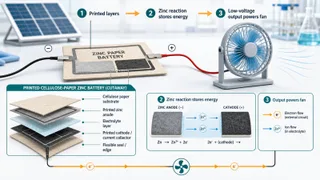
Singapore's printed zinc paper battery is laboratory research, not a UK solar battery you can buy for home energy storage today.
Read article

Break down the real maths behind UK solar savings, electricity bills, self-consumption and ROI. See what really determines whether solar pays for itself.
Read article
Write for Kilowatts.uk
Write it here under your own name. Sign in, put a profile up, and start a guide. Pay only if you want more links from your articles out to your own site.
Create a Kilowatts.uk account, or sign in if you already have one.
Put your name, photo and experience on a public author page.
Write a guide or a blog. Free authors can put one followed link to their own site in articles each month.
FAQ
Live help
Talk to RoboMo™ and get instant answers.
Live chat