


Octopus Zero Bills Tariff: No Energy Bills for 5-10 Years
Published: 2026-07-26 21:23:54
Updated: 2026-08-03 16:01:43
No Home Energy Bills for 5-10 Years with Octopus Zero Bills.
Octopus Energy’s Zero Bills tariff in brief
Octopus Energy’s Zero Bills tariff is a property-specific energy arrangement for selected homes, not a standard tariff that any household can switch to. It is mainly aimed at newbuild properties designed around solar PV, battery storage and a heat pump, with a guarantee that eligible standard home energy bills are covered for a stated period, commonly 5 or 10 years depending on the property and agreement.
The buyer checks are practical rather than theoretical: confirm the exact plot, read the tariff terms, understand the fair-use allowance, check how electric vehicle charging is treated, and confirm how any lender will view the arrangement. HSBC should not be described as offering the same type of bespoke Zero Bills mortgage partnership as Santander unless HSBC’s own current product pages say so.
Official starting points are Octopus Energy’s Zero Bills information page and its participating Zero Bills homes search. Mortgage and affordability claims are time-sensitive, so use the lender’s own page or a regulated mortgage adviser before relying on any saving in a reservation or mortgage application.
Last checked
July 2026 for the public product positioning described in this article; lender criteria, partnerships and tariff terms can change without notice.Main buyer risk
assuming that a solar-equipped or EPC A-rated home automatically qualifies for Zero Bills.Main finance risk
assuming that every green mortgage treats a Zero Bills guarantee in the same way.
What the Zero Bills guarantee covers
The guarantee is designed to remove standard home energy bills for an eligible property during the guarantee period, provided the home stays within the relevant terms. In the 10-year version, the home is typically designed with solar panels, a home battery and a heat pump so that it can generate, store and use electricity efficiently.
The guarantee is subject to fair use. Octopus has described the fair-use allowance as materially higher than typical household consumption, but buyers should check the current tariff terms for the exact allowance that applies to the property they are buying. Octopus also states that electric vehicle charging is not included in the standard Zero Bills allowance, which matters because an EV can add significant extra electricity demand.
This does not mean the home uses no energy, or that the equipment becomes maintenance-free. The property may still import and export electricity. The heat pump still needs correct setup and operation, and the battery and solar system must suit the home’s expected demand, including how home battery storage interacts with the tariff. Eligible home: The property must be accepted into the Zero Bills scheme and meet Octopus Energy’s technical and contractual requirements. Included technologies: Solar PV, battery storage and a heat pump are central to the usual specification. Fair use: The guarantee is not unlimited, and the allowance should be checked in the current tariff terms. EV charging: Electric vehicle charging is treated separately and should not be assumed to be covered. Guarantee period: Some homes may carry a 5-year guarantee, while selected homes may carry a 10-year guarantee. Property-specific terms: The buyer should read the exact tariff, handover and reservation documents before relying on the headline claim.
How to verify an eligible Zero Bills property
The most important check is whether the exact property appears in Octopus Energy’s official participating homes search, not whether the development brochure uses phrases such as “zero bills ready”, “solar home” or “EPC A”. Eligibility is attached to the property and terms, so a neighbouring plot or similar house type is not enough evidence.
Use the participating Zero Bills homes search before reserving, then ask the developer, seller or broker for written confirmation of the guarantee length and terms. If anything differs between the marketing material, reservation form, mortgage illustration and Octopus documentation, resolve that before treating the bill saving as part of your affordability calculation.
Check EV metering
Ask how EV charging is measured and billed if you have, or may later install, a charger.Check the exact plot
Confirm the address or plot number in the official Octopus participating homes search.Read the tariff terms
Request the current Zero Bills terms, including fair-use wording and exclusions.Confirm transferability
Ask what happens if you sell the home during the guarantee period.Confirm lender recognition
Ask the lender or broker whether the Zero Bills arrangement affects affordability, and get the answer in writing where possible.Confirm the guarantee length
Ask whether the property carries a 5-year or 10-year guarantee and where that is stated contractually.
Keep evidence — Save the official listing, tariff terms, reservation paperwork and lender correspondence in your purchase file.
How a Zero Bills home works in practice
A Zero Bills home is intended to reduce bought-in energy by combining efficient building fabric, solar generation, battery storage and electric heating. Solar panels generate electricity during daylight, the battery stores some surplus for later use, and the heat pump provides space heating and hot water more efficiently than direct electric heating. If you want the basics first, this guide explains how solar works in UK homes.
In real homes, performance depends on design, installation and behaviour. A well-specified heat pump should be sized from the property’s heat loss, not guessed from floor area alone. The battery should match likely household consumption, and the solar array needs suitable roof area, orientation and shading.
The building fabric matters as much as the technology. Insulation, airtightness, heating controls, commissioning and user handover all affect comfort and energy use. Poorly understood controls or weak commissioning can increase consumption even where the home has strong renewable-energy equipment.
Documents buyers should request before exchange
A Zero Bills claim is only useful if you can prove what is included, who is responsible for each system, and what happens if performance or equipment fails. Ask for the technical pack early, not after completion, because it can influence mortgage discussions, snagging and your understanding of future responsibilities.
The exact documents will vary by property and developer, but a serious buyer should expect more than a sales brochure. If the seller cannot provide the documents immediately, ask when they will be available and whether completion depends on them being supplied.
Battery specification
Battery capacity, usable capacity if stated, location, warranty, operating mode and safety documentation.Commissioning records
Heat pump commissioning, solar commissioning and battery commissioning documents where supplied.Solar PV specification
Panel capacity, inverter details, roof layout, expected generation assumptions and warranty information.Zero Bills tariff terms
The current tariff contract, fair-use wording, EV charging treatment, guarantee length and any transfer conditions.Heat pump design evidence
Heat-loss calculations, emitter design, hot water design and control strategy for the exact property.Official eligibility evidence
Confirmation that the exact plot is accepted into the Octopus Zero Bills scheme.
MCS documentation — MCS certificates or equivalent installation paperwork where the systems are MCS-certified. For context, this guide explains MCS certification for solar installations. Handover pack — Manuals, operating instructions, maintenance guidance, emergency isolation information and contact details for support. Warranty terms — Product warranties, workmanship warranties, exclusions and who to contact if something fails. Servicing responsibilities — Who pays for routine servicing, how often it is required, and whether servicing affects warranties or tariff eligibility. Grid and export paperwork — Export, metering and connection documents where applicable to the installed system.
HSBC, Santander and Perenna compared
The mortgage point is where much of the confusion arises. Santander has publicly promoted a Zero Bills Home Mortgage approach for eligible homes, linked to the idea that recognised reduced energy costs can affect affordability assessment. Octopus has also stated that this kind of treatment could allow some buyers of 10-year Zero Bills homes to borrow up to £30,000 more, but that figure is not a guaranteed uplift for every buyer and remains subject to lender criteria, income, deposit, credit assessment and product availability.
HSBC is different. As of the last editorial check in July 2026, HSBC should be treated as offering general green or energy-efficient mortgage support only where its current criteria allow, not as having the same advertised bespoke Zero Bills partnership as Santander. Perenna has also been associated with Zero Bills property financing, but buyers should confirm the current product terms directly because availability and eligibility can change.
Use the official lender and provider pages as your starting point, including Santander’s Zero Bills Home Mortgage information, HSBC’s green mortgage or energy-efficient home finance information, and Perenna’s mortgage information. If a product page has moved, search within the provider’s own website rather than relying on old broker summaries. The practical point is simple: do not assume any green mortgage is a Zero Bills mortgage. A high EPC rating may help with some lender products, but it is not the same as a lender recognising a specific Zero Bills guarantee in affordability.
Why eligibility matters more than the headline
The phrase “zero bills” is powerful, but the legal and practical detail sits in the eligibility criteria. A buyer needs to confirm the individual property, not just the development name, show-home specification or marketing brochure. The guarantee depends on the home being accepted into the scheme and used within the relevant terms.
Newbuild homes are the main focus because the developer can design the fabric, roof layout, solar PV, battery and heating system as one package. Retrofitting an older home to the same standard may be technically possible in some cases, but it is not automatically part of the Zero Bills tariff.
Buyers should also separate the energy guarantee from equipment ownership, warranties and maintenance. A tariff guarantee does not remove the need to know who maintains the heat pump, what happens if components fail, and how the handover documents explain controls, servicing and responsibilities.
EV charging
Ask how electric vehicle charging is metered and billed.Heating design
Request evidence that the heat pump has been designed for the home’s heat demand.Guarantee length
Check whether the property carries a 5-year or 10-year guarantee.Property listing
Confirm the home appears in the official participating property search.Fair-use allowance
Ask for the current allowance and any relevant exclusions in writing.Battery and solar specification
Check where the battery is installed and how the solar system is expected to operate.
Handover documents — Make sure manuals, warranties and operating guidance are provided before completion. Future sale — Ask whether the guarantee can transfer to a future buyer and what process is required.
Common buyer mistakes to avoid
The most common mistake is treating Zero Bills as a generic offer rather than a property-specific arrangement. Buyers may see solar panels and a heat pump and assume the home qualifies. The scheme still depends on formal participation and agreed terms.
Another mistake is looking only at the monthly bill saving. The wider decision should include mortgage affordability, purchase price, service responsibilities, equipment lifespan, comfort, hot water performance, roof access and the buyer’s future energy use. A home that works well for a low-usage household may behave differently for a family working from home with high hot water demand and an EV.
Buyers should also avoid assuming that “green mortgage”, “EPC A”, “solar home” and “Zero Bills home” mean the same thing. They overlap, but they are not interchangeable. Lender incentives and tariff guarantees are separate products with separate eligibility rules. Relying on the brochure: Marketing wording is not the same as tariff eligibility. Ignoring fair use: The guarantee has usage terms, and EV charging is treated separately. Assuming all lenders agree: Mortgage treatment depends on the lender’s current criteria. Forgetting maintenance: Heat pumps, solar inverters and batteries still need proper care and support. Missing handover details: Controls, hot water settings and battery operation need clear user guidance. Treating the uplift as guaranteed: Any higher borrowing figure is subject to lender assessment and should not be built into a budget without confirmation.
Questions to ask before reserving a Zero Bills home
A useful viewing or reservation conversation should go beyond the show-home claims. Ask for documents that confirm the property’s status, guarantee terms and technical design. Also ask how the systems have been specified for that exact plot rather than for the development in general.
If the seller, developer or broker cannot clearly explain the energy arrangement, pause before relying on the benefit in your budget. The guarantee may be valuable, but only if it is confirmed, transferable where relevant, and aligned with how you expect to use the home.
Is this exact plot listed in Octopus Energy’s participating Zero Bills homes search. Is the guarantee for 5 years or 10 years. What fair-use terms apply to household energy use. Where can I read the current tariff contract before exchange. How is EV charging billed if I install a charger or use one. Which lender products recognise the Zero Bills arrangement. These questions are not about being difficult. They are normal checks before treating a future bill saving as part of the affordability picture. Has the lender confirmed how it will treat energy costs in my affordability assessment. Who owns and maintains the heat pump, solar panels and battery. What warranties apply to each item of equipment. What happens if the battery, inverter or heat pump fails during the guarantee period. Will the guarantee transfer if I sell the home. Who should I contact for tariff, equipment or control problems after completion.
How this affects solar, batteries and heat pumps more widely
Zero Bills homes are part of a wider shift towards all-electric, low-carbon housing. The same core technologies can also be used outside the Octopus scheme, but without the same tariff guarantee. A homeowner can compare home solar options, battery storage and a heat pump on an existing property, but the financial outcome will depend on usage, export arrangements, installation quality and property heat demand.
For non-Zero Bills homes, the design process is more bespoke. Solar PV should be assessed against roof space, orientation, shading and household consumption. Battery storage should be sized around daily electricity patterns rather than chosen as the largest affordable unit, so it helps to choose the right battery size for your home. Heat pumps need proper heat-loss calculations, emitter checks and sensible control settings, not just a like-for-like boiler replacement. If you are considering this route, read the basics of heat pump installation before comparing specifications.
Independent advice can help here. The best system is not simply the one with the most equipment. It is the one that fits the property, the occupants and the long-term plan for heating, hot water, appliances, smart EV charging and transport.
Final view for UK buyers
Octopus Energy’s Zero Bills tariff can be a valuable arrangement for selected eligible properties, particularly where the home has been designed from the start around solar PV, battery storage, a heat pump and efficient fabric. It is not a universal tariff, and it should not be confused with every green mortgage or EPC-linked lender incentive on the market.
The best next step is to confirm the exact property through Octopus Energy’s participating homes tool, read the current tariff terms, then check the mortgage treatment with the lender or broker before reserving. If a borrowing uplift, cashback or affordability adjustment is part of your plan, treat it as provisional until the lender confirms it for your application.
If you are not buying an eligible newbuild, the same technologies may still reduce energy costs, but they need a property-specific design rather than reliance on a Zero Bills guarantee. For an existing home, you can also book a home survey to assess the right solar, battery and heating approach.
Plan, Compare & Buy Renewable Energy Solutions
AI does the thinking.
You get the perfect solar match.
Use RoboMo™ to assess your property, compare available technologies and connect with trusted UK installers, suppliers and manufacturers.
Simply enter your postcode, drop a pin on your roof, create your free account and let RoboMo™ analyse your property to find the best solar panels for your home.

You don't have to think
RoboMo™'s AI analyses your roof and does all the hard work.

Accurate & tailored
AI-powered assessment based on your roof, location, and conditions.

Best options, maximum savings
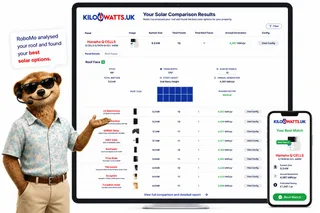
Compare top solar panels for the best performance and value.

Simple, fast & effortless
Provide a few details, sit back and watch your results unfold.
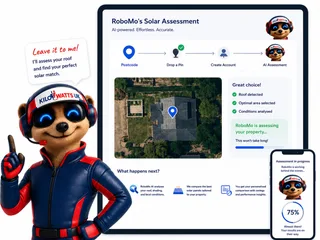
STEP 1
Choose Home, Business or Industrial
Enter your postcode to start your assessment.
STEP 2

Drop a pin on your roof
STEP 3

Create your free account
STEP 4

Sit back and watch RoboMo™ work
RoboMo™ analyses your roof and builds your personalised solar comparison.

Kilowatts UK is an authorised representative
Flower Turbines
Compact vertical-axis turbines built for real UK sites, not just open farmland.
They start in light wind, sit in a small footprint, and are bird-safe by design. Cluster them as a bouquet and the group performs better together than the same turbines standing alone. Enter your postcode for a location-based generation estimate. Figures use area weather data and will differ if buildings, trees or hills sit in the way.
Starts in light UK wind
Built to generate in typical UK wind, not only open farmland.
Small rooftop or ground footprint
Compact towers for roofs, yards and tight sites.
Bird-safe slow rotation
Slow vertical-axis spin, bird-safe by design.
Bouquet clusters raise output
Grouped turbines outperform the same units standing alone.
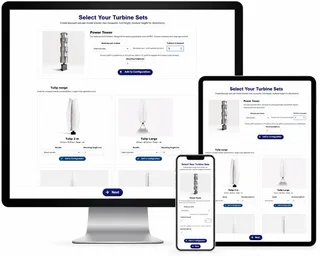
Step 1
Enter your postcode
Start designing your wind energy system in seconds.
STEP 2

Choose a location
STEP 3

Place your cluster
Tap the map where you want the turbine cluster to go.
STEP 4

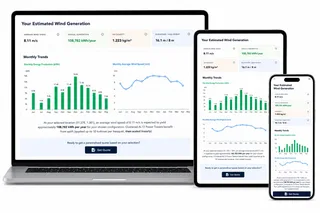
Instant generation forecasts
Compare different turbine layouts and see annual generation forecasts instantly.
STEP 5

No commitment required
Explore different configurations before deciding whether to request a quotation.
Related articles
Mo's Mission Nominations
FAQ
Need Help? RoboMo's Got Answers
What is Octopus Energy's Zero Bills Tariff?
Octopus Energy's innovative Zero Bills tariff offers a 5-10 year guarantee of no home energy costs for selected newbuild homes equipped with solar panels, a home battery, and a heat pump. This means that homeowners can enjoy a decade of free energy bills, making it an attractive option for those looking to reduce their environmental impact and save money on their energy costs.
Does Octopus Energy's Zero Bills Tariff guarantee zero energy bills for all homes?
The 10-year Zero Bills property financing is led by Santander and Perenna (octopus.energy). The guarantee only applies to selected newbuild homes equipped with solar panels, a home battery, and a heat pump. This innovative energy solution has been making waves in the UK property market.
How does Octopus Energy's Zero Bills Tariff work?
The Octopus Energy's Zero Bills tariff provides a 5-10 year guarantee of no home energy costs for selected newbuild homes equipped with solar panels, a home battery, and a heat pump. This means that homeowners can enjoy a decade of free energy bills, making it an attractive option for those looking to reduce their environmental impact and save money on their energy costs.
Which banks support Octopus Energy's Zero Bills Tariff?
Santander has partnered with Octopus Energy to launch a high-street mortgage that removes energy bills from affordability calculations, allowing buyers of 10-year Zero Bills homes to borrow up to £30,000 more. HSBC offers general energy-efficient mortgages and cashback for properties with high EPC ratings (A or B), but does not feature a bespoke 10-year Zero Bills lending policy.
What are the practical considerations when evaluating Octopus Energy's Zero Bills Tariff?
When evaluating Octopus Energy's Zero Bills tariff, homebuyers should consider practical factors such as property types, location, roof type, and regulations. By understanding the benefits and drawbacks of this innovative energy solution, homeowners can make informed decisions about their energy future and enjoy a decade of free energy bills.
Where can I learn more about Octopus Energy's Zero Bills Tariff?
* Learn more about Octopus Energy's Zero Bills tariff at [Octopus Energy](https://octopus.energy/zero-bills/participating-properties/) * Compare home solar panel options and find the best fit for your needs at [Compare home solar panel options](/services/residential/renewable-energy/residential-solar-panel-installation/compare/) * Book a free home energy survey and personalized recommendations with one of our experts today at [Book a free home energy survey](https://kilowatts.uk/booking/?kwrf=8SA53&kwpid=6&kwlid=9) * Stay informed about the latest developments in renewable energy by reading our blog posts on [Octopus Energy battery storage tariff](/blog/octopus-energy-battery-storage-tariff), [Solar feed in tariff in Glasgow](/blog/solar-feed-in-tariff-in-glasgow), and more.