


Solar battery cost UK: how much is a home battery in 2026?
Published: 2026-09-22 19:53:38
Updated: 2026-09-24 15:23:43
Practical UK guide on how much for a battery. Clear answers for homeowners comparing options and next steps.
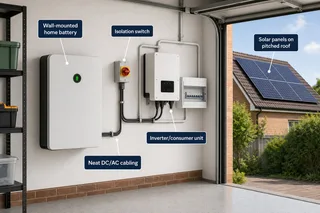
How much for a battery?
Understand how much for a battery in the UK, with clear explanations, examples, and practical next steps.
Solar battery cost UK: how much is a home battery in 2026?
For many UK homes, a professionally installed battery system is commonly quoted at about £4,000 to £10,000. The figure depends on usable capacity, inverter arrangement, retrofit complexity, backup requirements and the condition of the existing electrics. Smaller add-ons can cost less, while larger or backup-capable systems can cost more. The only reliable figure is a site-specific quote.
Prices last reviewed: September 2026. Battery hardware prices, installer labour, tariffs and export rates can change quickly, so treat any headline figure as a planning guide rather than a fixed price.
That price covers more than the battery box. A proper domestic quote normally includes the battery modules, inverter or hybrid inverter, cabling, protection devices, metering, commissioning, monitoring setup and the installer’s paperwork. If the consumer unit needs work, cable routes are awkward, or the battery is being added to an older solar PV system, the installed cost can move noticeably. A battery can make sense where a home has surplus solar generation, high evening electricity use, or a suitable time-of-use tariff. It is less convincing where electricity use is low, export payments are attractive, or the battery would spend much of the year underused.
What should be included in a battery quote?
A good quote should make clear whether it covers the whole installed system or only the hardware. This matters because online battery prices rarely reflect the full job that lands on the wall and works safely with the rest of the property.
In practice, an installer is pricing design time, compatibility checks, electrical labour, protection equipment, commissioning and aftercare. They also need to consider where the battery will be fitted, how cables will run, whether there is reliable connectivity for monitoring, and whether the system can export or needs export limitation.
The quote should be easy to understand without relying on brand jargon. If it only states a battery model and a headline capacity, ask for the assumptions behind it.
Why battery prices vary so much
Two homes can receive very different battery quotes even if the desired storage capacity looks similar on paper. Capacity is only one part of the job. The rest depends on the existing solar system, the electrical layout, the DNO position, physical access and what the homeowner expects the battery to do. A battery fitted alongside a new solar PV system may be simpler to design because the inverter, monitoring and generation system can be specified together. A retrofit to older solar panels can be more involved, especially if the existing inverter is not suitable for a hybrid setup or the original monitoring and warranties need careful handling. Backup is another common source of surprise. Many standard solar and battery systems do not automatically power the home during a power cut. If backup is wanted, the installer may need extra equipment, dedicated circuits and a different design approach, which can increase both cost and complexity.
Battery size matters, but bigger is not always better
Battery capacity is measured in kWh, which tells you how much energy the battery can store. Power output is measured in kW, which tells you how quickly it can charge or discharge. A battery can have enough stored energy for the evening but still be limited if several high-demand appliances run at once.
Many UK homes look at batteries around 5 kWh to 15 kWh usable capacity, but the right battery size depends on electricity use, solar generation and tariff strategy. A household with steady evening use may benefit from a different size than one with an EV, heat pump, shift-working occupants or very low daytime consumption.
Oversizing is a common mistake. If the battery rarely fills in winter or remains partly unused for much of the year, the extra capacity may not improve the financial case. The aim is not to buy the biggest battery possible, but to choose a size that cycles usefully across the seasons.
How solar panels, tariffs and export affect the answer
A battery is usually more valuable when it captures electricity that would otherwise be exported at a lower value and uses it later when grid electricity would be more expensive. The calculation changes if the household already receives a strong export rate, has low evening demand, or is on a tariff that rewards different patterns of charging and exporting.
Time-of-use tariffs can also change the role of the battery. Some households charge cheaply overnight and discharge during more expensive periods, while others mainly use the battery to store daytime solar. The best approach depends on the tariff terms, the battery controls, the inverter setup and the household’s real consumption pattern.
This is why a simple payback claim can be misleading. A battery does not generate electricity; it stores it. The value comes from shifting when electricity is used, reducing imports at expensive times, and sometimes improving how much solar generation is used on site.
Worked scenarios that change battery value
The financial case for a battery depends more on household behaviour than on the battery label. The same installed system can be sensible in one home and marginal in another if the import tariff, export value, daytime generation and evening use are different.
These examples are not guaranteed payback calculations. They show the type of reasoning an installer or energy adviser should apply before recommending a system size.
Can you add a battery to existing solar panels?
Yes, many homes can add a battery to existing solar panels, but it is not always a plug-in upgrade. The installer needs to check the existing inverter, generation meter, consumer unit, cable routes, monitoring arrangement and any warranty implications before recommending the right design.
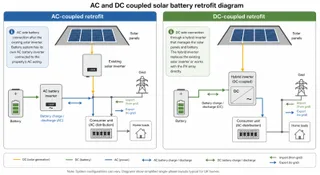
An AC-coupled battery can often be used where the existing solar inverter remains in place and the battery has its own inverter. A DC-coupled approach usually involves a hybrid inverter and may be neater when solar and storage are designed together, but it can be more involved as a retrofit if existing equipment needs replacing.
The installer should also consider DNO requirements. Where a battery system can export to the grid, the combined inverter capacity and export behaviour matter. Depending on the design, the work may fall under a notification route or require approval before installation. The installer should explain the process rather than leaving the homeowner to guess.
Can a battery run your house in a power cut?
A home battery does not automatically mean the whole property will keep running during a power cut. Many standard grid-connected solar and battery systems are designed to shut down safely when the grid fails unless dedicated backup provision has been specified and installed.
Backup also has limits. A battery may support selected circuits, essential loads or a dedicated socket arrangement rather than every appliance in the property. High-demand loads such as electric showers, ovens, immersion heaters, EV chargers and some heat pump arrangements can be unsuitable for backup unless the system has been specifically designed around them.
If backup matters, raise it before the quote is finalised. Retrofitting backup after installation can be more expensive or impractical if the original design did not allow for it.
How long does a home battery last?
Battery life depends on chemistry, design, operating temperature, depth of discharge, cycling pattern, software controls and manufacturer warranty terms. A well-specified battery should be chosen for how it will actually be used, not only for its headline capacity.
The quote should set out the product warranty, what it covers, what might invalidate it and whether warranty support is handled by the installer, manufacturer or distributor. It should also explain any requirements around location, ventilation, firmware updates, internet connectivity and maintenance checks.
Be cautious when comparing warranties using only the number of years shown on a brochure. The more important question is whether the warranty matches the expected cycling pattern and whether the installer is likely to provide competent aftercare if a fault occurs. For more context, read about how long batteries last.
Do you need solar panels for a battery?
No, a home battery can be installed without solar panels, usually to charge from the grid when electricity is cheaper and discharge when electricity is more expensive. Whether that is worthwhile depends on the tariff, the battery controls, the household’s demand pattern and the installed cost.
Solar panels often strengthen the case because they create on-site generation that can be stored instead of exported. Solar is not required, though. A battery-only installation may still be considered where tariff shifting is the main goal.
The key limitation is that a battery-only system relies entirely on the grid for charging. If tariff terms change, the saving opportunity can change too, so the proposal should not depend on a perfect tariff staying available indefinitely.
VAT, grants and headline prices
When comparing quotes, check whether the price includes VAT and what assumptions the installer has made. Do not assume that two quotes are comparable unless both show the same tax treatment, installation scope and optional extras.
Be careful with grant claims or short-lived incentives. Support schemes can change, eligibility can be narrow, and marketing wording is not the same as a confirmed entitlement. A trustworthy installer should explain what is included in the quote and should not rely on vague promises of future funding to make the figures look better.
If a quote looks unusually cheap, check whether it excludes electrical remedial work, DNO-related administration, monitoring setup, backup equipment, scaffolding where needed, or aftercare. Missing scope can make a cheaper quote more expensive later.
Standards, DNOs and trustworthy reference points
Battery storage is an electrical installation, not just an appliance purchase. The design should be compatible with the solar PV system where present, the property’s electrical installation, manufacturer instructions and the relevant network connection process.
For UK projects, useful reference points include MCS guidance where the installation is within its scope, Energy Networks Association connection guidance used by DNOs, the local DNO’s own application or notification process, Ofgem tariff context, and the installer’s product documentation. These references do not produce a universal price, but they help keep the proposal grounded in recognised UK practice.
The homeowner should not have to manage the technical paperwork alone. A competent installer should be able to explain what network process applies, what will be submitted, whether export limitation is being used and what handover documents will be provided.
Is a battery worth it for your home?
A battery is most likely to be worth considering where you have solar generation during the day and meaningful electricity use later on. It can also suit homes that can use an appropriate time-of-use tariff, provided the system is set up and operated in a way that actually takes advantage of cheaper and more expensive periods.
It may be less suitable if your annual electricity use is low, your solar system exports very little surplus, your budget would be better spent on insulation or electrical upgrades, or you expect to move soon. A home can be technically suitable for a battery while still having a weak financial case.
Before accepting a quote, gather recent electricity bills, export data if available, and half-hourly smart meter data where you can access it. Those records help an installer calculate the payback and model whether the battery is likely to cycle often enough to justify the added cost.
Common mistakes when comparing battery quotes
The biggest mistake is comparing one quote with another only by headline capacity. A 10 kWh nominal battery is not automatically the same as another 10 kWh product once usable capacity, power output, inverter design, installation scope and backup capability are considered.
Another common issue is assuming a solar battery will make the home independent from the grid. Most standard UK installations still rely on the grid and shut down safely during a power cut unless they have been specifically designed for backup. Whole-home backup is a different design challenge from normal self-consumption.
It is also worth being cautious with very neat payback claims. Tariffs change, household behaviour changes, and battery performance depends on how the system is cycled over time. A trustworthy proposal should show assumptions clearly rather than promising a guaranteed result.
What to ask before you buy
A good installer should be able to explain why a particular battery size and inverter design suits your property. If the answer is simply “this is our standard package”, ask for more detail, especially if you already have solar panels or want backup.
The quote should separate essentials from options. Backup, extra capacity, outdoor mounting, consumer unit work and monitoring upgrades should not be hidden inside vague wording. Clear scope protects both the homeowner and the installer.
Ask practical questions before focusing on brand preference. Start with usable capacity, maximum charge and discharge power, and whether the system is AC-coupled or DC-coupled. If backup is important, ask which circuits will be supported during a power cut. You should also understand whether the battery can be expanded later and what that would involve.
The practical next step
For a first planning figure, many UK homeowners should think in terms of a professionally installed domestic battery costing several thousand pounds, often around the £4,000 to £10,000 range for common single-home systems. The final answer depends on the usable capacity, the inverter setup, the existing electrics, the installation location, the DNO position and whether backup is part of the brief.
The most useful next step is to avoid shopping by battery size alone. Gather your annual electricity use, recent tariff details, solar generation figures if you already have PV, export information where available, and a sense of when the home uses most energy. With that information, an installer can size the battery around real behaviour rather than guesswork. If you are also reviewing PV options, you can compare home solar before deciding how storage fits into the wider system.
Plan, Compare & Buy Renewable Energy Solutions
AI does the thinking.
You get the perfect solar match.
Use RoboMo™ to assess your property, compare available technologies and connect with trusted UK installers, suppliers and manufacturers.
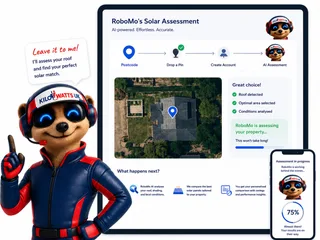
Simply enter your postcode, drop a pin on your roof, create your free account and let RoboMo™ analyse your property to find the best solar panels for your home.

You don't have to think
RoboMo™'s AI analyses your roof and does all the hard work.

Accurate & tailored
AI-powered assessment based on your roof, location, and conditions.

Best options, maximum savings
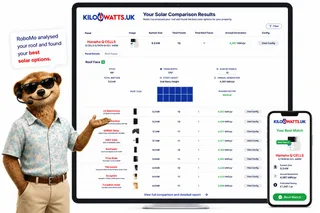
Compare top solar panels for the best performance and value.

Simple, fast & effortless
Provide a few details, sit back and watch your results unfold.
STEP 1
Choose Home, Business or Industrial
Enter your postcode to start your assessment.
STEP 2

Drop a pin on your roof
STEP 3

Create your free account
STEP 4

Sit back and watch RoboMo™ work
RoboMo™ analyses your roof and builds your personalised solar comparison.

Kilowatts UK is an authorised representative
Flower Turbines
Compact vertical-axis turbines built for real UK sites, not just open farmland.
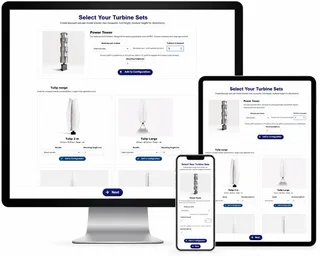
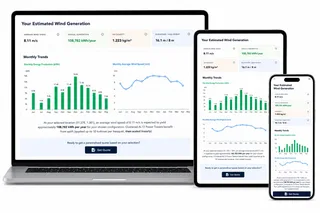
They start in light wind, sit in a small footprint, and are bird-safe by design. Cluster them as a bouquet and the group performs better together than the same turbines standing alone. Enter your postcode for a location-based generation estimate. Figures use area weather data and will differ if buildings, trees or hills sit in the way.
Starts in light UK wind
Built to generate in typical UK wind, not only open farmland.
Small rooftop or ground footprint
Compact towers for roofs, yards and tight sites.
Bird-safe slow rotation
Slow vertical-axis spin, bird-safe by design.
Bouquet clusters raise output
Grouped turbines outperform the same units standing alone.
Step 1
Enter your postcode
Start designing your wind energy system in seconds.
STEP 2

Choose a location
STEP 3

Place your cluster
Tap the map where you want the turbine cluster to go.
STEP 4

Instant generation forecasts
Compare different turbine layouts and see annual generation forecasts instantly.
STEP 5

No commitment required
Explore different configurations before deciding whether to request a quotation.
Related articles

Mo's Mission Nominations
FAQ
Need Help? RoboMo's Got Answers
How much does a home battery cost in the UK?
A professionally installed home battery system is commonly quoted at about £4,000 to £10,000, but the final cost depends on the property and specification. Capacity, inverter choice, backup requirements, cable routes and the condition of the existing electrics can all change the price. Treat headline prices as planning guides and get a site-specific quote.
What should be included in a battery quote?
A proper quote should cover the battery modules, inverter or hybrid inverter, cabling, protection devices, metering, commissioning and monitoring setup. It should also state whether electrical remedial work, network paperwork and VAT are included. If the quote only lists a battery model and capacity, ask what is excluded.
What size battery do I need?
The right size depends on your electricity use, solar generation, tariff and when you use power. Many UK homes consider batteries in the region of 5 kWh to 15 kWh usable capacity, but bigger is not always better. If a battery rarely fills or sits unused for long periods, the extra capacity may not add much value.
Can I add a battery to existing solar panels?
Yes, many homes can add a battery to an existing solar PV system, but it is not always a simple plug-in upgrade. An installer needs to check the existing inverter, consumer unit, metering, cable routes, monitoring and any warranty implications. The design may use an AC-coupled battery or involve changes to the inverter arrangement.
Will a battery power my home during a power cut?
Not automatically. Many standard grid-connected solar and battery systems shut down safely during a power cut unless backup has been specifically designed and installed. Backup may only support selected circuits or essential loads, and high-demand appliances may be unsuitable.
Do I need solar panels to have a battery?
No, a home battery can be installed without solar panels and charged from the grid, often to take advantage of a suitable time-of-use tariff. Whether that makes financial sense depends on the tariff, the battery controls, your usage pattern and the installed cost. Solar panels can strengthen the case by creating surplus electricity to store.
How long does a home battery last?
Battery life depends on the product, chemistry, operating temperature, cycling pattern, depth of discharge and software controls. Check the warranty terms carefully, including what is covered, what could invalidate it and who provides aftercare. Do not compare batteries only by the number of years shown on a brochure.
Are grants, VAT or incentives available for home batteries?
Rules and support schemes can change, so check the current position before relying on any saving. When comparing quotes, confirm whether VAT is included and whether the same installation scope is being priced. Be cautious of sales claims that depend on a grant, tariff or incentive without clear eligibility details.