


Can I add a battery to an existing solar system in the
Published: 2026-06-07 10:50:07
Updated: 2026-06-07 13:04:32
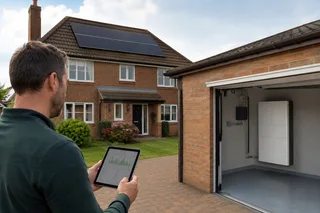
Can You Add a Battery to an Existing Solar System in the UK?
Yes. In most cases you can add a battery to an existing solar system in the UK without replacing your solar panels. Most battery systems can be retrofitted to existing solar installations, although the best approach depends on your inverter, electrical setup, electricity usage and future plans.
Many homeowners assume battery storage can only be installed at the same time as solar panels. In reality, battery retrofits are now one of the most common upgrade projects carried out on existing solar systems.
The bigger question is often not whether a battery can be added, but whether the proposed battery system is suitable for the way the property actually uses electricity.
Why Home Batteries Have Changed
A few years ago, battery storage was largely marketed as a way to store surplus solar generation for use later in the day.
Today, batteries are increasingly being used as home energy management systems. They can store solar energy, reduce peak-rate imports, provide backup power functionality and help households take advantage of time-of-use electricity tariffs.
This shift means that battery storage may be worth considering even where solar generation is relatively low or household energy usage patterns have changed since the solar system was originally installed. As electricity prices continue to influence household energy decisions, batteries are increasingly being viewed as part of a wider energy strategy rather than simply an accessory to solar panels.
Three Reasons People Install Batteries Today
Battery storage systems are now installed for a variety of different reasons.
Some homeowners want to maximise the value of their existing solar generation. Others are primarily interested in reducing electricity imports during expensive tariff periods. Some are focused on resilience and backup power.
- Energy resilience.
- Solar optimisation.
- Tariff optimisation.
Many battery installations combine more than one objective. Understanding the primary goal of the system is often the first step towards selecting the right equipment.
Batteries Can Save Money Without Solar Panels
One of the most common misconceptions about battery storage is that solar panels are required before a battery becomes worthwhile.
Many modern battery systems are installed specifically to take advantage of off-peak electricity tariffs. The battery charges when electricity is cheaper and discharges when electricity prices are higher.
Homeowners researching battery storage without solar are often surprised to discover that some battery installations are designed primarily around tariff optimisation rather than solar generation. The suitability of this approach depends on the tariff available, household demand, battery capacity and charging behaviour. However, it demonstrates that battery storage is no longer exclusively linked to solar generation.
Can My Existing Solar System Take A Battery?
Most UK solar systems can support battery storage, but compatibility should always be assessed before equipment is selected.
The solar panels themselves are rarely the limiting factor. In most battery retrofit projects, installers are assessing inverter compatibility, electrical infrastructure, installation space and future expansion requirements.
Many systems installed ten or fifteen years ago remain excellent candidates for battery storage. This is particularly true where homeowners have already learned about solar panel lifespan and degradation and are looking to maximise the value of an existing installation.
- Existing inverter condition.
- Available installation space.
- Electrical infrastructure.
- Future expansion plans.
In practice, ageing inverter equipment, outdated monitoring systems and electrical upgrade requirements are more likely to influence the project than the solar panels themselves.
AC Coupled vs DC Coupled Batteries
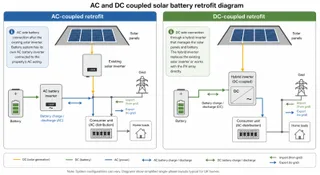
Most battery retrofits fall into one of two categories: AC-coupled systems or DC-coupled systems.
AC-coupled batteries are commonly used when adding storage to an existing solar system because they can often be installed without replacing the existing inverter.
DC-coupled batteries are typically integrated through a hybrid inverter platform where solar generation and battery charging are managed together.
AC-coupled retrofit
Often suitable where the existing solar inverter remains in service.DC-coupled retrofit
Commonly used where inverter replacement or wider system upgrades are planned.
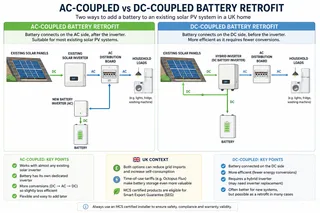
The best solution depends on the age of the solar system, future plans for the property and the overall objectives of the installation.
Will A Battery Affect My Feed-in Tariff Or Export Payments?
Many homeowners with older solar installations worry that adding a battery could affect existing Feed-in Tariff arrangements.
In most cases, battery storage does not automatically affect Feed-in Tariff generation payments because those payments are linked to electricity generation rather than electricity consumption.
Homeowners receiving Smart Export Guarantee payments should still discuss export arrangements before installation. Different suppliers may have different requirements depending on how the battery system operates. Battery retrofits are now a routine part of the UK solar industry, and any tariff implications should normally be identified during the design process before equipment is ordered.
What We Commonly Find During Battery Surveys
Battery surveys often reveal opportunities and limitations that homeowners are not aware of before requesting quotations.
Many homeowners initially focus on battery capacity because it is one of the easiest specifications to compare. However, the most successful battery installations are usually designed around how electricity is consumed throughout the day rather than around the largest available storage figure.
We frequently find that two homes with similar annual electricity consumption require completely different battery solutions because their usage patterns, future plans and energy objectives differ significantly.
- Batteries being significantly larger than the property's actual overnight consumption.
- Existing inverters approaching the end of their expected service life.
- Insufficient consideration for future electrification plans.
- Backup power expectations that do not match the proposed equipment.
Selecting the correct battery size often delivers more value than simply purchasing the largest battery available.
Typical Battery Retrofit Costs In The UK
One of the most common questions homeowners ask is how much it costs to add battery storage to an existing solar system.
The reality is that battery retrofit costs depend on far more than the battery itself. Installation complexity, inverter compatibility, backup requirements and electrical upgrades can all influence the final specification.
Homeowners comparing battery retrofit costs often focus on storage capacity alone, but this can create a misleading comparison. A battery system with a similar storage capacity may include very different levels of monitoring, backup functionality, integration and future expandability. Understanding what is included is usually more important than comparing headline storage figures.
Real-World Battery Retrofit Examples
Battery surveys regularly demonstrate that homeowners can have very different requirements despite having similar electricity bills.
One common scenario involves an existing solar installation where a large proportion of daytime generation is exported because nobody is home during working hours. In this situation, battery storage can increase self-consumption by storing energy that would otherwise leave the property.
Another increasingly common scenario involves homeowners using time-of-use tariffs. Here, battery charging may be driven primarily by cheaper overnight electricity rather than solar generation. The battery becomes part of a wider energy management strategy rather than simply a solar accessory. These examples highlight why battery design should start with household behaviour rather than equipment specifications.
What We Review During A Battery Survey
Before recommending a battery system, several factors should be assessed to ensure the proposed solution is suitable for the property.
- Annual electricity consumption.
- Daytime versus evening electricity usage.
- Existing inverter specifications.
- Available installation locations.
- Consumer unit arrangement.
- Internet and monitoring requirements.
- Backup power expectations.
- Potential battery expansion requirements.
The most successful battery installations are usually those designed around both current and future requirements rather than today's electricity bill alone.
Choosing The Right Battery System
Battery selection involves much more than comparing storage capacity.
Modern battery systems are increasingly expected to interact with solar panels, monitoring platforms, smart tariffs and future electrification projects. This means the overall platform can be just as important as the battery itself.
Expandable systems
Allow storage capacity to increase over time if requirements change.Integrated systems
Combine multiple functions into a single platform and may simplify installation.Value-focused systems
Prioritise usable storage capacity and cost effectiveness.Backup-focused systems
Prioritise resilience and outage protection.
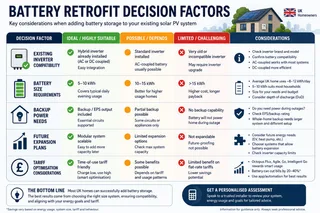
Different battery platforms are designed around different priorities. Some homeowners focus on achieving the lowest storage cost, while others place greater value on backup functionality, monitoring, integration or future flexibility.
Backup Power Is Often Overlooked
Many homeowners only begin thinking about resilience after starting the quotation process.
Historically, backup power installations often required additional components, dedicated consumer units and significant rewiring. Modern systems can simplify this process, but the level of protection available still depends on the chosen equipment and electrical design.
Many homeowners first begin researching backup power after experiencing an outage or discovering that not all battery systems provide resilience during a power cut. Not every battery system offers meaningful backup functionality as standard. Homeowners who value resilience should discuss these requirements early in the design process.
What Affects The Cost Of Adding A Battery?
Battery retrofit costs depend on far more than battery capacity.
Several factors influence the final system specification and installation requirements.
- Battery capacity.
- Installation complexity.
- Existing inverter arrangement.
- Backup power requirements.
- Electrical upgrade requirements.
The final price may also be influenced by monitoring systems, future expansion requirements and any additional hardware required to achieve specific functionality. Comparing quotations solely on storage capacity can be misleading because two systems with similar capacities may include very different levels of capability.
When A Battery May Not Be Right
Battery storage is not automatically the best solution for every property.
Some households may place greater value on resilience, energy independence or future flexibility than direct financial returns. Others may find that alternative energy improvements represent a higher priority.
The best battery system is not necessarily the largest battery or the cheapest quote. Two homes with similar electricity bills may require completely different solutions because their usage patterns, objectives and future plans differ. Understanding these trade-offs is an important part of making an informed decision.
Final Thoughts
For most homeowners asking whether they can add a battery to an existing solar system in the UK, the answer is yes. Existing solar installations can usually be upgraded successfully, and modern battery technology offers significantly more flexibility than many people realise.
Battery storage is no longer simply about storing spare solar generation. Modern systems can support tariff optimisation, resilience planning and wider household electrification strategies.
Future electrification and energy policy changes can also influence battery design decisions. Homeowners interested in longer-term trends may wish to understand recent UK energy policy changes and how they may affect future energy usage. As household electricity prices continue to influence purchasing decisions, battery storage is increasingly being evaluated as part of a wider home energy strategy rather than simply an add-on to solar panels. For most properties, the challenge is not whether a battery can be added. The challenge is designing the right system for the way the property actually uses electricity.
Ready to compare your options?
Get tailored comparisons and connect with trusted installers in under a minute.
Plan, Compare & Buy Renewable Energy Solutions
AI does the thinking.
You get the perfect solar match.
Use RoboMo™ to assess your property, compare available technologies and connect with trusted UK installers, suppliers and manufacturers.
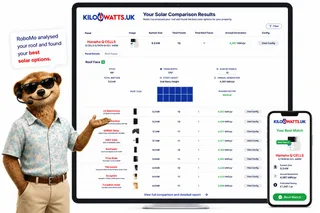
Simply enter your postcode, drop a pin on your roof, create your free account and let RoboMo™ analyse your property to find the best solar panels for your home.

You don't have to think
RoboMo™'s AI analyses your roof and does all the hard work.

Accurate & tailored
AI-powered assessment based on your roof, location, and conditions.

Best options, maximum savings
Compare top solar panels for the best performance and value.

Simple, fast & effortless
Provide a few details, sit back and watch your results unfold.
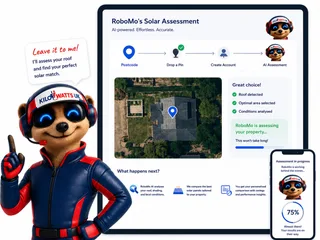
STEP 1
Choose Home, Business or Industrial
Enter your postcode to start your assessment.
STEP 2

Drop a pin on your roof
STEP 3

Create your free account
STEP 4

Sit back and watch RoboMo™ work
RoboMo™ analyses your roof and builds your personalised solar comparison.

Step 1
Enter your postcode
Start designing your wind energy system in seconds.
Are you an installer, distributor or renewable energy business?
Kilowatts UK is expanding the Flower Turbines partner network across the UK.
Become A Flower Turbines PartnerKilowatts UK is an authorised representative
Flower Turbines
Compact vertical-axis turbines built for real UK sites, not just open farmland.
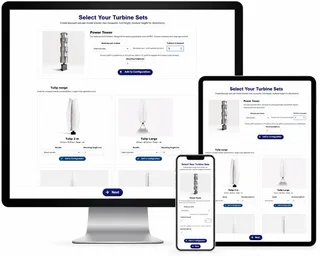
They start in light wind, sit in a small footprint, and are bird-safe by design. Cluster them as a bouquet and the group performs better together than the same turbines standing alone. Enter your postcode for a location-based generation estimate. Figures use area weather data and will differ if buildings, trees or hills sit in the way.
Starts in light UK wind
Built to generate in typical UK wind, not only open farmland.
Small rooftop or ground footprint
Compact towers for roofs, yards and tight sites.
Bird-safe slow rotation
Slow vertical-axis spin, bird-safe by design.
Bouquet clusters raise output
Grouped turbines outperform the same units standing alone.
STEP 2

Choose a location
STEP 3

Place your cluster
Tap the map where you want the turbine cluster to go.
STEP 4

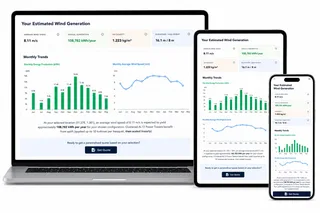
Instant generation forecasts
Compare different turbine layouts and see annual generation forecasts instantly.
STEP 5

No commitment required
Explore different configurations before deciding whether to request a quotation.
Related articles


Mo's Mission Nominations
FAQ
Need Help? RoboMo's Got Answers
Can you add a battery to an existing solar system in the UK?
Yes. In most cases a battery can be added to an existing solar system without replacing the solar panels. The suitability of a retrofit depends more on the inverter, electrical infrastructure, installation space and future plans than the solar panels themselves.
Do you need to replace your solar inverter to add a battery?
Not always. Many AC-coupled battery systems can be added to an existing solar installation without replacing the current inverter. However, some battery designs and DC-coupled systems may require inverter changes depending on the existing setup.
Can a home battery work without solar panels?
Yes. Modern battery systems can be installed specifically to take advantage of off-peak electricity tariffs. The battery charges when electricity is cheaper and discharges during more expensive periods, even if no solar panels are installed.
Why do homeowners install batteries?
Homeowners typically install batteries to store excess solar generation, reduce electricity imports during expensive tariff periods or provide backup power during outages. Many systems are designed to achieve more than one of these goals.
What is the difference between AC-coupled and DC-coupled batteries?
AC-coupled batteries are commonly used when retrofitting battery storage to an existing solar system because they can often be added without replacing the existing inverter. DC-coupled batteries are usually integrated through a hybrid inverter platform that manages both solar generation and battery charging.
Will adding a battery affect Feed-in Tariff payments?
In most cases, no. Feed-in Tariff generation payments are generally linked to electricity generation rather than electricity consumption. However, homeowners should discuss any potential implications with their installer before proceeding.
Can a battery affect Smart Export Guarantee payments?
Potentially. Different suppliers may have different requirements depending on how the battery system is configured and operated. Export arrangements should be reviewed during the design stage of the project.
What limits whether a battery can be added to an existing solar system?
The most common limitations are inverter compatibility, electrical infrastructure, available installation space, monitoring equipment and future expansion requirements rather than the solar panels themselves.
How do installers decide what battery size is suitable?
Battery size should be based on how the household uses electricity rather than simply choosing the largest available battery. Electricity consumption patterns, overnight demand and future energy requirements are often more important than headline storage capacity.
What are common mistakes homeowners make when choosing a battery?
Many homeowners focus exclusively on battery capacity. Common mistakes include selecting a battery significantly larger than actual overnight usage, overlooking backup power requirements and failing to consider future energy needs.
How much does it cost to add a battery to an existing solar system?
Battery retrofit costs depend on more than the battery itself. Installation complexity, inverter compatibility, electrical upgrades, monitoring systems and backup power requirements can all affect the final cost.
Why can two battery systems with similar capacities cost different amounts?
Battery systems with similar storage capacities can include different levels of monitoring, backup functionality, integration and future expandability. Comparing storage capacity alone can give a misleading impression of value.
Can battery storage increase solar self-consumption?
Yes. Battery storage can store electricity that would otherwise be exported to the grid, allowing more of the generated solar energy to be used within the property later in the day.
Can a battery help reduce electricity bills using time-of-use tariffs?
Yes. Many battery systems are designed to charge during cheaper tariff periods and discharge during more expensive periods, helping reduce the cost of imported electricity.
Do all battery systems provide backup power during a power cut?
No. Not every battery system provides meaningful backup functionality. Backup capability depends on the equipment selected and how the system has been designed and installed.
What do installers typically assess during a battery survey?
Installers commonly assess annual electricity consumption, usage patterns, inverter specifications, installation locations, monitoring requirements, backup power expectations and future expansion plans before recommending a system.
Is the largest battery always the best option?
No. The most suitable battery depends on how the property uses electricity, the homeowner's objectives and future plans. A larger battery is not always the most effective or economical solution.
When might battery storage not be the right choice?
Battery storage is not automatically the best solution for every property. Some households may prioritise resilience or energy independence, while others may find that different energy improvements offer greater value based on their circumstances.
Can older solar systems still be good candidates for battery storage?
Yes. Many solar systems installed ten or fifteen years ago can still be excellent candidates for battery storage, provided the wider electrical system and inverter arrangements are suitable.
What is the biggest factor in a successful battery retrofit?
A successful battery retrofit is usually determined by how well the system matches the property's electricity usage patterns, objectives and future requirements rather than by battery capacity alone.