


Choosing the best home battery for your UK property
Published: 2026-07-19 08:33:52
Updated: 2026-08-01 11:06:57
There is no single best home battery for every property. A small home may suit a 5 kWh modular battery.
Best home battery in the UK: quick answer
The best home battery storage system in the UK is the one that matches your usable capacity, power output, inverter compatibility, tariff, solar system, backup needs, warranty terms, DNO approval route, and installed cost. There is no single best home battery for every property.
A small home may suit a 5 kWh modular battery. A larger household with solar panels, an EV, a heat pump, high evening demand, or a need for backup power may need 10 kWh to 15 kWh or more. Installation quality and correct system design matter as much as the battery brand.
A sensible UK shortlist usually includes systems from Tesla, GivEnergy, Enphase, SolarEdge, Huawei, Fox ESS, myenergi, Sigenergy, Sunsynk, BYD, Puredrive, Duracell Energy, GoodWe, Solis, and Victron-compatible battery setups. The right choice depends less on brand popularity and more on how the battery will work with your existing or planned inverter, your distribution network operator requirements, and your day-to-day electricity pattern. For most UK homes, the comparison should start with these questions.
- How much electricity do you use overnight.
- How much surplus solar do you export.
- Do you want grid charging on a smart tariff.
- Do you need backup during power cuts.
- Is your existing solar inverter compatible with the battery.
- Will a hybrid, DC-coupled, or AC-coupled battery be better value.
Typical installed home battery costs are about £4,000 to £10,000, although large premium systems with backup equipment, complex electrical work, or inverter replacement can cost more. A solar-plus-battery installation commonly costs about £9,000 to £15,000, depending on system size, inverter choice, scaffolding, electrical works, DNO requirements, and property complexity. If you are comparing panels at the same time, it is worth checking how battery choice fits your wider plan to compare home solar options. Does the system need G98 notification, G99 approval, or export limitation. Is there a safe and practical installation location.
What makes one home battery better than another
A good home battery is not simply the battery with the largest capacity. Capacity tells you how much energy can be stored, but power output tells you how much can be delivered at one time. A 10 kWh battery with a 3.6 kW output can store a useful amount of electricity, but it may still struggle if several high-load appliances run together.
Usable capacity is especially important. It is the amount of stored energy the system allows you to use after allowing for battery protection. Many UK homes compare batteries in the 5 kWh to 15 kWh range, but the right size depends on evening demand, solar surplus, tariff spread, and how often the battery will cycle.
Power output affects real-world performance. A kettle, oven, hob, heat pump, or electric shower can draw a lot of power. Many domestic batteries discharge at about 2.5 kW to 5 kW, while some premium systems can deliver more. That does not mean every high-load appliance should be placed on backup circuits. Inverter compatibility is just as important as battery capacity. Some batteries only work with a specific inverter family. Others are AC-coupled and can be added alongside many existing solar systems. Some modular batteries, such as BYD Battery-Box units, can work with a range of compatible inverter brands, but only if the exact inverter model, firmware, voltage range, and battery protocol are approved. Warranty terms also need close reading. Most domestic batteries are designed for about 10 to 15 years of use, and many warranties run for around 10 years. Some warranties include throughput limits, cycle limits, or retained capacity guarantees. A long warranty is useful, but only if the terms match your expected cycling pattern, especially if you plan to charge and discharge the battery daily on a smart tariff. The installer’s design can make or break the outcome. Incorrect CT clamp placement, poor inverter configuration, weak Wi-Fi, unsuitable siting, missing DNO paperwork, or a badly planned backup board can turn a good battery into a frustrating system.
Best home battery by use case
The best home battery depends on the job it has to do. A fair comparison should look at the property first, then the product.
Best for larger homes
Tesla Powerwall 3 and GivEnergy All in One are common 13.5 kWh-class options for homes with higher demand, larger solar arrays, or a desire for a single large unit.Best for SolarEdge homes
SolarEdge Home Battery is usually the natural battery to compare where a compatible SolarEdge inverter is already installed or being specified.Best for modular expansion
Enphase, Huawei, Fox ESS, BYD, myenergi libbi, Sigenergy, Puredrive, Duracell Energy, GoodWe-compatible batteries, and Solis-compatible battery systems can suit homes wanting staged capacity increases.Best for new solar installation
Hybrid inverter or DC-coupled systems can reduce duplicated equipment and may be neater when panels and batteries are designed together.Best for existing solar retrofit
AC-coupled batteries are often simpler to add to an existing solar installation because they use their own battery inverter, although export limits and DNO requirements still need checking.Best for Enphase microinverter homes
Enphase IQ Battery systems are usually the most straightforward ecosystem fit, subject to UK backup configuration and system design.
A low-cost battery can be excellent value in the right installation, but it may not be the best choice if it lacks the power output, warranty, support, compatibility, or control features needed for your tariff strategy. Best for smart tariffs — The best option is usually the battery with reliable scheduling, tariff compatibility, and software that can charge and discharge at the right times without constant manual adjustment. Best for backup power — The best choice depends on backup output, switchover method, gateway hardware, selected circuits, DNO approval, and whether whole-home backup is genuinely required.
Popular UK home battery options to compare
Tesla Powerwall 3 is often considered for larger homes because it has 13.5 kWh of usable capacity and an integrated solar inverter. It can support backup when installed with the appropriate gateway hardware. It is usually a premium option and is less modular than smaller stackable systems. In retrofit situations, the installer must decide whether Powerwall 3 will sit alongside existing solar equipment or become part of a redesigned solar-and-storage system.
GivEnergy All in One is another common large domestic battery, also around 13.5 kWh usable capacity. It is AC-coupled and is widely installed in the UK. It can provide backup when installed with compatible gateway equipment, making it a frequent comparison against Powerwall-class systems. It can be a practical retrofit option because it does not normally require the existing solar inverter to be replaced.
GivEnergy modular batteries are popular where homeowners want a lower starting capacity than a large single unit. Common sizes include around 5 kWh and 9.5 kWh, usually paired with GivEnergy hybrid or AC-coupled inverters. They are often attractive where the customer wants a single manufacturer ecosystem for inverter, battery, app, and support. Enphase IQ Battery 5P is a modular AC-coupled system based around approximately 5 kWh battery modules. It is especially relevant where the home already uses Enphase microinverters. Backup capability depends on the installed UK configuration, so it should not be assumed without checking the specific design. SolarEdge Home Battery is designed for compatible SolarEdge inverter systems and has about 9.7 kWh usable capacity. It is a DC-coupled high-voltage battery, which can make sense for homes already using SolarEdge optimisers and compatible SolarEdge inverter equipment. It is not a generic battery that can be paired freely with any existing inverter. Huawei LUNA2000 batteries are modular in 5 kWh blocks, with common domestic configurations of 5 kWh, 10 kWh, and 15 kWh. They are usually paired with compatible Huawei SUN2000 hybrid inverters and are often used in new solar-plus-battery installations. Fox ESS batteries are often chosen for price-sensitive installations and are commonly paired with Fox hybrid inverters such as suitable H1 or KH series models, depending on the battery range. The specification varies by battery family, so comparisons should be made model by model rather than by brand name alone. myenergi libbi is available in modular capacities from about 5 kWh to 20 kWh and is designed to integrate with other myenergi devices such as zappi and eddi. It can suit homes already building around that energy ecosystem, particularly where EV charging control is a priority. Sigenergy SigenStor is a modular battery and inverter system that can combine solar, battery storage, and EV charging options. It may suit homes wanting an integrated energy setup, although long-term UK field data is more limited than for older product families. Sunsynk systems are often chosen where flexible hybrid inverter design or backup functionality is important. Sunsynk inverters can work with selected compatible batteries, but the exact battery model, communications protocol, commissioning settings, and warranty position need careful installer attention. BYD Battery-Box systems are modular and can work with several inverter brands, provided compatibility is confirmed. They are commonly discussed alongside compatible SMA, Fronius, GoodWe, Victron, Solis, and other inverter options, but the approved pairing depends on the specific battery range and inverter model. Puredrive batteries are UK-based domestic battery products often installed in modular sizes. Installer availability and compatible inverter choices can vary by region and system design, so they should be compared using full installed specifications. Duracell Energy batteries benefit from strong brand familiarity among homeowners, but technical suitability still depends on inverter compatibility, warranty terms, monitoring features, DNO treatment, and installer support. GoodWe battery systems are often used with GoodWe hybrid inverters in solar-plus-storage installations. They can be cost-effective, but the right model depends on whether the system is single-phase or three-phase, whether backup is required, and which battery range is supported. Solis hybrid inverter systems are common in the UK and can be paired with compatible batteries from approved ranges. They can be a practical choice for new solar-plus-battery systems or selected retrofits, but the installer must check exact compatibility and export control requirements. Victron-based systems can be highly flexible, particularly where off-grid-style control, backup, or unusual system architecture is needed. They are not always the simplest or cheapest option for a standard domestic property, but they can be useful where a more engineered solution is justified.
How inverter compatibility affects the best battery choice
Inverter compatibility is one of the biggest differences between a good quote and a poor quote. A battery is not always a plug-in addition to an existing solar panel system. The battery, inverter, solar inverter, meter, monitoring platform, gateway, and DNO export settings all need to work together.
If you already have solar panels with a standard string inverter, an AC-coupled battery is often the simplest retrofit. For example, a home with an existing SMA, Fronius, Solis, Growatt, GoodWe, or older SolarEdge inverter may be able to keep that inverter and add a separate AC-coupled battery such as GivEnergy All in One, Tesla Powerwall, Enphase, or another suitable AC battery system. This can avoid replacing the solar inverter, but it adds another inverter and may require export limitation or G99 approval. If this is your situation, compare the practical steps to add a battery before committing to a specific product.
If you are installing solar panels and a battery at the same time, a hybrid inverter can be neater and more cost-effective. For example, a Huawei LUNA2000 battery with a compatible Huawei hybrid inverter, a Fox ESS battery with a compatible Fox hybrid inverter, or a GivEnergy battery with a GivEnergy hybrid inverter may reduce duplicated equipment. The trade-off is that the battery becomes tied more closely to that inverter ecosystem. If you already have SolarEdge optimisers and a compatible SolarEdge inverter, SolarEdge Home Battery is often the natural first comparison. It may be technically cleaner than trying to mix ecosystems, but compatibility depends on the exact inverter model and generation. Some older SolarEdge systems may need inverter replacement before battery storage can be added. If you have Enphase microinverters, Enphase IQ Battery is usually the most ecosystem-aligned option. This can be attractive because each solar panel already has its own microinverter, and the battery is AC-coupled. However, backup hardware, system controller availability, UK configuration, and DNO requirements still need checking. If you want a battery such as BYD Battery-Box, the inverter choice becomes central. BYD batteries can work with a range of approved inverter brands, but not every inverter from those brands is compatible. A quote should name the exact inverter model, battery model, battery capacity, and firmware assumptions. If you are considering Tesla Powerwall 3 on a new solar installation, its integrated solar inverter can reduce the need for a separate solar inverter in some designs. On an existing solar installation, the design may be different, and the installer should explain whether the existing inverter remains, whether solar strings are moved, and what happens to warranties. Compatibility can also affect cost. Keeping an existing solar inverter and adding an AC-coupled battery may be cheaper than removing equipment and rewiring solar strings, but it may involve extra protection devices and export controls. Replacing an old inverter with a hybrid inverter may increase the upfront cost, but it can create a neater long-term system if the existing inverter is near the end of its life. A quote that looks cheap can become expensive if it ignores inverter replacement, scaffolding, cable routes, gateway equipment, or DNO work.
How to choose the right battery size
A typical UK home battery is around 5 kWh to 15 kWh of usable capacity. Small batteries are usually 3 kWh to 6 kWh, medium batteries are usually 7 kWh to 10 kWh, and large domestic batteries are usually 11 kWh to 15 kWh. Some homes install more than 20 kWh using multiple modules, but that is not automatically better.
A low-usage home may only need 4 kWh to 6 kWh. An average electricity-using home often suits 7 kWh to 10 kWh. A home with a heat pump, EV, high evening demand, or larger solar array may need 10 kWh to 20 kWh or more.
The best size is normally found by comparing three things.
- Your half-hourly electricity use.
- Your solar export or likely solar surplus.
- Your tariff’s peak and off-peak periods.
Oversizing is a common mistake. If the battery rarely fills and empties, the extra capacity may not pay for itself. Undersizing is also a problem because the home may export cheap surplus solar during the day and import expensive electricity later. Do not size a battery from annual electricity use alone. Two homes with the same annual consumption can need different batteries if one uses power during the day and the other uses most electricity in the evening. For smart tariff charging, the usable capacity should also fit the cheap-rate window. A very large battery may not fully charge in a short off-peak period if the inverter charge rate is limited. A smaller battery with a higher charge and discharge rate may sometimes work better than a larger battery with lower power capability. For a more detailed sizing method, start with your real usage and work through battery size planning.
Capacity and power output are not the same
Capacity is measured in kilowatt-hours. It tells you how much energy the battery can store. Power output is measured in kilowatts. It tells you how much electricity the battery can deliver at one moment.
This distinction matters in real homes. A battery may have enough stored energy to cover evening use, but its inverter may not be able to run every appliance at once. A kettle may draw about 2 kW to 3 kW, an electric oven may draw about 2 kW to 3.5 kW, and an electric shower may draw about 7 kW to 10.5 kW. Most home batteries are not intended to run an electric shower for long.
For backup systems, inverter output is often more important than total battery capacity. Critical loads normally include lighting, fridge, freezer, router, boiler controls, and selected sockets. High-load circuits are often excluded unless the system is specifically designed and approved for them. A larger battery with low output may suit solar self-consumption but disappoint during a power cut. A smaller battery with higher output may feel more responsive but empty sooner. The right balance depends on the household load profile. DNO limits can also affect usable output. A battery may technically be capable of exporting more power than the local network allows. In that case, export limitation or a lower export setting may be required, even if the battery can still supply more to the home internally.
AC-coupled, DC-coupled, and hybrid systems
The best battery configuration often depends on whether the property already has solar panels. AC-coupled batteries connect to the home’s AC wiring through their own inverter. They are often practical for retrofits because they can sit alongside an existing solar inverter.
DC-coupled batteries connect on the solar side before electricity is converted to AC. They are commonly used with hybrid inverters that manage solar panels and battery storage together. This can be efficient and tidy in a new solar installation, but it usually requires compatible equipment from the start.
Hybrid inverter systems can reduce the number of boxes on the wall, but they also tie the battery more closely to the inverter ecosystem. AC-coupled systems can offer flexibility, but they add another inverter and may need careful export limitation settings. If you are choosing between these layouts, compare the trade-offs between AC-coupled and DC-coupled storage before looking only at battery capacity. For example, if a home already has a 3.68 kW solar inverter and adds a separate 5 kW AC-coupled battery inverter, the DNO may treat the site as having more total generation capability than the original solar system. Even if the battery is intended mainly for self-consumption, the inverter can export unless it is correctly limited. This is why retrofit battery installations often need more DNO attention than homeowners expect. A new hybrid solar-and-battery system can sometimes be easier to justify electrically because the hybrid inverter manages solar and battery through one grid connection point. However, the total inverter rating, export setting, and type-tested equipment still matter. The choice is not only technical. It affects cost, DNO approval, future expandability, warranty support, monitoring, and how easy the system is to maintain if one component fails.
UK DNO requirements for home battery installations
Your distribution network operator, or DNO, owns and manages the local electricity network that connects your home to the grid. It is not the same as your electricity supplier. Your supplier bills you for electricity; the DNO sets connection requirements for equipment such as solar inverters, battery inverters, EV chargers, and heat pumps.
UK DNOs include UK Power Networks, Scottish and Southern Electricity Networks, Northern Powergrid, Electricity North West, SP Energy Networks, National Grid Electricity Distribution, ScottishPower Manweb within SP Energy Networks, and NIE Networks in Northern Ireland. The correct DNO depends on where the property is, not which supplier you pay.
Home batteries are treated as generation equipment because they can export electricity to the grid. That means the installer must consider Engineering Recommendation G98, G99, and sometimes G100 export limitation requirements. The exact route depends on inverter size, whether there is already solar on site, whether the system is single-phase or three-phase, and whether export is limited. As a general guide, small domestic generation up to 16 A per phase, commonly referred to as 3.68 kW on a single-phase supply, may fall under G98 if the equipment is type-tested and the site meets the rules. Larger systems, multiple inverters, or systems that exceed the G98 threshold normally need G99 approval before connection. Export-limited systems may also need G100-compliant export control equipment. DNO requirements can affect the best battery choice in several ways.
- A 3.68 kW battery inverter may be easier to approve than a larger inverter on some single-phase homes.
- Adding an AC-coupled battery to existing solar may push the total generation capacity into G99 territory.
- A hybrid inverter may simplify export control compared with separate solar and battery inverters.
- Whole-home backup equipment may require additional protection and isolation design.
- Rural or weak networks may have stricter export limits than urban networks.
- Three-phase homes may have more options, but the design must balance phases correctly.
The installer should check the Energy Networks Association type test register where relevant and should confirm whether the job is a connect-and-notify G98 installation, a pre-approved G99 installation, or a G99 application requiring DNO assessment. They should also provide the DNO paperwork after installation. DNO approval is not a formality to ignore. If an installer fits a system without the correct notification or approval, it can create problems with export tariffs, insurance, future property sale paperwork, and network compliance. It can also lead to settings being changed later if the DNO refuses the export level assumed in the quote. Approval times can affect installation dates, especially for larger systems.
Battery costs and what affects price
A small installed home battery can cost about £4,000 to £6,000. A medium installed home battery can cost about £6,000 to £8,500. A large installed home battery can cost about £8,000 to £12,000, and a premium large battery with backup hardware can exceed £12,000.
The installed cost per usable kWh is commonly about £600 to £1,100. Larger batteries often have a lower cost per kWh than small batteries, but that does not mean they are always better value. A low-cost oversized system can still deliver poor returns if it is not used regularly.
The battery unit is only part of the price. The total installed cost can include inverter hardware, protection devices, gateway equipment, cabling, commissioning, monitoring setup, certification, and DNO work. Retrofitting a battery to an existing solar system can cost more than adding one during a new solar installation. For a fuller cost breakdown, compare the items that usually sit behind installed battery costs. Inverter compatibility has a direct cost impact. If your existing solar inverter can stay in place and an AC-coupled battery can be added cleanly, the installation may be relatively straightforward. If the existing inverter must be replaced with a hybrid inverter, the quote may need to include inverter removal, rewiring, possible scaffolding, solar string testing, additional certification, and new monitoring setup. Backup capability can add significant cost. Whole-home backup or selected-circuit backup may need extra consumer units, isolation equipment, changeover hardware, neutral-earth switching, gateway devices, DNO-compliant protection, and more design time. DNO requirements can also affect cost. A simple G98 notification is usually less onerous than a larger G99 application. Export limitation can add hardware and commissioning time. In some constrained areas, the DNO may require a lower export limit than expected, which can change the financial case. Domestic battery installations currently qualify for 0% VAT when installed by a contractor under UK energy-saving materials rules. DIY battery purchases do not normally receive the same VAT treatment as a qualifying installed system.
Solar, tariffs, and payback
Battery savings depend heavily on the gap between import and export prices. If your import price is high and your export price is low, storing solar for evening use can make sense. If your export tariff is attractive, the financial case for storing every spare unit of solar becomes weaker.
A standalone battery without solar can still work if it charges from cheap off-peak electricity and discharges during expensive periods. This usually needs a smart meter, a suitable time-of-use tariff, and reliable scheduling. Poor scheduling can increase bills rather than reduce them.
Solar generation is seasonal in the UK. A battery may fill daily in summer and rarely fill in winter unless it charges from the grid. Heat pump homes can have the highest demand when solar output is lowest, so winter modelling matters. Simple payback is often about 7 to 15 years, but it depends on electricity use, solar generation, tariff, export rate, installed cost, DNO export limits, and battery degradation. Backup value, resilience, and convenience are not fully captured by a simple payback calculation. A realistic calculation should test your usage and tariff assumptions rather than rely on headline savings, especially when estimating battery payback. Export limits can change the payback calculation. If the DNO restricts export, a battery may increase self-consumption and improve the value of solar generation that would otherwise be curtailed. If export is unrestricted and the household has a strong export tariff, the benefit of storing solar may be lower. A battery does not remove electricity standing charges, and most UK homes will still need a grid connection. It should be treated as part of a wider energy strategy, not as a route to full off-grid independence for most properties.
Backup power during power cuts
Not all home batteries provide backup power. Not all backup systems operate automatically. Not all backup systems power the whole house. This is one of the most common misunderstandings when comparing batteries.
EPS means emergency power supply. It may provide power to selected circuits, a dedicated socket, or a backup consumer unit, depending on the system. Whole-home backup is a more complex design and usually costs more.
Solar panels do not usually work normally during a power cut. Standard grid-tied solar shuts down for safety. Solar can operate during a power cut only if the battery system supports islanded operation and has the correct isolation and protection equipment. Before paying extra for resilience, check what power cut backup actually means for the exact battery and wiring design. Backup design should start with a list of essential loads. Fridge, freezer, router, lights, boiler controls, and some sockets are realistic. Electric showers, large ovens, immersion heaters, and EV chargers are usually not sensible backup loads for most domestic battery systems. DNO and electrical safety requirements still apply to backup systems. The battery must not energise the public grid during a power cut. This requires correct isolation, anti-islanding protection, earthing arrangements, and commissioning. Whole-home backup should never be treated as a simple add-on without a proper electrical design. If power cuts are rare in your area, backup may not justify the extra cost. For rural homes, home workers, medical equipment users, or properties with unreliable supply, backup value may be more important than payback alone.
Installation checks that homeowners often overlook
A proper battery survey should cover more than available wall space. The installer should check the main fuse rating, meter tails, consumer unit, earthing arrangement, cable routes, existing solar inverter, spare ways, DNO requirements, and whether the wall or floor can support the chosen battery.
Many batteries are heavy. A 13.5 kWh battery can weigh over 100 kg, so floor mounting or a structurally suitable wall may be needed. Loft installations are often poor choices because of temperature swings, difficult access, fire safety concerns, and structural loading.
Location matters for performance and lifespan. High temperatures can accelerate degradation, while very cold spaces can reduce charging performance. Outdoor-rated batteries still need correct clearances and suitable protection from exposure. Internet connectivity is another practical issue. Many batteries rely on monitoring apps, firmware updates, and tariff control. Weak Wi-Fi in a garage or plant room can lead to unreliable monitoring or missed charge schedules. The survey should also check whether the existing solar system is documented properly. Missing MCS certificates, unknown inverter settings, old generation meters, inaccessible isolators, or unclear wiring can make a battery retrofit more complex. The handover pack should include manuals, electrical certificates, DNO documents, warranty details, commissioning records, export limitation settings where relevant, and app access. If the installer leaves without explaining operating modes and tariff settings, the battery may not perform as expected.
When a home battery may not be suitable
A home battery is not always the right investment. Very low-use homes may not cycle the battery enough to justify the installed cost. Homes with high daytime self-consumption and little evening use may already be using most of their solar directly.
A battery may also be difficult where there is no safe installation location. Flats, leasehold properties, shared electrical infrastructure, escape routes, and meter cupboards can introduce practical and fire safety constraints.
Homeowners seeking a very short payback may be disappointed. Battery economics depend on tariff rules, electricity use, export rates, installed cost, DNO export limits, and degradation. Tariffs can change, and savings are not guaranteed. DNO limits can also affect suitability. Larger or more complex systems may need G99 approval, G100 export limitation, or additional design work. Rural networks can be more constrained than urban networks. In some cases, the best battery on paper may not be the best battery for the local grid connection. Existing inverter age can also change the decision. If your solar inverter is close to the end of its warranty, it may be sensible to compare a battery retrofit against a full hybrid inverter replacement. If your inverter is new and working well, an AC-coupled battery may be more attractive. If the main reason for buying a battery is to charge an EV, the sizing should be checked carefully. An EV battery is usually much larger than a home battery, often 40 kWh to 100 kWh. A domestic battery should not normally be sized to fill an EV.
How to compare quotes fairly
A fair home battery comparison should use installed system data, not headline battery prices. Two quotes can look similar while offering very different usable capacity, power output, backup capability, inverter compatibility, DNO treatment, and warranty value.
Usable capacity: Compare the energy you can actually use, not only the nominal capacity. Continuous output: Check whether the inverter can support your normal simultaneous loads. Charge rate: Confirm whether the battery can charge fully during your off-peak tariff window. Backup scope: Confirm whether there is no backup, selected-circuit backup, or whole-home backup. Inverter compatibility: Check whether the battery works with your existing solar inverter or needs a new hybrid inverter. DNO route: Ask whether the system is G98, G99, or G100 export-limited, and whether approval is needed before installation.
Ask for a design based on your actual usage data where possible. Half-hourly smart meter data, existing solar export data, and details of planned EV charging or heat pump use are far more useful than a generic estimate. The best quote should explain assumptions clearly. If a proposal promises very high savings without showing tariff assumptions, seasonal performance, export treatment, DNO constraints, or battery degradation, treat it cautiously. Warranty terms — Review length, throughput, cycle limit, and retained capacity. Monitoring and controls — Check that the app supports tariff scheduling, solar charging priorities, and remote support. Installed cost — Include labour, gateway equipment, electrical work, certification, scaffolding if needed, and DNO requirements. Support — Consider UK installer availability, technical support, spare parts, and warranty process.
Practical recommendation
For many UK homes with solar panels and evening electricity use, a well-designed 7 kWh to 10 kWh battery is a sensible starting point. Smaller homes may be better served by a 3 kWh to 6 kWh system, while larger homes, heat pump properties, and higher-demand households may need 10 kWh to 15 kWh or more.
If you want a large single battery, Tesla Powerwall 3 and GivEnergy All in One are obvious systems to compare. If you want modular growth, look closely at Enphase, Huawei, Fox ESS, BYD, myenergi libbi, Sigenergy, Puredrive, Duracell Energy, GoodWe, Solis, and compatible hybrid inverter options. If you already have solar, inverter compatibility may narrow the field quickly.
For an existing solar system, the first decision is usually whether to keep the existing inverter and add an AC-coupled battery, or replace the inverter with a hybrid system. Keeping the existing inverter can reduce disruption, but may add another inverter and trigger more DNO export checks. Replacing it can create a cleaner design, but may cost more upfront. For a new solar-plus-battery installation, a hybrid inverter or integrated system is often the neatest option, provided the battery ecosystem, backup requirements, and DNO export settings are suitable. For backup-focused homes, compare output, switchover method, gateway hardware, selected loads, and earthing design before comparing battery capacity. The best home battery is not the cheapest product or the biggest box. It is the system that cycles regularly, works with your tariff, fits your property safely, has enough output for the intended loads, is compatible with your inverter strategy, meets UK DNO requirements, and is installed by someone who provides proper commissioning, certification, and handover. If you want the next step based on your property and usage, you can book a free survey.
Plan, Compare & Buy Renewable Energy Solutions
AI does the thinking.
You get the perfect solar match.
Use RoboMo™ to assess your property, compare available technologies and connect with trusted UK installers, suppliers and manufacturers.
Simply enter your postcode, drop a pin on your roof, create your free account and let RoboMo™ analyse your property to find the best solar panels for your home.

You don't have to think
RoboMo™'s AI analyses your roof and does all the hard work.

Accurate & tailored
AI-powered assessment based on your roof, location, and conditions.

Best options, maximum savings
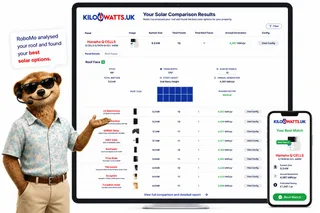
Compare top solar panels for the best performance and value.

Simple, fast & effortless
Provide a few details, sit back and watch your results unfold.
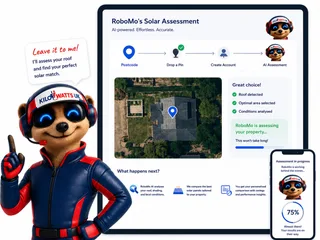
STEP 1
Choose Home, Business or Industrial
Enter your postcode to start your assessment.
STEP 2

Drop a pin on your roof
STEP 3

Create your free account
STEP 4

Sit back and watch RoboMo™ work
RoboMo™ analyses your roof and builds your personalised solar comparison.

Kilowatts UK is an authorised representative
Flower Turbines
Compact vertical-axis turbines built for real UK sites, not just open farmland.
They start in light wind, sit in a small footprint, and are bird-safe by design. Cluster them as a bouquet and the group performs better together than the same turbines standing alone. Enter your postcode for a location-based generation estimate. Figures use area weather data and will differ if buildings, trees or hills sit in the way.
Starts in light UK wind
Built to generate in typical UK wind, not only open farmland.
Small rooftop or ground footprint
Compact towers for roofs, yards and tight sites.
Bird-safe slow rotation
Slow vertical-axis spin, bird-safe by design.
Bouquet clusters raise output
Grouped turbines outperform the same units standing alone.
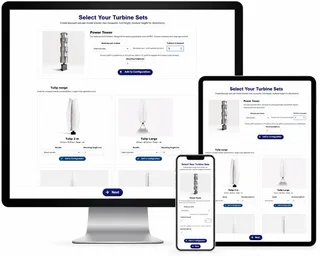
Step 1
Enter your postcode
Start designing your wind energy system in seconds.
STEP 2

Choose a location
STEP 3

Place your cluster
Tap the map where you want the turbine cluster to go.
STEP 4

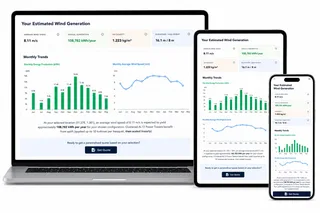
Instant generation forecasts
Compare different turbine layouts and see annual generation forecasts instantly.
STEP 5

No commitment required
Explore different configurations before deciding whether to request a quotation.
Related articles

Mo's Mission Nominations
FAQ
Need Help? RoboMo's Got Answers
What is the best home battery in the UK?
The best home battery in the UK is the one that fits your electricity use, solar generation, inverter setup, tariff, backup requirements, DNO approval route, warranty expectations, and budget. There is no single best battery for every home. A smaller property may only need around 5 kWh of usable storage, while a larger household with solar panels, an EV, a heat pump, or high evening demand may need 10 kWh to 15 kWh or more.
Which home battery brands should I compare?
Common UK home battery options include Tesla, GivEnergy, Enphase, SolarEdge, Huawei, Fox ESS, myenergi, Sigenergy, Sunsynk, BYD, Puredrive, Duracell Energy, GoodWe, Solis, and Victron-compatible systems. The best choice depends less on brand popularity and more on the full installed design, including inverter compatibility, usable capacity, power output, warranty terms, DNO requirements, backup capability, and installer support.
How big should my home battery be?
Most UK homes compare batteries between about 5 kWh and 15 kWh of usable capacity. Low-use homes may suit 3 kWh to 6 kWh, average homes often suit 7 kWh to 10 kWh, and larger homes with high evening use, heat pumps, EVs, or larger solar arrays may need 10 kWh to 20 kWh or more. The right size should be based on your half-hourly electricity use, solar export, likely solar surplus, tariff windows, and how often the battery is expected to charge and discharge.
Is a bigger home battery always better?
A bigger battery is not always better. If the battery rarely fills or empties, the extra capacity may not pay for itself. Oversizing can increase the upfront cost without increasing savings enough to justify it. Undersizing can also be a problem because you may export cheap surplus solar during the day and import expensive electricity later. The best battery size is one that cycles regularly and matches your real usage pattern.
What is the difference between battery capacity and power output?
Capacity is measured in kilowatt-hours and shows how much energy the battery can store. Power output is measured in kilowatts and shows how much electricity the battery can deliver at one time. A battery may have enough stored energy for the evening but still be unable to run several high-load appliances together. This matters especially for kettles, ovens, hobs, electric showers, heat pumps, and backup power circuits.
Can I add a battery to my existing solar panel system?
Yes, many existing solar panel systems can have a battery added, but the best option depends on your current inverter and electrical setup. An AC-coupled battery is often the simplest retrofit because it has its own battery inverter and can sit alongside an existing solar inverter. In some cases, replacing the existing inverter with a hybrid inverter may create a neater long-term system, especially if the old inverter is near the end of its warranty.
What is the difference between AC-coupled and DC-coupled batteries?
An AC-coupled battery connects to the home’s AC wiring through its own inverter, which often makes it practical for retrofitting to an existing solar system. A DC-coupled battery connects on the solar side of the system and is usually managed by a hybrid inverter. DC-coupled or hybrid systems can be neat and efficient for new solar-plus-battery installations, while AC-coupled systems can be more flexible when solar panels are already installed.
Do home batteries work during a power cut?
Not all home batteries work during a power cut. Backup power usually requires specific hardware, isolation equipment, earthing arrangements, and correct system design. Some systems only provide power to selected circuits or a dedicated backup output, while whole-home backup is more complex and usually more expensive. If backup is important, confirm exactly which circuits will be powered, how switchover works, and whether solar panels can continue operating during an outage.
Will my solar panels work during a power cut if I have a battery?
Solar panels do not normally work during a power cut because standard grid-tied solar systems shut down for safety. Solar can continue operating only if the battery system supports islanded operation and has the correct isolation and protection equipment. This should be designed properly by the installer and should never be assumed just because a battery is present.
How much does a home battery cost in the UK?
A small installed home battery may cost about £4,000 to £6,000, a medium system about £6,000 to £8,500, and a large system about £8,000 to £12,000. Premium large batteries with backup hardware, complex electrical work, or inverter replacement can cost more. The total installed cost can include the battery, inverter hardware, protection devices, cabling, gateway equipment, commissioning, certification, monitoring setup, and DNO work.
Are home batteries eligible for 0% VAT?
Domestic battery installations currently qualify for 0% VAT when installed by a contractor under UK energy-saving materials rules. This generally applies to qualifying installed systems rather than DIY battery purchases. The final VAT treatment should be confirmed with the installer as part of the quote.
Do I need DNO approval for a home battery?
Home batteries must be considered under UK DNO rules because they can export electricity to the grid. Some smaller systems may be installed under G98 notification if they meet the rules, while larger systems, multiple inverters, or systems above the 16 A per phase threshold usually need G99 approval before connection. Export-limited systems may also need G100-compliant equipment. Your installer should confirm the correct route and provide the DNO paperwork.
Can I use a home battery without solar panels?
Yes, a standalone home battery can work without solar panels if it charges from cheap off-peak electricity and discharges during expensive peak periods. This usually needs a smart meter, a suitable time-of-use tariff, and reliable battery scheduling. The financial case depends on the difference between off-peak and peak prices, battery efficiency, installed cost, and how consistently the battery is used.
How long does a home battery last?
Many domestic batteries are designed for around 10 to 15 years of use, and many warranties run for about 10 years. Warranty terms vary, so check the retained capacity guarantee, cycle limit, throughput limit, and any exclusions. A battery charged and discharged every day on a smart tariff may reach warranty throughput limits faster than a battery used mainly for storing surplus solar.
What affects home battery payback?
Payback depends on installed cost, electricity use, solar generation, import prices, export rates, tariff structure, DNO export limits, battery size, battery degradation, and how well the system is controlled. Simple payback is often around 7 to 15 years, but this varies widely. Backup value, resilience, and convenience may also matter, even though they are not always captured in a simple financial calculation.
Is a home battery worth it with a smart tariff?
A home battery can be worth it with a smart tariff if it reliably charges during cheap periods and discharges when electricity is expensive. The battery must have enough usable capacity and charge rate to make use of the off-peak window. Poor scheduling, weak connectivity, or unsuitable tariff settings can reduce savings or even increase bills, so monitoring and control features are important.
Which battery is best for an existing SolarEdge system?
For homes with compatible SolarEdge equipment, the SolarEdge Home Battery is often the natural first option to compare. It is designed to work within the SolarEdge ecosystem, but compatibility depends on the exact inverter model and generation. Some older SolarEdge systems may need an inverter replacement before a SolarEdge battery can be added.
Which battery is best for an Enphase microinverter system?
For homes with Enphase microinverters, an Enphase IQ Battery system is usually the most ecosystem-aligned option. It is AC-coupled and designed to work with Enphase monitoring and controls. Backup capability depends on the specific UK configuration, hardware availability, and electrical design, so it should be confirmed before purchase.
Is Tesla Powerwall 3 the best home battery?
Tesla Powerwall 3 is a strong option for many larger UK homes because it has 13.5 kWh of usable capacity and an integrated solar inverter. It can support backup when installed with the correct gateway equipment. However, it is not automatically the best choice for every property. It may be more battery than a small home needs, and retrofit designs must consider how it will interact with any existing solar inverter.
Is GivEnergy All in One a good alternative to Tesla Powerwall?
GivEnergy All in One is a common UK alternative to Tesla Powerwall-class systems, with around 13.5 kWh of usable capacity. It is AC-coupled, widely installed, and can provide backup when paired with compatible gateway equipment. It can be a practical retrofit option because it does not normally require the existing solar inverter to be replaced.
What should I check before accepting a home battery quote?
Check the usable capacity, continuous power output, charge rate, backup capability, inverter compatibility, DNO route, warranty terms, monitoring features, installed cost, and support arrangements. The quote should state whether the system is AC-coupled, DC-coupled, or hybrid, whether G98 or G99 applies, whether export limitation is required, and what electrical work is included. A good quote should be based on your usage data rather than a generic estimate.
Where should a home battery be installed?
A home battery should be installed in a safe, accessible location that meets the manufacturer’s requirements for temperature, ventilation, clearances, structural support, and weather protection. Garages, utility areas, plant rooms, and suitable external walls are common options. Lofts are often poor choices because of access, heat, cold, structural loading, and fire safety considerations. The installer should check the wall or floor can support the battery, especially for larger units.
What documents should I receive after a battery installation?
You should receive relevant manuals, warranty information, commissioning records, electrical certificates, DNO notification or approval documents, export limitation settings where relevant, and monitoring app access. The installer should also explain operating modes, tariff scheduling, backup operation if included, and who to contact for support. A poor handover can reduce the value of an otherwise good battery system.