


Why MCS matters for homeowners and businesses
Published: 2026-08-09 13:28:41
Updated: 2026-08-11 18:30:17
MCS stands for the Microgeneration Certification Scheme. In the UK, it is the certification scheme used for many small-scale renewable energy.
What is an MCS in the UK?
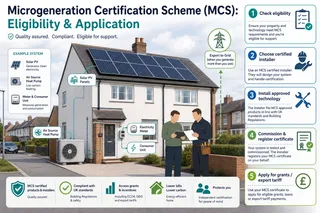
MCS stands for the Microgeneration Certification Scheme. In the UK, it is the certification scheme used for many small-scale renewable energy technologies, including solar PV, heat pumps and some battery-linked installations. In practice, MCS can mean a certified installer, a certified product, or the certificate issued after an eligible installation.
It mainly affects installation standards, product suitability, handover paperwork, export tariff evidence and eligibility for some support schemes. It is not a guarantee of savings, roof condition, grid export capacity or future energy prices.
People often say “the MCS” when they mean different things. An installer may be MCS certified for solar PV but not for heat pumps. A product may be MCS listed, but that does not mean every installer can fit it under the scheme. A homeowner may ask for “the MCS” when they mean the final MCS certificate for their property. For a solar-specific explanation, see our guide to MCS certification.
Why MCS matters for homeowners and businesses
MCS matters because renewable energy projects depend on more than the equipment. The design, installation, commissioning, paperwork and grid process all affect whether the system is accepted by an energy supplier, grant administrator, lender or future buyer.
For homeowners, the most visible outcome is usually the MCS certificate issued after completion. This can be important when applying for a Smart Export Guarantee tariff for solar electricity, where suppliers commonly ask for an MCS certificate or equivalent evidence. Ofgem guidance explains the Smart Export Guarantee framework, but individual suppliers set their own application process and evidence checks within that framework.
For small businesses, MCS can still be relevant, but the project may involve wider electrical design, metering, export limitation, three-phase supply checks and more detailed Distribution Network Operator communication. A commercial renewable project should not be judged by the certificate alone. The site’s load profile, operating hours and connection capacity often matter just as much, especially when comparing commercial solar options.
MCS certification, MCS products and the MCS certificate
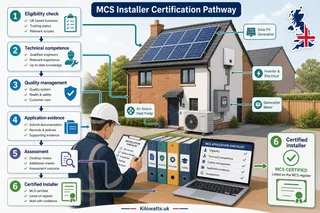
There are three parts that are often confused: the installer, the products and the completed installation paperwork. They are connected, but they are not interchangeable. A certified product does not make an installer certified, and a certified installer still has to design and document the job correctly.
The official MCS register is the place to check installer certification and product listings. Check before you pay a deposit, not after installation, because missing or incorrect certification can be difficult to fix later.
MCS standards
The technical and process requirements certified installers must follow for design, installation, commissioning and handover.MCS certificate
The post-installation document recording an eligible completed installation at a specific address.MCS certified product
Equipment listed against relevant product requirements for its technology type.MCS certified installer
A company certified under MCS for specific technology scopes, such as solar PV or heat pumps.
The certificate normally relates to a particular installation, at a particular property, using particular equipment. If you later replace an inverter, add a battery, alter the system layout or change export control settings, the original paperwork may not describe the changed system.
What MCS does and does not prove
MCS is useful because it creates a recognised framework for installer competence, product requirements and handover documentation. It is one part of a properly managed project, but it does not replace all other checks. On a solar project, for example, MCS can support confidence that the installation has followed scheme requirements. It does not prove that the roof covering will last for the next twenty years, that the local network can accept unlimited export, or that a battery will run the whole property during a power cut.
| Area | What MCS helps with | What still needs separate checking |
|---|---|---|
| Installer competence | Shows the contractor is certified for the relevant technology scope | Whether the proposed design is suitable for your property and usage |
| Product suitability | Supports use of listed equipment where required | Model compatibility, warranty terms and system integration |
| Consumer paperwork | Provides a recognised installation certificate where applicable | Supplier-specific export tariff evidence and application steps |
| Grid connection | Can form part of the project documentation | DNO notification, application, acceptance and export limits |
| Property suitability | Encourages structured design and handover | Roof condition, structural issues, planning constraints and access |
| Performance expectations | Requires design information to be provided | Actual savings, user behaviour, weather, tariffs and future energy prices |
Overview
A good installer will treat MCS as the start of proper diligence, not the end of it. They should still assess cable routes, consumer unit condition, earthing, roof access, shading, heat loss, emitter sizing, noise-sensitive locations and anything else that affects the finished result.
Is MCS a legal requirement?
MCS is not a blanket legal requirement for every renewable energy installation in the UK. A non-MCS installation is not automatically unlawful simply because it lacks an MCS certificate. However, MCS can be practically essential where you need evidence for an export tariff, a support scheme, finance, insurance, conveyancing or future resale.
This distinction matters when comparing quotes. A cheaper non-MCS installation may still produce electricity or heat, but it may not satisfy the evidence requirements of a Smart Export Guarantee supplier or a government scheme. If paperwork is important to you, agree it before work begins.
For solar PV, Smart Export Guarantee suppliers commonly ask for an MCS certificate or equivalent evidence that the installation meets recognised standards. For heat pumps, Boiler Upgrade Scheme eligibility has been linked to MCS certified installers and eligible products, with current rules set out through official GOV.UK and scheme administrator guidance. Always check the live scheme requirements before signing a contract, because eligibility rules and evidence requirements can change.
How MCS affects solar panels
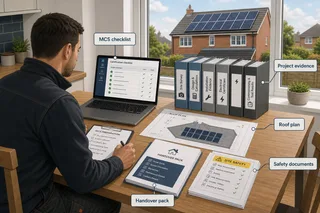
For solar PV, MCS is closely associated with the certificate issued after installation and the documentation needed for export tariff applications. The installer should provide a handover pack that explains the installed system, the main equipment, warranties, operating instructions and relevant electrical documentation. If you are still at the research stage, start with the basics of solar panel installation.
Solar projects also involve the local electricity network. Small generation systems are commonly handled through Engineering Recommendation G98 where they fall within the relevant limits, while larger or more complex systems usually require a G99 application before connection. The Distribution Network Operator may accept the design, request changes, impose an export limit or require additional equipment.
MCS and DNO acceptance are different things. MCS relates to scheme certification and installation standards. The DNO process relates to the safety and capacity of the local electricity network. A properly managed solar project should deal with both.
How MCS affects battery storage
Battery storage needs careful treatment because the paperwork can depend on how and when the battery is installed. A battery fitted with a new solar PV system may be documented as part of the overall design, while a retrofit battery added later may involve different certification, electrical and DNO considerations.
The inverter arrangement matters. A hybrid inverter, AC-coupled battery, backup-capable system or export-limited setup can each affect what needs to be notified, what the supplier may ask for, and how the system behaves in normal operation. If storage is part of your plan, it helps to understand what a home battery actually does before deciding what paperwork is needed.
MCS expectations for storage can vary depending on whether the battery is installed alongside solar PV, added later, or required as part of a specific product, tariff or scheme condition. Do not assume that any battery added by any electrician will automatically be covered by an existing solar MCS certificate. Ask the installer exactly what will be certified, what will be notified to the DNO, and what evidence you will receive.
How MCS affects heat pumps
For heat pumps, MCS is mainly about the certified installer scope, eligible products and the design process. A good heat pump design is more than a like-for-like boiler replacement. It should consider heat loss, insulation, radiator or underfloor heating capacity, hot water demand, controls, pipework and where the outdoor unit can be placed.
The DNO issue is different from solar PV. Heat pumps are demand equipment, not generation equipment, so they are not normally dealt with under G98 or G99 generation rules. Instead, they may require low-carbon technology notification or application to the local Distribution Network Operator, depending on the unit, electrical load, existing supply and local network requirements.
The certificate matters, but comfort and running costs depend heavily on design quality. A poorly assessed home can end up with higher flow temperatures, noisy operation, slow heat-up times or avoidable electrical upgrades. The installer should be able to explain the design assumptions clearly before heat pump installation starts.
How to verify an MCS installer before paying a deposit
The safest time to check MCS status is before you commit. A convincing sales proposal is not the same as verified certification, and a subcontracting arrangement can make responsibility less obvious if it is not set out clearly.
Use official source checks rather than relying only on a logo in a brochure. The MCS website provides installer and product search tools, while Ofgem, GOV.UK and the Energy Networks Association provide source information on export schemes, support schemes and network connection processes.
Get it in writing
Make sure the quote states what paperwork, certificates, warranties and handover documents are included.Check installer scope
Confirm on the official MCS register that the company is certified for the exact technology being installed.Check product listing
Confirm that key products are listed where MCS product certification is relevant to the installation or scheme.Confirm DNO responsibility
Ask who handles generation applications or notifications for solar and batteries, and low-carbon technology notification or application for heat pumps.Confirm certificate responsibility
Ask who will issue the MCS certificate and when it will be provided after commissioning.
If you need export evidence, ask what documents your chosen Smart Export Guarantee supplier is likely to request. If you are relying on the Boiler Upgrade Scheme or another support route, check the current official eligibility rules before signing. If the company selling the system is not the company installing and certifying it, ask for the certified installer’s details. Subcontracting is not automatically a problem, but the chain of responsibility should be clear.
What installers should check before promising an MCS installation
A credible installer should ask practical questions before confirming the final specification. If a quote is produced with no meaningful survey, it may depend on assumptions that later change the price, timescale or design.
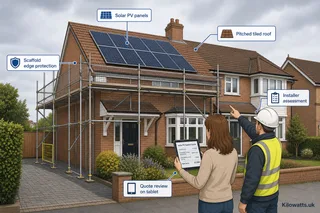
On a solar project, roof condition, orientation, shading, scaffolding, cable routes, inverter location, consumer unit capacity and DNO constraints can all affect the final design. On a heat pump project, the important questions often relate to heat loss, emitter sizing, cylinder space, pipework, electrical load and outdoor unit location.
Network process
Solar and battery systems may need G98 notification or G99 application, while heat pumps may need separate DNO low-carbon technology notification or application.Handover documents
The quote should explain which certificates, manuals, warranties, commissioning records and applications support will be provided.Roof and structure
The installer should check orientation, shading, covering type, access and whether the roof is suitable for the expected life of the system.Electrical capacity
The consumer unit, earthing, spare ways, meter position and cable routes can change the installation method.Product compatibility
Panels, inverters, batteries, controls, heat pumps and monitoring equipment must work together as a system.
The best quotes explain assumptions clearly. If the design depends on DNO approval, export limitation, structural work, asbestos checks, roof repairs, radiator upgrades or a consumer unit change, that should be visible before work starts.
Common misunderstandings about MCS
One common misunderstanding is that MCS guarantees a particular saving. It does not. Savings depend on generation, heat demand, energy use, tariff structure, export rate, self-consumption, weather, controls and future prices.
Another misunderstanding is that MCS replaces DNO approval. It does not. The DNO is concerned with the safety and capacity of the local electricity network. MCS is concerned with certification and installation requirements under the scheme.
A third misunderstanding is that any renewable installer can issue an MCS certificate after the event. In practice, the certification route needs to be correct at the time of installation. If the paperwork matters, check the installer’s certified scope before accepting the quote.
What to ask before choosing an MCS installer
Before choosing an installer, ask direct questions about certification, design responsibility and handover paperwork. This is especially important if you are relying on the certificate for export payments, a grant, property resale or finance.
It is also worth checking whether the person selling the system is the same organisation responsible for the certified installation. If more than one company is involved, you should know who designs the system, who installs it, who signs it off and who deals with defects or missing documents. For electrical competence checks more generally, read how to choose a qualified electrician.
Certified scope
Ask whether the company is MCS certified for the exact technology being installed.Certificate timing
Ask when the MCS certificate and handover pack will be issued after completion.DNO responsibility
Ask who handles generation notification or application for solar and batteries, or low-carbon technology notification or application for heat pumps.Design assumptions
Ask what could change the quote after survey, such as roof works, access issues, electrical upgrades or heating system changes.Export limitations
Ask whether export may be limited by the DNO, inverter settings or tariff conditions.Scheme eligibility
Ask what evidence is needed if you intend to apply for a tariff or support scheme.
A trustworthy installer should be able to answer these questions plainly. If the answer is vague, ask for clarification in writing before paying a deposit.
Practical next steps
If you are planning solar panels, a battery, a heat pump or another small-scale renewable system, treat MCS as an early project requirement rather than an afterthought. Decide why you need the certificate, then make sure the installer, products, design and handover documents match that aim.
For most households, the sensible sequence is to check the installer’s official MCS status, confirm the relevant product listings, understand any DNO steps, and ask exactly what paperwork you will receive. If you are ready to look at quotes, you can compare home solar options before deciding which installer route fits your needs. For businesses, add site load profile, export strategy, metering, electrical capacity and operational hours to the early discussion.
MCS is not the whole project, but it is often one of the most important pieces of evidence that the installation has followed a recognised UK certification scheme. Getting it right before work starts is far easier than trying to fix missing paperwork later.
Plan, Compare & Buy Renewable Energy Solutions
AI does the thinking.
You get the perfect solar match.
Use RoboMo™ to assess your property, compare available technologies and connect with trusted UK installers, suppliers and manufacturers.
Simply enter your postcode, drop a pin on your roof, create your free account and let RoboMo™ analyse your property to find the best solar panels for your home.

You don't have to think
RoboMo™'s AI analyses your roof and does all the hard work.

Accurate & tailored
AI-powered assessment based on your roof, location, and conditions.

Best options, maximum savings
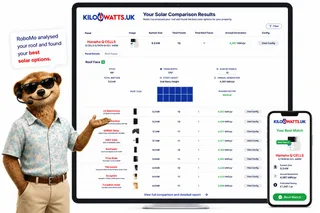
Compare top solar panels for the best performance and value.

Simple, fast & effortless
Provide a few details, sit back and watch your results unfold.
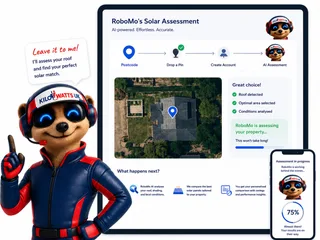
STEP 1
Choose Home, Business or Industrial
Enter your postcode to start your assessment.
STEP 2

Drop a pin on your roof
STEP 3

Create your free account
STEP 4

Sit back and watch RoboMo™ work
RoboMo™ analyses your roof and builds your personalised solar comparison.

Kilowatts UK is an authorised representative
Flower Turbines
Compact vertical-axis turbines built for real UK sites, not just open farmland.
They start in light wind, sit in a small footprint, and are bird-safe by design. Cluster them as a bouquet and the group performs better together than the same turbines standing alone. Enter your postcode for a location-based generation estimate. Figures use area weather data and will differ if buildings, trees or hills sit in the way.
Starts in light UK wind
Built to generate in typical UK wind, not only open farmland.
Small rooftop or ground footprint
Compact towers for roofs, yards and tight sites.
Bird-safe slow rotation
Slow vertical-axis spin, bird-safe by design.
Bouquet clusters raise output
Grouped turbines outperform the same units standing alone.
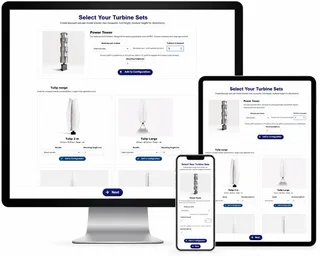
Step 1
Enter your postcode
Start designing your wind energy system in seconds.
STEP 2

Choose a location
STEP 3
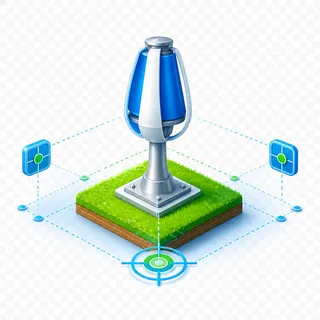
Place your cluster
Tap the map where you want the turbine cluster to go.
STEP 4

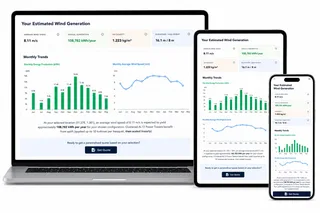
Instant generation forecasts
Compare different turbine layouts and see annual generation forecasts instantly.
STEP 5
No commitment required
Explore different configurations before deciding whether to request a quotation.
Related articles
Mo's Mission Nominations
FAQ
Need Help? RoboMo's Got Answers
What does MCS mean in the UK?
MCS stands for the Microgeneration Certification Scheme. It is a UK certification scheme covering many small-scale renewable technologies, including solar PV and heat pumps. People may use “MCS” to mean a certified installer, a certified product, or the certificate issued after an eligible installation.
Is MCS certification a legal requirement?
MCS is not a blanket legal requirement for every renewable energy installation in the UK. However, it can be practically important if you want a Smart Export Guarantee tariff, certain support schemes, suitable handover paperwork, or evidence for a future buyer. Always check the requirements that apply to your project before signing a contract.
Why does an MCS certificate matter for solar panels?
For solar PV, the MCS certificate is often used as evidence that the installation was completed under a recognised certification scheme. Smart Export Guarantee suppliers commonly ask for an MCS certificate or equivalent evidence before paying for exported electricity. The certificate does not guarantee a certain level of savings or confirm that the local network will accept unlimited export.
How do I check if an installer is MCS certified?
Use the official MCS register to check the company before you pay a deposit. Make sure the installer is certified for the specific technology you are buying, such as solar PV or heat pumps. If the sales company and the installing company are different, ask who will issue the MCS certificate and get this in writing.
Does an MCS product mean the whole installation is MCS certified?
No. An MCS listed product does not make the installer MCS certified, and it does not automatically make the completed job eligible for an MCS certificate. The installer, product choice, design, commissioning and paperwork all need to align with the relevant scheme requirements.
What is the difference between MCS and DNO approval?
MCS relates to certification, installation standards and handover documentation. DNO processes relate to the local electricity network and whether generation, battery storage or low-carbon technologies can be connected safely. A solar or battery project may need both MCS paperwork and the right DNO notification or application.
Does MCS apply to heat pumps?
Yes, MCS can apply to heat pump installations, including the installer’s certification scope, eligible products and design process. For schemes such as the Boiler Upgrade Scheme, current eligibility rules should be checked through official guidance before you commit. Comfort and running costs still depend heavily on the quality of the heat loss assessment, system design and commissioning.