


dcr panel vs non dcr panel: UK comparison guide
Published: 2026-08-09 13:18:08
Updated: 2026-08-10 23:00:05
DCR usually means a domestic content requirement, a term used in some overseas markets where panels.
DCR panel vs non-DCR panel in the UK
For most UK homeowners and small businesses, DCR vs non-DCR is not the main solar panel decision. DCR usually means a domestic content requirement, a term used in some overseas markets where panels, cells or other components must meet local manufacturing rules. In the UK, the more important checks are MCS installation route, product documentation, roof design, inverter compatibility, DNO connection handling, warranties and aftercare.
A non-DCR panel is not automatically lower quality, and a DCR-labelled panel is not automatically better. The label only matters if a specific scheme, tender or procurement rule requires domestic-content evidence. For a normal UK rooftop solar quote, treat DCR as a clarification point rather than a buying priority.
UK buyers often see solar information written for other countries. A quote or datasheet may mention DCR because the manufacturer sells into several markets, not because the label has any practical benefit for a British home. If an installer highlights DCR terminology, ask what UK rule, certificate or commercial requirement it relates to.
What DCR means for solar panels
DCR stands for domestic content requirement. In solar, it normally describes whether a product meets a rule requiring a defined amount of manufacturing, assembly or component sourcing in a particular country. The exact meaning depends on the market and scheme using the term.
DCR is not a universal quality mark. It is a procurement or eligibility label in places where domestic manufacturing rules apply. A panel could meet a domestic-content rule and still need separate checks for performance, safety, warranties and installation suitability. A panel could also fail a DCR rule in one country simply because it was manufactured elsewhere, while still being technically suitable for use in another market.
In a UK domestic solar project, the question is usually not whether the module is DCR. The question is whether the proposed system can be installed, connected, documented and supported correctly under the relevant UK route. DCR may appear in overseas schemes, shared supplier datasheets or procurement policies. That does not make it relevant to every UK installation.
Overseas scheme label
DCR may appear where a grant, tax incentive, public tender or local procurement rule requires domestic-content evidence.Procurement requirement
A commercial buyer with a specific sustainability, local-content or supply-chain policy may ask about manufacturing origin separately from technical performance.Supplier datasheet wording
Some manufacturers use the same product literature across markets, so the term may appear even when it is not relevant to your UK installation.
If a salesperson uses DCR as shorthand for “better panel”, ask for the evidence. The useful documents are the product datasheet, warranty terms, installation design, certification evidence and handover paperwork, not the label on its own.
How non-DCR panels differ in practice
A non-DCR panel usually means the module does not meet a particular domestic-content rule in the market where that rule exists. It does not mean the product is uncertified, unsuitable, unsafe or poor value. It simply sits outside that specific domestic-content category. UK solar supply chains are international. Many panels, inverters, mounting systems and batteries sold in Britain are manufactured or assembled through global production routes. For homeowners and most small businesses, the practical question is whether the product is right for the roof, the installer can support it, and the final system is documented properly. The useful comparison is not “DCR good, non-DCR bad”. It is whether the label has any relevance to your project and whether the rest of the proposal stands up to scrutiny. If you are still getting to grips with the basics, it helps to understand how solar works before comparing labels.
| Decision area | DCR panel | Non-DCR panel | What UK buyers should check |
|---|---|---|---|
| Meaning | Meets a domestic-content rule in a relevant market | Does not meet that specific domestic-content rule | Whether the label applies to a UK installation at all |
| UK relevance | Usually limited unless a tender or scheme requires it | Common in general UK solar supply chains | Product suitability, installer competence and warranty route |
| Quality signal | Not a full quality measure on its own | Not a sign of poor quality on its own | Datasheet, warranty terms, certification evidence and support process |
| Buying priority | May matter for overseas projects or specialist procurement | May be entirely suitable for UK homes and businesses | MCS route, roof design, inverter pairing and DNO handling |
Overview
A UK buyer should be cautious if a quote makes DCR sound like a substitute for proper specification. It is one piece of context, not a full technical assessment.
UK compliance checks that matter more
For a UK solar installation, compliance is about the installed system, not just the panel label. The installer should be able to explain the installation route, product documentation, electrical design, connection process and handover pack in plain English.
MCS is commonly important for domestic solar because many customers need an MCS-certified installation route for consumer protection, recognised documentation and access to export tariff arrangements offered by some suppliers. The Smart Export Guarantee is relevant where a household or business wants to be paid for exported electricity, but the exact supplier requirements and tariffs vary. Buyers should check current terms with their chosen SEG licensee rather than assuming eligibility from a panel label.
DNO handling is another area where detail matters. Some smaller systems can follow a notification route after installation when they fit the relevant connection requirements, commonly associated with G98. Other systems, larger arrays, higher export arrangements or designs involving batteries may need prior application and approval, commonly associated with G99. The installer should confirm the correct route for your specific system and local Distribution Network Operator.
DNO process
Ask whether the installer expects notification after installation or prior approval before work proceeds, and why.SEG readiness
If export payments matter to you, ask what documents and metering arrangements your chosen export supplier is likely to request.Handover records
Ask what certificates, manuals, commissioning information and monitoring access you will receive at completion.Product evidence
Ask for the panel datasheet, inverter datasheet and warranty documents before you sign.MCS installation route
Ask whether the system will be installed and certified through the appropriate MCS route where this is required for your objectives.
These checks are more useful than DCR terminology because they affect whether the system can be connected, claimed for export, maintained and supported over its life. A plain-English installation introduction can also help you understand what should happen before, during and after the work.
What UK buyers should compare instead
A good solar quote is a system design, not just a list of components. The panel must suit the roof layout, shading conditions, mounting approach, inverter input limits and the customer’s electricity use. A strong module on a poorly designed system can underperform, while a less headline-grabbing module can work well when specified correctly.
The installer should be able to explain why the proposed panel is suitable for your roof. Higher wattage can reduce the number of modules needed, but it does not solve problems such as awkward roof zones, shade from chimneys, difficult cable routes or an inverter that is not well matched to the array.
Compare the basics first: roof suitability, module specification, inverter matching, mounting method and aftercare. Roof checks should cover age, covering type, usable area, orientation, pitch, shading and access. Product checks should cover panel dimensions, power rating, efficiency, degradation terms, product warranty and manufacturer support route. You should also ask how the panels will be fixed, how brackets or roof penetrations will be managed, and how cable runs will be protected. For roof-specific decisions, panel placement is often more important than DCR wording. The best comparison is often the least glamorous one. A quote that clearly explains roof constraints, DNO handling and handover documents is usually more useful than one that relies on a single label or headline panel wattage.
Documents to request before signing
Before accepting a solar quote, ask the installer for evidence that the proposed system is suitable and supportable. This is where many weak quotes fall down. They may list a panel model and a price but leave unclear how the system will be certified, connected, warranted and handed over.
The documents do not need to be complicated, but they should be specific to the products and installation being proposed. If the installer cannot provide them before contract stage, ask why. A professional installer may finalise some details after survey, but the route and responsibilities should not be vague.
MCS route
Ask how the installation will be certified if MCS certification is part of your requirements.DNO paperwork
Ask whether the project needs notification or prior approval and what confirmation you will receive.Handover pack
Ask for certificates, manuals, commissioning records, monitoring instructions and emergency shutdown information.Warranty terms
Ask for product warranty, performance warranty and workmanship cover, including who handles claims.Panel datasheet
This should identify the exact module model, dimensions, electrical characteristics and warranty terms.Inverter datasheet
This should show the proposed inverter or hybrid inverter model and its suitability for the array design.
This checklist is more reliable than asking whether a panel is DCR. It tests whether the installer has designed a real system rather than simply quoting components.
How DCR affects cost and value
DCR status can affect cost in markets where domestic-content rules change eligibility, procurement options or supply-chain availability. That does not translate into a standard UK price difference. In Britain, installed solar cost is usually shaped by the full job rather than panel origin terminology alone.
A UK quote can vary because of system size, scaffolding, roof complexity, cable routes, consumer unit work, inverter choice, battery inclusion, monitoring hardware and workmanship standards. A straightforward south-facing roof is not the same installation as a multi-roof design with shading, fragile coverings and limited space for electrical equipment.
Value also depends on how the electricity will be used. A home with low daytime demand may place more value on battery compatibility and export arrangements. A business operating during daylight hours may care more about roof coverage, inverter design and predictable daytime generation. In both cases, DCR is usually much less important than whether the design matches the property’s demand profile.
When DCR might still matter
DCR may matter where a scheme, tender or procurement policy specifically requires domestic-content evidence. That is more likely in overseas incentive markets, public-sector procurement frameworks, specialist commercial tenders or supply-chain policies than in a typical UK home solar purchase.
It may also appear when a supplier imports datasheets or sales material from another market. In that situation, the right question is not whether the term sounds positive, but whether it affects your contract, eligibility, warranty or connection process. If the answer is no, it should not drive the buying decision.
Normal UK home quote
DCR is usually a distraction unless the installer can point to a specific UK requirement that applies to your system.Overseas scheme or grant
DCR may be essential where the local scheme rules make domestic content a condition of eligibility.Commercial procurement tender
DCR or domestic-origin evidence may matter if the tender documents explicitly require it.
Be especially careful with online claims that DCR panels are required for UK incentives. UK rules and supplier requirements can change, and eligibility depends on the actual scheme, installation route and export supplier. Ask for current evidence rather than relying on generic overseas advice.
How to assess a solar installation company
Choosing the right installer is more important than choosing a panel based on DCR wording. The installer surveys the property, designs the array, selects compatible equipment, manages the connection process and leaves you with the documents needed to operate and support the system.
A proper survey should look beyond roof space. It should consider roof covering, structural condition, loft access, cable routes, inverter location, consumer unit condition, earthing and bonding considerations, monitoring access and whether a battery, EV charger or heat pump might be added later.
You can compare installers more fairly by asking each one the same questions.
Survey basis
Ask whether the quote is based on a desktop estimate, photographs, a remote survey or a full site visit.Fault support
Ask who you contact for monitoring problems, warranty claims or suspected underperformance.Design explanation
Ask why the proposed panel, inverter and battery options suit your roof and electricity use.Certification route
Ask what certificates and completion documents you will receive after installation.Connection responsibility
Ask who handles DNO notification or application paperwork and when this happens.
A confident installer should welcome these questions. If the response is vague, rushed or heavily focused on one panel label, treat that as a warning sign. For larger sites, it can be useful to compare commercial options against the same survey, documentation and aftercare criteria.
Common mistakes when comparing panel quotes
The most common mistake is comparing only panel wattage. A higher-wattage module can be useful where roof space is tight, but it does not guarantee better annual generation if the layout is shaded, badly orientated or constrained by inverter design.
Another mistake is treating a manufacturer name, country of origin or DCR label as the whole decision. Panel choice sits within a wider installation that includes mounting quality, roof weathering, cable management, electrical protection, monitoring and aftercare. A neat-looking quote can still hide assumptions about scaffolding, access, bird protection or consumer unit work.
Future compatibility is also easy to overlook. If you may add a battery, EV charger or heat pump, ask how the current system design affects that. A hybrid inverter can be sensible for some homes, while an AC-coupled battery retrofit may suit others. The right answer depends on the property, existing equipment, budget and how electricity is used through the day. If storage is part of the plan, compare solar battery costs separately from the panel label.
The best way to decide
For UK buyers, DCR vs non-DCR is usually a secondary issue unless a specific procurement rule applies. Treat it as a terminology check, then focus on the factors that affect the real installation: product evidence, MCS route, roof design, inverter matching, DNO process, warranties and installer support.
Ask the installer to explain any DCR wording in plain English. If they cannot show why it matters for your UK property, it probably should not influence the decision. A well-designed non-DCR system with clear documents and good aftercare can be a much better choice than a poorly explained DCR-labelled option.
Plan, Compare & Buy Renewable Energy Solutions
AI does the thinking.
You get the perfect solar match.
Use RoboMo™ to assess your property, compare available technologies and connect with trusted UK installers, suppliers and manufacturers.
Simply enter your postcode, drop a pin on your roof, create your free account and let RoboMo™ analyse your property to find the best solar panels for your home.

You don't have to think
RoboMo™'s AI analyses your roof and does all the hard work.

Accurate & tailored
AI-powered assessment based on your roof, location, and conditions.

Best options, maximum savings
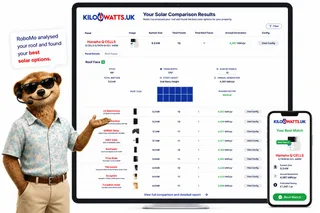
Compare top solar panels for the best performance and value.

Simple, fast & effortless
Provide a few details, sit back and watch your results unfold.
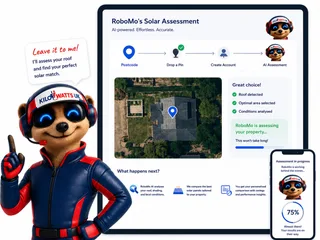
STEP 1
Choose Home, Business or Industrial
Enter your postcode to start your assessment.
STEP 2

Drop a pin on your roof
STEP 3

Create your free account
STEP 4

Sit back and watch RoboMo™ work
RoboMo™ analyses your roof and builds your personalised solar comparison.

Kilowatts UK is an authorised representative
Flower Turbines
Compact vertical-axis turbines built for real UK sites, not just open farmland.
They start in light wind, sit in a small footprint, and are bird-safe by design. Cluster them as a bouquet and the group performs better together than the same turbines standing alone. Enter your postcode for a location-based generation estimate. Figures use area weather data and will differ if buildings, trees or hills sit in the way.
Starts in light UK wind
Built to generate in typical UK wind, not only open farmland.
Small rooftop or ground footprint
Compact towers for roofs, yards and tight sites.
Bird-safe slow rotation
Slow vertical-axis spin, bird-safe by design.
Bouquet clusters raise output
Grouped turbines outperform the same units standing alone.
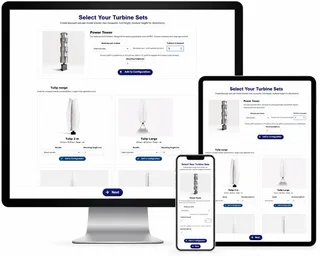
Step 1
Enter your postcode
Start designing your wind energy system in seconds.
STEP 2

Choose a location
STEP 3

Place your cluster
Tap the map where you want the turbine cluster to go.
STEP 4

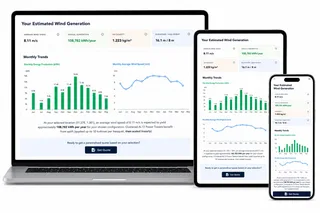
Instant generation forecasts
Compare different turbine layouts and see annual generation forecasts instantly.
STEP 5

No commitment required
Explore different configurations before deciding whether to request a quotation.
Related articles

Mo's Mission Nominations
FAQ
Need Help? RoboMo's Got Answers
What does DCR mean on a solar panel quote?
DCR usually means domestic content requirement. It is a label used in some markets where a scheme, tender or policy requires products to meet local manufacturing or sourcing rules. It is not a general solar panel quality mark.
Do UK homeowners need DCR solar panels?
For a typical UK home solar installation, DCR is usually not a key requirement. Most buyers should focus on the system design, installer competence, product documentation, warranties, MCS route and DNO connection process. If an installer says DCR matters, ask which UK rule or contract requirement it relates to.
Are non-DCR panels lower quality?
No, non-DCR does not automatically mean lower quality, unsafe or unsuitable. It normally means the panel does not meet a particular domestic-content rule in a market where that rule exists. You should judge the panel by its datasheet, warranty, certification evidence, compatibility and support route.
What should I check instead of DCR when comparing solar panels in the UK?
Check the exact panel model, power rating, dimensions, efficiency, degradation terms and warranty conditions. Also check that the inverter is compatible and that the roof design accounts for shading, orientation, pitch and available space. A well-designed system matters more than a single label on a datasheet.
Does DCR affect MCS certification or SEG export payments?
DCR on its own does not prove that a UK installation will meet MCS or export supplier requirements. Many export tariff arrangements require specific documents and the requirements can vary by supplier. Ask your installer how the system will be certified and check current terms with your chosen Smart Export Guarantee licensee.
Will DCR panels cost more or save more money in the UK?
There is no standard UK price advantage or saving linked simply to DCR wording. Installed cost is usually affected by system size, roof complexity, scaffolding, inverter choice, battery inclusion, cable routes and electrical work. Value depends more on how well the system matches your property and electricity use.
When might DCR still matter for a UK buyer?
DCR may matter if a commercial tender, procurement policy or overseas scheme specifically asks for domestic-content evidence. It may also appear on supplier literature because manufacturers use the same documents across different countries. For a normal UK home installation, ask whether it affects your contract, eligibility, warranty or connection process.
What documents should I ask for before accepting a solar quote?
Ask for the panel and inverter datasheets, warranty terms, proposed system design and confirmation of the MCS route if relevant to your aims. You should also ask how the DNO process will be handled and what handover documents you will receive. These checks are more useful than relying on DCR terminology.