


UK Solar Panel Comparison: A Comprehensive Guide
Published: 2026-09-10 14:14:24
Updated: 2026-09-15 02:51:45
A comprehensive guide to comparing solar panel quotes in the UK. This guide covers panel rating, efficiency, degradation, and product warranty.
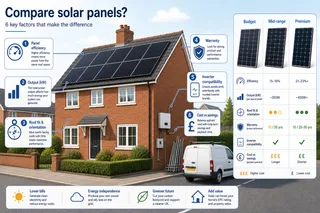
Compare soler panels?
Find out compare soler panels in the UK, including costs, what affects price, and how to choose an installer.
How to compare solar panels in the UK
If you searched for “compare soler panels”, you almost certainly mean compare solar panels. The best way to compare them is to compare the full installed solar PV system, not just the panel wattage or brand. Roof space, shading, inverter design, installer competence, warranty support, DNO handling, export assumptions and whether you add a battery can all change which quote is best.
A cheaper panel can be good value on a simple, unshaded roof. A higher-efficiency panel may be worth considering where roof area is tight, the roof shape is awkward or appearance matters. The strongest quote is usually the one with the clearest design assumptions, named equipment, realistic generation estimate and proper allowance for the installation work.
Before comparing prices, make sure every quote is describing the same job. A solar-only system, a solar-plus-battery system, and a quote that includes extra electrical work are not like-for-like, even if the headline system size looks similar.
What solar panel specifications actually mean
A solar panel’s output rating is normally shown in watts peak, or Wp. This is a standard test rating for the panel, not a promise that the panel will generate that amount continuously on a UK roof. A solar array is usually described in kilowatts peak, or kWp, which is the combined rated capacity of all the panels.
Efficiency tells you how much sunlight a panel can convert into electricity for a given area. It matters most when usable roof area is limited. If you have a large, simple roof with little shade, a slightly lower-efficiency panel can still form part of a strong system if the design and installation are good.
The warranty wording also needs careful reading. A product warranty is different from a performance warranty. A product warranty deals with defects under the manufacturer’s terms, while a performance warranty describes expected output degradation over time. Ask for the exact panel model and current datasheet, not just a broad brand name.
Compare panels as part of the whole solar PV system
The panel is only one part of the system. The inverter converts direct current from the panels into alternating current for the property, and its design affects monitoring, battery compatibility and performance where panels face different directions or have uneven shading.
A simple south-facing roof may suit a string inverter. A roof with dormers, chimneys, roof windows, multiple orientations or partial shade may need a more detailed design, which could include optimisers, microinverters or separate inverter strings. These choices should be justified by the survey, not added as a generic upgrade.
Mounting and electrical detail are just as important. The quote should explain how panels will be fixed, how the roof covering will be protected, where cables will run, where isolators and inverters will be installed, and whether consumer unit work is required. A vague quote may look cheaper because essential installation detail has not yet been priced properly.
The UK roof factors that change the answer
UK solar performance depends heavily on roof direction, pitch, shading and roof condition. South-facing roofs often give the strongest annual generation, but east and west-facing roofs can still work well because they spread production into the morning and afternoon, which may suit household demand better.
Shading can change the design more than panel brand. Chimneys, trees, aerials, neighbouring buildings, dormers and roof windows can all reduce output. In some string designs, shade on one panel can affect other panels in the same string, so the installer should assess shading before finalising the inverter and panel layout.
Roof condition should be checked before panel choice. If the roof covering is nearing the end of its life, it may be more sensible to repair or replace roof areas before installing solar. Otherwise, future roof work could require panels to be removed and refitted, adding cost and disruption. Access also matters, as scaffolding, safe working space and cable routes can materially affect the final quote.
A worked example of comparing two solar quotes
A useful comparison looks beyond the headline kWp figure. The example below is illustrative, not a price guide or a recommendation. It shows why the highest-capacity or cheapest-looking option is not automatically the best system for a real UK property. The key question is not “which quote has the most panels?” but “which quote has the most credible design for this roof, this usage pattern and this installation?”. A quote with slightly lower headline capacity may be stronger if it has better shading treatment, clearer warranties and fewer unresolved assumptions.
Overview
In this example, Quote B may still be the better choice if the installer can justify the design and clarify the missing detail. The point is that a quote should earn confidence through evidence, not through a larger headline system size alone.
How to compare solar panel costs fairly
Solar panel costs in the UK vary too much for a single fixed figure to be reliable. System size, roof complexity, access, equipment choice, scaffolding, labour, battery inclusion, consumer unit condition and cable routing can all change the installed price. Treat broad online cost ranges as early planning information only.
The fairest approach is to ask each installer to separate the main cost areas. This helps you see whether one quote is genuinely better value or simply missing work that another installer has included. It also makes it easier to compare a solar-only system with a solar-plus-battery option.
Payback depends on how much generated electricity you use on site, what you pay for imported electricity, what export arrangement you use and how your household demand changes over time. Daytime occupancy, EV charging, immersion control, heat pump use and battery storage can all alter the result, so payback claims should be based on realistic assumptions rather than best-case usage. Ask for the panel model, number of panels and total kWp. Check the inverter model, warranty and whether it supports your likely future plans. If a battery is included, separate battery cost from solar cost so the comparison remains clear. Confirm whether scaffolding, consumer unit changes, cable runs, isolators, bird protection, monitoring upgrades and any roof work are included or priced separately.
UK compliance, export and paperwork checks
UK solar comparison should include compliance and paperwork, not just equipment. Recognised sources to check include MCS guidance for certified installation standards, Energy Saving Trust guidance for homeowner cost and generation context, Ofgem information on the Smart Export Guarantee, and Energy Networks Association guidance on DNO connection processes. Scheme terms and supplier requirements can change, so use the latest published guidance when making a decision.
MCS certification is often important because many export tariff providers and finance or assurance processes ask for evidence that the installation meets recognised standards, or an accepted equivalent. Do not assume eligibility from a sales conversation alone. Ask the installer what certification and handover documents you will receive and how these relate to your intended export tariff.
Grid connection also matters. Installers commonly refer to G98 and G99 routes when discussing DNO notification or application requirements. The correct route depends on the system and export arrangement, so the installer should explain who handles the paperwork, when it is submitted and whether any export limit may apply. Planning is usually straightforward for many domestic roof-mounted systems, but it should not be ignored. Listed buildings, conservation areas, flats, unusual roof positions and some non-domestic sites may need additional checks, so confirm whether you need planning permission before proceeding. VAT treatment can also change depending on the work and property circumstances, so make sure the quote shows the VAT treatment being applied and seek appropriate advice for unusual cases.
When premium solar panels are worth considering
Premium panels can be worth considering when roof space is limited, the visible finish matters or the warranty package is particularly important to you. Higher efficiency may help fit more capacity into a constrained roof area, while all-black panels are often chosen for appearance on prominent roof slopes.
Premium does not automatically mean better value. On a large, simple, lightly shaded roof, the difference between panel tiers may be less important than survey quality, inverter design, mounting workmanship and aftercare. A well-designed mid-range system can be a better decision than a premium-panel system with weak installation detail.
Appearance should be treated as a legitimate preference, but not confused with guaranteed performance. If an all-black panel costs more, ask whether the difference is buying extra usable generation, a better warranty position, improved aesthetics or simply a different look.
How batteries affect the solar panel decision
A battery is not required for solar PV, but it can change the best inverter choice and overall design. Batteries store surplus generation for later use, which can help households that are away during the day or have evening electricity demand. They also add cost, equipment, space requirements and another warranty to review.
Battery capacity is measured in kilowatt hours, or kWh, which is different from kW or kWp. Usable capacity, operating limits and efficiency all matter because not every unit of stored energy can be recovered for use. The installer should explain the assumptions behind any self-consumption or payback estimate, especially if you may add a battery after the solar panels are installed.
Backup power should not be assumed. Many solar and battery systems shut down during a power cut unless specific backup hardware and wiring are included. If backup is important, raise it before accepting a quote because it can affect circuit design, equipment choice and installation cost.
What a good solar installation company should provide
A good solar installation company should be able to explain the design in plain language. The survey should consider roof structure, roof covering, shading, access, cable routes, consumer unit condition, meter location and where equipment will be installed. The quote should then connect those findings to the proposed system size and expected generation.
The company should also be clear about responsibility. Ask who handles the DNO process, who registers any warranties, who provides the handover pack, and who responds if monitoring shows a fault. Installer workmanship terms and any insurance-backed guarantee should be explained before you sign, not discovered after installation.
A transparent quote will name the panel model, inverter model, mounting system and any battery model. It should also state what is excluded. Exclusions are not automatically a problem, but they need to be visible so you can compare quotes fairly.
Common mistakes when comparing solar quotes
The most common mistake is choosing the cheapest quote before checking what is included. A low price can be perfectly reasonable for a simple installation, but it can also mean scaffolding, bird protection, monitoring, electrical work or DNO handling has not been clearly included.
Another mistake is treating the highest kWp figure as automatically best. More panels can generate more electricity, but only if the roof layout, inverter arrangement and grid connection make sense. If extra generation is mostly exported at a lower value than electricity used on site, the financial benefit may be smaller than expected.
Online estimates can be useful for early planning, but they should not replace a proper survey. Roof measurements, shading, rafter condition, tile type, cable routes and consumer unit condition are the details that turn a rough estimate into a buildable system.
The practical next step
The best next step is to collect two or three detailed, like-for-like solar quotes and compare the whole system. Ask each installer to show the panel model, inverter model, mounting system, generation estimate, shading assumptions, warranty terms, DNO approach, export assumptions and all included installation work.
Before requesting quotes, note your annual electricity use, daytime usage pattern, roof orientation, visible shading and whether you may add a battery, EV charger or heat pump later. Those details help an installer design a system that matches the property rather than simply filling the roof with panels, and a free home energy survey can help turn that information into a clearer specification.
A good solar comparison should leave you understanding why a system has been specified, what it is expected to do, what it does not include and who is responsible for support after installation. If those points are unclear, the quote is not ready to be judged on price alone.
Plan, Compare & Buy Renewable Energy Solutions
AI does the thinking.
You get the perfect solar match.
Use RoboMo™ to assess your property, compare available technologies and connect with trusted UK installers, suppliers and manufacturers.
Simply enter your postcode, drop a pin on your roof, create your free account and let RoboMo™ analyse your property to find the best solar panels for your home.

You don't have to think
RoboMo™'s AI analyses your roof and does all the hard work.

Accurate & tailored
AI-powered assessment based on your roof, location, and conditions.

Best options, maximum savings
Compare top solar panels for the best performance and value.

Simple, fast & effortless
Provide a few details, sit back and watch your results unfold.
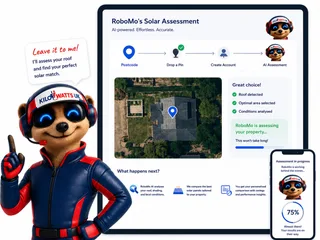
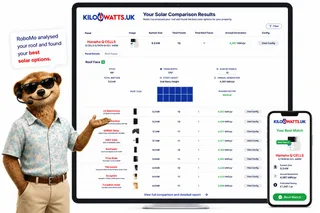
STEP 1
Choose Home, Business or Industrial
Enter your postcode to start your assessment.
STEP 2

Drop a pin on your roof
STEP 3

Create your free account
STEP 4

Sit back and watch RoboMo™ work
RoboMo™ analyses your roof and builds your personalised solar comparison.

Step 1
Enter your postcode
Start designing your wind energy system in seconds.
Are you an installer, distributor or renewable energy business?
Kilowatts UK is expanding the Flower Turbines partner network across the UK.
Become A Flower Turbines PartnerKilowatts UK is an authorised representative
Flower Turbines
Compact vertical-axis turbines built for real UK sites, not just open farmland.
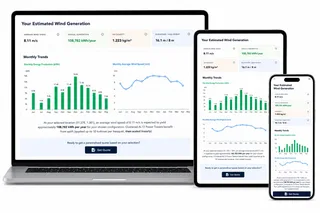
They start in light wind, sit in a small footprint, and are bird-safe by design. Cluster them as a bouquet and the group performs better together than the same turbines standing alone. Enter your postcode for a location-based generation estimate. Figures use area weather data and will differ if buildings, trees or hills sit in the way.
Starts in light UK wind
Built to generate in typical UK wind, not only open farmland.
Small rooftop or ground footprint
Compact towers for roofs, yards and tight sites.
Bird-safe slow rotation
Slow vertical-axis spin, bird-safe by design.
Bouquet clusters raise output
Grouped turbines outperform the same units standing alone.
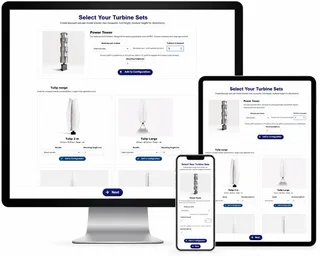
STEP 2

Choose a location
STEP 3

Place your cluster
Tap the map where you want the turbine cluster to go.
STEP 4

Instant generation forecasts
Compare different turbine layouts and see annual generation forecasts instantly.
STEP 5

No commitment required
Explore different configurations before deciding whether to request a quotation.
Related articles

Mo's Mission Nominations
FAQ
Need Help? RoboMo's Got Answers
How do I compare solar panels for a UK home?
Compare the full installed solar PV system, not just the panel brand or wattage. Check the panel model, total kWp, inverter design, roof layout, shading assumptions, warranties, scaffolding, electrical work and paperwork. A cheaper quote may be good value if it is complete and based on a realistic survey.
Is a higher-wattage solar panel always better?
Not necessarily. A higher-wattage panel can help where roof space is limited, but it does not guarantee the best overall system. Roof direction, shade, inverter choice and installation quality can have a bigger effect on real-world performance.
What is the difference between kW, kWp and kWh in solar quotes?
kWp is the rated peak capacity of the solar panel array under standard test conditions. kW is a measure of power at a point in time, often used for inverter or electrical output. kWh is a measure of energy over time, commonly used for electricity usage, generation and battery capacity.
Should I choose premium solar panels?
Premium panels may be worth considering if you have limited roof space, want a particular appearance or value a stronger warranty package. They are not automatically the best value for every home. On a large, simple roof, a well-designed mid-range system may be more sensible than paying extra for premium panels.
How important is shading when comparing solar panel quotes?
Shading is very important because chimneys, trees, dormers and nearby buildings can reduce generation. It can also affect the best inverter and panel layout. Ask whether the installer has modelled shading and whether optimisers, microinverters or separate strings are genuinely needed.
What paperwork should a UK solar installer handle?
Ask who will handle the DNO notification or application and when it will be submitted. You should also ask what certification, commissioning documents, warranty details and handover information you will receive. If you want to use an export tariff, check the supplier’s current requirements before assuming eligibility.
Do I need a battery when comparing solar panels?
A battery is optional, but it can change the best inverter choice and the overall value calculation. It may help you use more of your own solar electricity later in the day. Compare solar-only and solar-plus-battery quotes separately so you can see what the battery adds in cost, function and warranty cover.
What should be included in a like-for-like solar panel quote?
A clear quote should list the exact panel and inverter models, number of panels, total kWp, mounting system, monitoring, cable routes, isolators and any consumer unit work. It should also say whether scaffolding, bird protection, roof repairs, DNO paperwork and VAT are included or separate. If these details are missing, the headline price may not be a fair comparison.