


Is 650W Solar Panel Worth It? Debunking the Hype
Published: 2026-07-25 16:57:41
Updated: 2026-08-07 15:02:17
Discover if a 650W solar panel is right for your UK home. We'll explore the benefits and drawbacks, including energy yield, efficiency.
Is a 650W solar panel worth it for a UK home?
A 650W solar panel can be worth it, but only where the roof or site can use a large-format module properly. The headline wattage does not prove that the panel is better, more efficient or more cost-effective. For many UK homes, a well designed array using smaller domestic panels can fit the available roof more neatly and may generate as much, or more, from the real usable space.
The key question is not whether 650W is better than 430W. It is whether a 650W module improves the whole system once roof layout, shading, structural loading, access, inverter compatibility, export arrangements and future maintenance have been checked. If you are comparing installer recommendations, it can help to compare home solar options alongside the technical design.
In practice, 650W panels tend to make most sense on large simple roof areas, commercial buildings, farms, outbuildings and ground-mounted systems. They are less obviously useful on terraced or semi-detached homes with chimneys, dormers, roof windows, narrow access routes or roof shapes that waste space around oversized modules.
What does 650W actually mean?
The 650W rating is the panel’s peak power under Standard Test Conditions. STC ratings are used across manufacturer datasheets so panels can be compared on a consistent laboratory basis. They are not the output you should expect all day on a UK roof. Real output changes with irradiance, cloud, temperature, roof pitch, orientation, shading, soiling and system losses.
In system design, one 650W panel is normally treated as 0.65 kWp of installed DC solar capacity. Ten such panels would create a 6.5 kWp panel array before inverter sizing, export limits, cable losses and site-specific derating are considered. That does not mean the system will continuously produce 6.5 kW, especially in winter, during cloudy weather or when the sun is at a poor angle. For a clearer explanation of rated capacity, see this guide to kWp in solar.
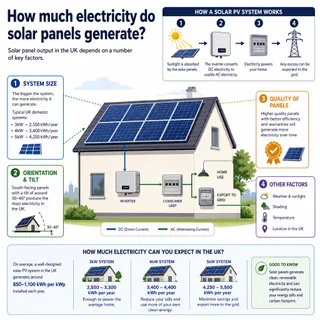
UK solar estimates are usually modelled from roof-specific inputs rather than panel wattage alone. Broad planning assumptions often place annual generation somewhere around 750 to 1,100 kWh per kWp per year depending on location, pitch, orientation and shading. On that basis, one 650W panel could produce roughly 490 to 715 kWh per year in suitable conditions, but a proper forecast should come from the installer’s design software and survey data, not from the brochure rating.
Are 650W panels more efficient or just bigger?
A 650W solar panel is often physically larger than a common domestic module, so the higher wattage may come mainly from extra area rather than much higher efficiency. Efficiency means how much power the module produces per square metre. Wattage means the total rated output of that whole module under test conditions. This distinction matters on UK roofs because usable area is rarely a perfect rectangle. Chimneys, roof windows, hips, valleys, vents, soil stacks, parapets and shaded margins can make a physically large panel awkward to place. If the bigger panel leaves unusable gaps or forces a lower panel count, a smaller module can produce a better total design even though each individual panel has a lower rating.
| Comparison point | 650W large-format panel | Common domestic panel |
|---|---|---|
| Best use case | Large simple roof planes, commercial roofs, farm buildings and ground mounts | Smaller or more interrupted domestic roof areas |
| Main advantage | Fewer modules for a given rated array size | More flexible layout around obstructions |
| Main risk | Size and weight can complicate handling, wind loading and replacement | More modules, rails, clamps and electrical connections may be needed |
| Efficiency question | Must be checked on the datasheet, not assumed from wattage | Must also be checked on the datasheet |
| Installer concern | Dimensions, weight, clamp zones, mechanical loading and inverter input limits | Layout density, shading zones, fixing positions and string design |
Overview
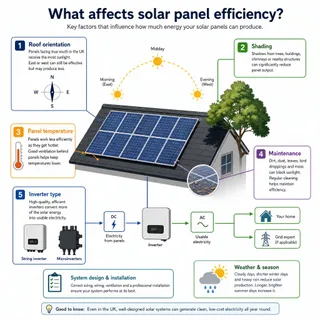
Some 650W-class modules use modern cell formats such as half-cut cells, large wafers, multi-busbar designs or bifacial construction. These features can be useful, but they do not remove the need to check the datasheet for module dimensions, weight, efficiency, temperature coefficient, mechanical load rating, permitted clamp zones, current, voltage and warranty terms. It is worth checking the broader panel efficiency factors before assuming a higher-wattage module is the better choice.
A practical roof layout example
Consider a UK roof plane that looks large from the ground but is split by a chimney, a roof window and edge zones that the installer does not want to crowd. A small difference in module dimensions can decide whether the design lands neatly or leaves awkward unusable strips. This is why installer layout drawings matter more than the wattage printed on one module.
A typical 650W-class module is often around the large commercial format rather than the compact domestic format. Exact sizes vary by manufacturer, so the installer should use the chosen panel’s datasheet, not a generic assumption. The point is simple: if fewer large panels do not fit the roof geometry well, several smaller panels may cover the same roof more effectively.
For example, a design using large modules may be forced to stop short of a roof window or chimney because one extra panel will not physically fit. A smaller-panel design may be able to step around that obstruction and keep more of the usable roof active. The better option is the one with the stronger modelled annual yield, sensible electrical design and maintainable installation, not the one with the largest single-panel rating.
Where 650W panels make practical sense
Large-format panels can be a good fit where there is space to use them without fighting the roof shape. Commercial roofs, agricultural buildings, outbuildings and ground-mounted arrays often offer broader, simpler areas, easier module handling and more repeatable mounting layouts than a typical house roof. For business sites, it may be useful to compare commercial solar designs before choosing a module format.
On domestic properties, the best candidates are usually detached homes or large extensions with broad, uncomplicated roof planes, limited shading and safe access. A simple south-facing or east-west roof may suit a larger module better than a narrow terrace with a central chimney and rooflights. Even then, the decision should be confirmed by a measured layout.
A 650W panel may be worth considering when several of these conditions apply:
The final point is easy to overlook. If a large-format module is damaged years later, replacing it like-for-like may be less straightforward if the exact size, frame, clamp zone or electrical characteristics are no longer common. That is not a reason to reject it automatically, but it should be part of the specification conversation.
Where a 650W panel may be the wrong choice
A 650W panel may be the wrong choice when the roof is small, complicated, fragile, heavily shaded or difficult to access. UK homes often have obstructions that look minor from the ground but become decisive during design. Chimneys, dormers, roof windows, aerials, flues, soil pipes, party wall edges and shaded margins can all reduce the usable area.
Large panels can also create installation compromises. They may be harder to carry safely onto scaffold, more awkward to manoeuvre over a roof, more sensitive to rail spacing and less forgiving around roof edges. Wind uplift and mechanical loading must be checked against the mounting system, fixing method, roof covering and manufacturer clamp-zone requirements.
The financial comparison is not simply the price of one panel multiplied by the number of panels. Scaffold, labour, roof covering, mounting hardware, electrical design, inverter choice, battery integration, access difficulty and survey findings all influence the installed cost. Fewer panels do not automatically mean a cheaper or better system if the larger format makes the job harder or reduces usable roof yield.
What installers should check before specifying 650W panels
A competent installer will not choose modules by wattage alone. The practical survey should confirm whether the panel physically fits, whether the roof structure and covering are suitable, and whether the chosen mounting system can be installed within the manufacturer’s requirements. For a domestic installation, this should sit alongside normal Building Regulations considerations and safe electrical design.
The electrical checks are just as important as the roof checks. Some large-format panels have current and voltage characteristics that may not suit every inverter, optimiser or microinverter. String voltage, maximum input current, maximum DC input power, temperature-adjusted voltage and any manufacturer compatibility limits should all be checked before equipment is ordered.
DNO requirements also need to be raised early. UK grid connection is not decided by panel wattage alone; it depends on the inverter, export capacity and connection arrangement. Installers commonly refer to the relevant Engineering Recommendation process, such as G98 or G99, and should follow current ENA and DNO guidance for the proposed system rather than assuming approval is automatic.
DNO status
Ask whether the system falls under the relevant G98 or G99 process and whether any approval or notification is needed.Datasheet review
Ask for the exact panel model, dimensions, weight, efficiency, voltage, current, clamp zones and mechanical load ratings.MCS certification
Ask whether the installation will be carried out under an appropriate MCS-certified process if you need MCS paperwork for tariffs, warranties or assurance routes. This guide explains what MCS certification means in a UK solar context.Roof layout evidence
Ask for a drawing that shows panel positions, obstructions, access margins and any shaded areas.Structural assessment
Ask how roof condition, fixing positions, wind uplift and module weight have been checked.Inverter compatibility
Ask the installer to confirm voltage and current limits, string design and any optimiser or microinverter compatibility.
These questions are not about catching the installer out. They are the normal practical checks that separate a sound solar design from a headline-wattage quote.
How much electricity could one 650W panel generate?
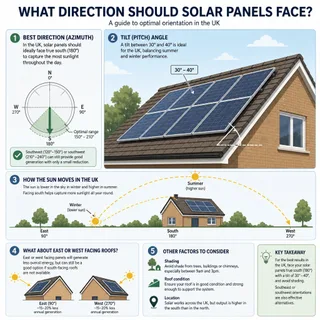
One 650W panel is 0.65 kWp of rated capacity, so annual generation depends heavily on the site. A south-facing, unshaded roof at a suitable pitch will usually perform better than a shaded, shallow, steep or poorly orientated roof. Location also matters, because annual solar resource differs across the UK.
Using broad UK planning assumptions of around 750 to 1,100 kWh per kWp per year, a single 650W panel could be in the region of 490 to 715 kWh per year in suitable conditions. This is only an estimate for early comparison. A proper forecast should account for roof orientation, pitch, shading, inverter efficiency, cable losses, local climate data and any export limitation. For more context, read about solar panel generation in UK conditions.
It is also important to separate generation from usable savings. If the panel produces electricity when the property is not using much power, some energy may be exported unless there is a battery, hot water diverter, EV charging demand or daytime business load. A commercial building with steady daytime consumption may use a higher share of its solar generation than a home that is empty for much of the day.
Does a 650W panel change battery or inverter choices?
Panel wattage affects system design, but it does not decide whether a battery is worthwhile on its own. Battery sizing should be based on electricity use, solar generation profile, tariff structure, usable battery capacity, expected surplus generation and how much evening or overnight demand the property has. If storage is part of the quote, compare the solar design against realistic battery cost assumptions.
A 650W panel can be used with standard string inverters, hybrid inverters or AC-coupled battery arrangements if the equipment is compatible. The installer needs to check string voltage, current limits, maximum input ratings and any optimiser or microinverter requirements. Large-format high-current modules should never be assumed compatible with every device.
Backup power is another common misunderstanding. A battery installation does not automatically provide whole-home backup during a power cut. Backup capability depends on the inverter, battery, wiring arrangement, earthing arrangement and whether the system has been specifically designed and installed for backup operation.
How to compare 650W panels with smaller alternatives
The fairest comparison is total system performance from the usable roof area, not the wattage of one panel. If your roof is borderline, ask for at least two layout options: one using the proposed 650W module and one using a more common domestic-size module. The comparison should show the installed capacity, predicted annual generation and any design compromises.
A good quote should explain assumptions rather than hiding behind panel wattage. Look for shading assumptions, inverter selection, export settings, roof layout drawings, mounting details, battery interaction if relevant, access requirements and DNO status. If the 650W option leaves odd gaps or creates awkward shaded strings, the smaller-panel option may be the better design.
DNO process
Ask whether the proposed inverter and export design need notification or prior approval.Roof layout
Ask whether the design makes best use of the actual roof shape.Future maintenance
Consider replacement availability and whether the module size is unusual.Handling and access
Check whether larger modules change scaffolding or labour requirements.Datasheet efficiency
Compare watts per square metre, not just watts per panel.Electrical compatibility
Confirm inverter input limits and any optimiser requirements.
Quotes can differ for legitimate reasons. One installer may prioritise simple installation, another may design for maximum annual generation, and another may optimise around export limitation or battery use. The best quote is the one that explains the trade-offs clearly and supports the recommendation with a measured design.
Common mistakes when judging 650W solar panels
The most common mistake is assuming that a bigger panel must create a better system. In reality, module wattage is only one input into the design. A roof with awkward geometry, shading or difficult access can make a large panel less practical than a smaller module with a more flexible layout.
Another mistake is comparing panels without checking the datasheet. Two panels with similar wattage can differ in dimensions, weight, current, voltage, efficiency, degradation warranty, clamp zones and mechanical load rating. Those details affect installation, inverter matching and long-term maintainability.
A third mistake is ignoring the grid connection and export arrangement until late in the process. The DNO position, inverter size and export settings can influence system design, especially where the proposed array, battery and inverter combination is larger than a simple domestic installation.
Final verdict on the 650W solar panel
A 650W solar panel is not hype by definition, but it is often marketed in a way that overstates the importance of single-panel wattage. It can be a strong choice where there is a large, simple, accessible roof or ground-mounted area and where the electrical design, structure and DNO process all support the specification.
For many UK homes, a common domestic panel may still be the better option if it allows a neater layout, easier handling, better use of broken roof space and simpler future replacement. The right decision comes from the full design, not the biggest number on the module datasheet.
Before choosing a 650W panel, ask for the datasheet, a measured roof layout, an annual generation estimate, inverter compatibility checks, structural and wind-loading confirmation, MCS status where relevant, and DNO connection guidance. If the larger module improves the system without creating layout, access, compatibility or replacement problems, it may be worth it. If it does not, a smaller panel can be the more sensible and better-performing choice.
Plan, Compare & Buy Renewable Energy Solutions
AI does the thinking.
You get the perfect solar match.
Use RoboMo™ to assess your property, compare available technologies and connect with trusted UK installers, suppliers and manufacturers.
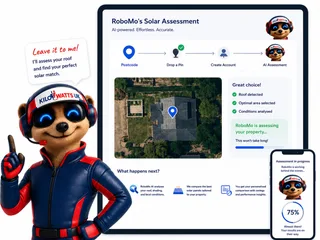
Simply enter your postcode, drop a pin on your roof, create your free account and let RoboMo™ analyse your property to find the best solar panels for your home.

You don't have to think
RoboMo™'s AI analyses your roof and does all the hard work.

Accurate & tailored
AI-powered assessment based on your roof, location, and conditions.

Best options, maximum savings
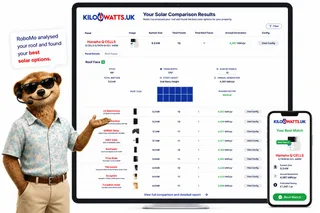
Compare top solar panels for the best performance and value.

Simple, fast & effortless
Provide a few details, sit back and watch your results unfold.
STEP 1
Choose Home, Business or Industrial
Enter your postcode to start your assessment.
STEP 2

Drop a pin on your roof
STEP 3

Create your free account
STEP 4

Sit back and watch RoboMo™ work
RoboMo™ analyses your roof and builds your personalised solar comparison.

BATTERY ROI TOOL
See what a battery saves on your bill
Enter the day rate, off-peak rate and export rate. The calculator ranks batteries in the Kilowatts shop over 10 years.
Home batteries also suit offices and small commercial sites. Industrial batteries are listed on their own calculator.

Step 1
Enter your postcode
Start designing your wind energy system in seconds.
Are you an installer, distributor or renewable energy business?
Kilowatts UK is expanding the Flower Turbines partner network across the UK.
Become A Flower Turbines PartnerKilowatts UK is an authorised representative
Flower Turbines
Compact vertical-axis turbines built for real UK sites, not just open farmland.
They start in light wind, sit in a small footprint, and are bird-safe by design. Cluster them as a bouquet and the group performs better together than the same turbines standing alone. Enter your postcode for a location-based generation estimate. Figures use area weather data and will differ if buildings, trees or hills sit in the way.
Starts in light UK wind
Built to generate in typical UK wind, not only open farmland.
Small rooftop or ground footprint
Compact towers for roofs, yards and tight sites.
Bird-safe slow rotation
Slow vertical-axis spin, bird-safe by design.
Bouquet clusters raise output
Grouped turbines outperform the same units standing alone.


STEP 2

Choose a location
STEP 3

Place your cluster
Tap the map where you want the turbine cluster to go.
STEP 4

Instant generation forecasts
Compare different turbine layouts and see annual generation forecasts instantly.
STEP 5

No commitment required
Explore different configurations before deciding whether to request a quotation.
Related articles
Mo's Mission Nominations
FAQ
Need Help? RoboMo's Got Answers
What is a 650W solar panel?
A 650W solar panel is a photovoltaic module rated to produce up to 650 watts under Standard Test Conditions. The rating is a laboratory benchmark, not a promise of constant output on a UK roof. Most 650W panels achieve the higher wattage mainly by being physically larger than typical residential panels.
Is a 650W solar panel worth it for a UK home?
It can be worth considering if you have a large, simple roof area and want to reduce the number of panels in the array. It is not automatically better than using smaller panels, because total system output depends on roof space, orientation, shading, inverter design and installation quality. On smaller or awkward roofs, several lower-wattage panels may fit more neatly and produce more overall energy.
Are 650W panels more efficient than 400W or 450W panels?
Not necessarily. A 650W panel often has a similar efficiency percentage to good-quality smaller panels, but it has more surface area. When comparing options, look at efficiency, dimensions and total kWp that can fit on your roof, not just the wattage printed on the datasheet.
How much electricity will a 650W panel generate in the UK?
Annual generation varies with location, roof angle, orientation, shading and system losses. As a rough guide, a 650W panel in the UK might generate in the region of a few hundred kWh per year, with better results on unshaded south-facing roofs. A proper estimate should be based on your specific roof survey rather than the panel rating alone.
Will a 650W panel fit on a typical house roof?
Many 650W panels are large-format modules, so they may be harder to place around chimneys, roof windows, hips, dormers and edges. They can work well on large, uncomplicated roof sections, but may be impractical on smaller terraced or semi-detached roofs. Your installer should check panel dimensions, access, lifting and safe working requirements before recommending them.
Do larger panels create extra roof loading or installation issues?
Yes, larger panels are usually heavier and can be more awkward to handle than standard residential modules. The roof structure, mounting system and wind loading should be assessed as part of the design. This is one reason a high-wattage panel is not always the simplest or cheapest option to install.
Do 650W panels need a special inverter or grid approval?
They do not automatically need a special inverter, but the inverter and string design must match the panel’s electrical characteristics. For grid-connected systems, your installer should confirm the relevant Distribution Network Operator requirements and handle the correct paperwork. Do not assume that a higher-wattage panel can be swapped into an existing system without design checks.