


What affects solar panel efficiency in the UK
Published: 2026-02-16 18:36:37
Updated: 2026-02-16 18:52:18
Understand solar panel efficiency uk in the UK, with clear explanations, examples, and practical next steps.
Overview
Solar panel efficiency is how much sunlight a panel turns into usable electricity. In the UK, overall performance is shaped as much by roof layout and shading as by the panel rating. This explains what changes real output and what to check when comparing quotes. For related tools and reference pages, see the solar comparison flow at compare residential solar PV.
What solar panel efficiency means
Solar panel efficiency is the percentage of sunlight converted into electricity by the panel. Efficiency is measured in laboratories under Standard Test Conditions. Standard Test Conditions use 1,000 W per square metre irradiance and a 25C cell temperature. Real UK conditions often differ from Standard Test Conditions due to clouds, low sun angle, and partial shading. Higher efficiency panels can produce more power from the same roof area, but do not guarantee higher annual output on every roof.
Typical UK efficiency and performance ranges
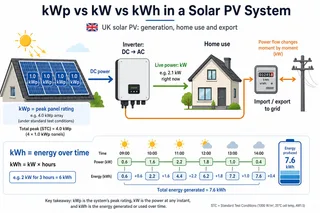
Most UK domestic panels are typically in the 18 to 23 percent efficiency range. Premium monocrystalline panels are typically around 20 to 23 percent efficiency. Older or lower efficiency technologies can be around 15 to 18 percent efficiency. Annual generation in the UK is often described as kWh per kWp per year. Typical UK annual ranges are about 800 to 1,100 kWh per kWp per year depending on location. A typical UK domestic system size is often 3 kWp to 5 kWp. A 4 kWp system in southern England can typically produce around 3,600 to 4,400 kWh per year. System performance ratio is commonly around 75 to 90 percent in the UK when well designed and installed. For panel examples and specs, the UK-facing directory at solar panels directory is useful for comparing stated efficiency and dimensions.
UK weather and daylight effects
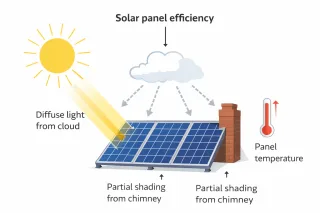
Cloud cover reduces total annual generation but does not stop production. Panels can generate electricity from diffuse light, which is common in the UK. Winter has shorter days and a lower sun angle, which reduces daily generation even on clear days. Cooler UK temperatures can reduce thermal losses compared with hotter climates. Higher panel temperature reduces efficiency above 25C cell temperature, but UK rooftop temperatures still rise in summer.
Roof orientation, pitch, and usable roof area
South-facing roofs typically deliver the highest annual yield in the UK. East- and west-facing roofs typically produce around 10 to 20 percent less than an equivalent south-facing layout. North-facing pitched roofs are usually unsuitable unless a flat roof frame changes the tilt and direction. A roof pitch around 30 to 40 degrees is often close to optimal for UK latitude. Complex roof shapes can limit usable area and increase shading from roof features. Higher efficiency panels can matter more when roof area is limited.
Shading and why it matters more than many people expect
Shading from chimneys, trees, dormers, and neighbouring buildings reduces output. Small shaded areas can have an outsized impact on string-connected panels. Traditional string inverter systems can see a whole string reduced by one shaded panel. Power optimisers or microinverters can reduce losses from partial shading. Installers usually assess shading with solar path tools or digital shade modelling rather than guesswork.
System design choices that change real output
The following points summarise the most important takeaways:
DC to AC ratio
Oversizing DC relative to inverter can increase yield in low light but may clip output in peak conditions.Microinverters
Each panel operates independently, which can help on complex or shaded roofs.Power optimisers
Per-panel optimisation can reduce mismatch losses and improve monitoring detail.String inverter design
Output depends on how panels are grouped into strings and matched to inverter tracking ranges.Cable runs and connectors
Longer runs and poor terminations increase resistance losses and reduce delivered power.
Inverter efficiency and lifespan factors
Modern string inverters typically operate around 96 to 98 percent efficiency. Inverter placement affects reliability and performance. Hot loft locations can shorten inverter life and may increase derating in summer. Inverters commonly need replacement earlier than panels, often around 10 to 15 years. Monitoring helps spot inverter faults because panel output typically falls sharply when an inverter fails.
Temperature, airflow, and mounting details
Panel efficiency reduces as the panel warms above its rated temperature point. Airflow behind the panel reduces operating temperature and can improve output. Flush-mounted panels with restricted airflow can run hotter than well-spaced mounts. Dark roof coverings can contribute to higher panel temperature. UK conditions are generally favourable compared with hotter climates, but mounting still matters.
Dirt, debris, and maintenance realities in the UK
Rainfall often keeps panels reasonably clean in many parts of the UK. Low tilt angles can allow dirt and moss debris to remain on the panel surface longer. Bird droppings can cause local shading and reduce output. Severe soiling can reduce output by several percent, and in some cases more. Physical inspection can also identify slipped panels, damaged bird mesh, or cable issues.
Degradation, warranties, and long-term performance
Panels typically degrade over time, reducing output year by year. Typical degradation can be around 0.3 to 0.8 percent per year. Many manufacturers guarantee around 80 to 85 percent of original output after 25 years. Higher-quality panels often have lower degradation assumptions and stronger product warranties. Long-term performance is also influenced by inverter replacements and any roof work that requires temporary removal.
Grid limits, export, and metering constraints
UK export rules can cap how much power can be sent to the grid. Many domestic systems are commonly limited to 3.68 kW per phase without prior approval. Larger systems may require Distribution Network Operator approval under G99. Export limitation devices can cap export to meet network constraints. Metering and export setup affect how much exported energy is recorded for any export arrangement. Related electrical compliance topics and installer selection can be checked via the electrical company and electrician directory.
Batteries and self-consumption impacts
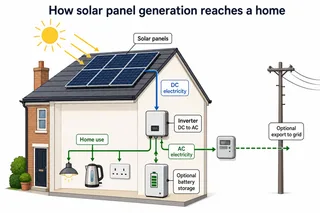
A battery does not increase solar panel efficiency. A battery can increase how much of your generated electricity you use at home. Typical self-consumption without a battery can be around 30 to 50 percent depending on usage. With a battery, self-consumption can rise to around 60 to 80 percent depending on usage patterns. Battery sizing depends on daily load shape, not panel efficiency alone. For background on storage concepts, see home battery storage systems introduction.
Common misconceptions that affect buying decisions
The following points summarise the most important takeaways:
Cold weather stops solar
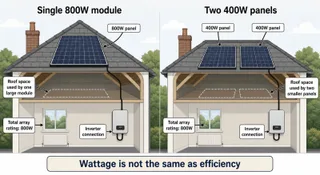
Cold can improve panel efficiency, but winter output is mainly limited by daylight hours.Wattage equals efficiency
Higher wattage can come from larger panel area rather than higher efficiency.All panels perform the same
Cell technology, degradation rates, and quality control affect long-term output.Solar does not work in the UK
Panels still generate in cloudy conditions using diffuse light.A bigger system always pays back faster
Roof suitability, shading, and self-consumption often matter more than raw size.
Suitability and when efficiency matters most
The following points summarise the most important takeaways:
Shaded roofs
Design choices like optimisers or microinverters can matter more than panel efficiency.East or west roofs
Annual yield may be lower than south-facing, even with high efficiency panels.Limited roof space
Higher efficiency panels can increase kWp installed on a small roof.Very complex roofs
Installation constraints and shading may reduce the benefit of premium panels.Flats or properties without roof rights
Solar may not be practical without clear permissions and access.
Installer-level checks that homeowners often miss
For EV-related electrical upgrades that often pair with solar, see EV charging station installation introduction.
String design
Confirm the number of panels per string and how different roof faces are separated.Roof fixing system
Ensure fixings suit roof type and that flashing and sealing details are specified.Inverter MPPT match
Ensure string voltages sit within the inverter MPPT range across temperatures.Cable sizing and routes
Longer DC runs and undersized cables increase voltage drop losses.Earthing and protection
Confirm DC isolators, surge protection, and bonding approach where applicable.Shading modelling method
Ask what tool or approach was used and what assumptions were applied.Commissioning and handover
Confirm monitoring setup, basic fault checks, and test documentation.
Ready to compare your options?
Get tailored comparisons and connect with trusted installers in under a minute.
Plan, Compare & Buy Renewable Energy Solutions
AI does the thinking.
You get the perfect solar match.
Use RoboMo™ to assess your property, compare available technologies and connect with trusted UK installers, suppliers and manufacturers.
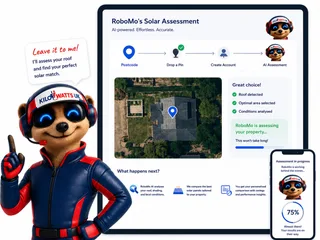
Simply enter your postcode, drop a pin on your roof, create your free account and let RoboMo™ analyse your property to find the best solar panels for your home.

You don't have to think
RoboMo™'s AI analyses your roof and does all the hard work.

Accurate & tailored
AI-powered assessment based on your roof, location, and conditions.

Best options, maximum savings
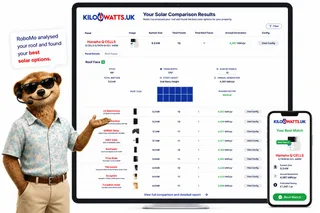
Compare top solar panels for the best performance and value.

Simple, fast & effortless
Provide a few details, sit back and watch your results unfold.
STEP 1
Choose Home, Business or Industrial
Enter your postcode to start your assessment.
STEP 2
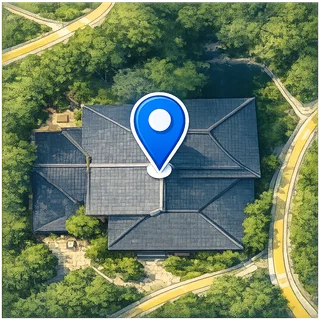
Drop a pin on your roof
STEP 3

Create your free account
STEP 4

Sit back and watch RoboMo™ work
RoboMo™ analyses your roof and builds your personalised solar comparison.
Kilowatts UK is an authorised representative
Flower Turbines
Compact vertical-axis turbines built for real UK sites, not just open farmland.
They start in light wind, sit in a small footprint, and are bird-safe by design. Cluster them as a bouquet and the group performs better together than the same turbines standing alone. Enter your postcode for a location-based generation estimate. Figures use area weather data and will differ if buildings, trees or hills sit in the way.
Starts in light UK wind
Built to generate in typical UK wind, not only open farmland.
Small rooftop or ground footprint
Compact towers for roofs, yards and tight sites.
Bird-safe slow rotation
Slow vertical-axis spin, bird-safe by design.
Bouquet clusters raise output
Grouped turbines outperform the same units standing alone.
Step 1
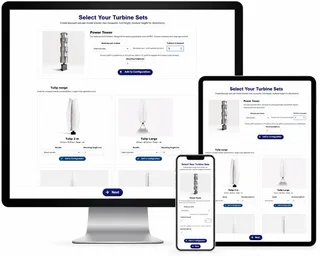
Enter your postcode
Start designing your wind energy system in seconds.
STEP 2

Choose a location
STEP 3
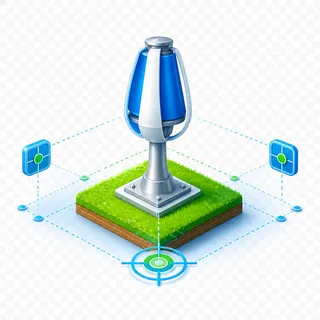
Place your cluster
Tap the map where you want the turbine cluster to go.
STEP 4

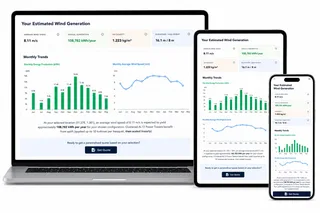
Instant generation forecasts
Compare different turbine layouts and see annual generation forecasts instantly.
STEP 5

No commitment required
Explore different configurations before deciding whether to request a quotation.
Related articles

Mo's Mission Nominations
FAQ
Need Help? RoboMo's Got Answers
What does solar panel efficiency actually mean?
Solar panel efficiency is the percentage of sunlight that a panel converts into usable electricity. It is measured under Standard Test Conditions using 1,000 W per square metre irradiance and a 25C cell temperature. Real UK conditions often differ due to cloud cover, lower sun angles, and shading, so actual performance can vary from the laboratory rating.
What is a typical solar panel efficiency range in the UK?
Most domestic solar panels installed in the UK are typically between 18 and 23 percent efficient. Premium monocrystalline panels are often around 20 to 23 percent, while some older or lower efficiency technologies may be around 15 to 18 percent. Annual generation is commonly expressed as 800 to 1,100 kWh per kWp per year depending on location.
Does cloudy UK weather stop solar panels working?
No. Solar panels can generate electricity from diffuse light, which is common in the UK. Cloud cover reduces total annual generation but does not stop production. Winter output is lower mainly because of shorter daylight hours and lower sun angles rather than cold temperatures.
How does roof direction affect solar panel performance?
South-facing roofs typically provide the highest annual yield in the UK. East- and west-facing roofs can produce around 10 to 20 percent less than an equivalent south-facing system. North-facing pitched roofs are generally unsuitable unless tilt and direction can be adjusted using a flat roof frame.
How much does shading affect solar panel efficiency?
Shading from chimneys, trees, dormers, or neighbouring buildings can significantly reduce output. In traditional string inverter systems, one shaded panel can reduce the output of the whole string. Power optimisers or microinverters can reduce these losses by allowing panels to operate more independently.
Does a battery increase solar panel efficiency?
A battery does not increase the panel’s conversion efficiency. It increases how much of your generated electricity you use at home. Without a battery, self-consumption is often around 30 to 50 percent, and with a battery it can rise to around 60 to 80 percent depending on usage patterns.
How long do solar panels maintain their performance?
Solar panels gradually degrade over time. Typical degradation rates are around 0.3 to 0.8 percent per year. Many manufacturers guarantee around 80 to 85 percent of original output after 25 years, provided the system has been installed and maintained correctly.
Are there UK limits on how much solar power I can export?
Yes. Many domestic systems are commonly limited to 3.68 kW per phase without prior approval. Larger systems may require Distribution Network Operator approval under G99. Export limitation devices can be used to cap output to meet local network constraints.