


Do solar panels work in winter in the UK
Published: 2026-02-26 09:17:07
Updated: 2026-10-05 12:49:12
Do solar panels work in winter in the UK Solar panels work in winter in the UK because they generate electricity from daylight, not heat.
Plan, Compare & Buy Renewable Energy Solutions
AI does the thinking.
You get the perfect solar match.
Use RoboMo™ to assess your property, compare available technologies and connect with trusted UK installers, suppliers and manufacturers.
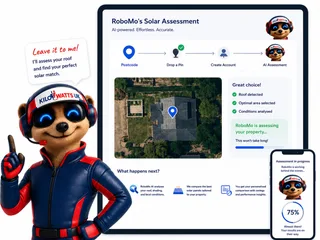
Simply enter your postcode, drop a pin on your roof, create your free account and let RoboMo™ analyse your property to find the best solar panels for your home.

You don't have to think
RoboMo™'s AI analyses your roof and does all the hard work.

Accurate & tailored
AI-powered assessment based on your roof, location, and conditions.

Best options, maximum savings
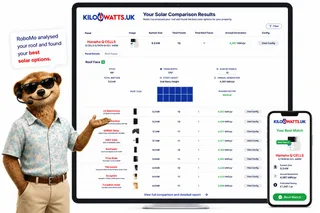
Compare top solar panels for the best performance and value.

Simple, fast & effortless
Provide a few details, sit back and watch your results unfold.
STEP 1
Choose Home, Business or Industrial
Enter your postcode to start your assessment.
STEP 2
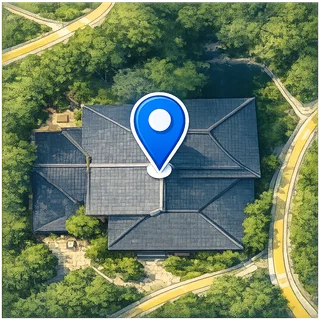
Drop a pin on your roof
STEP 3

Create your free account
STEP 4

Sit back and watch RoboMo™ work
RoboMo™ analyses your roof and builds your personalised solar comparison.

BATTERY ROI TOOL
See what a battery saves on your bill
Enter the day rate, off-peak rate and export rate. The calculator ranks batteries in the Kilowatts shop over 10 years.
Home batteries also suit offices and small commercial sites. Industrial batteries are listed on their own calculator.

Step 1
Enter your postcode
Start designing your wind energy system in seconds.
Are you an installer, distributor or renewable energy business?
Kilowatts UK is expanding the Flower Turbines partner network across the UK.
Become A Flower Turbines PartnerKilowatts UK is an authorised representative
Flower Turbines
Compact vertical-axis turbines built for real UK sites, not just open farmland.
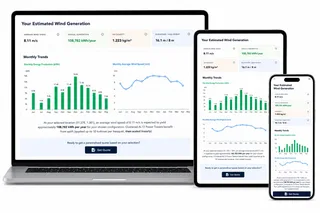
They start in light wind, sit in a small footprint, and are bird-safe by design. Cluster them as a bouquet and the group performs better together than the same turbines standing alone. Enter your postcode for a location-based generation estimate. Figures use area weather data and will differ if buildings, trees or hills sit in the way.
Starts in light UK wind
Built to generate in typical UK wind, not only open farmland.
Small rooftop or ground footprint
Compact towers for roofs, yards and tight sites.
Bird-safe slow rotation
Slow vertical-axis spin, bird-safe by design.
Bouquet clusters raise output
Grouped turbines outperform the same units standing alone.

STEP 2

Choose a location
STEP 3
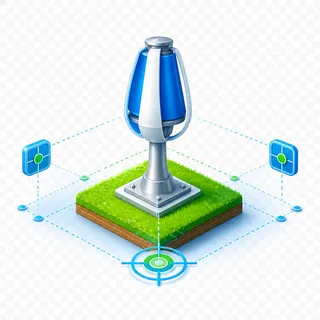
Place your cluster
Tap the map where you want the turbine cluster to go.
STEP 4

Instant generation forecasts
Compare different turbine layouts and see annual generation forecasts instantly.
STEP 5

No commitment required
Explore different configurations before deciding whether to request a quotation.
Related articles


Mo's Mission Nominations
FAQ
Need Help? RoboMo's Got Answers
Do solar panels work on short winter days in the UK?
Yes. Solar panels generate electricity from daylight, not heat, so they still work in winter. Output is lower mainly because there are fewer daylight hours and the sun sits lower in the sky.
Do solar panels work on cloudy winter days?
Yes. Cloud cover reduces output because irradiance is lower, but panels can still generate electricity from diffuse daylight. Generation may be reduced, but it does not normally drop to zero during daylight hours.
How much electricity can a typical UK system produce in winter?
A typical UK home system is often between 3 kWp and 5 kWp. A 4 kWp system in southern England may generate roughly 50 to 150 kWh in December, while in northern Scotland it may be below 50 kWh for the same month. Winter months usually account for about 15 to 25 percent of total annual generation.
Can a battery make up for low winter solar generation?
No. A battery stores surplus electricity for later use but does not increase how much your panels generate. In winter, lower solar output means fewer full battery charge cycles from solar alone.
Do snow and frost damage solar panels in winter?
Frost does not typically damage modern solar panels. Snow can block light if it covers the surface, but on tilted UK roofs it often slides off as it melts.