


How much electricity do solar panels generate in the UK?
Published: 2026-01-21 19:25:41
Updated: 2026-01-21 21:12:25
Understand solar panel output uk in the UK, with clear explanations, examples, and practical next steps.
Solar panel output in the UK at a glance
Solar panel output means how much electricity your solar PV system generates. In the UK, output is usually described as annual kWh, plus seasonal variation across the year. A typical home system is often 3.0 kWp to 5.0 kWp, and real output depends on roof details and daylight. [cta: solar]
Key terms and what they mean
If you want background on how installs are typically set up, see Solar panel installation: an introduction.
Export
Solar electricity sent to the grid when your home is not using it.kWp rating
The system size based on test conditions, used for comparing panel and system capacity.kWh generated
The electricity produced over time, shown on monitoring apps or a generation meter.Solar PV system
Panels and electrical equipment that convert daylight into electricity you can use at home.Self-consumption
The portion of solar electricity you use in the home at the time it is generated.
Typical UK output ranges
For panels commonly used on homes, see the residential solar panels directory.
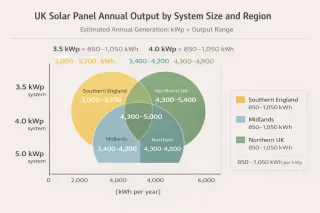
3.5 kWp example
Often around 3000 to 3700 kWh per year in typical UK conditions.4.0 kWp example
Often around 3400 to 4200 kWh per year in typical UK conditions.5.0 kWp example
Often around 4250 to 5250 kWh per year in typical UK conditions.Annual output rule of thumb
UK solar typically generates about 850 to 1050 kWh per kWp per year, depending on location and roof factors.
UK climate and seasonal patterns
Solar output varies far more by season than many homeowners expect. Most UK generation happens between April and September, with much lower totals in December and January. Cold weather does not stop panels working, but short daylight hours reduce production.
Cloudy days
Solar still generates in overcast weather, but output can drop sharply under heavy cloud.Winter reality
Typical winter output can be around 10 to 20 percent of summer output for the same system.Summer dominance
Around 65 to 75 percent of annual generation is typically produced between April and September.
Roof factors that change output
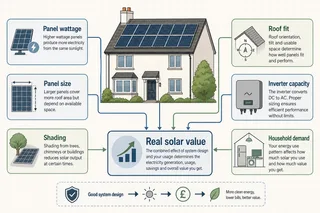
Two nearby homes can see different annual generation from the same kWp size. Orientation, shading, and usable roof area typically matter more than small differences in panel brand. Some constraints are only obvious after an installer survey. For a practical discussion on layout and placement decisions, see Solar panel placement secrets.
Pitch
A roof angle around 30 to 40 degrees is often close to ideal for annual UK generation.Shading
Chimneys, trees, and nearby buildings can reduce output materially, especially if shade hits multiple panels.Orientation
South-facing roofs usually generate the most across the year.East-west roofs
Often generate less overall, but can spread generation across the day.North-facing roofs
Often unsuitable for standard rooftop PV.Soiling and debris
Leaves and bird mess can reduce output, and the effect is often seasonal.
System design choices that affect usable electricity
Generation is only part of the story, because a home saves the most when solar electricity is used on site. The inverter, system configuration, and any shading mitigation can affect how much of the generated power is actually usable. Battery storage changes when you can use solar electricity, not how much the panels generate. For battery basics, see Home battery storage systems: an introduction.
Monitoring
Good monitoring helps confirm performance and spot faults early.Inverter type
String inverters are common on simple roofs, while microinverters or optimisers can reduce shading losses on complex roofs.System losses
Real-world losses of roughly 10 to 20 percent are typical from inverter conversion, cabling, and other factors.Battery storage
Batteries increase self-consumption by shifting solar use into evenings, but do not increase total generation.Typical home battery size
Many home batteries are in the 5 to 10 kWh range.
Grid connection and export constraints in the UK
UK connection rules can affect how a system is configured, especially on single-phase homes. Export limits do not stop generation, but they can influence inverter settings and system design choices. Larger systems may require approval from the local electricity network operator.
Metering
Your setup may rely on smart metering or a separate generation meter depending on the install and tariff arrangements.Larger systems
Higher export capacity or larger inverters can require prior approval, depending on the network.Common single-phase export limit
Many homes are often treated as capped at 3.68 kW export under standard arrangements.
Common misconceptions UK homeowners have
Solar output is often underestimated in cloudy climates, and overestimated in winter. Many misunderstand the difference between system size and energy generated. Some assume a battery increases generation rather than shifting usage.
Direct sun only myth
Panels generate in diffuse daylight, not only in bright sunshine.Battery increases output myth
Batteries improve self-consumption but do not increase kWh generated by the panels.Winter should match summer myth
Short days drive winter output down, even on clear days.Bigger panel wattage guarantees more myth
Shading, orientation, and layout can outweigh small panel spec differences.
Suitability and when output may disappoint
Solar output is strongly linked to roof suitability and shading. Homes with limited roof area may not fit the kWp size they want. Heavily shaded roofs can produce much less than expected, even with good panels. If you need to find an installer who can assess shading and layout properly, use the electrical company and electrician directory.
Often unsuitable
Flats without roof rights, or roofs dominated by shade and unsuitable orientations.Usually suitable
Homes with a clear, unshaded roof plane and space for a sensible number of panels.Often challenging
Roofs with frequent shading across the main array area, or very limited usable roof space.
Installer-level practical notes homeowners often miss
Installers plan around roof structure, wiring routes, and compliance constraints as well as kWp targets. Small details can change how many panels fit and how they are wired. These details can influence both yield and reliability. For EV households planning daytime charging, see EV charging station installation: an introduction.
Cable runs
Long DC cable runs increase losses, and poor routing can create avoidable efficiency drops.Roof condition
Any roof repair is more complex after panels are installed, so the roof should be sound before fitting PV.Shading workarounds
Optimisers or microinverters can help on complex roofs, but they add components that must be installed and managed.Commissioning checks
A proper handover should include confirmation that real generation aligns with expectations once monitoring is active.Scaffolding and access
Access constraints affect the install approach and may limit certain panel positions.Fire and safety setbacks
Panel layout can be limited by required access routes and spacing on the roof.
Ready to compare your options?
Get tailored comparisons and connect with trusted installers in under a minute.
Plan, Compare & Buy Renewable Energy Solutions
AI does the thinking.
You get the perfect solar match.
Use RoboMo™ to assess your property, compare available technologies and connect with trusted UK installers, suppliers and manufacturers.
Simply enter your postcode, drop a pin on your roof, create your free account and let RoboMo™ analyse your property to find the best solar panels for your home.

You don't have to think
RoboMo™'s AI analyses your roof and does all the hard work.

Accurate & tailored
AI-powered assessment based on your roof, location, and conditions.

Best options, maximum savings
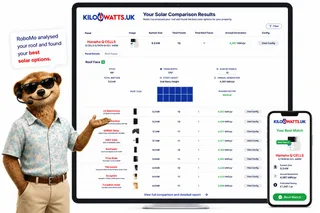
Compare top solar panels for the best performance and value.

Simple, fast & effortless
Provide a few details, sit back and watch your results unfold.
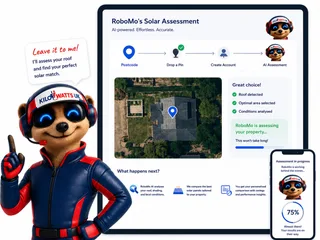
STEP 1
Choose Home, Business or Industrial
Enter your postcode to start your assessment.
STEP 2

Drop a pin on your roof
STEP 3

Create your free account
STEP 4

Sit back and watch RoboMo™ work
RoboMo™ analyses your roof and builds your personalised solar comparison.

Kilowatts UK is an authorised representative
Flower Turbines
Compact vertical-axis turbines built for real UK sites, not just open farmland.
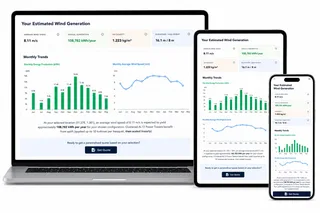
They start in light wind, sit in a small footprint, and are bird-safe by design. Cluster them as a bouquet and the group performs better together than the same turbines standing alone. Enter your postcode for a location-based generation estimate. Figures use area weather data and will differ if buildings, trees or hills sit in the way.
Starts in light UK wind
Built to generate in typical UK wind, not only open farmland.
Small rooftop or ground footprint
Compact towers for roofs, yards and tight sites.
Bird-safe slow rotation
Slow vertical-axis spin, bird-safe by design.
Bouquet clusters raise output
Grouped turbines outperform the same units standing alone.

Step 1
Enter your postcode
Start designing your wind energy system in seconds.
STEP 2

Choose a location
STEP 3

Place your cluster
Tap the map where you want the turbine cluster to go.
STEP 4

Instant generation forecasts
Compare different turbine layouts and see annual generation forecasts instantly.
STEP 5

No commitment required
Explore different configurations before deciding whether to request a quotation.
Related articles


Mo's Mission Nominations
FAQ
Need Help? RoboMo's Got Answers
How is solar panel output measured in the UK?
Solar panel output is measured in kilowatt-hours (kWh), which represents the amount of electricity generated over time. In the UK, output is usually discussed as total annual kWh, rather than daily or hourly figures, because generation varies significantly by season.
What does kWp mean and how does it relate to actual electricity generated?
kWp stands for kilowatt-peak and describes the size of a solar PV system under standard test conditions. Actual electricity generated in the UK is lower than the kWp figure and depends on daylight levels, roof orientation, shading, and system losses.
How much electricity do solar panels typically generate in the UK?
A typical UK home system of 3.0 to 5.0 kWp often generates roughly 850 to 1050 kWh per kWp per year. This means total annual generation commonly falls in the range of about 3000 to 5250 kWh, depending on location and roof factors.
How does the UK climate affect solar panel output?
Most UK solar generation occurs between April and September when days are longer. Winter output is much lower due to short daylight hours, not cold temperatures. Solar panels still generate electricity in cloudy conditions, but heavy cloud reduces output.
Why can two similar homes have very different solar output?
Differences in roof orientation, pitch, shading from trees or buildings, and usable roof area can significantly change annual generation. Installer design choices, such as panel layout and inverter configuration, also affect how much electricity is produced and used in the home.