


Solar Panel Placement Secrets
Published: 2025-10-16 19:00:00
Updated: 2026-08-01 07:13:25
Discover the key strategies and technical insights for optimal solar panel placement.
Key points to consider
Panel Placement Secrets: Horizontal vs Vertical Installation Performance Compared
When it comes to solar energy, most people focus on panel efficiency, brand names, and inverter quality. But one factor often overlooked could quietly be affecting your energy output every single day, the way your panels are installed. Horizontal or vertical, it’s not just about aesthetics. Let’s explore how your solar panel orientation can change performance, maintenance, and return on investment.
- The Basics: Portrait vs Landscape
- Sunlight Exposure and Efficiency
- Cooling and Temperature Control
- Dirt, Water, and Cleaning
- Space and System Design
Solar panels can be mounted in two main orientations: Portrait (Vertical): Taller than they are wide, like a smartphone held upright. Landscape (Horizontal): Wider than they are tall, similar to a computer monitor. While the internal cells of a panel function the same either way, the orientation determines how sunlight hits them, how they cool, and even how dirt and water drain off. The angle and direction of your panels have a bigger impact than the orientation, but layout still plays a role. Vertical (portrait) layouts generally perform better on steeper roofs, where sunlight strikes more evenly across the surface. Horizontal (landscape) layouts can slightly improve output on flatter roofs, since they spread sunlight exposure more evenly throughout the day. In lab tests and real-world installations, performance differences between the two are usually within 1-3%. That gap can widen depending on roof shape, tilt, and location. Heat is the enemy of efficiency. Solar cells lose power output as they get hotter, which is why it helps to understand what affects efficiency before choosing a layout. Landscape mounting allows for better air circulation underneath panels, helping them cool faster. Portrait setups can trap a bit more heat, especially if panels are close together with less airflow. In warmer climates, that can translate into slightly better year-round performance for landscape installations. Here’s a factor few installers mention: rainflow and dirt build-up. Vertical panels shed water and dust more effectively, reducing maintenance needs. Horizontal panels can accumulate grime along the lower edge, particularly if the roof is flat or has minimal tilt. If you live somewhere dusty or with heavy rainfall, portrait orientation might help keep your panels cleaner and more consistent over time. How your panels fit together on the roof affects how many panels you can install and how efficient your wiring is. Portrait panels work best for tall, narrow roofs, maximising the number of panels in vertical rows. Landscape panels suit wide, shallow roofs, like many modern homes and commercial buildings. Every installation should be designed around maximising usable roof area while minimising shading between rows. In real-world solar projects, the performance difference between horizontal and vertical installations is generally small, but not insignificant. Studies and installer feedback suggest variations of around 1-3% depending on local climate, roof angle, and airflow. Portrait setups tend to perform slightly better in dusty or rainy regions because they stay cleaner with less maintenance. Landscape layouts, on the other hand, may edge ahead in hotter environments where improved cooling and airflow matter more. Most installers now model both orientations using solar design software before finalising a layout, ensuring each project is optimised for its specific roof and regional conditions. So which is better, horizontal or vertical? The truth: there’s no universal winner. It depends on your roof type, climate, and maintenance habits. Choose portrait (vertical) if you live in a dusty or rainy area, have a steep roof, or want easier cleaning. Choose landscape (horizontal) if your roof is flatter, space is wide, or you live in a hot region where cooling matters. A skilled installer will model both configurations to see which one delivers the best energy yield over time. Find Trusted Solar Installers Near You Before deciding on your installation style, it’s worth speaking with certified professionals who understand your local climate, roof type, and the basics of solar installation. Homeowners in Scotland can reach out to Solar Central Scotland Ltd, while residents in Essex can contact Legra Electrical Renewables Ltd. Both are trusted Kilowatts.uk partners specialising in high-quality solar installations. Compare Solar Options for Your Home Panel orientation is just one of many factors that affect your system’s performance. To see which setup offers the best long-term savings, try our solar comparison tool. In less than a minute, you can get tailored quotes from MCS-certified installers using Kilowatts.uk’s Compare Tool. It’s quick, transparent, and designed to help you find the smartest solar deal for your home. Panel orientation may seem like a small detail, but in solar, small details add up over years of production. The right setup could mean hundreds of extra kilowatt-hours, and hundreds more in your pocket. Before your next installation, ask your provider: “Have you modelled the orientation for my roof?” It’s one simple question that can make your solar system smarter from day one.
Plan, Compare & Buy Renewable Energy Solutions
AI does the thinking.
You get the perfect solar match.
Use RoboMo™ to assess your property, compare available technologies and connect with trusted UK installers, suppliers and manufacturers.
Simply enter your postcode, drop a pin on your roof, create your free account and let RoboMo™ analyse your property to find the best solar panels for your home.

You don't have to think
RoboMo™'s AI analyses your roof and does all the hard work.

Accurate & tailored
AI-powered assessment based on your roof, location, and conditions.

Best options, maximum savings
Compare top solar panels for the best performance and value.

Simple, fast & effortless
Provide a few details, sit back and watch your results unfold.
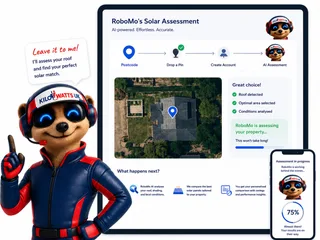
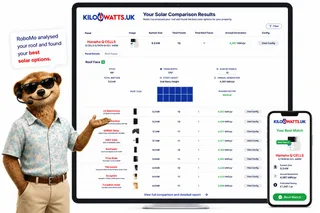
STEP 1
Choose Home, Business or Industrial
Enter your postcode to start your assessment.
STEP 2
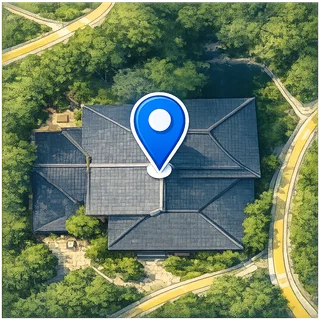
Drop a pin on your roof
STEP 3

Create your free account
STEP 4

Sit back and watch RoboMo™ work
RoboMo™ analyses your roof and builds your personalised solar comparison.

Kilowatts UK is an authorised representative
Flower Turbines
Compact vertical-axis turbines built for real UK sites, not just open farmland.
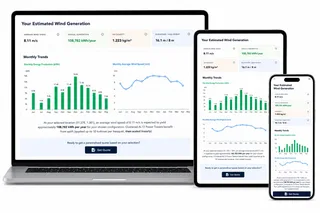
They start in light wind, sit in a small footprint, and are bird-safe by design. Cluster them as a bouquet and the group performs better together than the same turbines standing alone. Enter your postcode for a location-based generation estimate. Figures use area weather data and will differ if buildings, trees or hills sit in the way.
Starts in light UK wind
Built to generate in typical UK wind, not only open farmland.
Small rooftop or ground footprint
Compact towers for roofs, yards and tight sites.
Bird-safe slow rotation
Slow vertical-axis spin, bird-safe by design.
Bouquet clusters raise output
Grouped turbines outperform the same units standing alone.
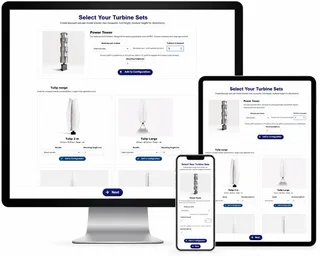
Step 1
Enter your postcode
Start designing your wind energy system in seconds.
STEP 2

Choose a location
STEP 3
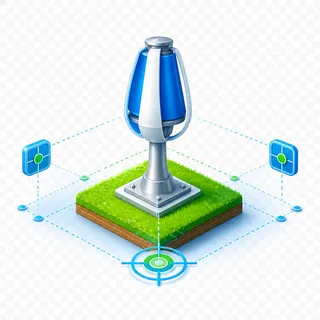
Place your cluster
Tap the map where you want the turbine cluster to go.
STEP 4

Instant generation forecasts
Compare different turbine layouts and see annual generation forecasts instantly.
STEP 5

No commitment required
Explore different configurations before deciding whether to request a quotation.
Related articles


Mo's Mission Nominations
FAQ
Need Help? RoboMo's Got Answers
Does the orientation of solar panels really make a big difference in performance?
Orientation can influence performance by 1–3% on average, depending on roof angle, shading, and local climate. While tilt and direction have a larger impact overall, choosing between portrait (vertical) and landscape (horizontal) layouts can still improve airflow, cleanliness, and efficiency over time.
Which orientation is better for UK homes, portrait or landscape?
In the UK’s northern climate, portrait (vertical) layouts generally perform better on pitched roofs as they shed rain and dirt more effectively. However, landscape (horizontal) setups can work better on flat or wide roofs, where improved airflow helps reduce heat and maintain consistent energy output.
Will horizontal panels overheat more than vertical ones?
Actually, the opposite is usually true. Landscape (horizontal) installations allow more air circulation beneath the panels, helping them stay cooler and slightly more efficient in warmer weather. Portrait setups can retain more heat if the spacing between panels is tight.
Do horizontal panels collect more dirt and require more cleaning?
Yes, horizontal panels can accumulate dust, leaves, or water along the lower edge, especially on flat roofs. Portrait panels tend to self-clean better in rainy regions because gravity and rainfall help wash away debris. Regular cleaning or installing at a slight tilt can help both types stay efficient.
Can I mix horizontal and vertical panels in one solar array?
It’s possible, but not usually recommended. Mixing orientations complicates wiring, inverter configuration, and shading analysis. Most installers prefer to keep panels aligned uniformly unless the roof shape or obstructions demand a mix. If mixed layouts are needed, each section is typically connected to a separate inverter or optimizer.
Does orientation affect how much sunlight my panels receive?
Only slightly. The direction and angle of your roof determine how much sunlight your panels get. Orientation mainly affects how that sunlight is distributed across the cells and how efficiently panels stay cool or clean. For example, landscape layouts can perform slightly better on flat roofs, while portrait works best on steeper ones.
How can I find out which orientation is best for my roof?
Professional installers use solar design software to simulate both portrait and landscape orientations based on your roof pitch, shading, and location. You can also use Kilowatts.uk’s free solar comparison tool to connect with MCS-certified installers who can model both configurations and recommend the most efficient setup for your home.