


Do Solar Panels Die After 25 Years. The Truth About Panel Lifespan
Published: 2026-06-06 13:37:17
Updated: 2026-06-06 14:00:53
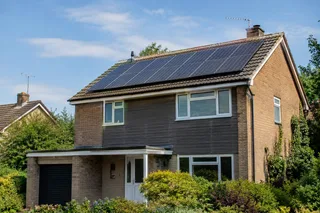
What Does A 25-Year Solar Panel Warranty Actually Mean?
Many homeowners assume a solar panel reaches the end of its life when the manufacturer's 25-year warranty expires.
In reality, most solar panel warranties are performance warranties that guarantee a minimum level of power output after a specified period rather than defining when the panel stops working.
Anyone researching residential solar installations should understand the difference between warranty life and operational life, as many systems continue generating electricity long after the warranty period ends.
Solar Panels Slowly Degrade Over Time
Solar panels gradually lose a small amount of generating capacity as they age, a process known as degradation.
Modern premium panels often advertise annual degradation rates of around 0.3% to 0.5% per year after an initial first-year decline, meaning performance reductions occur very slowly over decades.
Understanding degradation helps homeowners create realistic expectations for long-term energy production and compare technologies such as home battery storage systems that are commonly installed alongside solar panels.
Real-World Solar Systems Are Lasting Decades
Solar installations from the 1980s and 1990s are still generating electricity today, demonstrating that solar technology can remain operational for much longer than many people expect. Although older systems may produce less electricity than when first installed, they often continue delivering useful energy generation and financial savings for their owners. This long-term performance is one reason why solar energy remains a popular investment for households seeking to reduce electricity costs over many years.
What Usually Needs Replacing First?
The solar panels themselves are often not the first component of a system to require replacement.
Inverters, monitoring equipment and battery systems generally have shorter service lives and may need upgrading or replacement during the lifetime of the solar array.
- Inverters
- Monitoring equipment
- Battery systems
- Communication hardware
- Electrical protection devices
How Much Do Modern Solar Panels Really Degrade?
Modern premium solar panels from leading manufacturers tend to offer very similar long-term performance warranties.
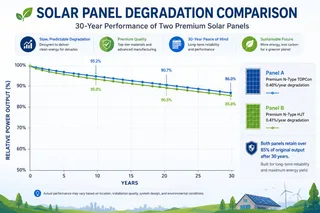
While specifications vary by model, many products advertise a maximum first-year degradation of around 1% followed by annual degradation of approximately 0.35% to 0.4%, with technical data available from manufacturers such as AIKO Solar and LONGi.
Using a 485W panel as an example, long-term output could look similar to the following:
Year 1 output
Approximately 480W after initial degradation.Year 10 output
Approximately 460W to 465W depending on the model.Year 20 output
Approximately 445W to 450W depending on the model.Year 30 output
Approximately 430W to 435W depending on the model.
What Does This Tell Us?
The differences between many premium solar panels become surprisingly small when viewed over a 30-year period.
In some cases, the gap in expected output after three decades can be only a few watts despite noticeable differences in marketing claims and product positioning.
Factors such as roof orientation, shading, installation quality and inverter selection often have a greater impact on real-world generation than small differences in panel degradation rates.
Is Efficiency Really The Most Important Number?
Solar panel efficiency measures how much sunlight can be converted into electricity within a given surface area.
Higher efficiency panels are particularly useful when roof space is limited because they allow more generating capacity to be installed within the same footprint, while larger roofs may allow greater flexibility in panel selection.
Homeowners comparing panel technologies may also find it useful to understand how different panel sizes affect system design by reading this guide to 650W solar panels.
Larger roof areas
Overall system value may matter more than efficiency alone.Limited roof space
Higher efficiency can increase total installed capacity.Complex roof layouts
Panel dimensions can influence system design.Budget-focused projects
Lifetime return may outweigh small efficiency differences.
Why This Matters For Homeowners
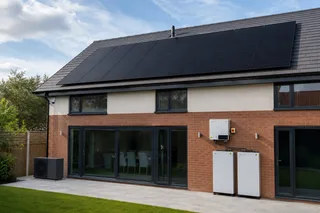
A solar system should be viewed as a long-term asset rather than a product designed to last only 25 years.
Many installations may continue generating electricity for 30 years or more, improving lifetime savings and overall return on investment as they continue operating beyond their warranty period.
Homeowners exploring system design can learn more about solar panel technology, determine what battery size may suit their property, and understand how long home batteries typically last when planning a complete renewable energy system.
Ready to compare your options?
Get tailored comparisons and connect with trusted installers in under a minute.
Plan, Compare & Buy Renewable Energy Solutions
AI does the thinking.
You get the perfect solar match.
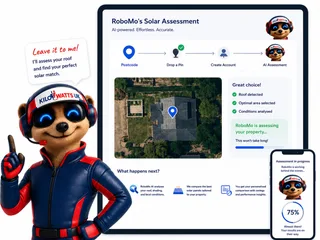
Use RoboMo™ to assess your property, compare available technologies and connect with trusted UK installers, suppliers and manufacturers.
Simply enter your postcode, drop a pin on your roof, create your free account and let RoboMo™ analyse your property to find the best solar panels for your home.
You don't have to think
RoboMo™'s AI analyses your roof and does all the hard work.

Accurate & tailored
AI-powered assessment based on your roof, location, and conditions.

Best options, maximum savings
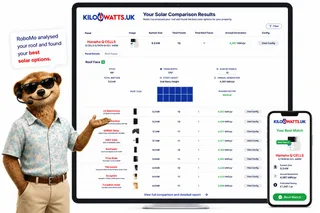
Compare top solar panels for the best performance and value.

Simple, fast & effortless
Provide a few details, sit back and watch your results unfold.
STEP 1
Choose Home, Business or Industrial
Enter your postcode to start your assessment.
STEP 2
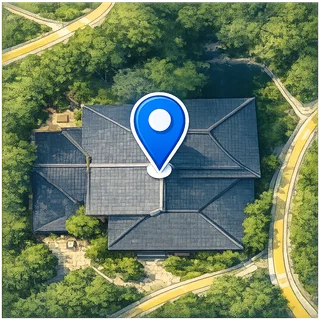
Drop a pin on your roof
STEP 3

Create your free account
STEP 4

Sit back and watch RoboMo™ work
RoboMo™ analyses your roof and builds your personalised solar comparison.

Step 1
Enter your postcode
Start designing your wind energy system in seconds.
Are you an installer, distributor or renewable energy business?
Kilowatts UK is expanding the Flower Turbines partner network across the UK.
Become A Flower Turbines PartnerKilowatts UK is an authorised representative
Flower Turbines
Compact vertical-axis turbines built for real UK sites, not just open farmland.
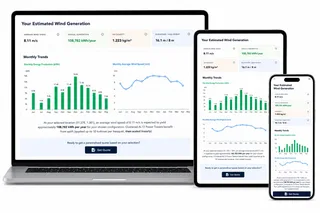
They start in light wind, sit in a small footprint, and are bird-safe by design. Cluster them as a bouquet and the group performs better together than the same turbines standing alone. Enter your postcode for a location-based generation estimate. Figures use area weather data and will differ if buildings, trees or hills sit in the way.
Starts in light UK wind
Built to generate in typical UK wind, not only open farmland.
Small rooftop or ground footprint
Compact towers for roofs, yards and tight sites.
Bird-safe slow rotation
Slow vertical-axis spin, bird-safe by design.
Bouquet clusters raise output
Grouped turbines outperform the same units standing alone.
STEP 2

Choose a location
STEP 3
Place your cluster
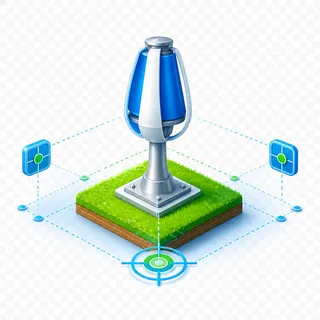
Tap the map where you want the turbine cluster to go.
STEP 4

Instant generation forecasts
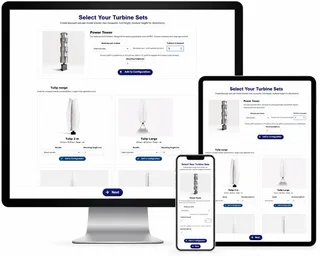
Compare different turbine layouts and see annual generation forecasts instantly.
STEP 5

No commitment required
Explore different configurations before deciding whether to request a quotation.
Related articles



Mo's Mission Nominations
FAQ
Need Help? RoboMo's Got Answers
Do solar panels stop working after 25 years?
No. Most solar panels continue generating electricity after 25 years. The 25-year figure commonly refers to a performance warranty, not the end of the panel's lifespan. Many systems remain operational for decades beyond their warranty period, although they will gradually produce slightly less electricity as they age.
What does a 25-year solar panel warranty actually mean?
A 25-year solar panel warranty usually guarantees that the panel will still produce a minimum percentage of its original rated output after 25 years. It does not mean the panel will stop working when the warranty expires. Modern performance warranties commonly guarantee between 80% and 90% of original output after the warranty period.
What happens when a solar panel warranty expires?
When a warranty expires, the manufacturer's performance guarantee ends, but the solar panels often continue operating normally. If the system is still generating electricity efficiently and remains in good condition, there may be no reason to replace it simply because the warranty has ended.
How much do solar panels degrade over time?
Solar panels gradually lose a small amount of generating capacity each year. Many modern premium panels advertise annual degradation rates of approximately 0.3% to 0.5% after the first year. This means performance declines slowly and predictably over several decades.
How much power will a solar panel produce after 25 years?
The exact figure depends on the manufacturer and model, but many modern panels are warranted to retain between 80% and 90% of their original output after 25 years. Some premium products now offer performance warranties extending to 30 years with similar retention levels.
Can solar panels last 30 years or more?
Yes. Many solar panels are expected to remain operational for 30 years or longer. Real-world examples show systems installed several decades ago still producing electricity today, demonstrating that operational lifespan can significantly exceed warranty periods.
What usually needs replacing first in a solar installation?
In many cases, the inverter reaches the end of its service life before the solar panels. Monitoring equipment, communication devices and battery storage systems may also require replacement or upgrading during the lifetime of the installation.
Are newer solar panels more durable than older models?
Modern solar panels benefit from advances in manufacturing, cell design and materials. They are generally backed by longer warranties and lower advertised degradation rates than many earlier generations of solar technology.
Is solar panel efficiency more important than degradation?
Not necessarily. Efficiency determines how much power can be generated from a given roof area, while degradation affects long-term performance. For many homeowners, factors such as roof orientation, shading, system design and installation quality can have a greater impact on overall energy generation than small differences in efficiency or degradation rates.
Why do high-efficiency solar panels matter?
Higher-efficiency panels can produce more electricity from the same roof area. This is particularly beneficial for properties with limited roof space where maximising installed capacity is important. On larger roofs, overall system value may be more important than achieving the highest efficiency rating.
What affects solar panel performance more than degradation?
Several factors can influence real-world energy production more significantly than panel degradation.
Roof orientation, shading, inverter quality, installation standards and system sizing all play important roles in determining how much electricity a solar system generates over its lifetime.
Roof orientation, shading, inverter quality, installation standards and system sizing all play important roles in determining how much electricity a solar system generates over its lifetime.
Should I replace solar panels after 25 years?
Not necessarily. If the panels are still producing useful amounts of electricity and remain structurally sound, replacement may not be financially justified. Many older systems continue generating power long after their warranty periods have expired.
Do solar panels become less cost-effective as they age?
Solar panels gradually produce less electricity over time due to degradation. However, they can continue delivering valuable energy savings for many years, particularly if they have already recovered their installation costs through reduced electricity bills.
Will a battery help offset solar panel degradation?
A battery does not prevent solar panel degradation. However, it can improve the value of the electricity generated by storing surplus energy for later use, helping homeowners maximise self-consumption and reduce grid imports.
How can I check whether my solar panels are degrading?
Most modern solar systems include monitoring software that tracks electricity generation over time. Comparing actual performance against expected generation figures can help identify whether a system is operating within normal degradation ranges or whether further investigation is needed.
Does weather affect solar panel lifespan?
Solar panels are designed to withstand decades of exposure to rain, wind, snow and sunlight. While weather can influence performance on a day-to-day basis, quality solar panels are tested to ensure they remain durable under normal environmental conditions.
Are solar panels still worth having after 20 years?
In many cases, yes. Even after 20 years, solar panels can continue producing a substantial proportion of their original output. As long as the system remains safe and operational, it can continue reducing electricity costs and generating renewable energy for the property.