


What happens at the end of a commercial solar PPA?
Published: 2026-07-19 08:16:25
Updated: 2026-08-01 07:21:07
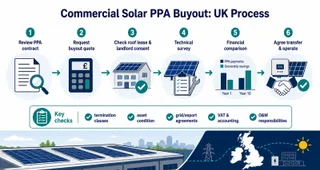
The business may be able to buy the solar PV system, extend the agreement, sign a new PPA, have the system removed, or repower the installation.
What happens at the end of a commercial solar PPA?
At the end of a commercial solar PPA in the UK, the outcome depends on the signed contract. The business may be able to buy the solar PV system, extend the agreement, sign a new PPA, have the system removed, or repower the installation. Ownership does not automatically transfer unless the PPA, roof agreement, or related legal documents say it does.
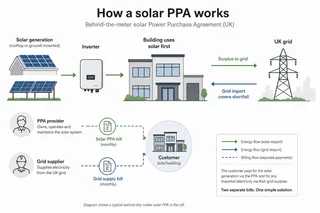
A Power Purchase Agreement is mainly a legal and commercial arrangement, not a technical cliff edge. In simple terms, a PPA usually means one party owns and operates the solar panels, while the site occupier buys the electricity generated on site at an agreed rate. When the term ends, the panels may still work well, but the rights to use the roof, sell or consume the electricity, maintain the equipment, receive export income, and access the site must still be clear. For background on the structure, see this guide to commercial solar PPAs.
For UK businesses, the most important factors are the end-of-term clause, roof agreement, system condition, inverter age, metering arrangements, export rights, insurance requirements, landlord or lender consent, and the site’s future electricity demand. A business should ideally start reviewing these points well before the PPA expiry date, because legal, technical, grid, and property issues can take time to resolve. This guide is for general UK commercial solar planning. It is not legal, tax, valuation, or insurance advice. For a live contract decision, the signed PPA and property documents should be reviewed by appropriate advisers.
Short summary for UK businesses
A commercial solar PPA usually means a third party funded, owns, and maintains a solar PV system on a business site. The customer buys the electricity generated on site at an agreed pence-per-kWh rate, often for a long term such as 15 to 25 years.
When that term ends, the contract normally sets out what can happen next.
Buyout
The customer buys the solar asset and takes on maintenance, insurance, safety, and future operating responsibility.Removal
The asset owner removes the panels and associated equipment, subject to the reinstatement terms in the contract.Extension
The parties agree to continue the PPA, often with a revised electricity rate and updated documents.Repowering
Older panels, inverters, monitoring, or mounting equipment are replaced or upgraded where the roof, grid connection, and legal rights allow it.New agreement
The original PPA is replaced with a new commercial structure, possibly including system upgrades.
The best option is rarely decided by panel age alone. In real projects, the roof condition, inverter condition, landlord consent, grid export capacity, metering, and the business’s future demand profile often matter more. The key point is simple: the end of a PPA is not the same as the end of the solar system. It is the point where the legal and commercial rights need to be confirmed or renegotiated.
The main end-of-PPA options
Most UK commercial solar PPAs point towards one or more practical outcomes at the end of the term. There is no universal market standard, so two similar-looking rooftop systems can have very different end positions.
Buy the system: Many agreements include a buyout option, although the price may be based on fair market value, a formula, a depreciated value, or a schedule in the contract. Once the customer owns the system, it usually becomes responsible for maintenance, inverter replacement, insurance notification, monitoring, safety documentation, and eventual decommissioning. Extend the existing PPA: An extension can suit businesses that want continued third-party ownership and maintenance. The revised rate may be lower if the asset is largely paid down, but it still needs to cover operation, maintenance, metering, insurance, and asset management. Sign a new PPA: A new agreement may be used where the original contract is no longer suitable. This can allow updated pricing, a new funder, revised roof access terms, battery storage, EV charging, or a larger system if the site and grid connection support it. Remove the system: Some contracts give the owner the right or obligation to remove the equipment. The key issue is who pays, what reinstatement means, whether roof penetrations or fixings must be made good, and what evidence is required after removal. Repower the installation: Repowering means replacing older equipment with newer equipment. This can improve output or reliability, but may need a fresh structural review, DNO check, updated insurance information, planning review, and a new commercial agreement.
A well-drafted PPA should say which options are available, when notices must be served, how values are calculated, and who is responsible for costs at each stage.
What does not happen automatically?
Several assumptions cause disputes at the end of a commercial solar PPA. The safest approach is to read the signed PPA, the roof lease or licence, and any side agreements together.
Ownership does not always pass to the building occupier. The solar electricity does not automatically become free. Export income does not automatically move to the site user. The funder does not always have to remove the system. The roof access rights do not always continue after the PPA ends.
If the business buys the system, it may stop paying the PPA electricity rate, but it has not removed all cost. It will still need to allow for monitoring, inspections, maintenance, possible inverter replacement, insurance updates, fire safety information, and eventual decommissioning. If the business does not buy the system, it must confirm whether the asset owner still has a valid legal right to keep the panels on the roof. A PPA expiry date and a roof licence expiry date do not always align neatly. The same applies to export income. The right to receive export payments depends on the export contract, metering arrangement, and ownership position. It should not be assumed that export payments automatically follow whoever occupies the building.
The clauses to check before the end date
The end-of-term review should start with the documents, not the panels. A system may be technically sound, but if the contract position is unclear, the site can still face cost, access, and liability problems.
Roof rights
Compare the PPA expiry date with the roof lease, licence, landlord consent, lender consent, and property lease terms.Buyout clause
Confirm whether a buyout right exists, how the value is calculated, when it can be exercised, and whether VAT, accounting, stamp duty land tax, or other transaction costs need advice.Export rights
Confirm who receives export income, which export agreement applies, and whether the export MPAN and metering arrangements remain valid.Removal clause
Identify who pays for removal, what equipment must be removed, what happens to cabling and meters, and what roof reinstatement standard applies.Extension clause
Check whether either party has a right to extend, whether rates are pre-agreed, whether indexation continues, and what notice period applies.Ownership clause
Check whether ownership transfers, can be bought, or remains with the asset owner after the PPA term.
If the PPA provider has changed, been acquired, or assigned the asset to a fund, the business should identify the current legal owner before sending notices or negotiating a buyout. Maintenance responsibility — Establish who looks after monitoring, faults, inspections, cleaning, inverter servicing, safety records, and emergency response after expiry. Change provisions — Review what happens if the property is sold, refinanced, redeveloped, sublet, or transferred to a new operating company. Assignment provisions — Check whether the asset owner has assigned the PPA or system to a funder, investor, or new operator. Dispute process — Identify how disagreements over valuation, condition, removal, or reinstatement are handled.
Technical condition matters more than panel age alone
A solar PV system at the end of a PPA can still be a useful generating asset. Commercial panels commonly have long design lives, and many continue producing after 25 years. Output gradually declines over time, but the condition of the inverters, cabling, roof, metering, and monitoring can be more important than the age of the panels.
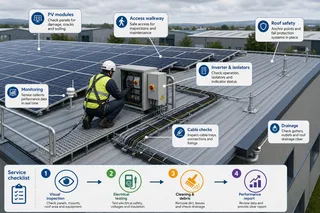
A practical end-of-term technical survey should not be limited to a quick visual check from ground level. It should assess the electrical system, the roof interface, and the performance history.
Module condition: Look for damaged glass, delamination, hotspots, staining, frame damage, and signs of poor drainage or soiling. Inverter condition: Review age, fault history, ventilation, alarms, replacement history, and whether parts or support are still available. Cabling and isolators: Check DC and AC cable routes, containment, labelling, isolator condition, earthing, bonding, and signs of water ingress or UV damage. Mounting system: Inspect fixings, corrosion, ballast movement, wind loading assumptions, and roof penetrations where relevant. Metering and monitoring: Confirm generation data, export data, sub-metering, data access, and how missing or faulty readings are handled. Roof condition: Assess remaining roof life, membrane condition, corrosion, fixings, drainage, fragile areas, and any evidence of leaks. For many UK sites, the roof becomes the limiting factor before the panels do. Extending a PPA on a roof that needs replacement soon can create expensive temporary removal and reinstatement issues. The technical review should also consider recognised UK industry requirements and guidance. Depending on the system, this may include BS 7671 electrical requirements, MCS guidance for solar PV installations, IET guidance, HSE expectations for safe roof access and work at height, and the insurer’s own fire and maintenance requirements. The exact standard to apply depends on the age, size, and design of the installation. Safety documentation — Check commissioning records, inspection certificates, emergency shutdown information, labelling, fire service information, and maintenance logs. Performance history — Compare actual generation against expected output, allowing for weather, faults, shading, downtime, and metering gaps.
How government support and UK policy affect the end of a PPA
Government support for solar panels, green energy policy, and the wider UK political environment can affect investment appetite and future project economics, but they usually do not decide what happens at the end of a PPA. The contract normally decides that.
The Feed-in Tariff closed to new applicants in 2019, although some existing accredited systems may still receive payments if they were registered before closure. Ofgem’s Feed-in Tariffs guidance explains that accredited installations may continue to receive payments subject to scheme rules. Those rights may belong to the asset owner unless the contract provides otherwise.
The Smart Export Guarantee is different. It can provide export payments for eligible low-carbon generators up to 5 MW, but rates are set by suppliers and vary. Ofgem’s Smart Export Guarantee guidance explains supplier obligations, eligibility, and metering requirements. A business should check whether the system, meter, and export contract are suitable before assuming any export value. For a commercial PPA site, on-site consumption is usually more valuable than export because it offsets imported electricity. If a business is considering a buyout or new agreement, it should check how much solar electricity is used on site, how much is exported, whether export capacity is limited by the Distribution Network Operator, and whether the existing metering arrangements are suitable. Policy can still matter indirectly. Planning rules, grid connection delays, business rates treatment, supplier export offers, and investor confidence can all affect whether a new PPA or repowering project is attractive. Government guidance on planning and permitted development rights, Ofgem guidance on export schemes, and the Energy Networks Association process for grid connections may all be relevant. However, political support for solar does not override the signed PPA documents.
Comparing the practical options
The right end-of-PPA decision depends on the property, energy use, contract wording, and risk appetite. A business with a long lease, strong daytime demand, and a good roof may lean towards buying or repowering. A business expecting to relocate may prefer an extension or removal, depending on the contract.
Buying the system can be attractive where the roof has a long remaining life and the buyout price is sensible. It gives the business more control, but it also transfers operational responsibility. The business should budget for inverter replacement if the equipment is already well into its operating life. If ownership is being compared with continued third-party funding, this PPA versus buying framework can help structure the decision.
Extending the PPA can reduce management burden because the third-party owner may continue to maintain the asset. It is less attractive if the indexed PPA price has become expensive, if the asset owner has been slow to fix faults, if metering data is unreliable, or if the roof needs major work. Removal can be the cleanest option where the building is being redeveloped, the roof is being replaced, or the system is unsafe or uneconomic. It can also be disruptive. The contract should specify the method, cost responsibility, waste handling, reinstatement standard, and documentation handover. Repowering can make sense where the site still has high electricity demand and the roof is suitable for continued operation. It may involve newer panels, replacement inverters, improved monitoring, or battery storage. It can also trigger fresh DNO, planning, structural, landlord, and insurance checks. A simple way to compare the choices is to separate them by control and responsibility.
Clean exit
Removal, where the contract and roof reinstatement position are clear.Highest control
Buying the system or funding a repower.Highest complexity
Repowering during lease changes, roof works, redevelopment, or unclear ownership.Lower operational burden
Extending a PPA or signing a new third-party-funded agreement.
No option is automatically best. The strongest route is the one that aligns the contract rights, roof condition, energy demand, and long-term property plan.
Financial checks before choosing a route
End-of-PPA decisions should be tested against realistic site data rather than headline savings claims. The key question is not only whether the panels still generate, but whether the chosen route is commercially better than the alternatives.
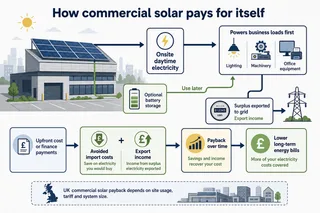
A business should compare the buyout cost with the expected remaining generation, likely maintenance spend, inverter replacement risk, insurance implications, export income, and avoided grid import costs. It should also check whether future electricity demand is likely to rise or fall. A wider review of commercial solar finance can be useful if the business is comparing a buyout with a new funded installation.
Useful financial checks include: Historic generation: How much electricity has the system actually produced each year? Self-consumption: How much solar electricity is used on site rather than exported? Avoided import cost: What import tariff is being offset, and how might it change? Export value: What export rate is available, and who is entitled to receive it? Buyout price: Is it based on contract formula, fair market value, depreciated cost, or negotiation? Operating cost: What will monitoring, inspection, maintenance, cleaning, and repairs cost? If production has been lower than expected, the reason matters. Shading from new buildings, poor inverter uptime, soiling on low-pitch roofs, monitoring faults, degraded cabling, or export curtailment can all change the economics. A buyout valuation based on assumed performance may not reflect the practical condition of the asset. Where the site has spare solar generation during the day, battery storage may improve self-consumption, but it is not automatically worthwhile. It needs a separate assessment of load profile, export limits, battery cycling, available space, fire strategy, warranty terms, and DNO requirements. Major component risk — Are inverters, optimisers, meters, or communications equipment near replacement? Roof risk — Will roof works require temporary removal and reinstatement? Tax and accounting — How will the asset be treated on the business’s books? Decommissioning — Who pays when the system is eventually removed?
Property, roof, and legal issues that are often missed
Commercial solar PPAs often sit across several documents. The PPA may deal with electricity purchase. A roof lease or licence may deal with access and equipment rights. A landlord consent letter, lender consent, planning decision, grid connection offer, or insurance note may also affect what can happen at the end.
A property sale can expose gaps in the paperwork. Buyers and lenders will ask who owns the panels, whether the roof is encumbered, whether the PPA can transfer, who receives the solar electricity, and whether termination fees apply.
Roof works are another common problem. If the roof needs replacement while the PPA is still active or soon after expiry, the contract should say who pays for temporary removal, storage, reinstatement, lost generation, and any damage. Without clear wording, a roof repair can become a commercial dispute. Insurance should also be updated. If ownership transfers to the site user, the solar PV system may need to be added to asset registers, fire risk information, business interruption reviews, and maintenance procedures. The insurer may ask for inspection records before accepting the changed risk. Planning and grid matters should not be ignored. Many rooftop commercial solar projects may fall within permitted development rights, but there are conditions and exceptions, especially for listed buildings, conservation areas, height limits, and certain roof types. Repowering, expanding, or materially changing the system may also require a fresh DNO review under the relevant connection process. The local planning authority, DNO, and professional advisers should be consulted where there is uncertainty.
A practical timeline before the PPA expires
The end of a PPA should be treated as a planned project. Leaving it until the final months reduces negotiating leverage and increases the risk of rushed decisions.
3 months before expiry
Finalise handover documents, safety information, meter data access, export arrangements, operational contacts, and emergency procedures.6 months before expiry
Agree the commercial route, prepare legal documents, plan roof works or technical upgrades, and confirm maintenance responsibility.9 months before expiry
Check landlord consent, lender consent, insurance requirements, DNO constraints, planning position, and any planned building works.12 months before expiry
Request any buyout valuation, compare extension terms, review export arrangements, and assess repowering potential.18 months before expiry
Commission a technical review of roof condition, system performance, inverter health, metering, monitoring, and safety documentation.24 months before expiry
Review the PPA, roof agreement, buyout rights, extension rights, notice periods, ownership terms, and assignment history.
This timeline can be compressed, but only if the documents are straightforward and the technical condition is clear. Complex sites, multi-tenant buildings, older roofs, lender consent, landlord consent, and unclear ownership positions need more time. At expiry — Record final meter readings, confirm asset ownership, update contacts, and make sure the system is either properly operated or safely decommissioned.
Documents and information to gather
Before negotiating with the asset owner, gather the core documents and site records. Missing information is one of the main reasons end-of-PPA decisions become slow or uncertain.
Signed PPA. Roof lease or licence. Landlord consent. Lender consent, if relevant. DNO connection approval. Export agreement.
If any of these are missing, ask the asset owner, installer, landlord, maintenance contractor, electricity supplier, or metering provider for copies. If ownership is unclear or the asset has been sold between funders, legal advice may be needed before serving notices or agreeing a buyout. Import supply and metering information. Generation meter details. Export MPAN details, if applicable. Single-line electrical diagram. As-built drawings. Structural survey. Planning documents. Fire risk information. Warranty documents. Operation and maintenance records. Generation data. Fault and downtime records. Metering agreement. Insurance documents. Previous inspection reports. Commissioning certificates. Decommissioning method statement. Asset ownership or assignment notices.
Questions to ask before making a decision
The business should ask both commercial and technical questions. The asset owner can clarify the contract position, while an installer or independent technical adviser can assess the condition and future operating risk.
Contract position: Who owns the system at expiry, what buyout rights exist, how the valuation is calculated, and whether warranties transfer. Extension terms: Whether the PPA can continue, what the new rate would be, whether indexation applies, and who remains responsible for operation and maintenance. Removal terms: Who pays for decommissioning, what equipment is removed, what roof reinstatement means in practice, and what records are provided afterwards. Export position: Who receives export revenue, whether an export agreement remains in place, and whether metering is suitable. Technical condition: Whether panels, inverters, cabling, isolators, mounting, monitoring, and roof interfaces are safe and performing properly. Roof position: Whether the roof has enough remaining life to justify continued operation or repowering.
These questions help avoid the common mistake of choosing the cheapest-looking option before understanding the full legal and operational position. Grid position — Whether the existing DNO approval still applies and whether any changes require a new connection application. Insurance position — Whether the insurer is satisfied with the installation, inspection history, fire information, and maintenance regime. Future changes — Whether repowering, batteries, commercial EV charger installation, or system expansion would need DNO approval, planning checks, landlord consent, or insurance updates.
When each option is likely to suit
Buying the system is usually most suitable where the business expects to occupy the site long term, the roof is in good condition, daytime electricity demand is stable, and the buyout price is commercially reasonable. It is less suitable if the business is relocating, the roof needs replacement, the system has poor performance, or no one internally is ready to manage the asset. Financial performance should be checked against real data, not just assumptions, so a separate look at commercial solar ROI may help frame the numbers.
Extending the PPA can suit businesses that want predictable third-party maintenance and do not want to own electrical generation equipment. It is less attractive if the extension price is uncompetitive, the asset is close to major component failure, the roof is approaching replacement, or the existing owner has not maintained the system well.
Removal may be the right answer where the building is being redeveloped, the roof is unsuitable, the system is unsafe, or the customer no longer wants solar generation on site. It is less attractive where the system is still performing well and removal would increase grid import costs. Repowering is worth considering where the roof has a long remaining life, electricity demand remains high, and newer equipment could make better use of the available roof area. It is less suitable where lease terms are short, export capacity is constrained, the roof cannot take the loading, or planning and insurance issues are unresolved. A new PPA may suit businesses that still want solar but do not want to fund or manage the system themselves. It can also be useful where the existing contract is outdated and the site now needs a different structure, such as more generation, battery storage, EV charging, or revised export arrangements. If a new third-party-funded route is being considered, it is worth revisiting how a solar PPA works before agreeing updated terms.
Final view
At the end of a commercial solar PPA, the panels do not simply become free, vanish, or transfer automatically. The outcome is governed by the contract, the roof rights, the metering and export arrangements, and the technical condition of the asset.
For most UK businesses, the sensible route is to review the documents early, inspect the system properly, compare buyout, extension, removal, repowering, and new commercial solar options, and make sure metering, export, insurance, maintenance, and safety responsibilities are clear before the expiry date. Larger sites with heavier loads may also want to compare industrial options before deciding whether to buy, extend, or repower.
The best end-of-PPA outcome is not just the lowest immediate cost. It is the option that gives the business clear legal rights, a safe and maintainable system, realistic financial value, and a plan that fits the future of the property. Businesses weighing a new installation, repower, or replacement funding model can also compare solar options as a next step.
Plan, Compare & Buy Renewable Energy Solutions
AI does the thinking.
You get the perfect solar match.
Use RoboMo™ to assess your property, compare available technologies and connect with trusted UK installers, suppliers and manufacturers.
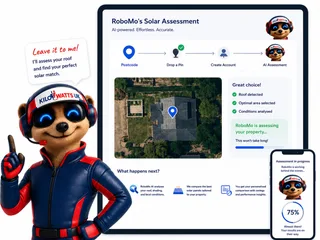
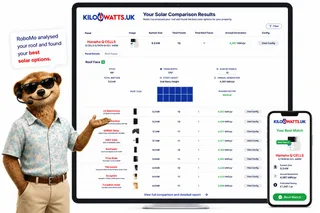
Simply enter your postcode, drop a pin on your roof, create your free account and let RoboMo™ analyse your property to find the best solar panels for your home.

You don't have to think
RoboMo™'s AI analyses your roof and does all the hard work.

Accurate & tailored
AI-powered assessment based on your roof, location, and conditions.

Best options, maximum savings
Compare top solar panels for the best performance and value.

Simple, fast & effortless
Provide a few details, sit back and watch your results unfold.
STEP 1
Choose Home, Business or Industrial
Enter your postcode to start your assessment.
STEP 2

Drop a pin on your roof
STEP 3

Create your free account
STEP 4

Sit back and watch RoboMo™ work
RoboMo™ analyses your roof and builds your personalised solar comparison.

Kilowatts UK is an authorised representative
Flower Turbines
Compact vertical-axis turbines built for real UK sites, not just open farmland.
They start in light wind, sit in a small footprint, and are bird-safe by design. Cluster them as a bouquet and the group performs better together than the same turbines standing alone. Enter your postcode for a location-based generation estimate. Figures use area weather data and will differ if buildings, trees or hills sit in the way.
Starts in light UK wind
Built to generate in typical UK wind, not only open farmland.
Small rooftop or ground footprint
Compact towers for roofs, yards and tight sites.
Bird-safe slow rotation
Slow vertical-axis spin, bird-safe by design.
Bouquet clusters raise output
Grouped turbines outperform the same units standing alone.
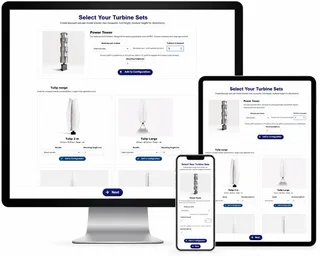
Step 1
Enter your postcode
Start designing your wind energy system in seconds.
STEP 2

Choose a location
STEP 3

Place your cluster
Tap the map where you want the turbine cluster to go.
STEP 4

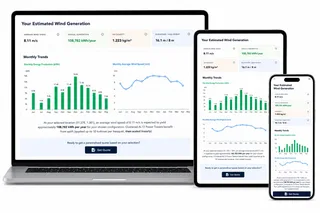
Instant generation forecasts
Compare different turbine layouts and see annual generation forecasts instantly.
STEP 5

No commitment required
Explore different configurations before deciding whether to request a quotation.
Related articles
Mo's Mission Nominations
FAQ
Need Help? RoboMo's Got Answers
Do the solar panels become mine at the end of a commercial solar PPA?
Not automatically. At the end of a commercial solar power purchase agreement, the solar PV system normally remains owned by the asset owner unless the signed contract says ownership transfers or gives the customer a purchase option. The position depends on the PPA, any roof lease or licence, landlord consent, funder consent, side letters, variations, and the notice process required before expiry.
What usually happens when a commercial solar PPA ends?
The usual options are to buy the solar system, extend or renegotiate the PPA, sign a new agreement, remove the equipment, repower the installation, or transfer the system to another owner if the contract allows it. The best route depends on the end-of-term clause, roof condition, system performance, inverter age, metering arrangements, export rights, grid connection, landlord consent, and the business’s future plans for the site.
Does the electricity become free when the PPA ends?
Not necessarily. If the business buys the system or ownership transfers under the contract, it may stop paying the PPA electricity rate, but it will take on operating costs such as inspections, maintenance, monitoring, insurance, repairs, inverter replacement, metering administration, and eventual decommissioning. If ownership does not transfer, the asset owner may still control the system and the commercial terms for using the electricity.
What should I check first when a solar PPA is nearing expiry?
Start with the signed PPA and any related property or finance documents, including the roof lease, roof licence, landlord consent, lender consent, assignment notices, side letters, and contract variations. Check who owns the system, what happens at expiry, whether there is a buyout right, how the price is calculated, what notice must be served, who pays for removal, and what roof reinstatement standard applies. Notice dates are especially important because missing a deadline can affect the options available.
How early should end-of-PPA planning start?
Planning should usually start two to three years before the PPA expires, especially if the roof may need work, the business wants to compare buyout and extension options, or several parties are involved. Early planning gives time to review the contract, identify notice dates, confirm the asset owner, gather generation data, inspect the roof and electrical system, review metering and export arrangements, speak to insurers, and model the financial case properly.
Is buying the solar system at the end of a PPA a good idea?
It can be a good option if the system is performing well, the roof has a long remaining life, the business expects to stay at the site, and most of the solar electricity is used on site rather than exported. However, ownership also means taking responsibility for maintenance, insurance, monitoring, electrical safety, inverter replacement, emergency procedures, roof access, export arrangements, and future repairs. A low buyout price should always be checked against these wider costs and risks.
How is the buyout price for a solar PPA usually calculated?
The buyout price depends on the contract. It may be based on a fixed schedule, fair market value, a formula, depreciated value, remaining revenue value, or negotiation between the parties. The business should check whether VAT, valuation costs, legal costs, metering changes, transfer documents, and any tax or accounting treatment need to be considered before accepting a buyout figure.
What technical checks should be done before buying the system?
Before buying, the system should be reviewed as an operational energy asset rather than just a set of panels. Useful checks include panel condition, inverter age and fault history, generation data, monitoring access, isolators, connectors, cabling, roof fixings or ballast, export limitation equipment, earthing and bonding, labelling, shutdown information, as-built drawings, maintenance records, commissioning documents, and any signs of roof leaks or structural issues.
Why is the roof so important at the end of a solar PPA?
The roof can decide whether keeping the system makes financial sense. If the roof needs replacement or major repair soon, the cost of removing panels, storing them, reinstalling them, retesting the system, and updating documentation can be significant. Flat roofs may need checks for ballast, drainage, membrane condition, and wind loading, while older industrial roofs may need checks for fragility, asbestos risk, fixings, corrosion, and safe access.
Can I extend the PPA instead of buying the system?
Yes, if the asset owner agrees and the contract allows it. An extension may suit businesses that want to keep using solar electricity without taking ownership of an ageing asset. Before agreeing, check the revised electricity tariff, indexation, maintenance responsibilities, performance expectations, roof rights, access arrangements, insurance requirements, metering responsibilities, and whether the business’s lease or occupation of the site will last for the full extension period.
Can I sign a new PPA when the original one ends?
Yes, a new PPA may be possible if both parties agree, or if a new provider takes on the project. This can be useful where the old agreement no longer fits the site, the system needs upgrading, the business wants a different tariff structure, or the project could include repowering, battery storage, EV charging, or additional solar capacity. A new agreement should be checked against the roof rights, grid connection, metering, planning position, insurance requirements, and landlord consent.
What happens if the system has to be removed?
If removal is required or agreed, the contract should explain who pays, what equipment must be removed, how the roof or land must be reinstated, and how the work will be carried out safely. Removal may be the right option where the roof needs redevelopment, the site is changing use, the system performs poorly, the business is leaving the premises, or the legal right to keep the equipment on the roof has ended.
Who pays for roof repairs or reinstatement after removal?
The answer depends on the PPA, roof lease, licence, and any landlord consent. The documents should say who is responsible for removing panels, making good fixings or penetrations, dealing with cabling and mounting equipment, repairing damage, and proving the roof has been reinstated to the agreed standard. If the wording is unclear, the issue should be resolved before removal starts because disputes over roof condition can be costly.
Can a commercial solar system be repowered at the end of a PPA?
Yes, repowering can be an option where the roof and grid connection remain valuable but the equipment is ageing, unreliable, or underperforming. Repowering may involve new panels, inverters, monitoring, cabling, mounting equipment, fire safety updates, or revised export controls. If generation capacity, export capacity, electrical design, roof loading, or site use changes, the Distribution Network Operator, insurer, landlord, and planning authority may need to review the proposal.
What metering and export issues should be checked?
Check who owns or controls the generation meter, export meter, data logger, monitoring portal, export MPAN, export contract, and any export limitation equipment. If ownership changes, the metering and supplier paperwork should match the physical installation and the party entitled to receive export income. Export revenue should not be assumed until eligibility, metering, ownership, and commercial terms are confirmed.
Does UK government support change what happens at the end of a PPA?
Usually not. The end of a commercial solar PPA is governed mainly by the signed contract, not by new government announcements. However, legacy Feed-in Tariff rights, Smart Export Guarantee eligibility, export contracts, tax treatment, business rates, planning rules, building regulations, Distribution Network Operator requirements, and insurer conditions may affect the value or practicality of keeping, buying, exporting from, or repowering the system.
What tax and accounting issues should be considered?
Businesses should take professional advice before agreeing a buyout, extension, removal, or repowering project. Points to check include VAT, whether a buyout is treated as capital expenditure, possible capital allowances, treatment of maintenance and repair costs, export income, accounting value of the asset, business rates, and the treatment of removal or reinstallation costs during roof works.
How should a business compare the financial options?
The comparison should include the buyout price or extension tariff, legal review, technical inspection, roof survey, inverter replacement risk, monitoring costs, maintenance, insurance, metering, export administration, DNO or supplier costs, tax advice, and possible roof works. The main financial benefit is usually avoided import electricity, so the model should focus on how much solar power the site will use during daylight hours, not just total annual generation.
What generation data should be reviewed before making a decision?
Review annual and monthly generation, inverter uptime, fault history, monitoring gaps, export levels, self-consumption, and any periods when the system was offline or curtailed. Actual performance should be compared with expected output while allowing for weather, shading, soiling, equipment faults, and meter reliability. Poor or missing data does not always mean the system is bad, but it makes valuation and forecasting less reliable.
When might it be better not to keep the solar system?
Keeping the system may be poor value if there is weak generation history, missing monitoring data, repeated inverter faults, unclear ownership records, roof leaks, limited export permission, high access costs, unresolved landlord consent, poor documentation, or major roof works due soon. It may also be less attractive if most of the electricity is exported rather than used on site, because export payments are often lower than the value of avoided import electricity.
What should tenants check before taking ownership of a solar system?
Tenants should check whether their occupational lease allows them to keep solar equipment on the roof, access it, maintain it, insure it, alter it, or transfer it when they leave. If the lease ends soon, taking ownership can create dilapidations, consent, access, reinstatement, and end-of-lease issues. Landlord approval may be needed even if the tenant is the electricity buyer under the PPA.
What if the PPA provider or asset owner has changed?
The business should confirm the current legal owner of the solar asset before serving notices, negotiating a buyout, agreeing an extension, or arranging removal. Commercial solar assets are sometimes sold, refinanced, assigned to funders, or transferred between operators. Notices sent to the wrong party may not be effective, and the business may need copies of assignment notices or other evidence showing who now owns or controls the system.
Do warranties and maintenance records transfer if I buy the system?
They may transfer, but this should not be assumed. Some warranties depend on the original installer, manufacturer terms, registration details, maintenance history, or approved transfer process. Before buying, check panel warranties, inverter warranties, mounting system warranties, monitoring access, operation and maintenance records, commissioning certificates, inspection reports, as-built drawings, and emergency shutdown information.
What insurance and safety issues should be checked?
If ownership or responsibility changes, the business should tell its insurer and update asset registers, fire risk information, emergency procedures, maintenance plans, and inspection schedules. Insurers may ask for evidence of electrical inspection, safe roof access, fire service information, labelling, isolation points, maintenance history, and any known defects. A system that was acceptable under third-party ownership may still need updated records before the site owner takes responsibility.
Could planning or grid connection rules affect the end-of-PPA decision?
Yes, especially if the system is being repowered, expanded, materially altered, or combined with battery storage or EV charging. Many rooftop commercial solar installations may fall within permitted development rights, but conditions and exceptions can apply, particularly for listed buildings, conservation areas, height limits, and certain roof types. Changes to generation or export capacity may also require a Distribution Network Operator review or a new connection application.
Who should be involved in the end-of-PPA decision?
The decision may need input from finance, estates, operations, legal, procurement, sustainability, health and safety, insurers, landlords, tenants, funders, accountants, and technical advisers. Smaller businesses should also consider cash flow, premises security, lease length, roof condition, internal maintenance capability, and future growth plans before taking on ownership or another long-term commitment.