


How does a solar PPA work in the UK? | Commercial Solar Finance
Published: 2026-07-18 16:02:29
Updated: 2026-07-26 18:33:55
In the UK, solar power purchase agreements are most common for businesses, schools, farms, public-sector buildings, warehouses, logistics sites.
How does a solar PPA work in the UK?
A solar PPA works by letting a third-party provider fund, own, install, and usually maintain a solar PV system on your site, while you buy the electricity it generates at an agreed pence-per-kWh rate. In the UK, solar power purchase agreements are most common for businesses, schools, farms, public-sector buildings, warehouses, logistics sites, retail estates, and factories rather than ordinary homes.
In simple terms, a solar PPA is not a free solar panel scheme. It is a long-term electricity purchase contract linked to a solar PV system. The customer avoids most or all upfront capital cost, but commits to buying solar electricity from the PPA provider for the term of the agreement.
The strongest UK PPA cases are usually sites with:
- high daytime electricity use
- a sound, unshaded roof or suitable land
- stable long-term occupation
- clear landlord, lender, insurer, and freeholder consent where needed
- a grid connection that can accommodate the system
- a contract structure that is understandable beyond the headline tariff
A solar PPA can also support sustainability targets because solar PV generates electricity without direct operational carbon emissions. The actual carbon benefit depends on system size, generation, how much electricity is used on site, what grid electricity it displaces, and who has the right to claim any environmental attributes or reporting benefit under the contract.
The basic structure of a solar PPA
A solar PPA has three main parts. The first is the physical solar PV system. The second is the contract that sets out the tariff, responsibilities, metering, ownership, export treatment, and end-of-term options. The third is the ongoing operation, where solar electricity is measured and billed separately from normal grid electricity.
The provider usually funds the design, equipment, installation, grid application work, monitoring, and maintenance. In return, it receives payment for electricity generated and consumed on site. The customer usually continues to buy electricity from a licensed grid supplier for night-time use, winter shortfalls, and periods when the solar system is not generating enough.
This means a business may receive two energy-related bills: one from the normal electricity supplier for imported grid power one from the PPA provider for solar electricity used on site Most onsite commercial solar PPAs are “behind-the-meter” arrangements. The solar PV system is connected on the customer’s side of the meter, and the building uses the solar electricity directly when it is available. This is different from an offsite or “sleeved” corporate PPA, where a buyer contracts with a remote solar farm and electricity is supplied through the grid using separate trading and supply arrangements. Both models can be called solar PPAs, but they work differently. This article focuses mainly on onsite solar PPAs because they are the common buyer-intent route for UK organisations considering solar panels on their own roof or land.
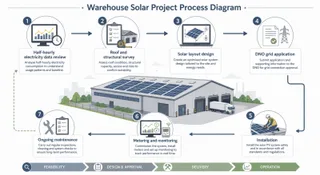
Step by step, how the process normally works
The process begins with a feasibility review, not with installation. A provider needs to know whether the building can physically host solar panels and whether the electricity use profile supports a viable commercial case.
Legal agreement
The parties agree ownership, roof rights, metering rules, export treatment, termination provisions, environmental attribute rights, and what happens if the site is sold or vacated.Site assessment
The provider checks roof area, roof condition, orientation, shading, access, structural capacity, fire access, and electrical connection points.Commercial offer
The provider proposes a PPA rate, contract term, indexation method, maintenance responsibility, export treatment, and end-of-term options.System modelling
The provider estimates generation, on-site use, export, seasonal variation, and likely savings against the customer’s grid tariff.Consumption review
The provider looks at electricity bills and, for larger commercial sites, half-hourly data to understand when power is used.Sustainability modelling
The proposal may estimate avoided grid electricity and indicative carbon savings, using transparent assumptions and recognised emissions factors.
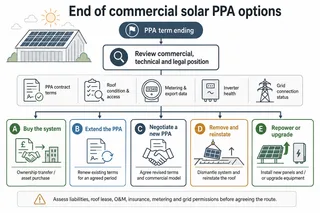
For commercial projects, the modelling stage is important because annual consumption alone can be misleading. A site with a large electricity bill but mostly night-time demand may be less attractive than a smaller site with steady daytime use. For example, a cold-storage site or factory running during daylight may consume a high proportion of its solar generation directly. A warehouse with low daytime demand and little equipment load may export more electricity, which can weaken the PPA economics unless there is future demand from EV charging, refrigeration, heat pumps, or extended operations. Consents and grid work — Landlord, lender, insurer, planning, building control, and Distribution Network Operator requirements are checked where relevant. Installation and connection — The solar PV system is installed, commissioned, metered, and connected to the building and the grid where approval is required. Operation and billing — The site uses solar electricity when available and pays the PPA provider for measured solar consumption. End of term — The contract may allow extension, removal, transfer, or purchase of the system depending on the agreed wording.
How the electricity flows
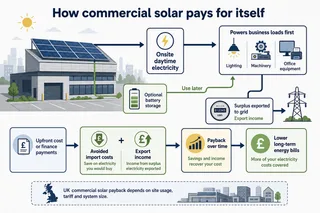
Solar panels generate direct current electricity during daylight. An inverter converts it into alternating current so it can be used by the building. When the site is using electricity at the same time as the panels are generating, solar power normally supplies the building first.
If the building needs more power than the solar system is producing, the balance is imported from the grid. If the solar system produces more than the building can use at that moment, surplus electricity may be exported to the grid, curtailed, stored in a battery, or handled in another way depending on the contract and grid connection.
A solar PPA does not usually make a building independent from the grid. Standard grid-tied solar PV systems also do not normally keep running during a power cut unless extra equipment such as battery storage, backup controls, and islanding protection has been designed into the system. A simple example is a daytime manufacturing site. If the solar PV system is producing electricity at 11am and the machinery, lighting, compressors, and office loads are running, that solar electricity is used directly by the site. If production stops at the weekend but the panels continue generating, more electricity may be exported unless there is a battery or another load to absorb it. This is why self-consumption matters. In many UK onsite solar PPAs, electricity used behind the meter is more valuable than exported electricity because it reduces the need to buy grid power at the full delivered retail rate.
How the PPA price is set
The PPA price is usually a rate per kWh of solar electricity consumed by the customer. It is normally intended to be lower than the customer’s grid electricity price, but the actual rate is site-specific rather than a fixed national figure.
Factors that affect the PPA rate include:
- system size
- roof quality and installation complexity
- scaffolding, access, and health-and-safety requirements
- grid connection limits or upgrade costs
- finance costs
- customer credit strength
A straightforward warehouse roof with strong daytime demand is usually easier to price than a shaded, fragile, multi-tenant building with uncertain occupation. The price structure also matters. Some PPAs use a fixed rate. Others include annual indexation linked to CPI, RPI, or a fixed uplift. Some include floors, caps, minimum purchase obligations, deemed generation provisions, or separate metering and administration charges. A low starting rate can become less attractive if the uplift mechanism is aggressive or poorly understood. Buyers should compare the full projected cost over the contract term, not only year-one savings. expected self-consumption export value contract term maintenance and inverter replacement assumptions legal and property risk
Contract length and why it matters
UK commercial solar PPAs commonly run for long periods, often around 10 to 25 years, with many structured around 15 to 25 years. The term is long because the provider is recovering the cost of funding, installing, maintaining, and operating the system.
A shorter term usually means a higher PPA rate because the provider has less time to recover its investment. A longer term may produce a lower starting rate, but it ties the building and occupier into a longer property arrangement.
This is why property plans matter as much as energy plans. If a tenant may leave soon, a roof may be replaced, or a site may be redeveloped, a long PPA can become awkward. The contract should clearly explain assignment rights, early termination costs, roof access, removal obligations, and what happens if the property is sold. For tenants, the PPA term should be checked against the lease term, break rights, repair obligations, and reinstatement clauses. For owner-occupiers, it should be checked against refinancing, sale plans, roof warranties, and long-term site strategy.
Who owns the panels and the export income?
Under a typical solar PPA, the provider owns the panels during the contract. The site owner or occupier buys the electricity generated and used on site. That is different from buying solar panels outright, where the property owner normally owns the asset, controls it, and keeps the full benefit of generation and export.
Export income is not automatic for the customer. If surplus electricity is exported, the contract should say who receives the export payments and who is responsible for arranging export metering and agreements. In many PPA structures, the provider may keep export income because it owns the system, but this must be checked rather than assumed.
The agreement should also state who receives any environmental certificates, renewable electricity evidence, reporting benefits, or carbon accounting rights where relevant. These points can matter for larger organisations with sustainability reporting duties, public-sector net zero plans, or corporate ESG targets. For carbon reporting, the customer should not assume it can claim every environmental benefit simply because panels are on its roof. The position depends on the contract, metering, supplier arrangements, and ownership of any relevant attributes. If the organisation has formal reporting obligations, finance, sustainability, and legal teams should review the wording before signature.
Environmental and sustainability benefits of a solar PPA
A well-designed solar PPA can help a UK organisation reduce reliance on imported grid electricity and support decarbonisation without committing capital to owning the asset. Solar PV has no direct emissions while generating electricity, so every kWh used on site can reduce the amount of grid electricity the building needs to import at that time.
The main sustainability benefits can include:
- lower operational electricity-related emissions where solar displaces grid imports
- progress towards net zero, ESG, or public-sector decarbonisation plans
- improved resilience against future energy-market volatility, depending on tariff structure
- visible onsite renewable generation for staff, customers, tenants, and stakeholders
- better use of underused roof space
- support for electrification, such as EV charging or heat pump loads
However, carbon claims should be made carefully. The avoided emissions from a solar PPA are not a single universal figure. They depend on annual generation, self-consumption, grid carbon intensity, system performance, and the reporting methodology used. A credible PPA proposal should therefore show: This matters because overstated carbon claims can undermine trust and may create reporting risk for organisations with audited sustainability disclosures. expected annual generation expected on-site consumption and export the emissions factor used for carbon estimates whether carbon savings are location-based, market-based, or for internal reporting only who owns any environmental attributes or renewable electricity evidence
A UK solar PPA example: City of London Corporation and South Farm
One widely reported UK example of a solar PPA is the City of London Corporation’s agreement with Voltalia for electricity from the South Farm solar project in Dorset. This is an offsite corporate solar PPA rather than a roof-mounted onsite PPA, but it is useful because it shows how a long-term UK buyer can use a solar PPA to support renewable electricity procurement and carbon-reduction goals.
Under this type of arrangement, the buyer agrees to purchase electricity from a specific solar project over a long contract term. The solar project is not installed on the buyer’s own building. Instead, the power is generated remotely and supplied through the electricity market and grid arrangements.
The important lessons for onsite buyers are similar: the PPA is a long-term contract, not a grant the buyer needs confidence in the counterparty and project delivery the agreement must define price, term, volume, metering, and reporting rights legal, procurement, and sustainability teams need to be involved early the carbon and renewable-electricity claims must be supported by the contract structure The main challenge in an offsite PPA is matching contractual electricity volumes, market settlement, and supply arrangements. The main challenge in an onsite PPA is usually the building: roof condition, grid connection, access rights, property consent, and long-term occupation. For a school, warehouse, farm, or factory considering panels on its own roof, the City of London example is not a direct template. But it does show that UK organisations use PPAs as serious long-term energy contracts, especially where renewable procurement and carbon reduction are part of the business case.
What makes a site suitable?
A solar PPA works best where the technical, legal, and commercial pieces all line up. A good electricity load profile is not enough if the roof is unsuitable, and a large roof is not enough if the building uses very little daytime electricity.
Strong fit: A site with high daytime electricity use, a sound roof, low shading, clear ownership or landlord consent, stable long-term occupation, and realistic grid connection prospects. Possible fit: A site with moderate daytime demand, some roof constraints, future EV charging or heat pump loads, or legal permissions that need resolving before contract signature. Poor fit: A site with low daytime use, major shading, a roof near replacement, short remaining lease term, planned redevelopment, unresolved lender consent, or a customer that wants full asset ownership. manufacturing sites with weekday daytime production cold stores and food-processing sites distribution centres with daytime operations
In real projects, providers tend to prioritise sites where most of the solar electricity can be consumed behind the meter. Export can still have value, but exported electricity is usually less valuable than electricity used directly by the building to avoid grid purchases. Good UK solar PPA candidates often include: Less suitable candidates include sites with short leases, uncertain trading futures, large unused roofs but very low load, or roofs that need major works before panels can be safely installed. farms with daytime loads such as ventilation, refrigeration, or processing schools and colleges with predictable weekday demand leisure centres and public-sector buildings with steady electrical loads commercial sites planning EV charging or electrified heating
Roof, grid, and installation checks
The roof is one of the biggest practical constraints. It needs enough usable area, suitable orientation, limited shading, safe access, and sufficient structural capacity. Solar panels and mounting systems add load to the roof, and wind uplift also has to be considered, especially on flat roofs and exposed sites.
Roof age is often overlooked. If the roof may need replacement during the PPA term, the parties must decide who pays for removing and reinstalling panels. Asbestos, fragile materials, rooflights, standing seam systems, membrane warranties, and existing plant can all change cost and feasibility.
The electrical connection also needs review. The installer will normally check the main intake, distribution boards, cable routes, metering arrangements, earthing, protection settings, and export capacity. Small systems may fall under G98 requirements, while larger systems usually need G99 approval from the Distribution Network Operator. Export limits, connection delays, or grid upgrade costs can affect whether the PPA is viable. Planning permission is not always required for roof-mounted solar PV, but this depends on the building, location, and system type. Listed buildings, conservation areas, ground-mounted arrays, and visually sensitive sites need more careful planning review. Building regulations, electrical standards, fire risk, insurer requirements, and safe access still matter even where planning permission is not needed. Insurer requirements are increasingly important. Some insurers may ask for evidence of competent design, fire safety measures, maintenance access, DC isolation, cable management, and compliance with relevant electrical standards. These points should be addressed before installation rather than after the system is on the roof.
What the contract should cover
A good PPA proposal should be more than a headline saving figure. It should explain the assumptions behind the model and make the operational responsibilities clear.
Ownership: The contract should state who owns the panels, inverters, meters, export rights, monitoring equipment, and any associated benefits. Maintenance: It should define who pays for planned maintenance, fault response, cleaning, inverter replacement, monitoring, and access equipment. Metering: It should explain how solar generation, site consumption, export, and billing data are measured and disputed. Roof obligations: It should cover leaks, roof repairs, temporary removal, access rights, reinstatement, and responsibilities if installation causes damage. Deemed generation: It should say whether the customer pays for energy the system would have produced during customer-side shutdowns, roof works, or access restrictions. Export: It should state who owns export income, who arranges export metering, and how export constraints are handled.
Deemed generation clauses deserve particular attention. They can be reasonable where the provider loses revenue because the customer prevents the system operating, but they can be expensive if a business later needs roof works, planned shutdowns, or major redevelopment. The contract should also make clear what happens if the system underperforms. Buyers should look for performance monitoring, maintenance response obligations, and a transparent billing process rather than relying only on sales projections. Environmental claims — It should define who can claim renewable electricity, carbon savings, or any environmental reporting benefit. Property change — It should explain what happens if the building is sold, the tenant leaves, the lease ends, or the site stops trading. End of term — It should set out whether the system is removed, transferred, purchased, or extended at the end of the agreement. Insurance and compliance — It should allocate responsibility for insurance, statutory compliance, fire safety information, and access for inspections.
Solar PPAs for homes in the UK
Domestic solar PPAs are much less common in the UK than in some other markets. For many homeowners, buying panels outright, using standard finance, or considering a more conventional solar and battery package is easier to compare than entering a long third-party roof agreement.
A household solar PV system works in the same basic way as a commercial one. The panels generate electricity in daylight, the inverter converts it for use in the home, the house uses solar power first, and the grid supplies any shortfall. Surplus electricity may be exported, and eligible small-scale generators may be able to receive Smart Export Guarantee payments, depending on ownership and the agreement in place.
Homeowners should be careful not to confuse a PPA with free electricity. If a third party owns panels on the roof, the agreement can affect mortgage lender views, house sales, roof repairs, access rights, and who receives export payments. Older rent-a-roof-style arrangements caused concerns in some UK property transactions, so any domestic PPA-style offer should be checked carefully before signing. The sustainability case for a home may still be strong, but the legal and property implications can outweigh the convenience of avoiding upfront cost. A homeowner should understand the term, buyout rights, roof access provisions, and export ownership before agreeing to any long-term third-party solar arrangement.
How batteries and future demand affect a PPA
Battery storage can make a solar PPA more complex. A battery may increase on-site use by storing surplus solar electricity for later, but it adds questions about ownership, warranties, charging rules, control strategy, safety, revenue sharing, and who benefits from avoided peak imports.
Future electricity demand can also change the case. EV charging, heat pumps, refrigeration, extended operating hours, and new production equipment can improve the match between solar generation and site consumption. However, future demand should not be exaggerated just to make the proposal look better. A credible model should show what is based on current data and what depends on planned changes.
For some sites, designing space for future expansion may be sensible. For others, oversizing from day one can increase export and weaken the economics. A useful approach is to ask for modelling in scenarios: current load only current load plus confirmed future demand current load plus potential future demand with and without battery storage with different export assumptions with different indexation assumptions This helps the buyer see whether the PPA is robust or whether it only works if several uncertain future changes happen exactly as planned.
Common mistakes to avoid
Many poor PPA decisions come from focusing on the starting pence-per-kWh rate and ignoring the rest of the agreement. The best rate on paper may not be the best deal if the contract has harsh indexation, unclear roof obligations, difficult termination terms, or weak maintenance commitments.
Assuming no upfront cost means free electricity. Comparing the PPA rate with today’s grid rate but ignoring indexation. Signing before landlord, lender, insurer, or freeholder consent is confirmed. Using annual electricity consumption instead of half-hourly daytime data. Ignoring roof age, roof access, asbestos, or future roof replacement. Overlooking export treatment and who receives export income.
A well-structured PPA should survive normal operational changes. If the agreement only works under perfect assumptions, it needs more scrutiny. Assuming carbon savings can be claimed without checking the contract. Forgetting that the site will still need grid electricity. Treating a long PPA as an energy-only decision rather than a property decision. Accepting generation forecasts without checking assumptions on shading, degradation, downtime, and export. Ignoring what happens if the business relocates, downsizes, or changes operating hours.
Is a solar PPA a good option?
A solar PPA can be a good option for a UK organisation that wants solar PV without upfront capital expenditure and has a site with strong daytime electricity use. It can be especially relevant for buildings where the owner and occupier are aligned, the roof is in good condition, and the organisation expects to remain on site for the long term.
It may not be suitable if the customer wants to own the solar asset, if the roof is weak or shaded, if daytime demand is low, if the lease is short, if redevelopment is likely, or if the necessary property and insurer consents cannot be obtained.
From a sustainability perspective, a solar PPA can help reduce electricity-related emissions and demonstrate progress towards renewable-energy goals. But the environmental benefit should be modelled honestly, and the contract should make clear who can claim carbon savings, export income, and any renewable-electricity attributes. Before progressing, gather electricity bills, half-hourly data if available, roof plans, meter details, roof age, lease or ownership information, insurer requirements, and any known redevelopment plans. A serious PPA proposal should then show expected generation, expected on-site use, export assumptions, carbon assumptions, tariff indexation, maintenance responsibilities, and end-of-term choices. For many UK businesses, the key question is not simply “Can we get solar with no upfront cost?” It is “Does this long-term energy and property contract still work for our site, finances, operations, and sustainability goals in 10, 15, or 25 years?”
Plan, Compare & Buy Renewable Energy Solutions
AI does the thinking.
You get the perfect solar match.
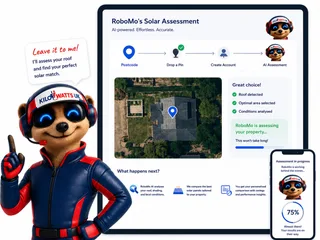
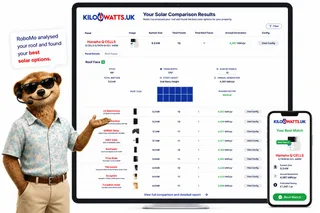
Use RoboMo™ to assess your property, compare available technologies and connect with trusted UK installers, suppliers and manufacturers.
Simply enter your postcode, drop a pin on your roof, create your free account and let RoboMo™ analyse your property to find the best solar panels for your home.

You don't have to think
RoboMo™'s AI analyses your roof and does all the hard work.

Accurate & tailored
AI-powered assessment based on your roof, location, and conditions.

Best options, maximum savings
Compare top solar panels for the best performance and value.

Simple, fast & effortless
Provide a few details, sit back and watch your results unfold.
STEP 1
Choose Home, Business or Industrial
Enter your postcode to start your assessment.
STEP 2

Drop a pin on your roof
STEP 3

Create your free account
STEP 4

Sit back and watch RoboMo™ work
RoboMo™ analyses your roof and builds your personalised solar comparison.

Step 1
Enter your postcode
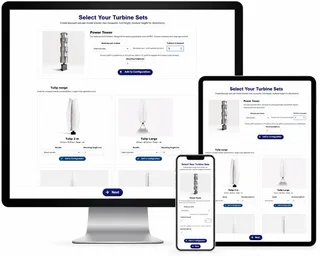
Start designing your wind energy system in seconds.
Are you an installer, distributor or renewable energy business?
Kilowatts UK is expanding the Flower Turbines partner network across the UK.
Become A Flower Turbines PartnerKilowatts UK is an authorised representative
Flower Turbines
Compact vertical-axis turbines built for real UK sites, not just open farmland.
They start in light wind, sit in a small footprint, and are bird-safe by design. Cluster them as a bouquet and the group performs better together than the same turbines standing alone. Enter your postcode for a location-based generation estimate. Figures use area weather data and will differ if buildings, trees or hills sit in the way.
Starts in light UK wind
Built to generate in typical UK wind, not only open farmland.
Small rooftop or ground footprint
Compact towers for roofs, yards and tight sites.
Bird-safe slow rotation
Slow vertical-axis spin, bird-safe by design.
Bouquet clusters raise output
Grouped turbines outperform the same units standing alone.
STEP 2

Choose a location
STEP 3

Place your cluster
Tap the map where you want the turbine cluster to go.
STEP 4

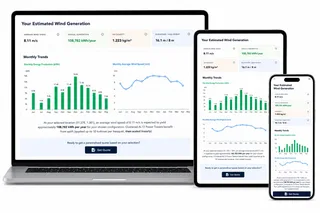
Instant generation forecasts
Compare different turbine layouts and see annual generation forecasts instantly.
STEP 5

No commitment required
Explore different configurations before deciding whether to request a quotation.
Related articles
Mo's Mission Nominations
FAQ
Need Help? RoboMo's Got Answers
What is a solar PPA?
A solar PPA, or power purchase agreement, is a long-term contract where a third-party provider funds, owns, installs, and usually maintains a solar PV system on your site. You then buy the electricity the system generates at an agreed pence-per-kWh rate, normally instead of paying upfront to own the panels.
Is a solar PPA the same as free solar panels?
No. A solar PPA can reduce or remove the upfront installation cost, but it is not free electricity. The customer commits to buying the solar electricity generated and used on site under a long-term contract, often lasting 10 to 25 years.
Who owns the solar panels under a PPA?
In a typical solar PPA, the provider owns the solar panels, inverters, meters, and related equipment during the contract term. The customer buys the electricity generated by the system rather than owning the asset outright, unless the contract includes a later purchase or transfer option.
How is a solar PPA charged?
Most solar PPAs charge a pence-per-kWh rate for the solar electricity consumed on site. The rate is usually designed to be lower than the customer’s grid electricity price, but it depends on the site, system size, roof condition, daytime electricity use, finance costs, contract length, export assumptions, and the customer’s credit strength.
Will I still need grid electricity with a solar PPA?
Yes. A solar PPA does not normally make a building independent from the grid. The site will still import electricity at night, during winter shortfalls, in poor weather, or whenever demand is higher than the solar system is producing.
What happens to surplus solar electricity?
If the solar system generates more electricity than the building can use at that moment, the surplus may be exported to the grid, curtailed, stored in a battery, or handled in another way. The PPA contract should state who owns any export income and who is responsible for export metering and agreements.
How long does a UK solar PPA usually last?
UK commercial solar PPAs commonly last around 10 to 25 years, with many agreements structured over 15 to 25 years. Longer terms can support lower starting tariffs, but they also create long-term property and operational commitments that should be checked carefully.
What type of site is best suited to a solar PPA?
A solar PPA works best for sites with high daytime electricity use, a suitable unshaded roof or land area, stable long-term occupation, clear landlord or owner consent, and a grid connection that can support the system. Good examples include factories, warehouses, cold stores, schools, farms, leisure centres, and public-sector buildings with regular daytime demand.
Is a solar PPA suitable for homes?
Domestic solar PPAs are much less common in the UK than commercial solar PPAs. Homeowners usually find it easier to compare buying panels outright, using finance, or installing a standard solar and battery system. Any domestic third-party roof agreement should be checked carefully because it may affect mortgage lender views, property sales, roof repairs, access rights, and export payments.
What should a solar PPA contract include?
A solar PPA should clearly cover ownership, tariff, indexation, metering, billing, maintenance, fault response, roof access, insurance, export income, environmental claims, early termination, property sale or lease changes, and end-of-term options. It should also explain what happens if the roof needs work, the system underperforms, or the customer prevents the system from operating.
What is deemed generation in a solar PPA?
Deemed generation is a contract mechanism where the customer may have to pay for electricity the solar system would have generated if it had not been prevented from operating. This can apply during customer-side shutdowns, restricted access, roof works, or other interruptions depending on the contract wording.
Can a solar PPA reduce carbon emissions?
Yes, a well-designed solar PPA can reduce electricity-related emissions by replacing some grid imports with onsite solar generation. However, the carbon benefit depends on system output, on-site consumption, export levels, grid carbon intensity, and who has the contractual right to claim environmental attributes or renewable electricity benefits.
Who can claim the environmental benefits of the solar electricity?
This depends on the PPA contract. The agreement should state who can claim carbon savings, renewable electricity evidence, export benefits, or any environmental certificates. Organisations with formal sustainability or ESG reporting requirements should have the contract reviewed before making carbon claims.
Do solar PPAs include maintenance?
Most solar PPAs include maintenance by the provider because the provider owns the system and relies on it generating electricity. The contract should still define what maintenance includes, such as monitoring, inspections, repairs, cleaning, inverter replacement, response times, access requirements, and responsibility for costs.
What checks are needed before signing a solar PPA?
Important checks include roof condition, structural capacity, shading, asbestos or fragile materials, roof warranties, safe access, electrical connection, grid approval, planning constraints, landlord or lender consent, insurer requirements, lease terms, redevelopment plans, and half-hourly electricity consumption data where available.
Does a solar PPA need planning permission?
Roof-mounted solar PV often falls under permitted development rights, but planning permission may be needed for listed buildings, conservation areas, visually sensitive sites, some ground-mounted systems, or installations that do not meet permitted development conditions. Building regulations, electrical standards, fire safety, insurer requirements, and grid rules still apply even where planning permission is not needed.
What is the difference between an onsite and offsite solar PPA?
An onsite solar PPA uses a solar PV system installed on the customer’s own roof or land, with electricity consumed directly behind the meter. An offsite solar PPA involves buying electricity from a remote solar project, usually through market and supply arrangements. Both are PPAs, but the technical, legal, and billing structures are different.
Can a battery be included in a solar PPA?
Yes, battery storage can be included, but it makes the agreement more complex. The contract should explain who owns the battery, how it is charged and discharged, who benefits from stored energy, how warranties are protected, and how any savings or revenue streams are shared.
What happens at the end of a solar PPA?
End-of-term options depend on the contract. The system may be removed, transferred to the customer, sold to the customer, or operated under an extended agreement. These options should be agreed before signing, including responsibility for roof reinstatement and equipment removal if required.
Is a solar PPA a good idea for my business?
A solar PPA can be a good option if your business wants solar PV without upfront capital cost and has strong daytime electricity demand, a suitable roof, stable long-term site plans, and clear property permissions. It may be less suitable if you want to own the asset, have a short lease, expect to move or redevelop, have low daytime demand, or need major roof works during the contract term.