


home battery storage systems introduction for UK homes
Published: 2026-09-08 14:21:21
Updated: 2026-09-08 15:22:20
Fogstar may be worth considering if the exact battery model is suitable for domestic stationary storage.
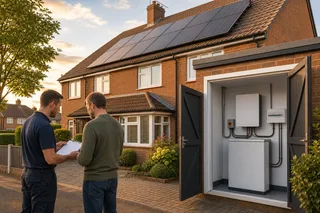
fogstar review - UK homeowner guide
Learn fogstar review with UK-specific guidance, including costs, savings, rules, and what to do next.
Fogstar review: the short UK homeowner verdict
A fair Fogstar review for a UK homeowner is not simply “good” or “bad”. Fogstar may be worth considering if the exact battery model is suitable for domestic stationary storage, your inverter compatibility is confirmed in writing, and your installer is willing to design, commission and support the whole system. If you want the simplest solar-and-battery ownership experience, a more packaged home battery system may be easier to manage.
The key issue is more than battery price or the headline kWh figure. A home battery becomes part of the electrical installation, so safety, inverter communication, firmware, monitoring, documentation, warranty route and aftercare all matter.
Fogstar is known in the UK for lithium battery products across several use cases, including leisure, off-grid and energy-storage applications. That range is useful, but it also means homeowners must check the exact product being considered rather than assuming that every lithium battery is appropriate for a grid-connected UK domestic solar installation.
What Fogstar is, and why the installation route matters
For a homeowner, Fogstar is best treated as a battery supplier rather than a complete one-brand domestic energy system. That distinction matters because many mainstream home battery packages are sold through installer channels with defined design, commissioning, monitoring and support procedures.
A Fogstar battery can still be a sensible option where the specification fits the project and the installer is comfortable taking responsibility for the design. The risk comes when a buyer compares an online product price with a fully installed system quote without allowing for the work involved in survey, design, electrical materials, protection, cable routes, commissioning, handover documents and future fault support.
Agree the installation route before the battery is bought. If the installer did not specify the battery, they may be cautious about accepting responsibility for inverter communication, warranty administration or site diagnosis if something does not work as expected. The main responsibilities to pin down are supply, design, commissioning, warranty diagnosis and aftercare.
This is about avoiding a common dispute where the battery supplier, inverter supplier and installer each say a fault sits outside their responsibility.
Fogstar battery specifications: what must be checked from current documents
This review cannot responsibly list fixed Fogstar model figures without the current datasheet, warranty document and compatibility notes for the exact battery being quoted. Battery specifications can change, model names can be updated, and warranty terms may depend on installation method, operating conditions and approved use. Treat any old screenshot, forum post or reseller summary as secondary evidence only. A homeowner should ask for the current product page, datasheet, warranty terms, installation instructions and inverter compatibility information before accepting a quote. The installer should then confirm how those documents apply to the actual property, not just to an ideal installation.
Overview
The specification review should be done before purchase, not after delivery. If any of these items are unclear, pause and ask the installer to confirm whether they are willing to install and support that exact combination.
What to check before choosing a Fogstar battery
The first check is whether the exact Fogstar battery model is intended for the domestic stationary storage use you have in mind. A battery used in a campervan, shed, workshop or off-grid project is not automatically suitable for a grid-connected house battery installation.
You also need to separate nominal capacity from usable capacity. A battery described by a kWh figure may not allow every kWh to be used daily because the battery management system protects the cells by controlling charge and discharge behaviour. Power output matters too. A large battery with limited discharge power may not cover several high-demand appliances running at once.
Before buying, get written answers to the practical questions an installer will need to resolve. Check intended use, inverter match, supported status, monitoring, location, documentation and warranty evidence before money changes hands.
These checks determine whether the final installation is safe to maintain, easy to diagnose and properly supported. They are also the difference between a battery that looks attractive on paper and one that works reliably as part of a domestic system.
Fogstar battery compatibility with inverters
Compatibility is often the decisive issue. Some homeowners assume that a lithium battery with the right voltage range can be paired with any inverter that appears broadly suitable, but domestic battery systems normally depend on reliable communication between the battery management system and the inverter.
The battery management system protects the battery and reports key information such as state of charge, alarms and operating limits. The inverter uses that information to decide how to charge and discharge the battery. If communication is unreliable, the system may limit output, show incorrect readings, trigger faults or fail to operate as expected.
A technically working connection is not the same as a supported installation. The inverter manufacturer, battery supplier and installer may each have different positions on approved combinations, firmware versions and fault handling. If those positions are unclear, the homeowner can be left in the middle when something stops working.
This is why installer confidence matters. If they have not installed the exact combination before, they should check the documents properly rather than relying on assumption.
How Fogstar compares with packaged home battery systems
Fogstar is often researched by buyers who are also considering better-known domestic battery packages. The useful comparison is not brand familiarity or headline storage capacity alone. It is how the whole system will be specified, installed, monitored and supported over its life. A flexible battery product can be attractive if it suits the technical design and the installer is happy to stand behind the installation. A packaged system can be attractive if you want a simpler route, a known commissioning workflow and fewer grey areas between suppliers.
Overview
This does not mean a packaged system is automatically better. It means the comparison should be made at installed-system level rather than product-only level.
Fogstar pros and cons for UK homeowners
The main advantage of considering Fogstar is flexibility. For the right project, a flexible battery choice may give an informed buyer more options than a tightly packaged system. That can be useful where an installer understands the product, the inverter combination is supported and the site constraints are straightforward.
The main drawback is that more flexibility usually places more responsibility on specification and support. If the battery, inverter and installation route are not joined up properly, the homeowner may face unclear responsibilities later.
The balanced verdict is that Fogstar should be judged as part of a complete design. It is not enough for the battery to be technically interesting or competitively priced if the final installed system lacks clear support.
Costs, savings and payback should be judged on the installed system
Fogstar product prices, warranty terms and specifications can change, so check them directly from the current product information and warranty document at the time of quoting. A product-only price is not the same as the cost of a completed domestic battery installation.
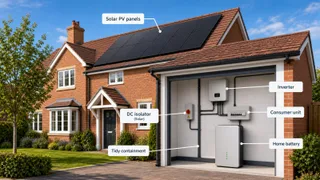
A real installation may involve electrical protection, isolators, cable routes, inverter work, monitoring setup, commissioning, documentation, labelling and remedial work to the consumer unit or surrounding electrical installation. If a battery is being added to an existing solar array, the design may differ from a new hybrid solar-and-battery installation.
Savings depend on household behaviour. A home with solar generation, evening electricity use and a suitable tariff strategy may use a battery very differently from a home with low consumption or limited solar surplus. Battery sizing should be based on actual electricity usage, not simply on the largest capacity that appears affordable.
A sensible payback discussion should use your own consumption data, solar generation estimate and installed quote. Generic savings claims are rarely reliable for an individual home.
UK installation, DNO and safety considerations
A domestic battery is not a plug-in accessory. It forms part of the home’s electrical installation, so the installer should consider the consumer unit, earthing arrangement, metering, cable routes, isolation, overcurrent protection, available wall or floor space, ventilation, access for maintenance and the manufacturer’s installation instructions.
Grid connection also matters. UK installers commonly consider G98 or G99 processes depending on system design and export capability, but the correct route depends on the inverter arrangement, existing generation, export limits and local Distribution Network Operator requirements. Do not assume that every home or every retrofit follows the same process.
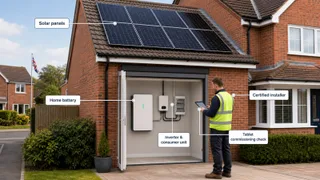
The installation should also align with the wider expectations of competent electrical work, relevant wiring requirements, manufacturer instructions and any certification route being used for the overall renewable installation. If the project is being sold as part of a certified solar-and-battery installation, the installer should be clear about what certification and handover documents will be provided.
Battery location is worth deciding early. Garages, utility rooms and some external positions may be possible for some products, but only if environmental limits, access requirements and manufacturer guidance are met.
Warranty, support and handover documents
A battery warranty is only useful if the homeowner can prove that the product was installed and operated within the required conditions. Warranty terms should be checked before purchase, including exclusions linked to installation method, environment, unsupported equipment, firmware, misuse or missing evidence.
For a Fogstar installation, the support route should be especially clear if the battery and inverter are not supplied as one packaged system. The homeowner should know who is expected to attend site, who reads fault codes, who speaks to the battery supplier, and who decides whether the inverter or battery is causing the issue.
A good handover should give the homeowner enough information to operate the system safely and enough evidence to support future diagnosis. Keep the datasheet, warranty terms, installation instructions, commissioning record, electrical certification, DNO evidence, monitoring access details and installer contact route together.
If an installer is unwilling to document the setup, that is a warning sign. Battery systems are long-term assets, and diagnosis years later is much harder without proper records.
When Fogstar may be a good fit
Fogstar may suit a homeowner who is prepared to compare technical documents, ask detailed compatibility questions and accept that the support route may be less packaged than with some mainstream domestic battery systems. It may also suit a project where the installer already knows the exact model and is willing to support it as part of the complete installation.
It is less likely to suit someone who wants the simplest possible ownership experience. If your priority is one product system, one app, a standard installer workflow and a clear aftercare path, a more integrated battery package may be easier to live with.
The best decision depends on the balance between cost control, technical confidence and support expectations. A battery that suits one home and one installer may not be the right choice for another.
Common mistakes to avoid
The biggest mistake is buying the battery first and trying to find an installer afterwards. That can leave you with a product that may be technically capable but awkward to integrate, unsupported by the installer you prefer, or unsuitable for the space available in your home.
Another common error is relying on online reviews without checking context. Reviews from leisure, off-grid or hobby users can be useful, but they do not prove how a battery will perform in a grid-connected UK domestic solar installation over the long term.
Avoid reducing the decision to a single kWh number. Capacity matters, but it sits alongside usable capacity, charge and discharge limits, inverter behaviour, monitoring quality, temperature limits, warranty conditions and aftercare.
Most of these mistakes are avoidable if the installer reviews the product before purchase and provides a clear written design.
Questions to ask before you buy
Before committing to any battery, ask the installer to comment on the complete system design. A good answer should cover more than whether the battery can be connected. It should also explain whether the installer is willing to commission it, document it and support it if a fault appears later.
You should also ask for the current datasheet and warranty terms for the exact Fogstar model being quoted. Do not rely on old forum posts, screenshots or assumptions from a similar battery.
Other useful questions cover firmware updates, monitoring data, installation location and warranty exclusions. If the answers are vague, pause the purchase. The right time to discover a compatibility, location or warranty issue is before the order is placed, not when the battery is already on site.
Final view for UK homeowners
Fogstar is worth a careful look if you are comfortable with technical checks and have an installer who is happy to support the chosen battery as part of a complete system. It should not be chosen purely because the product price appears attractive online.
For many homeowners, the safer decision process is to compare complete installed options: solar array, inverter, battery, monitoring, DNO process, warranty route, documentation and aftercare. That comparison determines whether the system will work well in a real UK home.
If you are planning solar and storage, start with your electricity usage, roof potential, inverter choice, installation location and installer support rather than with the battery brand alone. A Fogstar battery may be the right answer for some projects, but only if the whole installation case stacks up.
Plan, Compare & Buy Renewable Energy Solutions
AI does the thinking.
You get the perfect solar match.
Use RoboMo™ to assess your property, compare available technologies and connect with trusted UK installers, suppliers and manufacturers.
Simply enter your postcode, drop a pin on your roof, create your free account and let RoboMo™ analyse your property to find the best solar panels for your home.

You don't have to think
RoboMo™'s AI analyses your roof and does all the hard work.

Accurate & tailored
AI-powered assessment based on your roof, location, and conditions.

Best options, maximum savings
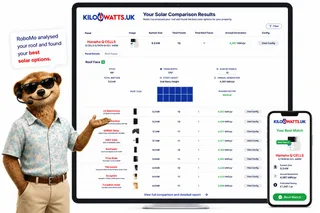
Compare top solar panels for the best performance and value.

Simple, fast & effortless
Provide a few details, sit back and watch your results unfold.
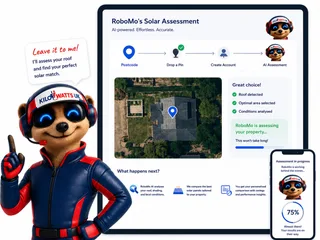
STEP 1
Choose Home, Business or Industrial
Enter your postcode to start your assessment.
STEP 2

Drop a pin on your roof
STEP 3

Create your free account
STEP 4

Sit back and watch RoboMo™ work
RoboMo™ analyses your roof and builds your personalised solar comparison.
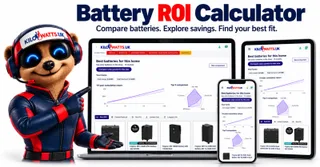
BATTERY ROI TOOL
See what a battery saves on your bill
Enter the day rate, off-peak rate and export rate. The calculator ranks batteries in the Kilowatts shop over 10 years.
Home batteries also suit offices and small commercial sites. Industrial batteries are listed on their own calculator.

Step 1
Enter your postcode
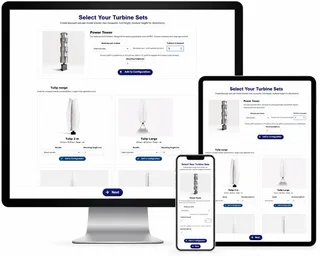
Start designing your wind energy system in seconds.
Are you an installer, distributor or renewable energy business?
Kilowatts UK is expanding the Flower Turbines partner network across the UK.
Become A Flower Turbines PartnerKilowatts UK is an authorised representative
Flower Turbines
Compact vertical-axis turbines built for real UK sites, not just open farmland.
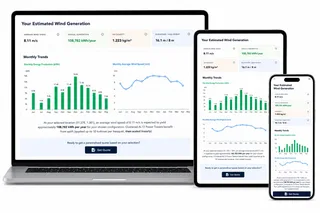
They start in light wind, sit in a small footprint, and are bird-safe by design. Cluster them as a bouquet and the group performs better together than the same turbines standing alone. Enter your postcode for a location-based generation estimate. Figures use area weather data and will differ if buildings, trees or hills sit in the way.
Starts in light UK wind
Built to generate in typical UK wind, not only open farmland.
Small rooftop or ground footprint
Compact towers for roofs, yards and tight sites.
Bird-safe slow rotation
Slow vertical-axis spin, bird-safe by design.
Bouquet clusters raise output
Grouped turbines outperform the same units standing alone.
STEP 2

Choose a location
STEP 3

Place your cluster
Tap the map where you want the turbine cluster to go.
STEP 4

Instant generation forecasts
Compare different turbine layouts and see annual generation forecasts instantly.
STEP 5

No commitment required
Explore different configurations before deciding whether to request a quotation.
Related articles
Mo's Mission Nominations
FAQ
Need Help? RoboMo's Got Answers
Is a Fogstar battery a good choice for a UK home solar system?
It can be a good option if the exact model is suitable for domestic stationary storage and your installer is willing to design, commission and support it. The key checks are inverter compatibility, battery documentation, warranty terms and aftercare route. If you want the simplest ownership experience, a packaged home battery system may be easier.
Can any Fogstar lithium battery be used as a home battery?
No. Fogstar sells lithium batteries for different uses, and a battery suitable for leisure, off-grid or workshop use is not automatically suitable for a grid-connected home energy storage system. Check the current datasheet, installation instructions and intended-use guidance for the exact model before buying.
What should I check before buying a Fogstar battery?
Ask for the current product datasheet, warranty document, installation instructions and inverter compatibility information. Confirm the exact model, usable capacity, charge and discharge limits, voltage range, communication protocol and permitted installation location. Your installer should confirm in writing that the battery is suitable for your property and inverter.
Why is inverter compatibility so important with Fogstar batteries?
A home battery normally needs reliable communication between the battery management system and the inverter. If the communication is not supported or configured correctly, the system may show faults, limit output or give inaccurate monitoring data. Check compatibility for the exact inverter model, firmware version and battery model, not just the brand name.
Should I buy the Fogstar battery myself or through an installer?
Buying the battery yourself may look cheaper, but it can make responsibility less clear if there is a fault later. Before purchase, agree who is responsible for design, commissioning, firmware, settings, warranty diagnosis and aftercare. Many installers prefer to supply the equipment they are expected to support.
How does Fogstar compare with packaged home battery systems?
Fogstar may offer flexibility for informed buyers and installers who are comfortable with the exact battery and inverter combination. Packaged home battery systems can be simpler because the equipment, monitoring, commissioning process and support route are often more clearly defined. The fair comparison is the fully installed and supported system, not just the battery price or headline kWh figure.
What affects the cost and payback of a Fogstar battery installation?
The battery price alone is not the full cost of a UK installation. You may also need design work, electrical protection, isolators, cabling, inverter setup, monitoring configuration, commissioning records and remedial electrical work. Savings and payback depend on your usage, tariff, solar generation, battery behaviour and the final installed cost.
Can a Fogstar battery be added to an existing solar panel system?
It may be possible, but it depends on your existing inverter, wiring, consumer unit, available space and the battery model being considered. The installer must check whether an AC-coupled or hybrid approach is appropriate and whether the chosen equipment is supported. Do not assume an existing solar system can accept any battery without a proper survey and design check.