


Battery storage benefits: is a home battery worth it in
Published: 2026-09-08 14:37:20
Updated: 2026-09-12 07:19:23
Battery storage can be worth it in the UK when it helps you use more of your own solar electricity, avoid higher-rate grid imports.
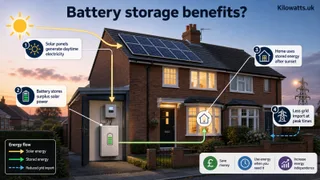
Battery storage benefits?
Learn battery storage benefits with UK-specific guidance, including costs, savings, rules, and what to do next.
Battery storage benefits: is a home battery worth it in the UK?
Battery storage can be worth it in the UK when it helps you use more of your own solar electricity, avoid higher-rate grid imports, or keep selected circuits running during a power cut. The main factors are your electricity use, solar surplus, tariff, battery size, inverter output, installation design, export payments and whether backup is included.
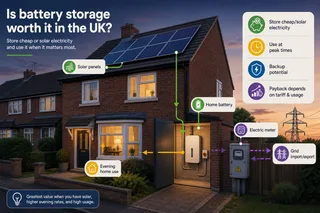
A battery does not create energy. It stores electricity from solar panels or from the grid, then releases it later when the home or business needs it. That makes it most useful where there is energy worth shifting, such as daytime solar generation that would otherwise be exported, or cheaper off-peak electricity that can be used during more expensive periods. If you are new to the concept, this guide to home battery storage explains the basics in more detail.
Battery storage is less convincing where electricity use is low, most solar power is already used as it is generated, or the household expects full energy independence from a system designed for load shifting. A good design starts with real consumption data, not a generic promise of savings.
How battery storage works in a UK home
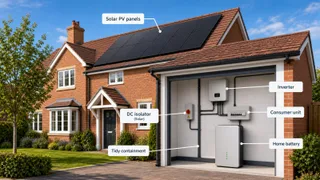
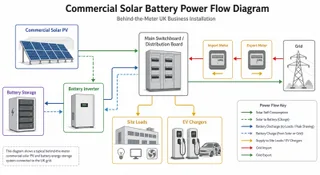
A domestic battery system usually includes battery modules, an inverter or hybrid inverter, control software, metering, protection equipment and isolation. With solar PV, the system decides whether electricity should go straight to the home, charge the battery, or export to the grid. When solar output falls, the battery can discharge to cover part of the property’s demand. For a simpler breakdown, see how a home battery works.
There are two common design routes. A hybrid inverter manages solar panels and battery storage through one combined system, which is often considered when solar and storage are installed together. An AC-coupled battery has its own inverter and can often be added to an existing solar PV system, subject to compatibility, metering, space and grid connection checks.
The important distinction is between energy and power. Battery capacity is measured in kilowatt-hours, or kWh, and describes how much energy can be stored. Inverter output is measured in kilowatts, or kW, and affects how much load the system can support at once. A battery may hold enough energy for evening use but still be unable to run several high-power appliances at the same time.
Why batteries improve solar self-consumption
Solar panels often produce their strongest output during daylight hours, while many UK homes use more electricity in the morning and evening. Without a battery, surplus solar may be exported once the home’s immediate demand is met. A battery can capture some of that surplus and make it available later, reducing grid imports after sunset.
This is the clearest benefit for many solar households, but it is not automatic. If someone is at home during the day, runs appliances when solar output is high, or has a daytime load such as a heat pump, EV charging or regular home working equipment, the property may already use a good share of its solar generation directly. In that situation, the extra value of a battery depends on how much surplus remains.
Seasonality matters. In spring and summer, a solar-linked battery may fill regularly and cover evening demand well. In winter, solar generation is lower and household consumption may be higher, so the battery may rely more on tariff charging or may have fewer chances to charge from solar.
Can battery storage reduce electricity bills?
Battery storage can reduce electricity bills where it replaces expensive grid imports with stored solar electricity or cheaper off-peak electricity. The savings are not guaranteed because they depend on installation cost, usable capacity, tariff rules, export payments, round-trip efficiency, household demand and how well the control settings match the property.
Round-trip efficiency matters because a battery gives back slightly less electricity than it stores. Manufacturer datasheets often state this as a percentage, and modern lithium home batteries are commonly quoted in the high-eighties to mid-nineties per cent range. Real results depend on the whole system, including inverter losses and operating conditions. The point is simple: the difference between charging value and discharging value must be enough to absorb these losses.
A cautious calculation should compare the value of each stored unit with the alternative. For solar charging, ask what you would otherwise receive for exporting that electricity. For grid charging, compare the off-peak import rate, the peak rate avoided, any standing charge or tariff condition, the battery’s losses and likely battery wear. If the saving only works under one unusually favourable tariff, the case is more fragile. Upfront cost should also be tested carefully, so it helps to understand typical home battery costs before relying on any payback claim.
A practical savings scenario to test
A useful battery assessment does not need exaggerated payback claims. It should test how energy moves through the property on a normal day, then repeat the same thinking for summer, winter and shoulder months. The key question is whether the battery will cycle often enough to justify its cost and complexity.
For a solar home, the installer should look at how much solar is exported during daylight hours and how much electricity is imported after solar output drops. A battery only helps if those two patterns overlap in a useful way. For a grid-charging home, the installer should look at half-hourly smart meter data to see whether there is regular peak-time use that could be shifted.
This is why two similar homes can get different results. A household with evening cooking, laundry, entertainment and EV top-ups may use stored energy very differently from a low-consumption household that is already efficient and often occupied during daylight hours.
Is home battery storage useful without solar?
Home battery storage without solar can be useful, but the case is narrower. The battery normally charges from the grid during cheaper periods and discharges during more expensive periods, so the benefit depends heavily on access to a suitable time-of-use tariff and enough regular demand during higher-rate periods. The decision is different from a solar-linked system, so read more about whether a battery without solar makes sense before comparing quotes.
This can suit some homes with predictable evening electricity use, flexible appliance schedules, electric heating patterns or an EV charging routine that works well with the tariff. It does not provide the same benefit as storing your own surplus solar generation, and the calculation must include efficiency losses, battery wear, tariff changes and installation cost.
For a standalone battery, smart meter data is especially important. Half-hourly consumption patterns show whether there is enough regular demand to shift. Without that evidence, it is easy to oversize the battery or build a savings case that only works on paper.
What a battery will and will not do in a power cut
A battery does not automatically keep a whole home running during a power cut. Many grid-tied systems are designed to shut down safely when the grid fails unless suitable backup equipment and wiring are included. If backup is important, it must be specified at the design stage rather than assumed later. You can also check what to expect from battery backup before deciding which circuits matter most.
The installer will need to confirm whether the system supports an emergency power supply, a dedicated essential-load circuit, or a more extensive backup arrangement. Whole-home backup is more demanding because high-load appliances can drain a battery quickly or exceed inverter output. In practice, many homeowners prioritise lighting, internet, refrigeration, heating controls and a few sockets.
Backup duration depends on usable battery capacity, the loads connected, the state of charge when the outage begins and whether solar can safely recharge the battery during the outage. A battery is a storage system, not a generator with unlimited fuel.
What makes a property a good fit?
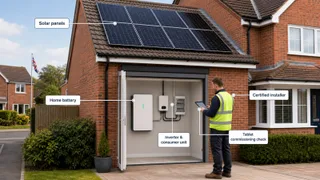
A good battery storage candidate usually has regular electricity use outside daylight hours, surplus solar generation, access to suitable tariffs and a safe location for equipment. The best design matches usable capacity and inverter output to how the property actually uses electricity. The property survey matters as much as the battery brochure. Installers will look at the consumer unit, earthing arrangement, metering, cable routes, inverter location, internet connectivity, ventilation, access and the manufacturer’s installation requirements. A neat design on paper can change once the installer sees limited wall space, long cable runs, an ageing consumer unit or an awkward route between the solar inverter and battery.
What affects battery size and performance?
Battery sizing should start with your load profile, not with the biggest battery available. A small battery may fill quickly and run empty before the evening peak finishes, while an oversized battery may sit partly unused, adding cost without adding much practical benefit. If you are unsure where to start, this guide can help you estimate what size battery may suit a UK home.
Usable capacity is the figure to focus on because headline capacity is not always the same as the energy available to the household. Many domestic proposals sit in the small to mid-sized home battery range, often built from modular units, but the right answer depends on the property rather than a standard package. The battery management system may reserve some capacity to protect the cells, and warranty conditions may limit how the battery can be used.
Controls also matter. Some systems are configured to maximise solar self-consumption, some to charge from the grid during off-peak periods, and some to balance import cost and export value. The right setting depends on tariff, solar generation, household routine and whether the owner wants resilience as well as bill savings.
A sensible quote should explain why the proposed size has been chosen. If the design is based only on roof size, a bundle offer or a round number, ask for the calculation behind it.
UK installation and grid connection points to understand
Battery installations in the UK need proper electrical design, safe isolation, suitable equipment location and the correct grid connection process. Depending on the design, the installer may need to notify or apply to the local Distribution Network Operator under the relevant small-generation connection arrangements. The exact route depends on the equipment and connection details, so it should be handled by a competent installer rather than guessed by the homeowner.
G98 and G99 are often mentioned because they relate to connecting generation equipment to the distribution network. For a homeowner, the practical point is that the DNO may care about inverter capacity, export limits and how the battery interacts with solar PV. If the design changes after notification or approval, such as a different inverter, added battery inverter or altered export capability, the connection position may need checking again.
MCS can also be relevant, particularly where battery storage is installed alongside solar PV or where export tariff eligibility and consumer documentation depend on certified work. The installer should provide clear handover documents, equipment details, commissioning information and warranty paperwork. Homeowners should keep these records because they may matter for future maintenance, property sale, tariff applications or system changes.
Battery safety and installation location
Battery safety depends on both the product and the installation. The system should be installed in line with manufacturer instructions, BS 7671 electrical requirements, current IET guidance where relevant, and applicable domestic battery fire-safety guidance such as PAS 63100 where it applies. The installer’s risk assessment should consider the specific property rather than relying on a generic location.
Location is a common source of design change. Garages, utility rooms and external positions may be possible for some products, but the right location depends on the battery’s rating, temperature range, ventilation needs, access, cable protection, weather exposure and separation from other equipment or escape routes where required by guidance and the manufacturer.
Homeowners should be cautious about squeezing a battery into the most convenient spare corner without checking the technical requirements. A poor location can create maintenance difficulties, nuisance issues, performance problems or safety concerns.
Common mistakes to avoid
The biggest mistake is treating battery storage as a guaranteed saving rather than a design decision. A battery can be very useful, but only if it is matched to your consumption, tariff, solar generation, backup expectations and installation constraints.
Another common mistake is assuming that a battery gives full energy independence. Most UK homes with batteries remain grid-connected and still import electricity at times, especially in winter. The battery reduces reliance on peak imports; it does not usually remove the need for an electricity supplier.
A good quotation should be able to explain the proposed operating mode, not just the equipment list. If the explanation is vague, ask how the system will behave on a sunny summer day, a dull winter evening and during a grid outage if backup is being offered.
Domestic and commercial battery benefits are not the same
Home battery storage is usually about solar self-consumption, time-of-use tariffs and limited resilience. Commercial battery storage can involve different drivers, such as operating hours, site load profile, demand peaks, metering arrangements and the interaction with solar PV. The technology is similar, but the financial case is not assessed in the same way.
A small business open during daylight may already consume much of its solar generation directly, which can reduce the case for storage. Another site with strong evening demand, machinery start-up peaks or a tariff structure that rewards load shifting may have a stronger case to test. For commercial premises, half-hourly data and a proper load study are more useful than a simple capacity rule of thumb.
Commercial solar return on investment, commercial battery ROI and solar power purchase agreements should be assessed separately from a household battery decision. They involve different contracts, operational risks, ownership models and accounting considerations, so a domestic payback assumption should not be copied into a business case. Businesses planning solar alongside storage can compare commercial solar before modelling battery options.
What to ask before getting a battery quote
Before asking for prices, gather the information that changes the design. Recent electricity bills, half-hourly smart meter data, solar generation figures and export information can help an installer size the system sensibly. If you are planning an EV charger, heat pump or solar panels at the same time, mention that early because it can change both capacity and inverter choices.
A useful quote should explain the proposed equipment, usable capacity, inverter arrangement, expected operating mode, installation location, grid connection process and whether backup is included. It should also make clear what is excluded, such as consumer unit upgrades, long cable runs, additional backup wiring, monitoring subscriptions or changes needed for an existing solar system.
Battery storage is worth considering when it solves a real problem in your energy use. The next step is not choosing the biggest battery, but checking your data, property constraints, tariff options and backup expectations so the design reflects how your home or business actually uses electricity. If you want a property-specific view, you can book a free home energy survey.
Plan, Compare & Buy Renewable Energy Solutions
AI does the thinking.
You get the perfect solar match.
Use RoboMo™ to assess your property, compare available technologies and connect with trusted UK installers, suppliers and manufacturers.
Simply enter your postcode, drop a pin on your roof, create your free account and let RoboMo™ analyse your property to find the best solar panels for your home.

You don't have to think
RoboMo™'s AI analyses your roof and does all the hard work.

Accurate & tailored
AI-powered assessment based on your roof, location, and conditions.

Best options, maximum savings
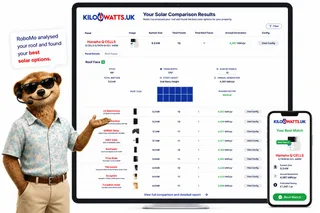
Compare top solar panels for the best performance and value.

Simple, fast & effortless
Provide a few details, sit back and watch your results unfold.
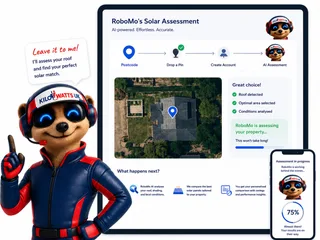
STEP 1
Choose Home, Business or Industrial
Enter your postcode to start your assessment.
STEP 2

Drop a pin on your roof
STEP 3

Create your free account
STEP 4

Sit back and watch RoboMo™ work
RoboMo™ analyses your roof and builds your personalised solar comparison.
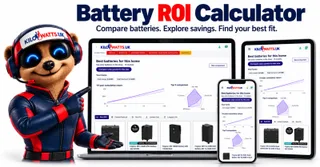
BATTERY ROI TOOL
See what a battery saves on your bill
Enter the day rate, off-peak rate and export rate. The calculator ranks batteries in the Kilowatts shop over 10 years.
Home batteries also suit offices and small commercial sites. Industrial batteries are listed on their own calculator.

Step 1
Enter your postcode
Start designing your wind energy system in seconds.
Are you an installer, distributor or renewable energy business?
Kilowatts UK is expanding the Flower Turbines partner network across the UK.
Become A Flower Turbines PartnerKilowatts UK is an authorised representative
Flower Turbines
Compact vertical-axis turbines built for real UK sites, not just open farmland.
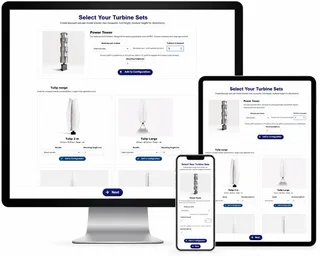
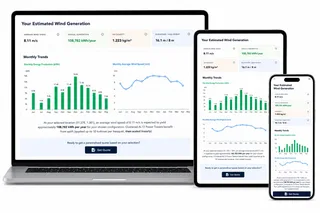
They start in light wind, sit in a small footprint, and are bird-safe by design. Cluster them as a bouquet and the group performs better together than the same turbines standing alone. Enter your postcode for a location-based generation estimate. Figures use area weather data and will differ if buildings, trees or hills sit in the way.
Starts in light UK wind
Built to generate in typical UK wind, not only open farmland.
Small rooftop or ground footprint
Compact towers for roofs, yards and tight sites.
Bird-safe slow rotation
Slow vertical-axis spin, bird-safe by design.
Bouquet clusters raise output
Grouped turbines outperform the same units standing alone.
STEP 2

Choose a location
STEP 3

Place your cluster
Tap the map where you want the turbine cluster to go.
STEP 4

Instant generation forecasts
Compare different turbine layouts and see annual generation forecasts instantly.
STEP 5

No commitment required
Explore different configurations before deciding whether to request a quotation.
Related articles
Mo's Mission Nominations
FAQ
Need Help? RoboMo's Got Answers
What are the main benefits of home battery storage in the UK?
A home battery can store surplus solar electricity for use later, reduce peak-time grid imports, and improve how much of your own generation you use. Some systems can also provide backup power for selected circuits during a power cut, but only if designed for that purpose. The benefits depend on your usage pattern, tariff, battery size and installation design.
Is a home battery worth it with solar panels?
It can be worth it if your solar panels regularly export electricity during the day and you import electricity later. The battery can shift that surplus solar into the evening, reducing reliance on the grid. The calculation should compare the value of stored solar with any export payment you would otherwise receive.
Can a home battery save money without solar panels?
A battery without solar may save money if you can charge it on a cheaper off-peak tariff and use the stored electricity during more expensive periods. This works best where there is regular peak-time electricity use and a tariff that suits battery charging. Savings are not guaranteed, as tariff changes, efficiency losses, battery wear and installation cost all matter.
Will a battery keep my home running during a power cut?
Not automatically. Many grid-tied battery systems shut down during a power cut unless backup equipment and suitable wiring are included. If resilience is important, ask the installer which circuits can be supported and how long the battery is likely to last under realistic loads.
How do I know what size battery I need?
Battery size should be based on your electricity use, solar surplus, tariff and the loads you want to cover. Usable capacity is more important than headline capacity, because not all stored energy may be available to the home. An oversized battery can add cost without much extra benefit, while an undersized one may run out too early.
What affects the savings from battery storage?
Savings depend on how often the battery charges and discharges usefully, the difference between import and export values, and the system’s round-trip efficiency. Your household routine, seasonal solar generation and control settings also make a difference. A good assessment should use real consumption data rather than generic payback claims.
Can a battery be added to an existing solar PV system?
Often it can, but it depends on your existing inverter, metering, available space, electrical layout and grid connection requirements. An AC-coupled battery is a common retrofit option, while a hybrid inverter may be considered when solar and storage are installed together. A competent installer should check compatibility before recommending a system.
Are there UK installation or grid connection issues to consider?
Yes. A battery installation needs proper electrical design, safe isolation, suitable equipment location and the correct Distribution Network Operator process where required. The route can depend on inverter capacity, export limits and how the battery interacts with solar PV. Homeowners should ask the installer to explain the connection process and any approvals or notifications needed.