


Is is battery storage worth it in the UK?
Published: 2026-09-08 14:53:05
Updated: 2026-09-18 11:24:10
It is not always worthwhile. The answer depends on your import rate, export rate, solar surplus, usable battery capacity, installation cost.
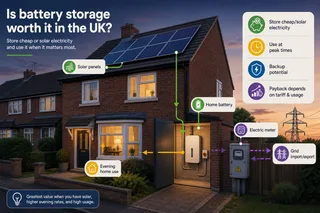
Is is battery storage worth it in the UK?
Understand is battery storage worth it in the UK, with clear explanations, examples, and practical next steps.
Is is battery storage worth it in the UK?
Yes, battery storage can be worth it in the UK, especially if you have solar panels, regular evening electricity use and a tariff where stored electricity is clearly more valuable than exported electricity. It is not always worthwhile. The answer depends on your import rate, export rate, solar surplus, usable battery capacity, installation cost, warranty terms, efficiency losses and how often the battery will cycle usefully.
The strongest financial case is usually a solar PV home that exports a meaningful amount during the day and then imports electricity later. A battery can shift that surplus into the evening and reduce grid imports. The weakest case is usually a low-use home, a system with little surplus solar, or a battery bought mainly on headline capacity without checking whether the household can actually charge and discharge it.
A battery should be judged as part of the whole electrical design, not as a standalone gadget. The assessment needs to cover usable capacity, discharge power, inverter arrangement, metering, grid connection, battery location, safety guidance and warranty limits. If those details are missing from a quote, the payback estimate is not reliable.
What battery storage actually does
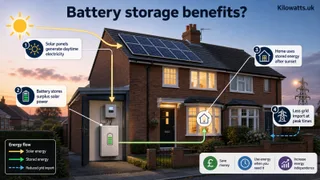
Battery storage holds electricity so it can be used later. In a UK home, that usually means storing surplus solar electricity during daylight hours and discharging it in the evening or overnight. This can avoid exporting surplus power and then buying electricity back from the grid later.
The two key technical figures are capacity and power. Capacity, measured in kilowatt-hours, tells you how much energy the battery can store. Power, measured in kilowatts, tells you how quickly it can charge or discharge. A battery may have enough capacity for the evening on paper but still struggle to cover several high-load appliances at once if its discharge rating is limited.
There is also a difference between nominal capacity and usable capacity. The usable figure is the amount the system is designed to make available in normal operation, after allowing for battery management limits that protect lifespan. When comparing quotes, use the usable capacity, not only the headline battery size. Battery storage can be configured in several ways. A solar-linked battery stores surplus solar generation for later use in the property. A standalone grid-charging battery charges from the grid during cheaper periods and discharges during more expensive periods. A hybrid inverter system combines solar and battery control through one inverter where the design supports it, while an AC-coupled battery adds storage through a separate battery inverter and is often used for retrofits. Backup-capable systems only provide power during an outage if the equipment and wiring are specifically designed for that purpose. For the basics, start with how a home battery works.
When battery storage is most likely to make sense
Battery storage tends to work best when it solves a real timing mismatch. Solar panels often produce most electricity during the day, while many households use more electricity in the early morning and evening. A battery can move some of that daytime generation to the point where the home actually needs it. The value of storing solar is not simply the full retail electricity price. If the electricity would otherwise have been exported, you need to consider the import cost avoided, the export income given up and the battery’s round-trip efficiency losses. A high export tariff can make storing solar less attractive; a high peak import rate can make storage more attractive.
Overview
The best battery designs start with measured electricity use. Smart meter data, solar generation records and export data are much more useful than a generic assumption about the average home. If you are planning solar at the same time, it is worth using that data to compare home solar options before fixing the battery specification.
How to work out payback without misleading averages
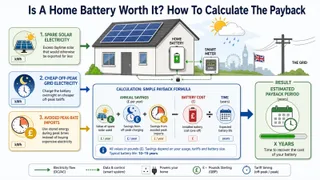
There is no trustworthy single payback period for UK battery storage because the inputs vary too much. Installed cost, usable capacity, inverter type, import tariff, export tariff, solar surplus, battery efficiency, degradation and future energy use all affect the result.
A practical payback estimate should separate solar charging from grid charging. It should also include the income you may give up by exporting less electricity. If a calculation only multiplies stored energy by the retail import price, it is likely to overstate the benefit.
For a solar-charged battery, the useful calculation is based on the value difference between storing and exporting. Annual benefit is driven by the import cost avoided after battery losses, minus the export payment you would otherwise have received. For grid charging, the benefit comes from the difference between the cheap charging rate and the avoided peak rate, again after battery losses. Simple payback means dividing the installed cost by the realistic annual benefit, then testing how the answer changes if tariffs, export payments or household use change. A cautious model should also allow for degradation, as battery performance normally reduces over time. Savings depend on the battery cycling at the right times, so controls, tariff windows and household routines matter. A separate payback calculation can help you test the assumptions rather than relying on a generic average. A simple solar example can be written without relying on any invented national average. If your battery stores S kWh of surplus solar in a year, your import price is I, your export payment is E, and your round-trip efficiency factor is R, the annual value is approximately S × (I × R - E). If E rises or I falls, the value reduces. If evening demand increases and more stored energy is used, the value improves. A standalone grid-charging example works differently. If the battery charges C kWh from the grid each year at an off-peak price O, avoids peak imports at price P, and has efficiency factor R, the annual value is approximately C × (P × R - O). If the tariff spread narrows, if the battery cannot discharge during peak periods, or if cheap-rate windows change, the case weakens.
Is battery storage worth it without solar panels?
Battery storage without solar panels can be worth it in some UK homes, but it depends more heavily on the tariff. Instead of storing your own solar electricity, the battery charges from the grid when electricity is cheaper and discharges when electricity is more expensive.
This approach needs a meaningful difference between cheap and peak rates, a smart meter where required by the tariff, and enough household demand during the expensive period to use the stored energy. It is weaker if the tariff changes, if the home is often empty during peak periods, or if the battery is too large for the daily load.
A standalone battery also lacks the wider benefit of increasing solar self-consumption. You are still buying all the electricity that goes into the battery, and some energy is lost in the charge-discharge cycle. That does not make standalone storage wrong, but it does mean the modelling needs more care. For a deeper look at tariff-led systems, see whether a battery can be worth it without solar.
UK rules, export tariffs and paperwork to check
A UK battery installation should not be assessed only on price and capacity. It also needs to fit the grid connection process, electrical safety requirements, export metering arrangements and any tariff rules that affect payment for exported electricity.
For solar-plus-battery projects, MCS certification is often relevant because it is commonly associated with recognised solar PV installation standards, consumer documentation and export tariff administration. Requirements can vary by supplier or project, so the installer should explain what certification and paperwork apply to your situation rather than assuming.
Grid-connected inverters normally involve DNO notification or application. The installer should confirm whether the project falls under the relevant G98 or G99 process and whether export limitation under G100 is part of the design. Where there is existing solar PV, an added battery inverter can change the connection picture, so it should not be treated as just another household appliance. The Smart Export Guarantee is also relevant because a battery can change how much solar electricity you export. Some export arrangements and supplier tariffs have specific metering or eligibility conditions, particularly where a battery can also charge from the grid. Before relying on export income in a payback estimate, check what your chosen export provider will measure and pay for.
Safety, location and warranty issues people overlook
Battery storage needs competent design and installation because it becomes part of the fixed electrical system. The relevant wiring requirements, manufacturer instructions and recognised storage guidance should be followed, including safe isolation, labelling, protection devices, cable sizing and appropriate commissioning checks.
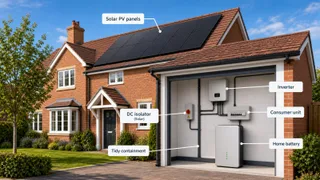
Location matters. A battery may need specific clearances, temperature limits, ventilation, weather protection, mechanical protection and a suitable mounting surface. A garage, utility space or external wall may be suitable for some products, but not every location is acceptable for every battery.
Warranty terms are also part of the financial case. A battery warranty normally sets conditions around installation, operation, usage, temperature, depth of discharge, firmware, monitoring and expected degradation. The important question is not only how long the warranty lasts, but what it promises at the end of the period and what could invalidate it.
Fire safety is another reason to avoid improvised installation. The installer should follow current manufacturer guidance and recognised UK electrical practice for battery siting, protection, isolation and emergency labelling. If a proposed location blocks escape routes, is exposed to impact, or does not meet product instructions, it should be challenged.
Sizing a battery properly
Battery sizing is where many poor-value installations begin. A large battery is not automatically better. If it regularly remains partly empty because there is not enough surplus solar to charge it, or partly full because the home cannot use the stored energy, the extra capacity may add cost without adding much value.
The right size depends on daily energy flow. For a solar home, the key question is how much surplus is exported on a normal day and how much electricity is imported after sunset. For a tariff-led battery, the key question is how much electricity can be charged cheaply and then used during the expensive period.
Discharge power also matters. If the battery can only discharge at a limited rate, it may not cover an oven, kettle, shower pump, EV charger or heat pump load in full. The home may still import from the grid during high-load moments even when the battery has energy available. A good design should consider current annual electricity use, half-hourly smart meter patterns where available, solar generation and export history, evening and overnight demand, and seasonal differences between summer and winter. It should also allow for planned changes such as an EV charger, heat pump or immersion diverter, along with inverter rating, the existing electrical layout, the battery location and the cable route. These inputs are what determine the right battery size, not the biggest unit that fits the wall. The aim is not to eliminate every unit of grid import. The aim is to choose a system that cycles usefully, fits the property safely and gives a realistic return for the money spent.
Common mistakes that make batteries poor value
The most common mistake is buying based on headline battery size. Capacity only has value if the battery can be charged regularly, discharged into real demand and controlled in a way that matches the tariff and household routine.
Another common mistake is assuming that any battery will provide power in a cut. Many grid-tied systems shut down during a power cut unless backup has been specifically designed, wired and commissioned. If resilience is important, the quote needs to say whether backup covers the whole property, selected circuits or only a limited emergency supply. Check the difference between ordinary storage and power during a power cut before treating backup as included.
Metering mistakes can also reduce performance. Current transformers, smart meter feeds and monitoring clamps need to read the right flows of electricity. If they are installed in the wrong place, the system may charge or discharge at the wrong time, and the app may show confusing information.
The best safeguard is to ask every installer to explain the assumptions behind the design. If two quotes recommend very different battery sizes, there should be a clear reason based on your data.
Battery storage for businesses
Half-hourly consumption data is often essential. The important question is not only how much electricity the site uses, but when it uses it, how sharp the peaks are, whether solar generation aligns with operating hours and whether avoiding peak imports has measurable commercial value.
A small office, farm, warehouse, retail unit and manufacturing site can all have very different battery cases. Some sites have predictable daytime loads that already use most solar generation. Others have refrigeration, EV charging, machinery, compressed air, process heat or early morning peaks that change the storage calculation.
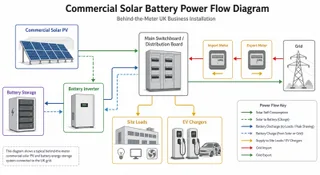
For business projects, the quote should make clear what problem the battery is solving. A system designed for solar self-consumption may not be the same as one designed for resilience or peak management, and larger systems need a proper electrical and commercial assessment before installation. Business sites should model commercial battery storage against their actual half-hourly demand, not a domestic usage pattern.
What to ask before accepting a quote
Before requesting quotes, gather the information that shapes the design. This includes recent electricity bills, smart meter data if available, solar generation records, export records, details of your current tariff and any planned upgrades such as an EV charger, heat pump or additional solar panels.
If you want backup power, say so from the start. Backup can change the inverter, wiring, consumer unit arrangement and commissioning process. It can also limit which loads can be supported during an outage.
A useful quote should explain the design clearly enough for you to compare it with alternatives. It should state the usable capacity, charge and discharge power, inverter arrangement, tariff assumptions, efficiency assumptions and warranty terms. It should also explain the DNO process, any backup specification, the proposed location and how performance will be monitored after commissioning. A quote that only states battery size and price is not enough. For a high-value electrical installation, the design assumptions matter as much as the equipment list.
The practical verdict
Battery storage is worth it in the UK when it is matched to real electricity use, suitable tariffs and competent installation. It is usually most compelling for homes with solar panels, meaningful daytime surplus and regular evening demand. It can also work without solar where time-of-use tariff savings are predictable, but that case is more exposed to tariff changes.
It may not be worth it if your electricity use is low, you already use most of your solar generation directly, the export tariff is strong, the battery would rarely cycle, or the installation is complex relative to the expected benefit. It is also a poor purchase if bought for backup without a confirmed backup design.
The right next step is to model your own import, export and usage pattern, then compare quotes that state usable capacity, inverter power, safety considerations, warranty terms, DNO handling and tariff assumptions. A battery can be a valuable part of a wider energy plan, but it should earn its place through the numbers and the design, not through a generic payback claim.
Plan, Compare & Buy Renewable Energy Solutions
AI does the thinking.
You get the perfect solar match.
Use RoboMo™ to assess your property, compare available technologies and connect with trusted UK installers, suppliers and manufacturers.
Simply enter your postcode, drop a pin on your roof, create your free account and let RoboMo™ analyse your property to find the best solar panels for your home.

You don't have to think
RoboMo™'s AI analyses your roof and does all the hard work.

Accurate & tailored
AI-powered assessment based on your roof, location, and conditions.

Best options, maximum savings
Compare top solar panels for the best performance and value.

Simple, fast & effortless
Provide a few details, sit back and watch your results unfold.
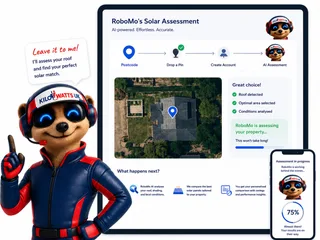
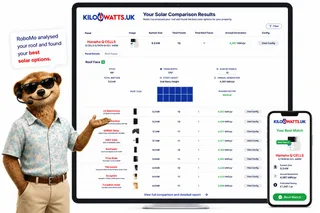
STEP 1
Choose Home, Business or Industrial
Enter your postcode to start your assessment.
STEP 2

Drop a pin on your roof
STEP 3

Create your free account
STEP 4

Sit back and watch RoboMo™ work
RoboMo™ analyses your roof and builds your personalised solar comparison.

Step 1
Enter your postcode
Start designing your wind energy system in seconds.
Are you an installer, distributor or renewable energy business?
Kilowatts UK is expanding the Flower Turbines partner network across the UK.
Become A Flower Turbines PartnerKilowatts UK is an authorised representative
Flower Turbines
Compact vertical-axis turbines built for real UK sites, not just open farmland.
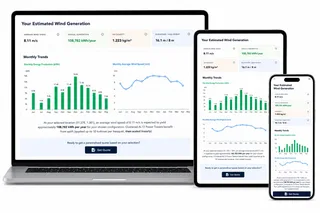
They start in light wind, sit in a small footprint, and are bird-safe by design. Cluster them as a bouquet and the group performs better together than the same turbines standing alone. Enter your postcode for a location-based generation estimate. Figures use area weather data and will differ if buildings, trees or hills sit in the way.
Starts in light UK wind
Built to generate in typical UK wind, not only open farmland.
Small rooftop or ground footprint
Compact towers for roofs, yards and tight sites.
Bird-safe slow rotation
Slow vertical-axis spin, bird-safe by design.
Bouquet clusters raise output
Grouped turbines outperform the same units standing alone.
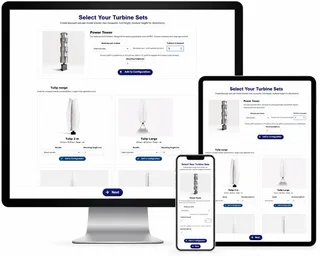
STEP 2

Choose a location
STEP 3

Place your cluster
Tap the map where you want the turbine cluster to go.
STEP 4

Instant generation forecasts
Compare different turbine layouts and see annual generation forecasts instantly.
STEP 5

No commitment required
Explore different configurations before deciding whether to request a quotation.
Related articles
Mo's Mission Nominations
FAQ
Need Help? RoboMo's Got Answers
Is home battery storage worth it in the UK?
It can be worth it if you have surplus solar generation, regular evening electricity use and a clear gap between your import and export rates. It is less likely to pay back well if you have little surplus solar, low electricity use or an oversized battery. The best answer comes from modelling your own smart meter, solar generation and export data.
How do I calculate whether a battery will pay for itself?
Start with the energy the battery is likely to store and use each year, not just its headline capacity. For solar charging, compare the import cost avoided with the export income you would give up, allowing for battery efficiency losses. For grid charging, compare the off-peak charging cost with the peak import cost avoided. Include installation cost, degradation, warranty limits and possible tariff changes.
Is a battery worth it without solar panels?
A battery without solar can work if you have a time-of-use tariff with a meaningful difference between cheap and peak rates. It needs enough household demand during the expensive period to use the stored electricity. The case is more sensitive to tariff changes because all the electricity going into the battery is still bought from the grid.
What size battery do I need for a UK home?
The right size depends on your daily energy pattern, not just the size of your house. For solar homes, compare typical daytime surplus with evening and overnight use. A battery that is too large may sit unused, while one with too little discharge power may not cover high-load appliances even when it has charge available.
Will a battery still save money if I get paid for exported solar electricity?
Possibly, but the export payment reduces the extra value of storing solar. If your export rate is high, sending electricity to the grid may be more attractive than storing every spare unit. Any payback estimate should include the export income you would lose by charging the battery instead.
Can a home battery provide backup power in a power cut?
Only if the system is specifically designed and installed for backup operation. Many standard battery systems shut down during a grid outage for safety reasons. If backup is important, ask which circuits will be supported, what load limit applies and how the changeover or islanding arrangement will work.
What paperwork or grid checks are needed for a battery installation?
A grid-connected battery inverter normally needs the correct DNO notification or application process, such as G98 or G99 depending on the design. Export limitation may also be relevant where the system is designed to cap export. If solar panels, export tariffs or MCS-related documentation are involved, the installer should explain exactly what applies to your project.
Where can a home battery be installed safely?
The location must follow the manufacturer’s instructions and recognised UK electrical practice. Important checks include clearances, temperature range, ventilation, weather protection, impact risk, access for maintenance and suitable mounting. Avoid accepting a proposed location if it conflicts with product guidance, blocks escape routes or lacks proper isolation and labelling.