


Battery storage installers?
Published: 2026-08-19 17:43:10
Updated: 2026-08-23 08:29:39
Battery storage installers design, fit and commission battery energy storage systems for homes and businesses.
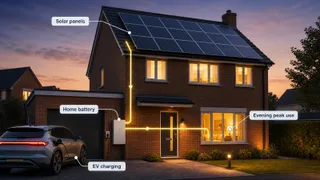
Battery storage installers?
Battery storage installers design, fit and commission battery energy storage systems for homes and businesses.
Battery storage installers in the UK: what they do and how to choose one
Battery storage installers design, fit and commission battery energy storage systems for homes and businesses. In the UK, the right installer should assess your usage, existing electrics, solar PV, tariff, battery location and grid connection before recommending a system. A good quote is not just for a battery box; it should cover the inverter, protection, monitoring, DNO paperwork where needed and any practical electrical work required.
For most homeowners, the decision comes down to whether the battery will store surplus solar power, charge from off-peak electricity, provide limited backup, or combine those aims. For businesses, the assessment is usually more involved because the installer needs to understand load profile, operating hours, peak demand, onsite generation and any grid constraints.
A short summary is simple: choose a battery installer who starts with your property and consumption data, not with a fixed package. Ask how the system will be connected, what it can and cannot power, what paperwork is included, and how the controls will be set up after installation.
What a battery storage installer should check before quoting
A proper installer will normally begin with your electricity use, existing solar PV and the condition of your electrical installation. Desktop estimates can be useful for an initial conversation, but they should not replace a site survey where cable routes, consumer unit space, meter position and battery location can change the design.
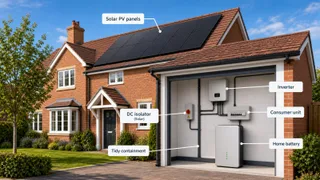
In practice, the installer is looking for both performance and safety constraints. A battery may be technically suitable on paper but awkward on site if the proposed location is too cold, poorly ventilated, exposed to weather, difficult to access or outside the manufacturer’s installation limits. Garages and utility rooms are common options, but each property needs checking.
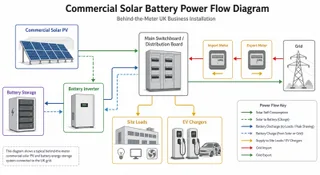
A domestic survey should normally consider the consumer unit, earthing arrangement, main fuse, meter area, existing inverter, cable runs and internet access for monitoring. If the system is being added to older solar PV, the installer should also check whether the existing inverter is compatible, whether an AC-coupled battery makes more sense, and whether replacing equipment would be more practical than working around it. This is especially important when you want to add a battery to an existing system rather than install everything from scratch.
AC-coupled, hybrid and standalone batteries explained
An AC-coupled battery has its own battery inverter and is often used when adding storage to an existing solar PV system. It can be a practical retrofit because it does not always require replacing the solar inverter, although the final design still depends on compatibility, space, grid connection and monitoring. A hybrid inverter is usually considered when solar panels and battery storage are being installed together. It can manage solar generation and battery charging through one inverter arrangement, but it may not be the best answer for every retrofit. A standalone battery can also charge from the grid on a suitable tariff, but it does not generate electricity by itself. If you are comparing retrofit designs, it is worth understanding AC and DC batteries before you judge quotes.
Overview
The best option is the one that fits the site and the reason for installing storage. A homeowner trying to use more of their daytime solar surplus may need a different design from a household mainly charging overnight, and both are different from a business looking at peak demand or resilience.
UK rules and paperwork to ask about
Battery storage connects to your electrical system, so the installer needs to treat it as more than an appliance. Domestic work should be designed and installed in line with relevant electrical safety requirements, and in England and Wales some work may fall under Building Regulations Part P requirements. The exact route depends on the work being carried out and who is doing it.
Grid connection is also important. Depending on inverter capacity and configuration, the installer may need to notify or apply to the local Distribution Network Operator, often using G98 or G99 processes. This is about protecting the local network and confirming how the system can operate, including export where relevant.
You do not need to become a grid-connection specialist, but you should ask clear questions before accepting a quote. The installer should be able to explain whether DNO notification or approval is needed, who handles it, what equipment details are being submitted and whether any export limit affects the system design.
Battery size, power output and usable capacity
Battery size is measured in kilowatt-hours, or kWh, which describes how much energy the battery can store. Power output is measured in kilowatts, or kW, which describes how much electricity the battery can deliver at once. Both matter because a battery with enough capacity may still be unable to run several high-power appliances together.
Many UK domestic batteries sit in a small-to-medium residential range, with modular systems available above or below that depending on the property and objective. The right size depends on daily electricity use, solar surplus, evening demand, tariff strategy and whether backup is required. Bigger is not automatically better if the battery rarely fills or empties usefully.
Usable capacity is the practical figure to look for, not just the headline battery size. Some capacity is reserved by the system to protect battery life, and round-trip efficiency means not every unit of electricity put into the battery is returned to the property. Your installer should explain these concepts in plain English rather than only quoting brochure numbers.
What affects battery storage costs and savings
Battery storage costs vary too much to give a reliable single price without checking the current market and the specific site. A domestic battery installation is usually a significant several-thousand-pound purchase, with the final cost shaped by capacity, inverter choice, backup equipment, cabling, location, electrical upgrades and whether it is installed alongside solar panels. For a deeper cost breakdown, start with home battery costs and then compare that with your own quote.
Savings are just as site-specific. A battery can improve solar self-consumption, shift electricity bought from the grid into cheaper periods on a suitable tariff, or help a business manage certain load patterns. It can also be a poor investment if electricity use is low, solar surplus is limited, the tariff does not reward shifting, or the system is oversized.
Be cautious with any quote that promises a fixed payback without showing the assumptions. The calculation should reflect your actual import, export, tariff, daily pattern, solar generation if present and battery operating strategy. Export payments, tariff rules and household behaviour can all change the outcome, so check how the installer has estimated battery payback before relying on the figures.
Will a battery keep the power on during a power cut?
A standard grid-tied battery system will not necessarily keep your home running during a power cut. Many systems shut down when the grid fails unless backup or emergency power supply equipment has been specifically designed and installed.
Backup is a separate design choice, not a default feature. Some systems can support selected circuits, such as lighting, broadband, a fridge or a small heating control load, but whole-house backup is more demanding and may not be suitable or cost-effective for every property. Before you pay extra for resilience, make sure you understand the limits of battery power cuts support.
If resilience matters to you, raise it at the first design conversation. The installer should explain what can be backed up, whether a separate backup board is needed, how the system behaves when the grid returns, and which appliances should not be connected to backup circuits.
Battery storage for business and commercial sites
Battery storage for business is not simply a larger version of a home battery. Commercial battery storage needs a more detailed assessment because business sites often have larger loads, more complex tariffs, three-phase supplies, operational constraints and stricter access or fire-risk considerations.
A competent commercial installer will usually ask for half-hourly consumption data, electricity bills, site layout, supply capacity, existing generation details and future plans such as EV charging or heat pumps. The aim is to understand when the site uses power, when it could charge, and whether battery energy storage systems can reduce imported energy, improve solar use, support resilience or help manage grid limitations. If solar is part of the wider project, it can also help to compare commercial solar options before finalising the battery brief.
For industrial battery storage or larger business battery storage, the decision may also involve the landlord, facilities team, insurer, DNO and fire-safety advisers. The installer should be comfortable explaining responsibilities, maintenance access, monitoring arrangements and what assumptions sit behind any financial model. A business project should be scoped around the site’s real demand, not just the battery size, so review the basics of battery storage for business before comparing proposals.
How to compare battery storage installers
The strongest battery storage installers ask detailed questions before they recommend equipment. They will want to see usage data, understand your aims, inspect the electrical installation and explain any constraints clearly. A weak quote often looks attractive because it leaves out the difficult parts.
When comparing proposals, look beyond the battery brand and headline capacity. Check whether the quote includes installation, commissioning, monitoring setup, DNO work where required, backup equipment if requested, electrical upgrades, warranties and aftercare.
A fair comparison is easier when each installer is quoting for the same outcome. If one proposal includes backup power, consumer unit work and DNO application while another only includes a battery and inverter, the cheaper figure may not be the better offer.
Common mistakes to avoid before you sign
The most common mistake is buying the largest battery the budget allows without checking whether the property can fill and use it effectively. Oversizing can increase cost without improving savings if solar surplus is small or evening demand is modest.
Another mistake is assuming a battery can be added to any solar PV system without design work. Older inverters, limited space, export settings, monitoring compatibility and DNO requirements can all affect the retrofit. A good installer will identify these issues early rather than treating the battery as a plug-in upgrade.
Homeowners also sometimes focus on the battery warranty without asking what conditions apply. Location, temperature, internet connection, commissioning records and operating limits may all matter. Ask the installer what you need to do after installation to keep monitoring, updates and support working properly.
What to do next
Start by collecting a recent electricity bill, your annual usage if available, half-hourly smart meter data if you have it, and details of any existing solar PV system. If you are a business, gather half-hourly data, operating hours, supply details and any plans for EV charging, heat pumps or site expansion.
Then speak to installers with a clear brief. Tell them whether your priority is solar self-consumption, cheaper off-peak charging, backup, business load management or a mixture. Ask each installer to explain the design, not just the product.
A well-designed battery can be useful, but only when the system matches the property, tariff and usage pattern. The right next step is to compare installer proposals on design quality, compliance, aftercare and realistic assumptions rather than choosing on headline capacity alone.
Plan, Compare & Buy Renewable Energy Solutions
AI does the thinking.
You get the perfect solar match.
Use RoboMo™ to assess your property, compare available technologies and connect with trusted UK installers, suppliers and manufacturers.
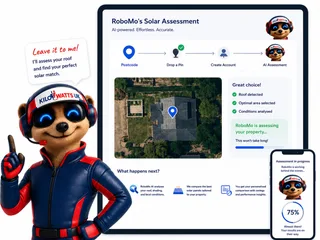
Simply enter your postcode, drop a pin on your roof, create your free account and let RoboMo™ analyse your property to find the best solar panels for your home.

You don't have to think
RoboMo™'s AI analyses your roof and does all the hard work.

Accurate & tailored
AI-powered assessment based on your roof, location, and conditions.

Best options, maximum savings
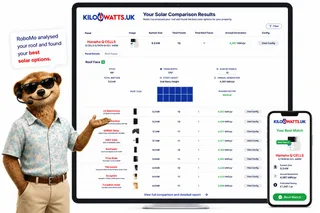
Compare top solar panels for the best performance and value.

Simple, fast & effortless
Provide a few details, sit back and watch your results unfold.
STEP 1
Choose Home, Business or Industrial
Enter your postcode to start your assessment.
STEP 2

Drop a pin on your roof
STEP 3

Create your free account
STEP 4

Sit back and watch RoboMo™ work
RoboMo™ analyses your roof and builds your personalised solar comparison.
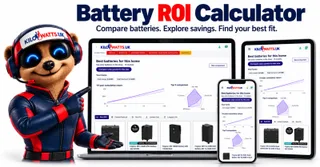
BATTERY ROI TOOL
See what a battery saves on your bill
Enter the day rate, off-peak rate and export rate. The calculator ranks batteries in the Kilowatts shop over 10 years.
Home batteries also suit offices and small commercial sites. Industrial batteries are listed on their own calculator.

Step 1
Enter your postcode
Start designing your wind energy system in seconds.
Are you an installer, distributor or renewable energy business?
Kilowatts UK is expanding the Flower Turbines partner network across the UK.
Become A Flower Turbines PartnerKilowatts UK is an authorised representative
Flower Turbines
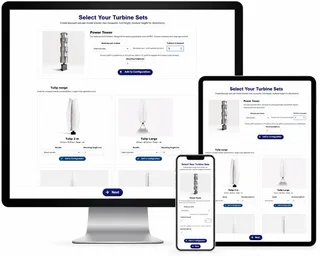
Compact vertical-axis turbines built for real UK sites, not just open farmland.
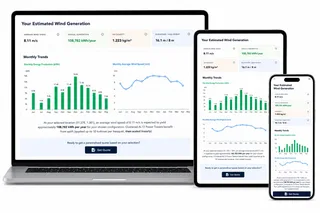
They start in light wind, sit in a small footprint, and are bird-safe by design. Cluster them as a bouquet and the group performs better together than the same turbines standing alone. Enter your postcode for a location-based generation estimate. Figures use area weather data and will differ if buildings, trees or hills sit in the way.
Starts in light UK wind
Built to generate in typical UK wind, not only open farmland.
Small rooftop or ground footprint
Compact towers for roofs, yards and tight sites.
Bird-safe slow rotation
Slow vertical-axis spin, bird-safe by design.
Bouquet clusters raise output
Grouped turbines outperform the same units standing alone.
STEP 2

Choose a location
STEP 3

Place your cluster
Tap the map where you want the turbine cluster to go.
STEP 4

Instant generation forecasts
Compare different turbine layouts and see annual generation forecasts instantly.
STEP 5

No commitment required
Explore different configurations before deciding whether to request a quotation.
Related articles
Mo's Mission Nominations
FAQ
Need Help? RoboMo's Got Answers
What should a battery storage installer check before giving me a quote?
A good installer should look at your electricity use, existing solar PV if you have it, consumer unit, meter area, earthing arrangement, cable routes and possible battery location. They should also ask what you want the battery to do, such as storing solar surplus, charging off-peak or providing backup. A desktop estimate can start the conversation, but a proper survey is usually needed before a final design.
Can I add a battery to my existing solar panel system?
Often yes, but it depends on your current inverter, wiring, available space, export settings and grid connection requirements. An AC-coupled battery is commonly considered for retrofits because it has its own battery inverter. The installer should check compatibility rather than assuming any battery will work with any solar PV system.
Will a home battery keep my power on during a power cut?
Not necessarily. Many grid-tied battery systems shut down during a power cut unless specific backup or emergency power supply equipment has been designed and installed. If backup matters, ask which circuits can be supported, how long they may run and what appliances should not be connected.
How do I know what size battery I need?
The right size depends on your daily electricity use, solar surplus, evening demand, tariff and whether you want backup. Capacity is measured in kWh, but you should ask about usable capacity rather than only the headline figure. Bigger is not always better if the battery will rarely charge or discharge usefully.
Does a battery storage installer need to deal with the DNO?
Sometimes, depending on the inverter capacity, export arrangements and how the system is connected. The installer should tell you whether DNO notification or approval is needed and who will handle it. They should also explain any export limit or grid constraint that affects the design.
What should be included in a battery storage quote?
A clear quote should include the battery, inverter or hybrid inverter, installation, commissioning, monitoring setup and any required electrical work. It should also state whether DNO paperwork, backup equipment, consumer unit changes, warranties and aftercare are included. Comparing quotes is easier when each installer is pricing the same outcome.
Can a battery save money without solar panels?
It can in some cases if you have a suitable time-of-use tariff and enough electricity use to make off-peak charging worthwhile. It will not generate electricity by itself, so the savings depend on tariff differences, battery efficiency, cycling and your daily pattern. Be cautious of fixed payback claims that do not show the assumptions used.
What is different about commercial battery storage installation?
Commercial systems usually need a more detailed assessment than home batteries because business sites can have larger loads, three-phase supplies, complex tariffs and operational constraints. An installer will often ask for half-hourly consumption data, bills, site layout, supply capacity and details of existing generation. Larger projects may also involve the landlord, insurer, DNO and fire-safety advisers.